
 Worksheets
TIMSS - BIO 5 - Ecosystems
Total questions: 20
Worksheet time: 11mins
Name
Class
Date
1.

A connection of food chains with many food energy paths in an ecosystem is a ____________
a)
ecosystem
b)
food web
c)
environment
d)
population
2.

The shrew provides energy for the _______?
a)
cricket
b)
grasshopper
c)
frog
d)
snake
3.

Where does the energy start in this food chain?
a)
Plant
b)
Sun
c)
Deer
d)
Wolf
4.

An organism that gets energy from eating other organisms is a ______________
a)
producer
b)
consumer
c)
decomposer
d)
prey
5.

What is a herbivore?
a)
an animal that gets energy from eating other animals
b)
an organism that gets energy from eating only plants
c)
an animal that gets energy by eating both plants and other animals
d)
an animal that eats only herbs
6.
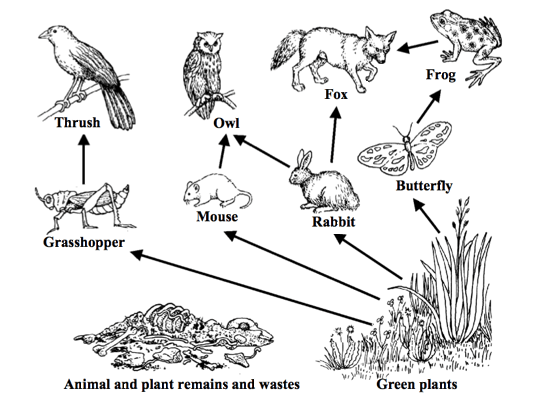
The owl receives energy from which organisms?
a)
grasshopper and mouse
b)
mouse and rabbit
c)
rabbit and butterfly
d)
butterfly and frog
7.

What is the water cycle?
a)
the 3 forms of water
b)
the movement of water on, above, or below the surface of the Earth
c)
when water melts
d)
when clouds form
8.
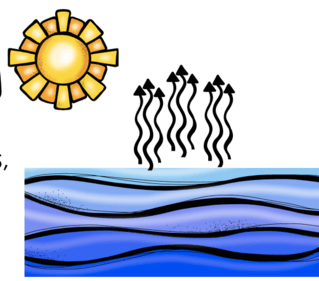
What part of the water cycle does this picture show?
a)
condensation
b)
precipitation
c)
evaporation
9.
In order for plants to go through photosynthesis, they need -
a)
water and soil
b)
sunlight, water and carbon dioxide
c)
soil and oxygen
10.
Plants release ____________ as a waste product.
a)
carbon dioxide
b)
oxygen
11.
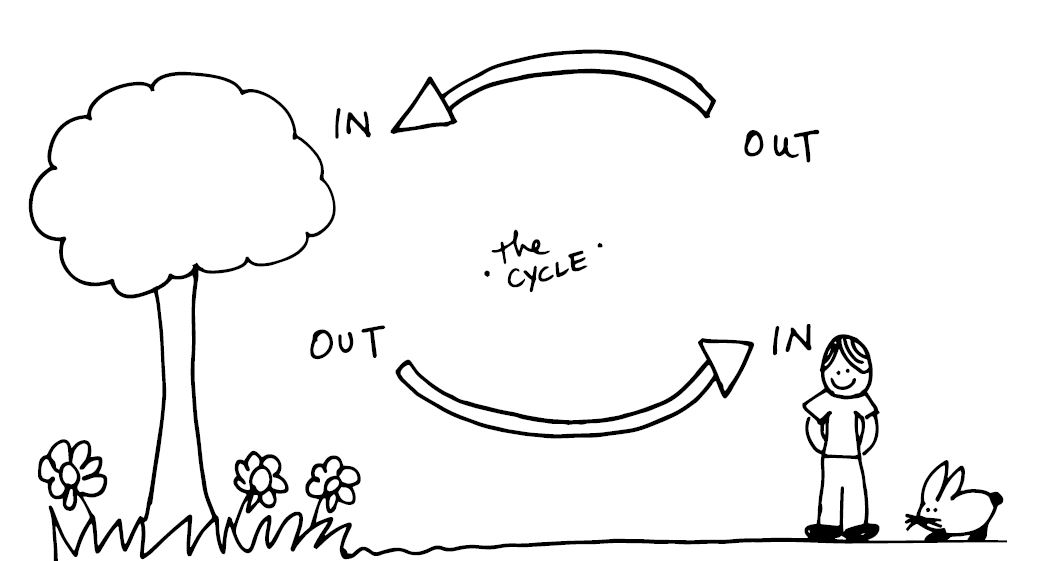
Animals and plants use substances that cycle through the environment. Which substance is needed by plants to survive and is released into the environment by animals?
a)
oxygen
b)
sugar
c)
salt
d)
carbon dioxide
12.
________________ could increase the amount of oxygen in the air.
a)
Building more houses
b)
Burning more oil
c)
Paving more streets
d)
Planting more trees
13.

Cattle egrets forage (feed) in fields among cattle. The egret gets easy access to flying insects stirred up by the cattle, and the cattle don't care if they are there or not.
a)
mutualism
b)
commensalism
c)
competition
d)
parasitism
14.
A relationship between two organisms in which one organism benefits and the other is unharmed...
a)
Mutualism
b)
Competition
c)
Parasitsm
d)
Commensalism
15.
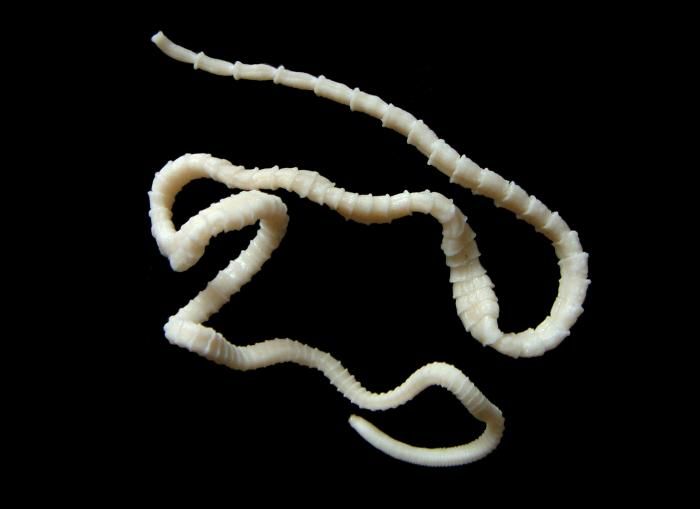
A tapeworm and a cat have this type of relationship.
a)
mutualism
b)
parasitism
c)
commensalism
d)
competition
16.
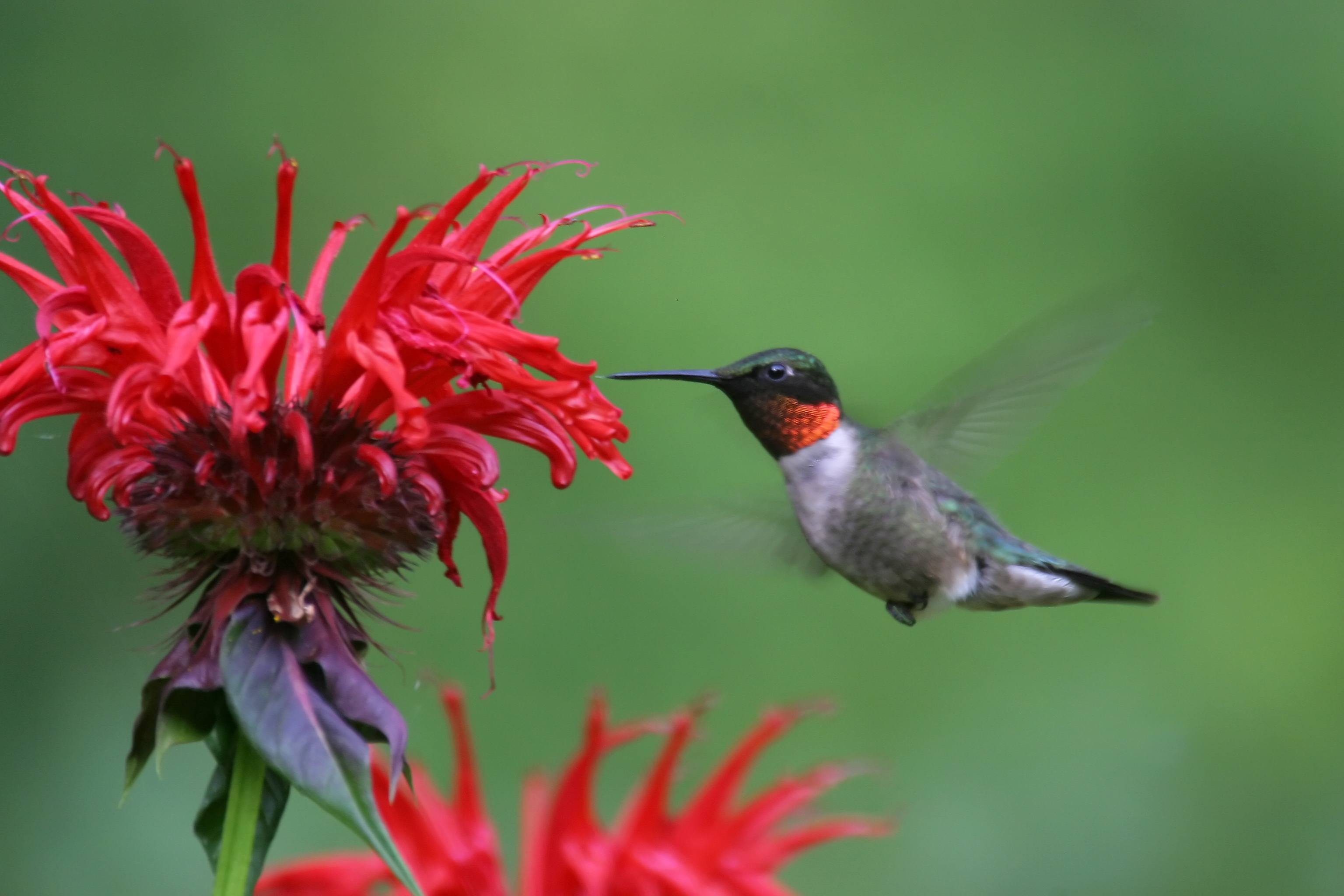
What type of symbiosis? Hummingbirds feed on nectar from flowers. The flowers are pollinated by hummingbirds as they move from flower to flower.
a)
commensalism
b)
mutualism
c)
parasitism
d)
predation
17.
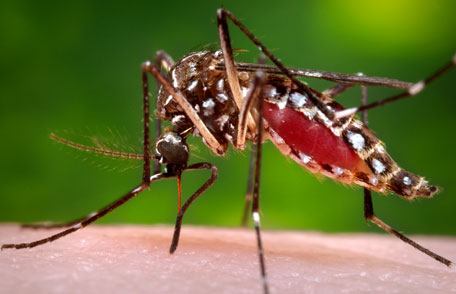
When a mosquito bites you, you are the __________ and the mosquito is the ____________.
a)
host, hostess
b)
parasite, host
c)
host, parasite
d)
prey, predator
18.
Which of these is most likely the result of weasels and foxes depending on the same food source?
a)
The populations will compete with each other.
b)
One of the populations will become herbivores.
c)
Birthrates for both populations will increase.
d)
New species of prey will evolve in the area.
19.

The idea that individuals whose characteristics are best suited to an environment tend to survive.
a)
succession
b)
niche
c)
natural selection
d)
symbiosis
20.
If the population of prey increases, the population of predators will ________because of the availability of food.
a)
decrease
b)
stay the same
c)
increase
100 %

