
 Worksheets
Work
Total questions: 101
Worksheet time: 2hrs 35mins
Name
Class
Date
1.
Rain washing away soil from a hillside
a)
Weathering
b)
Erosion
2.
Water getting into cracks, freezing, and breaking the rocks or pavement apart
a)
Weathering
b)
Erosion
3.
Wind blowing sand from one location to another
a)
Weathering
b)
Erosion
4.
Wind blasting sand at rock and carving out arches
a)
Weathering
b)
Erosion
5.
Flood waters moving soil from one location to another
a)
Weathering
b)
Erosion
6.
What is sediment?
a)
the process of rocks being broken down and carried away
b)
bits of rock and sand caused by the weathering of rocks
c)
the top layer of the soil
d)
decaying plant or animal material
7.
The process by which small pieces of rocks and soil are carried away to new locations is called...
a)
weathering
b)
erosion
8.
How does freezing water cause the weathering of rocks? The freezing water—
a)
keeps the rocks in place
b)
makes the rocks last longer
c)
expands cracks and breaks rocks
d)
causes rocks to fall in landslides
9.
The process of breaking up Earth's surface into sediment is called...
a)
weathering
b)
erosion
10.
Flood water pounding against a canyon wall and wearing it down
a)
Weathering
b)
Erosion
11.
What is the main way to identify rocks?
a)
By grain size
b)
By color
c)
By streak test
d)
By hardness
12.
What is solid and made of one or more minerals?
a)
rust
b)
minerals
c)
sand
d)
rocks
13.

the general terms for the movement of sediment by wind, water, glaciers
a)
weathering
b)
erosion
c)
deposition
14.

the breakdown of rock into smaller pieces of the same rock without any change in its composition
a)
mechanical weathering
b)
chemical weathering
c)
erosion
d)
deposition
15.

the process by which layers or sheets of rock gradually break off
a)
exfoliation
b)
abrasion
c)
erosion
d)
deposition
16.

the process of wearing down by friction - like sand blasting
a)
exfoliation
b)
abrasion
c)
erosion
d)
deposition
17.

the breakdown or decomposition of rock that takes place when minerals change through chemical processes
a)
chemical weathering
b)
mechanical weathering
c)
erosion
d)
deposition
18.

decayed organic matter in soil
a)
abrasion
b)
exfoliation
c)
humus
d)
erosion
19.

a soil layer with physical and chemical properties that differ from those soil layers above and below it
a)
soil profile
b)
soil horizon
c)
humus
d)
deposition
20.

the soil horizon in a specific location; a cross section of soil layers that display all soil layers
a)
soil profile
b)
soil horizon
c)
humus
d)
deposition
21.

the expansion of desert conditions in areas where the natural plant cover has been destroyed
a)
desertification
b)
exfoliation
c)
abrasion
d)
erosion
22.

the process in which sediment particles are picked up and moved from one place to another
a)
mechanical weathering
b)
chemical weathering
c)
erosion
d)
deposition
23.

the part of the erosion process in which sediment travels to a new location and is laid down or dropped off
a)
chemical weathering
b)
mechanical weathering
c)
erosion
d)
deposition
24.

Roots grow into cracks of a rock and pry them apart
a)
mechanical weathering
b)
chemical weathering
c)
erosion
d)
deposition
25.

oxidation produces rust on some rocks containing iron
a)
chemical weathering
b)
mechanical weathering
c)
erosion
d)
deposition
26.

rock is broken by the freezing and thawing of ice
a)
chemical weathering
b)
mechanical weathering
c)
erosion
d)
deposition
27.

rock particles wear away rock
a)
mechanical weathering
b)
chemical weathering
c)
erosion
d)
deposition
28.

plants produce weak acids that slowly dissolve the rock they are growing on
a)
chemical weathering
b)
mechanical weathering
c)
erosion
d)
deposition
29.

fossil fuels react with water producing acid rain that wears minerals away in the rock
a)
chemical weathering
b)
mechanical weathering
c)
erosion
d)
deposition
30.

animals break up the ground by burrowing
a)
mechanical weathering
b)
chemical weathering
c)
erosion
d)
deposition
31.

carbon dioxide dissolves in water then weathers marble and limestone
a)
chemical weathering
b)
mechanical weathering
c)
erosion
d)
deposition
32.
carbon dioxide dissolves in water then weathers marble and limestone
a)
chemical weathering
b)
mechanical weathering
c)
erosion
d)
deposition
33.
Weathering involves the movement of rocks and minerals by agents such as water, wind and gravity.
a)
True
b)
False
34.
The process of carrying away weathered bits of rocks is called
a)
weathering
b)
erosion
c)
deposition
35.
The process of moving weathered rock and depositing it in another location is called?
a)
weathering
b)
erosion
c)
deposition
36.
A small stream or other source of flowing water cannot form a canyon?
a)
True
b)
False
37.
The process of slowly breaking rocks into smaller pieces is called
a)
weathering
b)
erosion
c)
deposition
38.
Deposited material at the end of a river is called?
a)
landform
b)
delta
c)
canyon
39.
Glaciers shape and carve away the land beneath them and can drastically reshape the landscape over hundreds or even thousands of years.
a)
True
b)
False
40.
A natural land feature on Earth's surface is called
a)
landform
b)
delta
c)
canyon
41.
Weathering and erosion are the same thing.
a)
True
b)
False
42.
Wind blowing sand from one location to another is called
a)
Weathering
b)
Erosion
c)
Deposition
43.
Deltas forming at the mouths of rivers is called?
a)
Weathering
b)
Erosion
c)
Deposition
44.
Water getting into cracks, freezing, and breaking the rocks or pavement apart is called?
a)
Weathering
b)
Erosion
c)
Deposition
45.
Waves dropping sand on the beach is called?
a)
Weathering
b)
Erosion
c)
Deposition
46.
A mudslide flowing down a steep hill is called?
a)
Weathering
b)
Erosion
c)
Deposition
47.
Rocks at the top of a mountain are smoother than rocks at the bottom of a mountain.
a)
True
b)
False
48.
A crack in a sidewalk is probably caused by root wedging?
a)
True
b)
False
49.
The process that breaks down rocks and other materials on Earth's surface is called
a)
weathering
b)
erosion
c)
soil conservation
d)
decomposition
50.

What is mechanical weathering?
a)
Process through which rocks are physically broken into smaller pieces.
b)
Rocks are broken down through chemical changes.
c)
Rocks are worn away from acid in plant roots.
d)
Rocks broken down by machinery.
51.
How does freezing water cause the weathering of rocks? The freezing water—
a)
keeps the rocks in place
b)
makes the rocks last longer
c)
expands cracks and breaks rocks
d)
causes rocks to fall in landslides
52.
Rain washing away soil from a hillside
a)
Weathering
b)
Erosion
c)
Deposition
53.
Waves dropping sand on the beach
a)
Weathering
b)
Erosion
c)
Deposition
54.
Wind blowing sand from one location to another
a)
Weathering
b)
Erosion
c)
Deposition
55.
Muddy water being carried away by a fast-moving river
a)
Weathering
b)
Erosion
c)
Deposition
56.
Flood waters moving soil from one location to another
a)
Weathering
b)
Erosion
c)
Deposition
57.
Rocks being made smooth by tumbling across a streambed
a)
Weathering
b)
Erosion
c)
Deposition
58.
Wind blasting sand at rock and carving out arches
a)
Weathering
b)
Erosion
c)
Deposition
59.
Weathering involves the movement of rocks and minerals by agents such as water, wind and gravity.
a)
True
b)
False
60.
What is the process of moving sediments from location to another?
a)
Deposition
b)
Erosion
c)
Weathering
d)
Compaction
61.
Which of these is an example of erosion
a)
Light Shinning onto a mountain
b)
Rain breaking down rock
c)
Wind blowing away sediment
d)
All of the above
62.
What is the major cause of weathering and erosion to form canyons?
a)
wind
b)
ice
c)
glaciers
d)
moving water
63.
What is the correct order of the processes?
a)
they all happen at the same time
b)
erosion, weathering, deposition
c)
weathering, erosion, deposition
d)
weathering, deposition, erosion
64.
Rain washing away soil from a hillside
a)
Weathering
b)
Erosion
c)
Deposition
65.
What is the small broken down pieces of rock called?
a)
dirt
b)
grime
c)
sediment
d)
popcorn
66.
What force lays down sediment in new locations?
a)
Erosion
b)
Weathering
c)
Deposition
d)
Abrasion
67.
Weeds growing into the cracks in a sidewalk and the sidewalk begins to crumble is an example of:
a)
mechanical weathering
b)
chemical weathering
68.
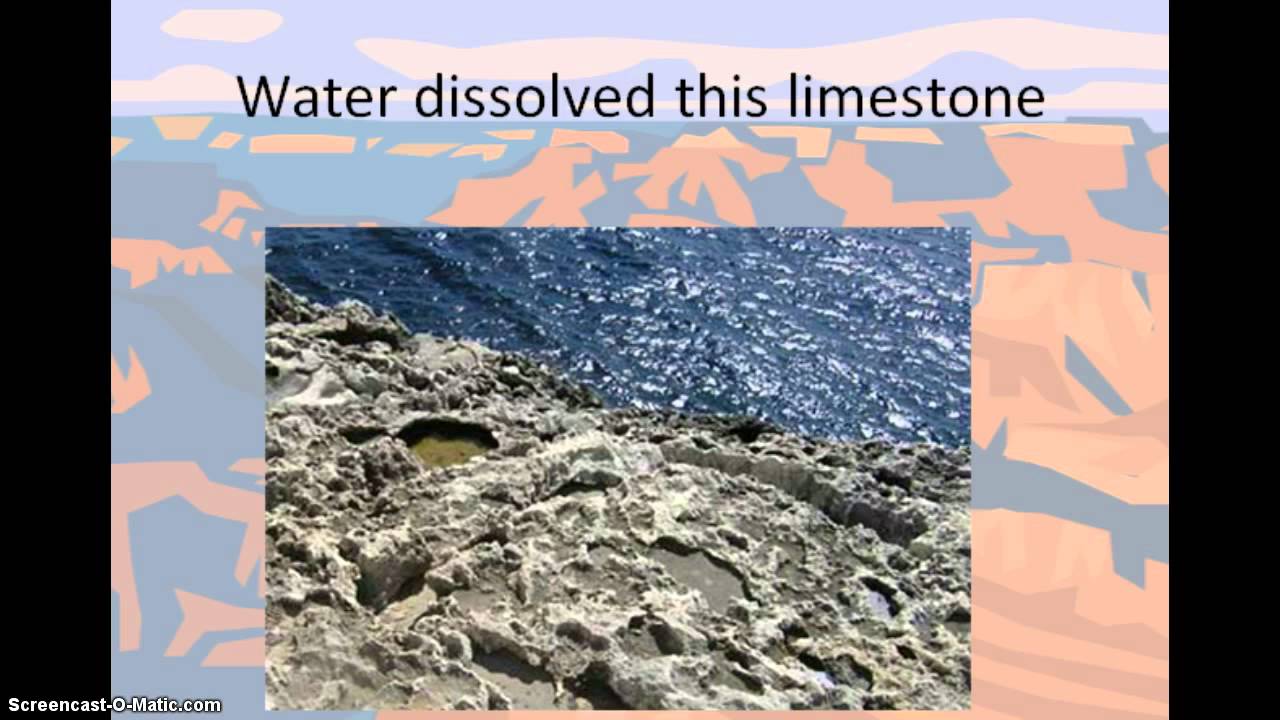
Is this an example of physical or chemical weathering?
a)
Physical
b)
Chemical
69.

Wind blows sand onto rocks and slowly breaks down the rock
a)
Mechanical Weathering
b)
Chemical Weathering
c)
Erosion
d)
Deposition
70.

A mudslide dumps a large pile of mud onto a road
a)
Mechanical Weathering
b)
Chemical Weathering
c)
Erosion
d)
Deposition
71.

Water gets into cracks of a rock, when the water freezes it breaks up the rock
a)
Mechanical Weathering
b)
Chemical Weathering
c)
Erosion
d)
Deposition
72.
Water gets into cracks of a rock, when the water freezes it breaks up the rock
a)
Mechanical Weathering
b)
Chemical Weathering
c)
Erosion
d)
Deposition
73.

Waves wash sand onto land until a beach is formed
a)
Mechanical Weathering
b)
Chemical Weathering
c)
Erosion
d)
Deposition
74.

A flash flood washes away the side of a river bank
a)
Mechanical Weathering
b)
Chemical Weathering
c)
Erosion
d)
Deposition
75.

A river carries dirt and mud out of the land it runs through
a)
Mechanical Weathering
b)
Chemical Weathering
c)
Erosion
d)
Deposition
76.

Wind blows sand into the desert where it collects in giant piles called sand dunes
a)
Mechanical Weathering
b)
Chemical Weathering
c)
Erosion
d)
Deposition
77.

small islands made of sediment called deltas form at the end of rivers
a)
Mechanical Weathering
b)
Chemical Weathering
c)
Erosion
d)
Deposition
78.
Rain washes away dirt from a hillside
a)
Mechanical Weathering
b)
Chemical Weathering
c)
Erosion
d)
Deposition
79.

Wind blows sand out of the dessert
a)
Mechanical Weathering
b)
Chemical Weathering
c)
Erosion
d)
Deposition
80.
A stream widens into a river over time as the sides get worn away
a)
Mechanical Weathering
b)
Chemical Weathering
c)
Erosion
d)
Deposition
81.

A rock sits on a river for 100 years and is worn down until it is smooth
a)
Mechanical Weathering
b)
Chemical Weathering
c)
Erosion
d)
Deposition
82.

Acid rain melts the features of a statue
a)
Mechanical Weathering
b)
Chemical Weathering
c)
Erosion
d)
Deposition
83.
Acid rain melts the features of a statue
a)
Mechanical Weathering
b)
Chemical Weathering
c)
Erosion
d)
Deposition
84.

Salt water eats away at rock
a)
Mechanical Weathering
b)
Chemical Weathering
c)
Erosion
d)
Deposition
85.
Removing Sediment from a location
a)
Mechanical Weathering
b)
Chemical Weathering
c)
Erosion
d)
Deposition
86.
Adding sediment to a location
a)
Mechanical Weathering
b)
Chemical Weathering
c)
Erosion
d)
Deposition
87.
Breaking a rock down into smaller pieces (sediment) by physical force
a)
Mechanical Weathering
b)
Chemical Weathering
c)
Erosion
d)
Deposition
88.
Breaking a rock down into smaller pieces (sediment) using chemicals
a)
Mechanical Weathering
b)
Chemical Weathering
c)
Erosion
d)
Deposition
89.

The small peices of rock that break off of a larger rock during weathering are called...
a)
Sediment
b)
Salt
c)
Erosion
d)
Deposition
90.
When rocks are broken down into smaller pieces
a)
erosion
b)
weathering
c)
sediment
91.
Particles of rock, sand, soil, plant and animal remains
a)
erosion
b)
sediment
c)
weathering
92.
When water, ice and wind move particles of rock and soil from one place to another
a)
sediment
b)
weathering
c)
erosion
93.
A mass of ice that covers a large area and moves slowly
a)
gravity
b)
glacier
c)
sediment
94.
The force that attracts objects to each other
a)
erosion
b)
gravity
c)
glacier
95.
Erosion occurs when water, ice wind and gravity move __________________ of rock and soil from one place to another
a)
water
b)
waves
c)
particles
96.
Moving ________________ picks up particles of rock and soil.
a)
patricles
b)
deposits
c)
water
97.
Water ________ heavier sediment first
a)
particles
b)
waves
c)
depositis
98.
The subsoil catches and holds the nutrients and minerals that are washed down from the
a)
Topsoil
b)
Weathered rock
c)
solid rock
99.
Erosion caused by _______________ changes beaches and lakes
a)
glaciers
b)
ice
c)
waves
100.
A glacier is a mass of ________ that covers a large area and moves slowly
a)
ice
b)
water
c)
waves
101.
Soil is a mixture of
a)
weathered rock particles
b)
plant and animal remains
c)
all of the above
100 %

