Worksheets
Hierarchical Organization CA Review
Total questions: 40
Worksheet time: 25mins
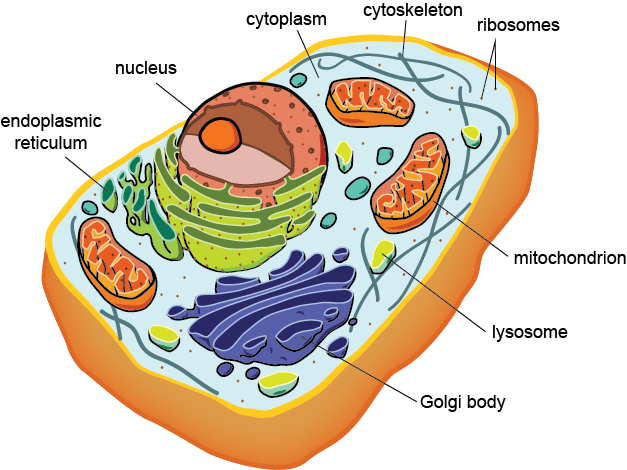

Where are lysosomes found?
bacteria and plant cells
plant cells only
fungi and bacteria
animal cells only

What organelle is considered to be the “gatekeeper” for plant and animal cells? It controls the movement of molecules in and out of the cell.
Cell Wall
Cytoplasm
Nucleous
Cell Membrane
Who was the first person to see little boxes he called cells under the microscope and give them their name?
Mattias Schleiden
Robert Hooke
Theordor Schwann
Anton van Leeuwenhoek
A group of similar cells that come together to perform a specific function or part of the body is a/an?
organ
organism
organ system
tissue
Which describes the cell of fungus?
Cell wall made of chitin, cell membrane, mitochondria
No cell wall, cell membrane, nucleus
No cell wall, cell membrane, mitochondria
Cell wall made of cellulose, cell membrane, vacuole
A type of cell that does not have a nucleus or cell membrane bound organelles. Bacteria are this kind of cell.
Eukaryote
Capsid
Prokaryote
Flagellum
What is the difference between a bacteria and a virus?
Viruses need and oxygen and bacteria do not.
bacteria need oxygen and viruses do not
viruses can reproduce on their own and bacteria cannot
Bacteria can reproduce on their own, viruses cannot.
What invention was necessary to discover cells?
magnifying glasses
electricity
compound microscope
electron microscope
Only animal cells have?
a cell membrane
ribosomes
cell walls
lysosomes
How many cells do protists have/
1000
1
100
millions
Which is an example of a single-celled organism?
fish
tree
bacteria
human
Plants absorb light for photosynthesis. Cows eat grass. These are examples of how these organisms do what?
Eat predators
produce offspring
get oxygen
obtain energy

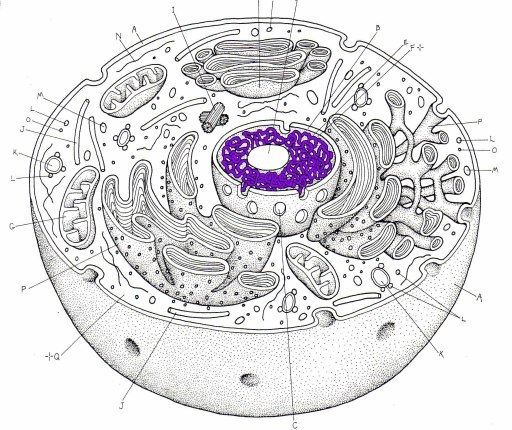
What is the purple organelle?
vacuole
chloroplast
cell wall
nucleus
What is not a characteristic of life?
responding to stimulus
maintaining homeostasis
rproducing
movement

If you look at pond water under a microscope, how can you identify an amoebic protist?
We can identify an amoebic protist by seeing how they ingest food, and how they release the waste.
We can identify an amoebic protist by seeing where It lives, and how it affects humans
We can identify an amoebic protist because it has cell structure with a membrane and nucleus.
Compare/contrast a eukaryote and a prokaryote.
Both are single cells that carry out the functions of life.
Both are examples of primitive cells that cannot reproduce.
Both have a nuclues.
Only the eukaryote has true cell structure to carry out the functions of life.
Compare multicellular and unicellular organisms. How are they alike?
They both are complex organisms.
They both have cilia or flagella for movement.
They both live for years.
They both take in nutrients for energy.
ology means
false
foot
the study of
pseudo
micro means
false
foot
the study of
small
pod/ped means
false
foot
the study of
small
psuedo means
false
the study of
foot
small

Which is true about the location of our Sun and the Milky Way Galaxy?
It's outside our galaxy.
It's near an outer arm of the galaxy.
It's on the right side of the galaxy.
It's within the bulge of the galaxy.
What is a celestial body that orbits the sun, contains frozen gases, rocks, and dust had has a tail?
meteor
planet
comet
astroid