
 Worksheets
Hope Academy Year 7 - C3 Particles
Total questions: 36
Worksheet time: 41mins
3.1 What do scientists believe all matter is made up of?
dust
particles
water
grains
3.1 All matter is made up of tiny _______________
energy
particles (atoms and molecules)
bits
antimatter
3.2 Which of the following sentences are true about solids?
Solids are rigid, have a fixed shape but not a fixed volume
Solids are not rigid, have a fixed shape and no fixed volume
Solids are rigid, have a fixed shape and a fixed volume

3.2 Number 2 represents a ________
solid
liquid
gas
plasma
3.2 Particles in a _____________ are tightly packed together.
solid
liquid
gas
plasma
3.2 Particles in a _________ take the shape of the container.
solid
liquid
gas
plasma

3.2 What does this picture represent?
Solid
Liquid
Gass
3.2 The states, or phases of matter are...
proton, neutron and electron
solid, liquid and gas
on and off
a mystery
3.4 Particles are always moving.
True
False
3.4 Which key term describes the random movement of particles?
a) Diffusion
b) Osmosis
c) Brownian Motion
d) Absolute zero �
3.5 An inflated balloon is placed in a refrigerator. Which statement describes the movement of the gas particles in the balloon?
The particles move more slowly and become closer together.
The particles move more slowly and become further apart.
The particles move faster and become closer together.
The particles move faster and become further apart.
3.5 Identify the states of matter where Brownian Motion can occur.
a) Solid, liquid, gas
b) Liquid, gas
c) Solid, gas
d) Solid, liquid
3.6 Convert the following - 7,000 m = ____ km
70
700
7
0.07
3.6 Convert the following - 38cm = ____mm
0.38mm
3.8mm
380mm
3,800mm
3.6 Convert the following - 648 mm = ____ nm
648,000
64,800
648,000,000
0.648
3.6 Convert the following - 490,000nm =____ mm
490
49
4,900
0.49
3.8 What is diffusion?
when molecules move
when molecules move from a high concentration to a low.
no movement
molecules move everywhere
3.8 Which key term describes the movement of particles from a high to low concentration?
a) Diffusion
b) Osmosis
c) Brownian Motion
d) Absolute zero �
3.9 Diffusion is the movement of molecules from an area of _____ concentration to an ______ concentration
High, low
Low, high
Low, low,
High, high
3.10 What does “high concentration area” mean?
Spread out
Tightly packed together
Uncrowded
Spacious
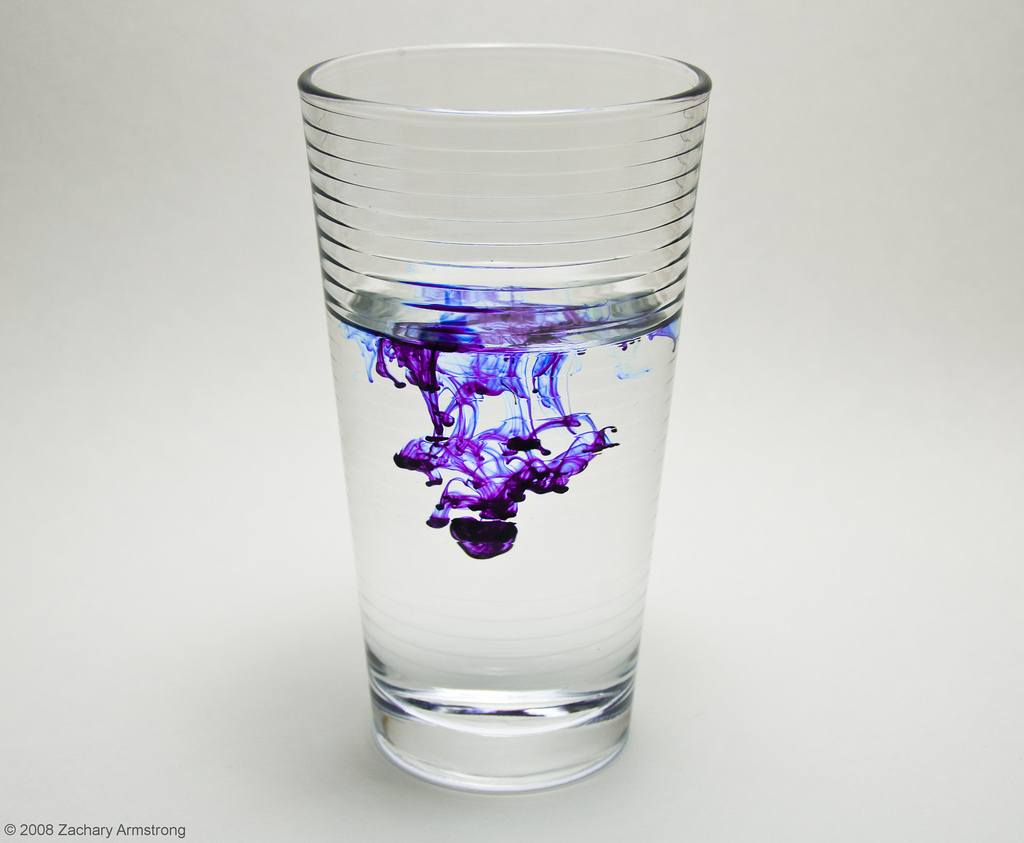
3.10 Where is there a low concentration of dye?
at the bottom of cup
in the color
at the top of cup
no concenteraion gradient
3.11 How does the rate of diffusion change with an increase in temperature?
a) Faster
b) Slower
c) Unaffected
d) Impossible to tell
3.11 An increase in temperature does what to diffusion?
Speeds it up
Slows it down
Has no effect
I wish i knew. Really I do.
3.11 How does the rate of diffusion change with a decreases in temperature?
a) Faster
b) Slower
c) Unaffected
d) Impossible to tell
3.12 As particles are exposed to colder temperatures they _____
speed up
slow down
stay the same
become ions
3.12 As particles are exposed to warmer temperatures they __________
speed up
slow down
stay the same
vibrate
3.13 Which key term is defined as 'gas molecules' colliding with the inner surface and pushing out?
a) Surface Pressure
b) Air Pressure
c) Gas Pressure
d) Force Pressure
3.13 Give the unit for Pressure?
a) N/cm2
b) g
c) cm2
d) N
3.13 A unit of pressure is called a
bernoulli
pascal
pound
meter
3.14 What TWO factors will increase the pressure produced? A - Higher temperature B - Lower Temperature C - Higher volume D - Lower volume
AC
AD
BC
BD
3.15 A device that is used to measure atmospheric pressure is a ___________.
barometer
thermometer
kilometer
micrometer
3.15 happens to air pressure as you move upward into the atmosphere?
increases
decreases
stays the same
3.15 Air pressure is greater _______.
at the top of the mountain
at the bottom of the mountain
at the center of the mountain
3.15 When going up in an elevator, your ears 'pop' because the air pressure
Remains the same
Decreases
Increases
3.3 What is the major problem with trying to observe Brownian Motion?
a) Molecules are moving too fast
b) Molecules are moving too slow
c) Molecules are too big to observe
d) Molecules are too small to observe
3.3 What piece of apparatus can be used to see the effect of 'Brownian Motion'?
a) Magnifying glass
b) Microscope
c) Telescope
d) Bright light

