wayground logo

Free Printable Worksheets

Font size

S
M
L
XL
Worksheets

Chemsitry Final Review

Total questions: 169

Worksheet time: 4hrs 24mins

Name
Class
Date
1.
The smallest particle of an element is a(n)
a)
cell
b)
atom
c)
molecule
d)
compound
2.
What two types of matter are pure substances?
a)
Elements and Mixtures
b)
Compounds and Solutions
c)
Solutions and Heterogenous Mixtures
d)
Elements and Compounds
3.
Air consists of several substances that are NOT chemically combined, so air is classified as a(n)
a)
element
b)
compound
c)
mixture
d)
pure substance
4.
Which type of mixture has substances that are evenly mixed so that you cannot see the different parts?
a)
heterogenous
b)
homogeneous
c)
chemical
d)
molecular
5.
When a liquid is heated to its boiling point, it will begin to
a)
condensate.
b)
evaporate.
c)
sublimate.
6.
Which phase of matter is most likely shown in the picture?
a)
solid 
b)
liquid
c)
gas
7.
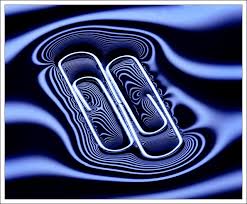
The tightness across the surface of water that enables paper clips to float is ____________.
a)
adhesion
b)
capillary action
c)
surface tension
d)
polarity
8.

What are the seven diatomic elements?

a)

H2, Cl2, Br2, O2, N2, I2, F2

b)

H2, Cl2, I2, F2, Hg2, Br2, Fe2

c)

H2, Cu2, Ni2, B2, O2, I2, Fe2

9.

What are diatomic elements?

a)

Elements that form two-atom molecules when not combined in a compound.

b)

Two elements that combine with one atom from each element.

c)

Elements that are always in pairs no matter what.

10.

What are some properties of a Nucleus?

a)

Small center of an atom

b)

Has a positive charge

c)

Surrounded by electrons

d)

Has a negative charge

11.

What part of the atom is this?

a)

Proton

b)

Neutron

c)

Electron

d)

Nucleus

12.

What part of the atom is this?

a)

Proton

b)

Electron

c)

Neutron

d)

Nucleus

13.

The Periodic Table is organized into _________ and __________.

a)

Atoms, things

b)

Groups, Periods

c)

Groups, metals

d)

Nonmetals, Periods

14.
As you move down a group, atomic radius increases because - 
a)
you add more and more neutrons
b)
you add more and more protons
c)
you add more and more shells (energy levels)
d)
you add more atomic mass
15.
The atom with the largest atomic radius in Group 18 is - 
a)
Ar
b)
He
c)
Kr
d)
Rn
16.
As you move across the periodic table from left to right, the atomic radius decreases.  This is because - 
a)
the number of protons increases, so attraction to electrons increases
b)
the number of energy levels increases
c)
the number of electrons increases
d)
the atomic mass increases
17.
The atom with the largest atomic radius in Period 4 (row 4) is - 
a)
K
b)
Kr
c)
Fe
d)
Fe
18.
Francium (Fr) has the lowest ionization energy in Group 1 because - 
a)
it has the smallest number of valence electrons
b)
it has the greatest atomic mass
c)
it has the greatest number of protons, so it attracts its electrons the strongest
d)
its 1 valence electron is very far from the nucleus, so little energy is needed to remove it
19.
The element with the smallest ionization energy in Period 6 is - 
a)
Rn
b)
Cs
c)
Os
d)
Tm
20.
As you move across the periodic table atoms tend to get smaller because, ______________.
a)
the atoms have more mass.
b)
the atoms have less mass
c)
the atoms have more protons.
d)
the atoms have less electrons.
21.
The energy required to remove electrons is the definition of: 
a)
Electronegativity
b)
Atomic Number
c)
Atomic Radius
d)
Ionization
22.
What is the name of family I
a)
Alkaline Earth Metals
b)
Boron Family
c)
Alkali Metals
d)
Halogen Family
23.
Group B is known as the:
a)
Inner Metals
b)
Transition Metals
c)
Weirdos
d)
Changelings 
24.
Families all have similar 
a)
Names
b)
atomic numbers
c)
atomic masses
d)
properties
25.
Electronegativity is...
a)
the ability of an atom to attract/ accept electrons
b)
the ability of an atom to lose electrons
c)
the energy required to remove an electron from a specific atom
d)
how easy it is to make friends. 
26.
Which has the greater Electronegativity: 
N or C?
a)
C
b)
N
27.
Electronegativity __________ from left to right within a period and __________ from top to bottom within a group.
a)
decreases, increases 
b)
increases, increases
c)
increases, decreases 
d)
stays the same, increases
28.
Name Al2S3
a)
Aluminum sulfide
b)
Dialuminum trisulfide
c)
ammonium sulfide
d)
aluminum (II) sulfice
29.
What is the charge on the calcium ion?
a)
1+
b)
2+
c)
2-
d)
1-
30.
Which is a transition metal?
a)
cesium
b)
iron
c)
helium
d)
tellurium
31.
Identify the phosphide ion
a)
P5+
b)
P3+
c)
P3-
d)
P4-
32.
What is the name for the NO3- ion?
a)
nitrate ion
b)
nitrite ion
c)
nitrogan ion
d)
nitride ion
33.
Select the correct formula for sulfur hexachloride
a)
S2Cl6
b)
S6Cl
c)
SCl6
d)
SF6
34.
Name the compound NH4OH
a)
ammonium hydroxide
b)
ammonia oxyhydride
c)
mononitrogen tetraoxihydride
d)
hydrogen nitrate
35.
What is the formula for lead (II) carbonate?
a)
PbCO3
b)
Pb2CO3
c)
Pb(CO3)2
d)
Pb(CO)4
36.
What is the metallic ion in the compound CuCl?
a)
Cu1+
b)
Cu2+
c)
Cu1-
d)
Cu2-
37.
What is the formula for aluminum sulfite?
a)
Al3S2
b)
AlSO4
c)
Al3(SO4)2
d)
Al2(SO3)3
38.
What is the formula for tin (II) chromate 
a)
Sn2(CrO4)4
b)
Sn(CrO4)2
c)
Sn4(CrO4)2
d)
SnCrO4
39.
What is the formula for barium hydride?
a)
BaOH2
b)
Ba(OH)2
c)
BaH2
d)
BaOH
40.
Name the compound Mg3(PO4)2
a)
magnesium phosphate
b)
magnesium (III) phosphate
c)
magnesium phosphite
d)
magnesium phosphide
41.
Name the compound Fe(NO2)3
a)
iron nitrite
b)
iron (III) nitrate
c)
iron (III) nitrite
d)
ferric nitrite
42.
Name the compound NO3
a)
nitrogen trioxide
b)
nitrate
c)
nitrite
d)
dinitrogen pentoxide
43.
Name the compound CuO
a)
copper (II) oxide
b)
copper oxide
c)
copper (I) oxide
d)
carbon uranium oxide
44.

Name the compound SiCl4

a)

silicon tetrachloride

b)

sulfur tetrachloride

c)

silicon (IV) chloride

d)

silicon chloride

45.
Name the compound CaF2
a)
calcium difluoride
b)
calcium (II) fluoride
c)
calcium fluorite
d)
calcium fluoride
46.
Name the compound CuCO3
a)
cobalt carbonate
b)
copper (III) carbonate
c)
copper (II) carbonate
d)
copper carbonate
47.
Name the compound HCl
a)
hydrogen chlorite
b)
hypochlorous acid
c)
hydrogen chlorate
d)
hydrochloric acid
48.
Name the compound HOH
a)
hydrogen hydroxide
b)
hydrogen dioxide
c)
oxalic acid
d)
hydrogen oxalate
49.
Name the compound ClO2
a)
chlorite
b)
chlorate
c)
chlorine dioxide
d)
chlorine (II) oxide
50.
What is the molar mass of C6H12O6?
a)

180.18 g/mol

b)

180.12 g/mol

c)

180.24 g/mol

d)

180.06 g/mol

51.
If you start with atoms of NaOH and are going to moles of NaOH, how many steps is it?
a)
1
b)
2
c)
3
d)
4
52.
Using the following equation:
Fe2O3(s) + 3H2(g) → 2Fe(s) + 3H2O(l)
How many moles of iron can be made from  6 moles H2
a)
4 moles Fe
b)
6 moles Fe
c)
9 moles Fe
d)
2 moles Fe
53.
N2 +  3H2 → 2NH3 
How many moles of hydrogen are needed to react with 2 moles of nitrogen?
a)

6 mol H

b)

2 mol H

c)

3 mol H

d)

1 mol H

54.
2H2   +   O2  →  2H2O
How many moles of water can be produced if 8 moles H2 are used?
a)
4 moles
b)
8 moles
c)
16 moles
d)
2 moles
55.
2 NaClO3 (s) --> 2NaCl (s) +3 O2 (g)  
12.00 moles of NaClO3 will produce how many grams of O2?
a)
256 g of O2
b)
576 g of O2
c)
288 g O2
56.
B2H6 + 3O2 -->2 HBO2 + 2 H2O
 What mass of O2 will be needed to burn 36.1 g of B2H6?
a)
13.8 g O2
b)
3.86 mol of O2
c)
124 g O2
57.
4 Al + 3 O2 –> 2 Al2O How much aluminum would be needed to completely react with 45 grams of O2?
a)
1.05 moles
b)
3.75 moles
c)
1.875 grams
d)
1.875 moles
58.
2Al + 3H2SO4 -> Al2(SO4)3 + 3H2
How many grams of aluminum sulfate would be formed if 250g H2SO4 completely reacted with aluminum?
a)
0.85 g
b)
290 g
c)
450 g
d)
870 g
59.
Mg(s) + 2 HCl(aq)  -->  MgCl₂(aq)   + H₂(g)
How many moles of HCl are consumed in the production of 7.5 moles of MgCl₂?
a)
3.8 moles
b)
15 moles
c)
7.5 moles
d)
23 moles
60.
Balance the following reaction :
 
CaC₂(s)   +   H₂O(l)   -->   C₂H₂(g)   +   Ca(OH)₂(aq)
a)
1,2,2,2
b)
1,2,1,1
c)
2,1,1,1
d)
2,1,2,1
61.
 CaC₂(s) + 2H₂O(l)   -->   C₂H₂(g)   + Ca(OH)₂(aq)
how many grams of Ca(OH)₂ would be formed with 3.20 moles of CaC₂?
a)
119 g
b)
21.2 g
c)
114 g
d)
237 g
62.
Use the following equation:
NaIO3(aq) + 6HI(aq) --> 3I2(s) + NaI(aq) + 3H2O(l)
How many moles of iodine can be made from 6.55 moles of NaIO3?
a)
4.55 moles I2
b)
23.18 moles I2
c)
19.65 moles I2
d)
34.99 moles I2
63.
Using the following equation:
4NH3(g) + 5O2(g) --> 4NO(g) + 6H2O(l)
How many grams of oxygen gas are needed to react with 56.8 grams of ammonia?
a)
45.08 g O2
b)
133.33 g O2
c)
260.77 g O2
d)
75.92 g O2
64.
ΔH value in an endothermic reaction is a positive number.
a)
True
b)
False
65.
A catalyst works by
a)
changing the order of the reaction
b)
increasing the temperature
c)
lowering the activation energy
d)
making the activated complex
66.
Which statement is true regarding endothermic reactions?
a)
a) Temperature change is positive and enthalpy change is positive
b)
b) Temperature change is positive and enthalpy change is negative
c)
c) Temperature change is negative and enthalpy change is positive
d)
d) Temperature change is negative and enthalpy change is negative
67.

What is the Heat of Reaction ΔH\Delta H  for this reaction?

a)

-200 KJ

b)

200 KJ

c)

400 KJ

d)

-300 KJ

68.

How much activation energy is needed for this reaction?

a)

300 KJ

b)

500 KJ

c)

400 KJ

d)

100 KJ

69.

What type of reaction is this?

a)

Exothermic

b)

Endothermic

c)

Energy Producing

d)

No way to tell

70.

What kind of equation is this: 2KI + MgCl2 + 200KJ ----> 2KCl + MgI2

a)

Endothermic

b)

Exothermic

71.

In this equation, is more energy stored in the bonds of the reactants or products: NaCl + AgF +100KJ -----> NaF + AgCl

a)

Products

b)

Reactants

72.

How can you tell this reaction is exothermic: MgO + CaS ----> CaO + MgS + 200 KJ

a)

Energy is written on the products side

b)

Energy is being released

c)

Less energy is stored on product side

d)

All of these tell me

73.
The type of bond where valence electrons are SHARED is called: 
a)
Covalent
b)
Ionic
c)
Hydrogen
d)
Isotope 
74.
The type of bond where valence electrons are TRANSFERRED is called: 
a)
Covalent
b)
Ionic
c)
Hydrogen
d)
Isotope
75.
Gain or lose electrons
a)
Ionic Bonds
b)
Covalent Bonds
c)
Both bonds
d)
Neither bond
76.
Share electrons
a)
Ionic Bonds
b)
Covalent Bonds
c)
Both bonds
d)
Neither bond
77.
Between metals and nometals
a)
Ionic Bonds
b)
Covalent Bonds
c)
Both bonds
d)
Neither bond
78.
Between  nonmetals
a)
Ionic Bonds
b)
Covalent Bonds
c)
Both bonds
d)
Neither bond
79.
H2O
a)
Ionic Bond
b)
Covalent Bond
c)
Both bonds
d)
Neither bond
80.
NaCl
a)
Ionic Bond
b)
Covalent Bond
c)
Both bonds
d)
Neither bond
81.
CO2
a)
Ionic Bond
b)
Covalent Bond
c)
Both bonds
d)
Neither bond
82.
LiF
a)
Ionic Bond
b)
Covalent Bond
c)
Both bonds
d)
Neither bond
83.
This picture shows a...
a)
Ionic Bond
b)
Covalent Bond
c)
Both bonds
d)
Neither bond
84.
This picture shows a...
a)
Ionic Bond
b)
Covalent Bond
c)
Both bonds
d)
Neither bond
85.
Atoms are most stable when their outer shell is complete.
a)
true
b)
false
86.

The electrons in a polar covalent molecule are shared...

a)

Evenly

b)

Unevenly

c)

Electrons are not shared

d)

None of the Above

87.

The electrons in a nonpolar covalent molecule are shared...

a)

Evenly

b)

Unevenly

c)

Electrons are not shared

d)

None of the Above

88.

The electrons in an ionic molecule are shared...

a)

Evenly

b)

Unevenly

c)

Electrons are not shared

d)

None of the Above

89.

In a polar covalent bond, the electrons gather around...

a)

The atom with the Greatest Electronegativity

b)

The atom with the Lowest Electronegativity

c)

Each atom Equally

d)

None of the Above

90.

In a nonpolar covalent bond, the electrons gather around...

a)

The atom with the Greatest Electronegativity

b)

The atom with the Lowest Electronegativity

c)

Each atom Equally

d)

None of the Above

91.

In an ionic bond, the electrons gather around...

a)

The atom with the Greatest Electronegativity Only

b)

The atom with the Lowest Electronegativity Only

c)

The atom with the Greatest Electronegativity Mostly

d)

The atom with the Lowest Electronegativity Mostly

92.

The polarity of a bond is determined by...

a)

The sum of the electronegativities of the two atoms

b)

The difference in the electronegativities of the two atoms

c)

The charges of the atoms

d)

None of the Above

93.

Partial charges are present in which type of bond?

a)

Ionic

b)

Nonpolar Covalent

c)

Polar Covalent

d)

Both Polar Covalent and Ionic

94.

Molecules that contain whole number charges on atoms (+1,-3, etc.) must be...

a)

Polar Covalent

b)

Nonpolar Covalent

c)

Ionic

d)

Polar Covalent or Ionic

95.

In a polar covalent bond, which atom will have a partial positive charge? (choose 2 correct answers)

a)

The atom that attracts fewer electrons

b)

The atom with the greater electronegitivity

c)

The atom that attracts more electrons

d)

The atom with the lower electronegativity

96.

What must the difference in electronegativity between two atoms be in order for the bond between them to be polar covalent?

a)

less than 0.4

b)

greater than 1.7

c)

between 0.4 and 1.7

d)

exactly 0

97.

What must the difference in electronegativity between two atoms be in order for the bond between them to be nonpolar covalent?

a)

less than 0.4

b)

greater than 1.7

c)

between 0.4 and 1.7

d)

exactly 0

98.

A diatomic molecule like O2 is always _____ because electrons are shared _____

a)

nonpolar; unequally

b)

polar; equally

c)

nonpolar; equally

d)

polar; unequally

99.

Order the types of bonds based on the charge of their molecules. (lowest amount of charge to greatest)

a)

Polar Covalent --> Ionic --> Nonpolar Covalent

b)

Ionic --> Nonpolar Covalent --> Polar Covalent

c)

Ionic --> Polar Covalent --> Nonpolar Covalent

d)

Nonpolar Covalent --> Polar Covalent --> Ionic

100.

For a solution, pH + pOH =

a)

7

b)

14

c)

1.0 x 10⁻¹⁴

d)

-log (1.0 x 10 -14)

101.

If the pH of a solution is 4.0, what is the pOH?

a)

4.0

b)

10.0

c)

1.0 x 10 -4

d)

cannot be determined from the information

102.

If the [H3O+] of a solution is 1 x 10⁻³ M, the pH is

a)

11

b)

-3

c)

3

d)

1

103.

What is the pH of a solution that has a [H+] of 2.5 x 10⁻⁵?

a)

4.60

b)

2.5

c)

5.0

d)

7

104.

What is the [H+] if the pH is 4.0?

a)

1.0 x 10⁻¹⁰ M

b)

1.0 x 10⁻¹⁴ M

c)

1.0 x 10⁻⁴ M

d)

1.0 x 10⁻⁷ M

105.

Acids have a ______ pH and a _________ pOH

a)

low, high

b)

high, low

c)

An acid will not have a pOH

106.

Find the pH of a solution with [OH-] = 8.41 x 10⁻⁴.

a)

3.08

b)

10.92

c)

9.88

d)

11.23

107.

If the [H3O+] of a solution is 9.3 x 10⁻³ M, the pOH of the solution will be

a)

2.03

b)

1.02

c)

11.97

d)

12.98

108.
The hydroxide ion concentration in a soft drink is 5.00 x 10⁻¹² M.  Find the pH.
a)
0.002
b)
2.7
c)
11.3
d)
14
109.
The [H+] is orange juice is
0.00020 M.  FInd the pH of orange juice.

a)
1
b)
3.7
c)
10.3
d)
13
110.
What is the conjugate acid in the following equation?
a)
PO43- 
b)
HNO3 
c)
NO3- 
d)
HPO42-
111.
What is the conjugate base in the following reaction?
a)
HCO3- 
b)
HCl
c)
 H2CO3 
d)
Cl-
112.

Which of the following correctly identifies an Acid-Base Pair?

a)

HH4+ , OH-

b)

H2O , OH-

c)

CaCO3 ,CaCl2

d)

HNO3 , H2SO4

113.

Given the reaction above, which compound is the bronsted-Lowry Acid?

a)

NH3

b)

HCl

c)

NH4+

d)

Cl-

114.

Given the reaction above, which compound is the bronsted-Lowry Conjugate base, if HCl is the acid?

a)

NH3

b)

NH4+

c)

Cl-

115.

Given the information from the previous three questions, what is NH4+ classified as?

a)

Acid

b)

Base

c)

Conjugate Acid

d)

Conjugate Base

116.
Which of the following word pairs correctly completes the sentence below?
_______ are corrosive substances characterized as having a strong smell, a sour taste, and a _______.
a)
Acids; pH less than 7
b)
Acids; pH greater than 7
c)
Bases; pH greater than 7
d)
Bases; pH less than 7
117.
A substance that remains when a base has accepted an H+ ion is
a)
An acid
b)
A Base
c)
A Conjugate Acid
d)
A Conjugate Base
118.
The conjugate acid of HCO3is ___ and the conjugate base of HCO3- is ___.  (remember that Hion? well, follow it!!)
a)
H2CO3; CO3-2
b)
CO3-2; CO3-2
c)
H2CO3; H2O
d)
H2O; H2CO3
119.
Which reactant in the following equation is a Bronsted acid?
a)
ammonium
b)
ammonia
c)
hydroxide
d)
water
120.
The _____is the part that gets dissolved. 
a)
solute 
b)
solvent 
c)
solution 
d)
Sacajawea 
121.
A solution is a kind of ________. 
a)
mixture 
b)
compound 
c)
element 
d)
stuff 
122.
A solution is a ________ mixture. 
a)
heterogeneous 
b)
homogeneous 
c)
dumb 
d)
mixed 
123.
The universal solvent is ______. 
a)
sodium 
b)
acid 
c)
water 
d)
wind 
124.
When one of the parts of the solution is water we call it _________. 
a)
water stuff 
b)
water mixture 
c)
aqua-man
d)
aqueous 
125.
This is the part of the solution that does the dissolving. 
a)
solute
b)
solvent 
c)
salt water 
d)
First Continental Congress 
126.
Solubility is a ________ property. 
a)
neat 
b)
chemical 
c)
physical 
d)
an organic 
127.

The ______ is the smaller part of the solution.

a)

solute

b)

solvent

c)

system of a down

128.

This is a mixture that will settle over time if you let it sit.

a)

Suspension

b)

Colloid

c)

Mix - Mix a lot

129.
How many liters would you need to make a 1 M solution if you have 6 mol of Sodium Hydroxide? 
a)
2
b)
3
c)
4
d)
130.
What is the molarity of 4 g of NaCl (MM=58.45) in 3,800 mL of solution?
a)
0.018 M
b)
0.0011 M
c)
1.052 M
d)
0.062 M
131.
How many grams of solute are dissolved in 125.0 mL of 5.00 M NaCl (MM = 58.45)?
a)
0.625 g NaCl
b)
625 g NaCl
c)
36.5 g NaCl
d)
0.04 mol NaCl
132.
Find the molarity of 186.55 g of sucrose, C12H22O11 (MM = 342) in 250 mL of water.
a)
2.18 M
b)
0.746 M
c)
1.18 M
d)
0.545 M
133.
How many moles of NaCl are present in a solution with a molarity of 8.59 M and a volume of 125 mL?
a)
1074 mol
b)
0.069 mol
c)
1.07 mol
d)
62.7 mol
134.
Which sweet tea would you expect to taste the sweetest?
a)
1M
b)
3M
c)
3.1M
d)
2.5M
135.
True or False? The higher the concentration of a solution the less solutes it has in it.
a)
True
b)
False
136.
How many grams of AgNO3 (MM = 169.87) are needed to prepare 0.125M solution in 250 mL of water? 
a)
.03g
b)
0.5g
c)
5.3g
d)
84.9g
137.
Which of the following has the most NaCl (MM = 58.44)?
a)
100 mL of a 1.8 M solution
b)
50 mL of a 4.1 M solution
c)
9.35 grams
d)
1 mole
138.
What is the molarity of a solution made by diluting 26.5 mL of 6.00M HNO3 to a volume of 250 mL?
a)
15.9 M
b)
0.636 M
c)
0.642 M
d)
1.59 M
139.
How many mL of 10.8M HCl are required to make 100.0 mL of 3.00M acid?
a)
27.8 mL
b)
27.78 mL
c)
2.8 mL
d)
278 mL
140.
Calculate the molarity of the following solution:  1.0 mole of KCl in 750.0 mL of solution.
a)
0.750 M
b)
99 M
c)
1.3 M
d)
2.0 M
141.
What volume of 1.50 M KBr can be made from 15.6 mL of concentrated KBr with a molarity of 9.65 M?
a)
150. mL
b)
151 mL
c)
1.00 L
d)
100. mL
142.
What is the molarity of a solution made by adding 1.565 moles of PbNO3 to 500 mL?
a)
300. M
b)
31.3 M
c)
3.13 M
d)
1.56 M
143.
How many moles are needed to make 2.5 L of a 3.8 M solution? 
a)
9.5 mol
b)
0.66 mol
c)
1.5 mol
d)
15 mol
144.

List four factors that affects the rate of a reaction

a)

temperature

b)

concentration

c)

surface area

d)

volume

e)

catalysts

145.

A temperature increase causes the particles ......

a)

to slow down

b)

move faster

c)

collide higher

d)

in the right order

146.

How does a catalyst work in speeding up a reaction?

a)

By lowering the activation energy or reaction

b)

by giving them more energy

c)

by making them more available

147.
The following graph shows two different reaction pathways for the same overall reaction at the same temperature. Which pathway is slower and why?
a)
Red, because the activation energy is larger
b)
Blue, because the activation energy is lower
c)
both reaction progress at the same rate
148.
In an exothermic reaction, heat is ...
a)
taken in
b)
given out
149.

Why does a higher concentration increase the rate of reaction?

a)

it increases the amount of reactants

b)

it lowers the activation energy

c)

it increases the energy of particle collisions

d)

it increases the frequency of particle collisions

150.
What makes an effective collision?
a)
When molecules collide.
b)
When molecules collide with the proper orientation.
c)
When molecules collide with proper orientation and enough kinetic energy.
d)
High Temperature.
151.
Located on the left side of the reaction
a)
reactants
b)
products
152.
This symbol indicates that a reaction is ____________
a)
reversible
b)
irreversible
153.
When the rate of the forward reaction is equal to the rate of backward reaction, the system is said to be in
a)
Chemical Equilibrium
b)
Chemical Balance
c)
Chemical Constant
d)
Chemical Reaction
154.
Which of the following is NOT true at equilibrium?
a)
The forward and reverse reactions proceed at the same rate.
b)
The concentrations of reactants and products do not change.
c)
The concentration of the reactants is equal to the concentration of the products.
d)
The forward and reverse reactions continue to occur.
155.
What is the activation energy?
a)
the quantity of heat absorbed in a reaction
b)
the minimum energy needed to begin a reaction
c)
the energy given off after reactants collide.
d)
both the energy and frequeny of collisions in increased
the energy difference between reactants and products
156.
For the reaction...
SO2 + O2  <=>  SO3
If the concentration of SOis increased, the equilibrium position of the reaction will shift ___________.
a)
to the left
b)
to the right
c)
to the left and right 
d)
neither left nor right
157.
For the reaction...
SO2 + O2 <=>  SO3
If the equilibrium position shifts to the right, the concentration of O2 will ___________.
a)
increase
b)
decrease
c)
remain the same
d)
double
158.
For the reaction...
N2  +  O2  <=>  2NO
If  O2 is removed, the  concentration of N2 will _______.
a)
increase
b)
decrease
c)
remain the same
d)
double
159.
For the reaction...
N2 (g) +  3 H2 (g) <=> 2 NH3 (g)

If the pressure in the system is increased,  which substance(s) will increase in concentration?
a)
N (as 2 mol gas  → 4 mol gas)
b)
H2 (as 2 mol gas  → 4 mol gas)
c)
N2 and H(as 2 mol gas  → 4 mol gas)
d)
NH3 (as 4 mol gas  → 2 mol gas)
160.
Which pair has the same empirical formula?
a)
NaCrO4 and Na2Cr2O7
b)
C2H4O2 and C6H12O6
c)
C3H6Oand C2H6O2
d)
CH4 and C2H6
161.
A compound consists of 72.2% magnesium(Mg) and 27.8% nitrogen(N) by mass. What is the empirical formula?
a)
Mg4N3
b)
MgN2
c)
Mg3N
d)
MgN
162.
You are given the following percentages: 40.05% S and 59.95% O. Find the empirical formula for these elements.
a)
SO
b)
SO2
c)
SO3
d)
SO4
163.
What is the molecular formula if the empirical formula is CH2O and the molecular molar mass is 180.18?
a)
CH2O
b)
C2H4O2
c)
C4H8O4
d)
C6H12O6
164.
Given the following: 42.07% Na, 18.89% P, and 39.04% O, determine the empirical formula.
a)
 NaPO2
b)
Na2PO3
c)
Na3PO4
d)
NaPO4
165.
What is the molecular formula for a compound with the empirical formula: K2SOand a molecular mass of 696g.
a)
K2SO
b)
K8SO16
c)
K8S4O
d)
K8S4O16 
166.
What is the empirical formula if you have 81.82% carbon and 18.18% hydrogen?
a)
C3H8
b)
CH4
c)
C2H2
d)
C4H10
167.
Glycerol has a molar mass of 92.09g/mol. Its percent composition is: 39.12% C, 8.75% H, and 51.12% O. What is the molecular formula for glycerol?
a)
C2H3O2
b)
CH2O
c)
C2H4O2
d)
C3H8O3
168.
Whats the empirical formula of a molecule containing 18.7% of Lithium, 16.3% of Carbon and 65.0% of oxygen?
a)
CO2Li3
b)
Li2CO3
c)
Li3CO2
d)
LiCO5
169.
Given the following: 42.07% Na, 18.89% P, and 39.04% O, determine the empirical formula.
a)
NaPO2
b)
Na2PO3
c)
Na3PO4
d)
NaPO4