wayground logo

Free Printable Worksheets

Font size

S
M
L
XL
Worksheets

4th six weeks hw

Total questions: 200

Worksheet time: 5hrs 17mins

Name
Class
Date
1.

What are the zeros of the quadratic function graphed above?

I. (-1, 0)

II. (0, -3)

III. (3, 0)

a)

I only

b)

II only

c)

II and III only

d)

I and III only

2.

What is the equation of the axis of symmetry of the quadratic function graphed above?

a)

x = -4

b)

x = 1

c)

y = -4

d)

y = 1

3.

What is the maximum/minimum of the quadratic function graphed above?

a)

(-2, 5)

b)

(-1, 0)

c)

(1, -4)

d)

(3, 0)

4.

What is the vertex of the quadratic function graphed above?

a)

(0, 4)

b)

(-2, 0)

c)

(-2, 4)

d)

(-5, 10)

5.

What are the solutions of the quadratic function graphed above?

a)

-2

b)

0

c)

4

d)

10

6.

What is the y-intercept of the quadratic function graphed above?

a)

(0, 4)

b)

(-2, 0)

c)

(-2, 4)

d)

(-5, 10)

7.

What is the y-intercept of the quadratic function graphed above?

a)

-5

b)

-4

c)

-2

d)

4

8.

What is the maximum/minimum of the quadratic function graphed above?

a)

(-6, 4)

b)

(-3, -5)

c)

(-2, -4)

d)

(0, 4)

9.

What are the roots of the quadratic function graphed above?

a)

9

b)

2

c)

0 and 4

d)

No real roots

10.

What is the axis of symmetry of the quadratic function graphed above?

a)

x = 4

b)

x = 2

c)

y = 5

d)

y = 8

11.
Use the graph to determine the solutions.
a)
-1 and -3
b)
1 and -3
c)
1 and 3
d)
-1 and 3
12.
What is another word for zeros?
a)
y-intercepts
b)
roots
c)
vertex
d)
axis of symmetry
13.
What are the x-intercepts?
a)
0 and 2
b)
-4 and 0
c)
2 and 3
d)
0 and 4
14.
What is the vertex of this function?
a)
(-1,-2)
b)
(-2,-1)
c)
(-3,-1)
d)
(2,1)
15.

What is the equation for the axis of symmetry?

a)

A

x = 5

b)

B

x = 3

c)

C

x = 1

d)

D

x = 0

16.

What is the y-intercept?

a)

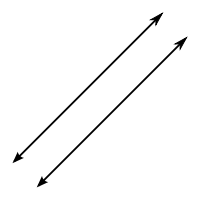
A

(0 , 5)

b)

B

(1 , 0)

c)

C

(5 , 0)

d)

D

(3 , -4)

17.
Name the x-intercept(s)?
a)
(0, 0)
b)
(2, 4)
c)
(0, 0) and (0, 4)
d)
(0, 0) and (4, 0)
18.
What is the vertex of the graph?
a)
(2, 4)
b)
(3, -1)
c)
(0, 8)
d)
(4, 2)
19.
.How many zeros does this parabola have? 
a)
3
b)
2
c)
0
d)
1
20.
Is this point a max or min?
a)
max
b)
min
21.
What's the y-intercept of y = 3x2- 6x + 4
a)
(4,0)
b)
(-4,0)
c)
(0,-4)
d)
(0,4)
22.
What is another name for the x-intercepts of a quadratic?
a)
y-intercept
b)
Zeros
c)
x-axis
d)
They don't have another name
23.
How many solutions does this graph have?
a)
one
b)
two
c)
no solutions
d)
all real numbers
24.

What does the rate of change (slope) represent in this situation?

a)

The sloth runs 1 feet in 3 minutes

b)

The sloth runs 3 feet in 1 minute

c)

The sloth runs fast

d)

The sloth runs 6 feet in 1 minute

25.
What is the range of the graph?
a)
1 ≤ x ≤ 5
b)
1 < x < 5
c)
1 ≤ y ≤ 5
d)
1 < y < 5
26.
What is the domain of the graph?
a)
1≤ x ≤ 4
b)
1 < x < 4
c)
1≤ y ≤ 4
d)
1 < y < 4
27.

What does the rate of change (slope) tell you about this situation?

a)

He ate 1 cookie in 2 minutes.

b)

He ate 4 cookies per minute.

c)

He ate 2 cookies per minute

d)

He ate 1/2 cookies every minute

28.

What does the y-intercept represent?

a)

The number of students who have been dropped off

b)

There are 60 students on the bus before the ride begins

c)

There are no more students on the bus after 12 minutes.

d)

There is no y-intercept

29.

What does the x-intercept represent?

a)

The number of students who have been dropped off after 6 minutes

b)

There are 60 students on the bus before the ride begins

c)

There are no more students on the bus after 12 minutes.

d)

There is no x-intercept

30.

What does the point (1.5, 9) represent?

a)

The sloth runs 1.5 feet in 9 minutes

b)

The sloth runs 9 meters in 1.5 minutes

c)

The sloth runs 1.5 mph

d)

The sloth runs 9 feet in 1.5 minutes

31.

After 1 hour, how tall is the candle?

a)

4 in

b)

5 in

c)

6 in

d)

7 in

32.

How long does it take for the candle to burn out?

a)

10 minutes

b)

60 minutes

c)

100 minutes

33.

How tall is the candle before it starts burning

a)

10 in

b)

10 ft

c)

100 in

d)

100 ft

34.
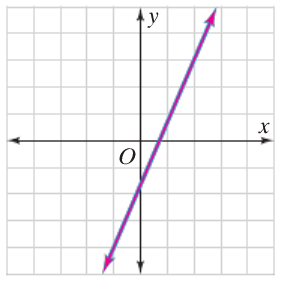
What is the x- intercept of the line?
a)
(0,-2)
b)
(0,-1)
c)
(-1,0)
d)
(-2,0)
35.

What is the y-intercept of the line?

a)

(-1,0)

b)

(1,0)

c)

(0,-2)

d)

(0,-1)

36.
What are the x- and y -intercepts on this graph?
a)
(0,5), (0,5)
b)
(5,0), (5,0)
c)
(5,0), (0,5)
d)
(0,0), (5,0)
37.

Give the y-intercept
a)
(2,0)
b)
(0,2)
c)
(0,-2)
d)
there is no y-intercept
38.
For the function {(0,1), (1,-3), (2,-4), (-4,1)}, write the domain and range.
a)
D: {1, -3, -4,}
R: {0, 1, 2, -4}
b)
D: {-4, 0, 1, 2}
R:{-4, -3, 1}
c)
D: {0, 1, 2, 3, 4}
R:{1, -3, -4}
d)
D: {0, 1, 2, -4}
R: {1, -3, -4, 1}
39.
a)
{1, 2, 3, 4, 5}
b)
{-1, 1, 2, 3}
c)
{1, 2, 3, 5}
d)
[1, 5]
40.
Identify the domain of the following relation:
a)
{-6, 14, 2, 28}
b)
{(-6,14), (0,32), (2,38), (4,44)}
c)
{-6, 0, 2, 4}
d)
{14, 32, 38, 44}
41.
a)
{-2, 3, 7}
b)
[-2, 3]
c)
{1, 2, 2, 3, 4}
d)
[1, 4]
42.
What is the definition of function?
a)
Has inputs and outputs
b)
Every input has only ONE output
c)
Inputs have different outputs every time
d)
x-values and y-values
43.
What is the domain of the graph?
a)
{-7, 5}
b)
{-3, 1}
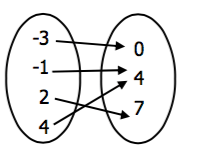
44.
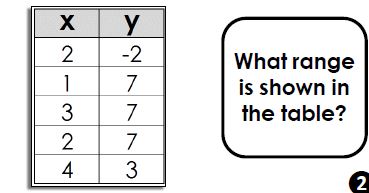
What is the range?
a)
{-3, -1, 2, 4}
b)
{0, 4, 7} 
c)
{0, 4, 4, 7}
d)
{7, 4, 0}
45.
Which graph does NOT pass the vertical line test?
a)
Graph 1
b)
Graph 2
c)
Graph 3
d)
Graph 4
46.
a)
{-7, -5, 2, 3, 7}
b)
{-7, 7}
c)
{1, 2, 3, 4, 5}
d)
{1, 5}
47.
a)
A
b)
B
c)
C
d)
D
48.
What is the Domain of this linear function?
a)
-6 ≤ x ≤ 6
b)
0 ≤ x ≤ 7
c)
2 ≤ x ≤ 7
d)
No Solution
49.
What is the Range of this linear function?
a)
-6 ≤ y ≤ 6
b)
0 ≤ y ≤ 6
c)
No Solution
d)
4 ≤ y ≤ 3
50.
What is the range?
a)
-4 < x ≤ 5
b)
-4 ≤ x < 5
c)
-3 < y < 3
d)
-3 ≤ y ≤ 3
51.
Simplify 
-3(2x - 5) + 4x
a)
-2x - 15
b)
2x -15
c)
2x + 15
d)
-2x + 15
52.
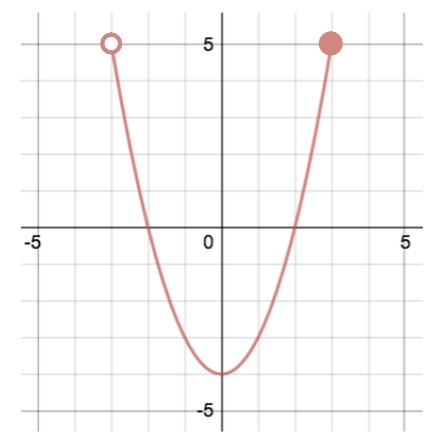
What is the domain?
a)
-3 < y ≤ 3
b)
-4 ≤ y ≤ 5
c)
-4 ≤ x ≤ 5
d)
-3 < x ≤ 3
53.
What is the range of the function?
a)
0≤h≤3
b)
0≤h≤36
c)
h<3
d)
t≤36
54.
Which of the following graphs have a domain of -4<x≤6?
a)
A
b)
B
c)
C
d)
D
55.
a)
Function
b)
Not a Function
56.
a)
Function
b)
Not a Function
57.
What is the y-intercept of the function?
a)
2
b)
3
c)
1
d)
-2
58.
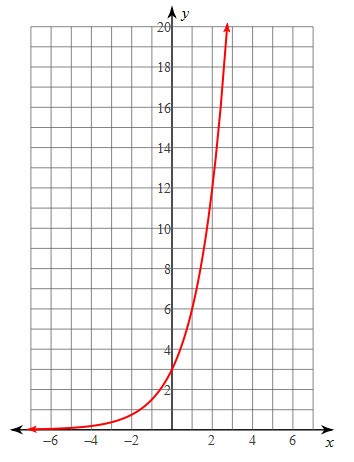
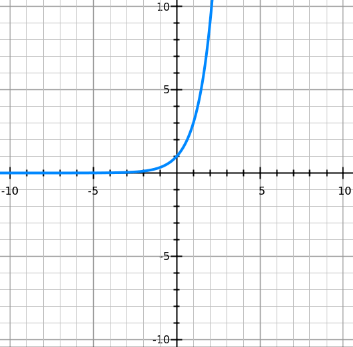
What is the x-intercept of the exponential function? 
a)
(0,1)
b)
(0,0)
c)
There is not one
59.
Where is the horizontal asymptote?
a)
y=3
b)
y=0
c)
x=0
d)
x=3
60.
Where is the horizontal asymptote?
a)
y=0
b)
y=3
c)
y=5
d)
y=4
61.
Where is the horizontal asymptote? 
a)
y = 6
b)
y=0
c)
y=-6
d)
none
62.

What is the domain and range of the function y=2x ?

Use the graph to help!

a)

Domain: All Real Numbers

Range: y>0

b)

Domain: All Real Numbers

Range: y>1

c)

Domain: All Real Numbers

Range: y<0

d)

Domain: x<4

Range: y>0

63.

Classify

f(x)=3(5)x

a)

Exponential Growth

b)

Exponential Decay

64.
Is this point a max or min?
a)
max
b)
min
65.

The image shows how the value of a specific car decreases over time. What was the initial value of the car?

a)

$12,000

b)

$3,000

c)

$75,000

d)

$6,000

66.

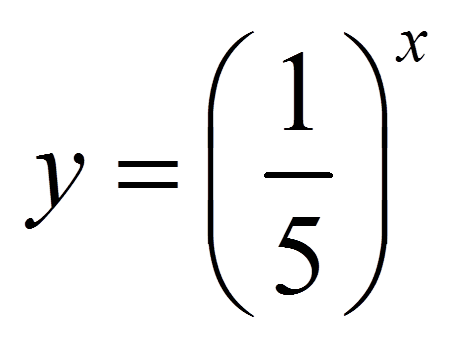
Is this exponential growth or decay?

a)

Growth

b)

Decay

c)

The graph shows decay, then growth

d)

Neither

67.
The highest or lowest point on the graph of a quadratic equation.
a)
minimum
b)
maximum
c)
vertex
d)
axis of symmetry
68.
What is the name of the imaginary line that cuts a parabola in half and goes through the vertex?
a)
the middle
b)
axis of symmetry
c)
minimum
d)
standard form
69.
True or false:
The solution, root, x-intercept, and zero of a problem are all the same thing
a)
True
b)
False, because the solution and root are the same but the x-intercept and zero are different
c)
False, because the x-intercept and root are the same but the zero and solution are different
d)
False, they are all different
70.
What is the zero?
a)
(2,0)
b)
(0,2)
c)
(0,0)
d)
None of the above
71.
Which point is an example of a y-intercept?
a)
(3,4)
b)
(-2,8)
c)
(0,4)
d)
(5,0)
72.
What is the equation for axis of symmetry?
a)
y=3
b)
x=3
c)
x=5
d)
x=1
73.
What are the green dots called?
a)
axis of symmetry
b)
vertex
c)
parabola
d)
roots or x-intercepts
74.
Does this parabola have a minimum or maximum and what is its value?
a)
minimum: 2
b)
maximum: 2
c)
minimum: 5
d)
maximum: 5
75.
Is this exponential growth or decay?
a)
Growth
b)
Decay
76.
What is the slope?
a)
1
b)
-1
c)
1/2
d)
2
77.
(x - 5)(x + 1)
a)
x2 - 4x - 5
b)
x2 + 6x - 5
c)
x2 - 5x - 4
d)
x2 - 4x - 4
78.
(x - 4)(x - 6)
a)
x2 -10x + 24
b)
x2 - 10x - 24
c)
x2 +10x + 24
d)
x2 + 10x - 24
79.
(6y - 5)(9y + 4)
a)
27y2 - 21y - 20
b)
36y2 - 21y - 20
c)
45y2 - 21y - 20
d)
54y2 - 21y - 20
80.
(2s + 9)(3s - 4)
a)
3s2 + 19s - 36
b)
4s2 + 19s - 36
c)
5s2 + 19s - 36
d)
6s2 + 19s - 36
81.
Mult (3x + 1)(2x + 5)
a)
6x2 + 17 + 5
b)
6x + 17x + 5
c)
6x2 + 17x + 5
d)
6x2 + 17 + 5x
82.
(2h + 8)(9h + 4)
a)
12h8 + 18h + 32
b)
18h2 + 80h + 32
c)
16h2 + 60h + 38
d)
24h2 + h + 32
83.
Find the product:
(3x – 4)(2x + 5) 
a)
6x2 + 23x + 20
b)
5x2 + 7x - 20
c)
5x2 + 23x + 5
d)
6x2 + 7x - 20
84.

(g - 2)(4g - 6)

a)

4g2 - 14b + 12

b)

4g2 - 2b - 6

c)

4g2 - 14b + 6

d)

4g2 - 14b - 12

85.

(z - 7)(2z - 4)

a)

2z2 - 18z + 28

b)

2z2 - 10z - 28

c)

2z2 + 10z + 28

d)

4z + 10z2 - 28

86.
(3x + 2)(2x + 4)
a)
6x2 + 16x + 8
b)
5x2 +11x + 6
c)
5x2 + 16x + 6
d)
6x2 + 11x + 8
87.
(3x + 1)(3x - 1)
a)
9x2 + 1
b)
9x2 - 1
c)
9x2 + 6x - 1
d)
9x2 - 6x - 1
88.
(2x - 1)(x + 2)
a)
2x2 + 3x - 2
b)
2x2 - 5x - 2
c)
2x2 + 3x + 2
d)
2x2 - 5x + 2
89.
Solve for y:
y + 2 = 3x
a)
y = 2x + 3
b)
y= 3x +2
c)
y= 3x -2
d)
y= 6x
90.
5x + y = -10
a)
y = 5x + 10
b)
y = -5x - 10
91.
3x + y = 12
a)
y = -3x +12
b)
x = y + 4
c)
x = y + 12
d)
y = 3x -12
92.
y - 4x = 8
a)
y = 4x + 8
b)
y = -8x + 4
93.
Solve for y:
2x + 2y = 6
a)
y = - x + 3
b)
y = x + 3
c)
y = 2x +6
d)
y = - 2x + 6
94.
2x + 2y = 18
a)
y = -x + 9
b)
y = x - 9
95.
8x + 4y= 16
a)
y = -8x + 16
b)
y = 2x -4
c)
y = -2x + 4
d)
y = -8x + 12
96.
10x - 2y = 6
a)
y = 5x - 3
b)
y = -5x + 3
c)
-2y = -10x + 6
d)
y = 1/5x - 1/3
97.
x + 2y = 10
a)
y = -2x + 5
b)
y = -1/2x + 5
c)
y = -1/2x - 5
d)
2y = -x + 10
98.
Solve for y:
4x + 2y = 6
a)
y = - 2x + 3
b)
y = 2x + 3
c)
y = 2x + 6
d)
y = - 2x + 6
99.
Solve for y:
y - 4x = 8
a)
y = 4x + 8
b)
y = -8x + 4
100.
Solve for y:
x + 2y = 10
a)
y = -2x + 5
b)
y = -1/2x + 5
c)
y = -1/2x - 5
d)
2y = -x + 10
101.
Solve for y:
3y -9 = 18x
a)
y = 6x - 3
b)
y = 2x - 3
c)
y = -6x + 3
d)
y = 6x + 3
102.
Solve for y: 
x + y = 4
a)
y = x + 4
b)
y = -x + 4
c)
x = -y + 4
d)
x = y - 4
103.
Solve for y:
x - y + 4 = 0
a)
y = x + 4
b)
y = 4x + 1
104.
Solve for y:
2(3x - y) = -8
a)
y = 6x + 8
b)
y = 3x + 4
c)
y = -6x - 8
d)
y = -3x - 4
105.
Solve for y:
2y + 2 = 3x
a)
y = 3x - 1
b)
y= 3/2x +2
c)
y= 3/2x -1
d)
y= 6x
106.
Solve for y:
x - y + 3 = 0
a)
y = x + 3
b)
y = 3x + 1
c)
y = -x - 3
d)
y = x + (-3)
107.
If you study more your grades will improve
a)
Causation
b)
correlation without causation
108.
Aging of the brain tends to be delayed in people with a college education
a)
Causation
b)
correlation without causation
109.
Car owners tend to live longer than people who do not own a car
a)
Causation
b)
Correlation without causation
110.
Seat belts reduce the risk of a severe injury in a car accident.
a)
Causation
b)
Association without causation
111.

Is it Correlation or Causation?


The amount of cars a salesperson sells and how much commission she makes.

a)

Correlation

b)

Causation

112.

Is it Correlation or Causation?


The age of a child and their shoe size.

a)

Correlation

b)

Causation

113.

Is it Correlation or Causation?


The number of miles (at a constant speed on a level road) and the amount of gas used.

a)

Correlation

b)

Causation

114.

Which example shows CAUSATION?

a)

High social media usage and reduced grades.

b)

Car ran out of gas and being stranded on the side of the road.

115.

Which example shows CORRELATION?

a)

I stepped on a spider and it died.

b)

Music lessons and brain development.

116.

Which example shows CAUSATION?

a)

It started raining and the baseball game was delayed.

b)

Eating more butter and increased divorce rates.

117.

Which example shows CORRELATION?

a)

I put water in the freezer and now I have ice.

b)

Temperature and the amount of people at the beach.

118.
Which example shows CAUSATION?
a)
Being happy and being a better student.
b)
An insect ate poison and it died.
119.

Is it Correlation or Causation?

The weight of a watermelon and the price of the watermelon.

a)

Correlation

b)

Causation

120.
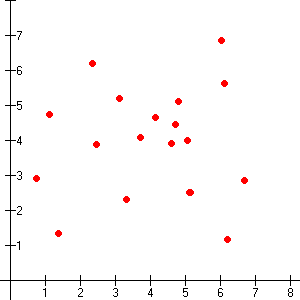
What is the type of correlation?
a)
Negative 
b)
no association
c)
positive 
121.
What type of correlation does this graph have?
a)
positive 
b)
negative
c)
none
d)
all of the above
122.
What type of correlation does this graph show?
a)
Positive
b)
negative
c)
none
d)
all of the above
123.
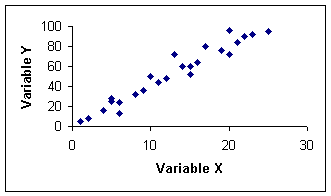
What type of correlation does this scatter plot show?
a)
positive linear association
b)
negative linear association
c)
no association
d)
nonlinear association
124.
What type of correlation does this scatter plot represent?
a)
positive linear association
b)
negative linear association
c)
no association
d)
nonlinear association
125.
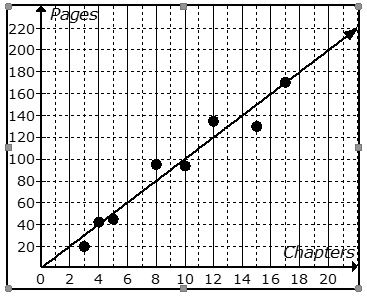
The scatter plot shows the relationship between the number of chapters and the total number of pages for several books.  Use the trend line to predict how many chapters would be in a book with 140 pages. 
a)
12 chapters
b)
19 chapters
c)
14 chapters
d)
21 chapters
126.
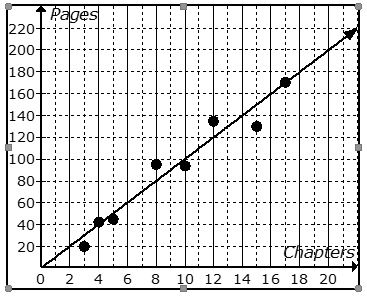
The scatter plot shows the relationship between the number of chapters and the total number of pages for several books. Use the trend line to predict how many pages would be in a book with 6 chapters. 
a)
100 pages
b)
170 pages
c)
60 pages
d)
20 pages
127.
About how many male math teachers were there in 2006?
a)
15
b)
30
c)
35
d)
45
128.
What type of association does this graph have?
a)
positive
b)
negative
c)
none
d)
all of the above
129.
What type of association does this graph have?
a)
positive 
b)
negative
c)
none
d)
all of the above
130.
What type of correlation (association)?
The outside temperature and the amount of layers you wear. 
a)
Positive correlation
b)
Negative correlation
c)
No correlation
d)
All of the above
131.
The number of siblings you have and your weight. 
a)
Positive correlation
b)
Negative correlation
c)
No correlation
d)
All of the above
132.
Based on the graph, if Joe earned $400, how many hours did he work?
a)
25 hours
b)
35 hours
c)
45 hours
d)
15 hours
133.
What type of correlation does this graph have?
a)
positive
b)
negative
c)
none
d)
all of the above
134.
As x increases, y decreases.
a)
no correlation
b)
negative correlation
c)
correlation coefficient
d)
positive correlation
135.
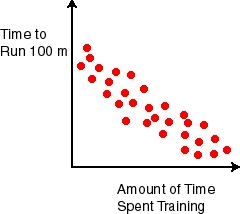
What is the type of correlation?
a)
Negative 
b)
no association
c)
positive 
136.
more than
a)
<
b)
>
c)
d)
137.
Fewer Than
a)
<
b)
>
c)
d)
138.
At Least
a)
<
b)
>
c)
d)
139.
At Most
a)
<
b)
>
c)
d)
140.
less than or equal to
a)
<
b)
>
c)
d)
141.
Less Than
a)
<
b)
>
c)
d)
142.
Not Below
a)
<
b)
>
c)
d)
143.
No More Than
a)
<
b)
>
c)
d)
144.
Below
a)
<
b)
>
c)
d)
145.
No Fewer Than
a)
<
b)
>
c)
d)
146.
maximum
a)
<
b)
>
c)
d)
147.
Not Exceeding
a)
<
b)
>
c)
d)
148.
Above
a)
<
b)
>
c)
d)
149.
greater than or equal to
a)
<
b)
>
c)
d)
150.
is no less than
a)
<
b)
>
c)
d)
151.
minimum
a)
<
b)
>
c)
d)
152.
Not Above
a)
<
b)
>
c)
d)
153.
Greater than
a)
<
b)
>
c)
d)
154.
Exceeding
a)
<
b)
>
c)
d)
155.

Is this an open or closed dot?

g ﹥-1

a)

open

b)

closed

156.

Is this an open or closed dot?

d ≥ 3

a)

open

b)

closed

157.

Is this an open or closed dot?

y ≤ 7

a)

open

b)

closed

158.

Is this an open or closed dot?

c ≥ 15

a)

open

b)

closed

159.

Is this an open or closed dot?

m ≥ 4

a)

open

b)

closed

160.

Is this an open or closed dot?

x ≤ -21

a)

open

b)

closed

161.

Is this an open or closed dot?

c ≥ -1

a)

open

b)

closed

162.

Which is true?

a)

9 < 2

b)

6 > 8

c)

5 < 7

163.

Which is true?

a)

8 > 10

b)

4 < 7

c)

3 > 9

164.

Which shows greater than?

a)

<

b)

>

165.

Which shows greater than or equal to?

a)

<

b)

>

c)

>

d)

<

166.

Which is NOT true?

a)

5 > 3

b)

2 > 7

c)

11 < 13

167.

Which makes it true: x > 8?

a)

9

b)

8

c)

7

d)

6

168.

Which makes it true: x > 13?

a)

0

b)

12

c)

8

d)

13

169.

Which shows the speed limit is 35 mph?

a)

x < 35

b)

x < 35

c)

x > 35

d)

x > 35

170.

Which shows "no one over the age of 60?"

a)

x > 60

b)

x < 60

c)

x > 60

d)

x < 60

171.
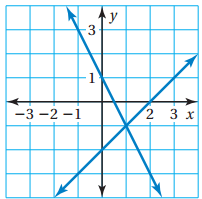
What is the solution? 
a)
1
b)
-2
c)
(1, 2)
d)
(1, -1)
172.
What is the solution?
(Hint:  Both lines are graphed over each other)
a)
One Solution
b)
No solution
c)
Infinitely Many Solutions
173.
Steffen graphed two lines in order to find the solution to a given system of equations.
What is the solution?
a)
(-3,-8)
b)
(-8,-3)
c)
(3,-8)
d)
(8,3)
174.
Parallel Lines never intersect because...
a)
they have the same slopes. 
b)
they have the same y-intercept.
c)
they have different slopes.
d)
they have different y-intercepts. 
175.
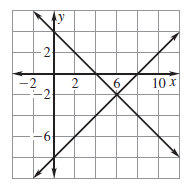
What is the solution to the system?
a)
(3, -1)
b)
(2, -6)
c)
No Solution 
d)
(6, -2)
176.
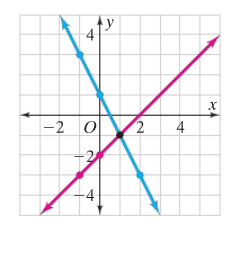
What is the solution?
a)
(1, -1)
b)
(-1, 1)
c)
(0, -2)
d)
(0, 1)
177.
How many solutions does this system of equations have?
a)
One Solution
b)
No solution
c)
Infinitely Many Solutions
d)
Two Solutions
178.
What is the solution?
a)
(6, 3)
b)
(3, 6)
c)
(-6, 3)
d)
No solution
179.
The solution is:
a)
(4, 3)
b)
(3, 4)
c)
(-4, 3)
d)
No solution
180.
a)
(2, -2)
b)
(2, 2)
c)
(-2, 2)
d)
(-2, -2)
181.
a)
(2, -1)
b)
(-1, 2)
c)
(-2, 1)
d)
(1, -2)
182.
a)
(2.5, 1)
b)
(1, 2.5)
c)
(-2.5, -1)
d)
(-1, -2.5)
183.
a)
(2, 0)
b)
(-2, 0)
c)
(0, 2)
d)
(0, -2)
184.
a)
(-3, 0)
b)
(0, 3)
c)
(3, 0)
d)
(0, -3)
185.
a)
(-1, -2)
b)
(-1, 2)
c)
(1, 2)
d)
(1, -2)
186.
a)
(-1, -4)
b)
(-1, -3)
c)
(-3, -1)
d)
(-4, -1)
187.
a)
Infinitely Many Solutions
b)
No Solution
188.
a)
Infinitely Many Solutions
b)
No Solution
189.
What is the solution?
a)
No solution
b)
(0, 2)
c)
(0, -4)
d)
(3, -3)
190.
What is the solution?
a)
(6, 3)
b)
(3, 6)
c)
(-6, 3)
d)
No solution
191.
These two lines intersect at _____.
a)
(4, -2)
b)
(4, 2)
c)
(-2, 4) 
d)
No solution
192.
Buzz graphed two lines in order to find the solution to a given system of equations.
What is the solution?
a)
(-1, 4)
b)
(1, -4)
c)
(-4, 1)
d)
(4, -1)
193.
The solution (x, y) to a system of equations is the point where they...? 
a)
Run off the graph
b)
Don't touch
c)
Intersect
d)
Exist
194.
Steffen graphed two lines in order to find the solution to a given system of equations.
What is the solution?
a)
(-3,-8)
b)
(-8,-3)
c)
(3,-8)
d)
(8,3)
195.
The solution is:
a)
(4, 3)
b)
(3, 4)
c)
(-4, 3)
d)
No solution
196.
What is the solution?
a)
(6, 3)
b)
(3, 6)
c)
(-6, 3)
d)
No solution
197.
What is the solution?
a)
(1, -1)
b)
(-1, 1)
c)
(0, -2)
d)
(0, 1)
198.
What is the solution to the system?
a)
(3, -1)
b)
(2, -6)
c)
No Solution 
d)
(6, -2)
199.
What is the solution to this system?
a)
(1, -1)
b)
(-1, 1)
c)
(0, -2)
d)
(2, 0)
200.
When you graph the exact same equation twice,
a)
you will have no solution. 
b)
you will have one solution.
c)
you will have infinite solutions. 
d)
you will graph a giraffe.