
 Worksheets
Weeks 1 and 2 Kinetic Energy
Total questions: 30
Worksheet time: 30mins
Energy is the ability to do ______
Work
Force
Change
Momentum

The formula for calculating the kinetic energy in an object is shown above. KE will get bigger if
There is more than 1 correct answer
the object has a greater mass
the object is moving quickly
the object is moving slowly
the object has a smaller mass
Which is the best example that something has kinetic energy?
a car parked on a steep hill
a tennis ball rolling across the court
a picture hanging on the wall
a piece of coal before it's burned
If these are all moving at the same speed, the vehicle with the greatest KE would be
(Think about their sizes)


If these are all moving at the same speed, the vehicle with the greatest KE would be
(Think about their sizes)
If these are all moving at the same speed, the vehicle with the greatest KE would be
(Think about their sizes)

A scientist is measuring how mass and velocity affect kinetic energy. If the scientist increases the mass of his object by 2, the kinetic energy will increase by:
4
2
1/2
8
A scientist is measuring how mass and velocity affect kinetic energy. If the scientist increases the mass of his object by 4, the kinetic energy will increase by:
2
1/2
4
16
A scientist is measuring how mass and velocity affect kinetic energy. If the scientist increases the velocity of his object by 2, the kinetic energy will increase by:
4
8
1/2
2
A scientist is measuring how mass and velocity affect kinetic energy. If the scientist increases the velocity of his object by 5, the kinetic energy will increase by:
1/5
5
10
25
What is the relationship between mass and kinetic energy?
As the mass increases, the kinetic energy decreases.
As the mass increases, the kinetic energy doubles.
As mass increases, the kinetic energy increases by the same amount.
What is the relationship between velocity and kinetic energy?
As velocity increases, the kinetic energy increases by the velocity squared.
As velocity increases, the kinetic energy does not change.
As velocity increases, the kinetic energy increases by the same amount.



Walking on the warm sand with your bare feet.
conduction
convection
radiation
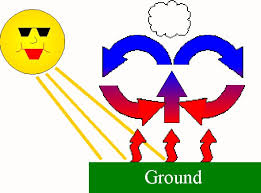


When thermal energy is added to a substance, the substance's particles move:
More rapidly farther away from each other.
More rapidly closer together.
More slowly farther away from each other.
More slowly closer together.
When thermal energy is removed from a substance, the substance's particles move:
More rapidly closer together.
More rapidly farther apart.
Less rapidly closer together.
Less rapidly farther apart.

The shape of the following graph demonstrates the relationship between:
Mass and kinetic energy
Velocity and kinetic energy
Mass and velocity
Potential and kinetic energy.

The shape of the following graph demonstrates the relationship between:
Mass and velocity
Potential and kinetic energy
Velocity and kinetic energy
Mass and kinetic energy

