Wayground logo

Free Printable Worksheets

Font size

S
M
L
XL
Worksheets

3rd Nine Weeks Review

Total questions: 34

Worksheet time: 18mins

Name
Class
Date
1.

What two people created Communism?

a)

Karl Marx and Friedrich Engels

b)

The Bolsheviks Brothers

c)

Joseph Stalin and Gulag Mckinsey

d)

Ben Shapiro and Elon Musk

2.
A government where a God or divine ones are given the status of supreme ruler?
(Examples: The Vatican, Egyptians, etc..)
a)
Democracy
b)
Dictatorship
c)
Monarchy
d)
Theocracy
3.

In the Mayan, Inca, and Aztec culture, human or animal sacrifice along with festivals were done to appease the gods.

a)

true

b)

false

4.
An economic system in which businesses compete against one another free of government control
a)
Socialism
b)
Free Enterprise
c)
Product
d)
Marketing
5.
Which choice best describes the Roman Republic?
a)
a dictatorship run by an emper
b)
a government run by elected officials
c)
a monarchy run by a king or queen.
d)
an oligarchy run by society's richest members.
6.

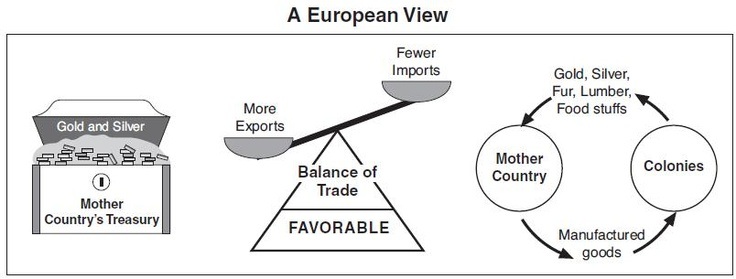
What is the key idea of Mercantilism?

a)

A country's power depends on its religious conversion

b)

A country's power depends on its colonies

c)

A country's power depends on its wealth

d)

A country's power depends on its military

7.

James Watt

a)

Coal Powered Engine

b)

Steam Engine

8.
Which best describes the working conditions of most immigrants during the Industrial Revolution? 
a)
Most immigrants worked long hours in low-paying industrial jobs
b)
Most immigrants worked as farmers in rural areas
c)
Most immigrants worked as bookkeepers or other professional jobs
d)
Most immigrants worked as tailors or other skilled jobs
9.
Which best describes the living conditions of most immigrants during the Industrial Revolution? 
a)
Most immigrants lived in rural areas with few other people around
b)
Most immigrants lived in cities in extremely crowded buildings
c)
Most immigrants lived in single-family homes
d)
Most immigrants lived in homeless shelters year-round
10.
Wal-Mart is opening in the small town of Vado, New Mexico. This is creating over 400 jobs in the area. Population is quickly increasing. This is an example of...
a)
Urbanization
b)
Inflation
c)
Urban Center
d)
Influence
11.
legal principle that requires that people who are arrested be brought to court to show why they should be held; writ inquiring into the lawful of retaining a person who is imprisoned or detained in custody
a)
habeas corpus
b)
popular sovereignty
c)
dark horse
d)
blockade
12.
A territory that is under the political control of another country
a)
Town 
b)
Colony 
c)
Democracy 
d)
Monarchy 
13.

What was one of the concerns that fueled the creation of the English Bill of Rights?

a)

That the Dutch would invade England.

b)

That the U.S. did not have its freedom from England.

c)

That King James had fled England during the Glorious Revolution.

d)

That the crown retained too much power.

14.

The English Bill of Rights

a)

Created separation of powers

b)

Enhanced the democratic election

c)

Limited the powers of the king and queen

d)

All the answers are correct

15.

What is mercantilism?

a)

A system where a mother countries gains money and power from natural resources that come from its colonies.

b)

where colonies trade gold and silver with each other.

c)

Wars that start over money.

d)

Plantation colonies trading slaves for money.

16.
Who designed the first efficient steam engine?
a)
James Hargreaves
b)
John Kay
c)
Richard Arkwright
d)
James Watt
17.

To sail or travel all the way around is __________

a)

detour

b)

compass

c)

circus

d)

circumnavigate

18.

Adam Smith's idea of ‘the invisible hand’ in refer to the tendency of free markets to regulate themselves by means of competition, supply and demand, and self-interest.

a)

True

b)

False

19.

What is the definition of socialism?

a)

The idea that the means of production, distribution and exchange should be owned and regulated by the community as a whole.

b)

The idea that all free men over the age of 21 of good standing should have the right to vote.

c)

The idea that women should have equal political, social and economic rights as men.

d)

The idea that a country’s trade and industry should be controlled by private owners for profit, rather than by the state.

20.
Economic motives for imperialism include _________.
a)
a desire to spread Christianity
b)
a need for military bases around the world
c)
a need for raw materials to be used in factories
d)
a desire to gain glory
21.
Imperialism is __________.
a)
when a powerful nation uses its resources to help a weaker nation
b)
when a weaker nation invites a powerful nation to help it industrialize
c)
when a powerful nation takes control of the economy and government of a weaker nation
d)
when weak nations join together to fight a strong nation
22.
The major goal of these, was to remove foreign influences in their countries.
a)
French and Industrial Revolution
b)
Sepoy Mutiny and Boxer Rebellion
c)
Mercantilism and Nationalism
d)
Humanism and Militarism
23.
The system in which the government owns and controls the means of production, such as mines and factories, is called?
a)
fascism
b)
socialism
c)
capitalism
d)
mercantilism
24.
Which of the following groups would most likely benefit from the socialist ideas of Karl Marx?
a)
Entrepreneurs
b)
Factory Workers
c)
Large Business Corporations
d)
Factory Managers
25.

Laissez-faire is associated with the phrase "hands-off" because it means...

a)

opposed to governments' regulation of business

b)

government should control major industries

c)

government should be eliminated

d)

nations should avoid international trade

26.

What does Grievance mean?

a)

A complaint

b)

An agreement

c)

A battle

d)

A compromise

27.

Many European leaders ruled as absolute monarchs from the 1400s into the 1700s. The situation in England was different because the powers of the monarchy were limited. This type of monarch is called...

a)

Figurehead

b)

Absolute

c)

Limited/Constitutional

d)

Dictatorship

28.

What type of power is held by an absolute monarch?

a)

Power over all aspects of a nation's social, political, economic, and cultural identity.

b)

Extensive power, but limited by a constitution and the nobility

c)

Only the power the nation is willing to give, often just enough to act as a government figurehead.

29.

TRUE Or FALSE: According to John Locke, the people have the right to revolt if the government doesn't follow the rules of the social contract.

a)

True

b)

False

30.
A time period, mostly in the 1700's, where philosophers and thinkers thought science and reason could improve all humanity.
a)
Enlightenment
b)
Great Awakening
c)
American Revolution
d)
French Revolution
31.
This thinker wrote "The Social Contract." He believed that government was a contract between the ruler & the people.
a)
Rousseau
b)
Locke
c)
Montesquieu
d)
Voltaire
32.
The Enlightenment thinkers observed technological advancements due to the adoption of modern methods that relied on logical though, experimentation, and careful observation.  These advancements occurred during the 
a)
Scientific Revolution
b)
Age of Reason
c)
American Revolution
d)
French Revolution
33.
A bigger country affecting development of a smaller country w/o any formal authority

Changing someone/ something

a)
Spheres of Influence
b)
Settlement Colonies
c)
Nationalism
d)
Imperialism 
34.
An application of Darwin's scientific theories of natural selection and the survival of the fittest to the struggle between nations and races; used in the late 1800s to justify imperialism and racism. 
a)
Communism
b)
Social Dawinism
c)
Socialism
d)
Social Theory