
 Worksheets
1.3 Forces Newton's Laws
Total questions: 30
Worksheet time: 24mins
Name
Class
Date
1.
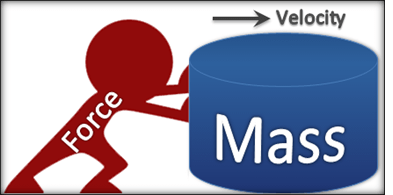
a)
1st
b)
2nd
c)
3rd
2.
What law is best described by inertia?
a)
1st
b)
2nd
c)
3rd
3.

a)
1st
b)
2nd
c)
3rd
4.

a)
1st
b)
2nd
c)
3rd
5.

a)
1st
b)
2nd
c)
3rd
6.

A magician pulls a tablecloth out from under dishes and glasses on a table without disturbing them.
a)
Newton's 1st Law
b)
Newton's 2nd Law
c)
Newton's 3rd Law
7.

Pushing a child on a swing is easier than pushing an adult on the same swing, because the adult has more mass and requires more force to accelerate.
a)
Newton's 1st Law
b)
Newton's 2nd Law
c)
Newton's 3rd Law
8.

What is the tendency of an object to resist a change in motion?
a)
coffee
b)
motion
c)
inertia
d)
gravity
9.
According to Newton’s second law of motion, force is equal to mass times ______________________.
a)
inertia
b)
weight
c)
acceleration
d)
direction
10.

"For every action, there is an equal and opposite reaction."
a)
Newton's 1st Law
b)
Newton's 2nd Law
c)
Newton's 3rd Law
d)
Newton's 4th Law
11.

Force = Mass x Acceleration
a)
Newton's 1st Law
b)
Newton's 2nd Law
c)
Newton's 3rd Law
d)
Newton's 4th Law
12.

"An object in motion (or at rest) will to stay in motion (or at rest) until an outside force acts upon it."
a)
Newton's 1st Law
b)
Newton's 2nd Law
c)
Newton's 3rd Law
d)
Newton's 4th Law
13.
What is the net force needed to accelerate a 66 kg skier at 2 m/sec2?
a)
132 N
b)
33 N
c)
58.8 N
d)
.030 N
14.
A net force of 250 N is applied to an object that accelerates at a rate of 5 m/sec2. What is the mass of the object?
a)
50 kg
b)
245 kg
c)
.02 kg
d)
25.5 kg
15.
What are the units of Force?
a)
kg*m/sec
b)
kg*m
c)
N
d)
N*sec
16.
What is the unit for mass?
a)
m/sec
b)
kg/sec
c)
kg
d)
kg m/sec
17.
What is the unit for acceleration?
a)
m/s
b)
m/s2
c)
kg*m/s
d)
N
18.
An automobile you are riding in suddenly stops, but you continue to go forward.
a)
Newton's
1st
Law of Motion
1st
Law of Motion
b)
Newton's
2nd
Law of Motion
2nd
Law of Motion
c)
Newton's
3rd
Law of Motion
3rd
Law of Motion
19.
When the force on a car is doubled, the acceleration is doubled.
a)
Newton's
1st
Law of Motion
1st
Law of Motion
b)
Newton's
2nd
Law of Motion
2nd
Law of Motion
c)
Newton's
3rd
Law of Motion
3rd
Law of Motion
20.
A stationary bumper car is set in motion by the outside force of another bumper car colliding with it.
a)
Newton's
1st
Law of Motion
1st
Law of Motion
b)
Newton's
2nd
Law of Motion
2nd
Law of Motion
c)
Newton's
3rd
Law of Motion
3rd
Law of Motion
21.
A skater pushes another skater forward, but the one pushing moves backwards.
a)
Newton's
1st
Law of Motion
1st
Law of Motion
b)
Newton's
2nd
Law of Motion
2nd
Law of Motion
c)
Newton's
3rd
Law of Motion
3rd
Law of Motion
22.
The harder you hit a baseball, the faster it accelerates.
a)
Newton's
1st
Law of Motion
1st
Law of Motion
b)
Newton's
2nd
Law of Motion
2nd
Law of Motion
c)
Newton's
3rd
Law of Motion
3rd
Law of Motion
23.
You push against a wall and the wall is pushing back on you.
a)
Newton's
1st
Law of Motion
1st
Law of Motion
b)
Newton's
2nd
Law of Motion
2nd
Law of Motion
c)
Newton's
3rd
Law of Motion
3rd
Law of Motion
24.
The acceleration of a 4 kg bowling ball will be greater than the acceleration of a 6 kg bowling ball if the same force is applied to both.
a)
Newton's
1st
Law of Motion
1st
Law of Motion
b)
Newton's
2nd
Law of Motion
2nd
Law of Motion
c)
Newton's
3rd
Law of Motion
3rd
Law of Motion
25.
As the fuel in a rocket ignites, the force of gas expansion and explosion pushes out the back of the rocket and pushes the rocket forward.
a)
Newton's
1st
Law of Motion
1st
Law of Motion
b)
Newton's
2nd
Law of Motion
2nd
Law of Motion
c)
Newton's
3rd
Law of Motion
3rd
Law of Motion
26.
You slide towards the window when a car makes a sudden turn.
a)
Newton's
1st
Law of Motion
1st
Law of Motion
b)
Newton's
2nd
Law of Motion
2nd
Law of Motion
c)
Newton's
3rd
Law of Motion
3rd
Law of Motion
27.
A swimmer pushes water back with her arms but her body moves forward.
a)
Newton's
1st
Law of Motion
1st
Law of Motion
b)
Newton's
2nd
Law of Motion
2nd
Law of Motion
c)
Newton's
3rd
Law of Motion
3rd
Law of Motion
28.
Determine the accelerations that result when a 12-N net force is applied to a 3-kg object.
a)
3 m/s
b)
4 ft/s
c)
13 m/s
d)
4 m/s
29.
Mass is a measure of an object's inertia. Objects with greater mass have a greater inertia; objects with less mass have less inertia.
a)
true
b)
false
30.
If a force of 50 Newton's was applied to an object with a mass of 500 grams, what will the object's acceleration be?
a)
10 m/s^2
b)
.1 m/s^2
c)
100 m/s^2
d)
1 m/s^2
100 %

