wayground logo

Free Printable Worksheets

Font size

S
M
L
XL
Worksheets

Fireworks Unit Test Review

Total questions: 82

Worksheet time: 5hrs 26mins
Name
Class
Date
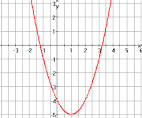
1.
What is the equation of this graph?
a)
f(x) = (x -5)2 + 1
b)
f(x) = (x - 1)2 - 5
c)
f(x) = (x + 1)2 - 5
d)
f(x) = (x + 5)2 +1
2.
If given the equation
y = 3(x + 5)2 - 4,
what is the vertex of the parabola?
a)
(5, -4)
b)
(-5, -4)
c)
(-15, -4)
d)
(15, -4)
3.

Find the Vertex: y= x2 +6x + 4

a)

(-3, -5)

b)

(5, 3)

c)

(3, 5)

d)

(5, -3)

4.

Convert to Vertex Form

4a2+16a-39 = y

a)

4(a2+16a)-39

b)

4(a+2)2-55

c)

(a+2)2-16

d)

4(a+2)2-43

5.

Convert to Vertex Form

7a2-14a-58 = y

a)

7(a-1)2-65

b)

7a2+14a-65

c)

7(a+1)2-59

d)

7(a-1)2+58

6.
Factor: x2 – 5x – 24
a)
(x - 5)(x + 19)
b)
(x - 8)(x + 3)
c)
(x - 3)(x + 8)
d)
(x - 19)(x + 5)
7.
Factor: x2 + 2x – 3
a)
(x - 2)(x + 1)
b)
(x + 1)(x - 3)
c)
(x + 2)(x - 1)
d)
(x - 1)(x + 3)
8.
Factor
n2-13n+40
a)
(n-5)(n-8)
b)
(n+5)(n-8)
c)
(n-5)(n+8)
d)
(n+6)(n+1)
9.
Factor
k2 -2k - 24
a)
(k+4)(k-6)
b)
(k+4)(k+6)
c)
(k+6)(k-1)
d)
(k-4)(k+6)
10.
Factor
n2 + 16n + 63
a)
(n-7)(n+4)
b)
(n+7)(n-9)
c)
(n-3)(n-10)
d)
(n+7)(n+9)
11.
Factor
3a2 + 4a + 1
a)
(7a-10)(a-8)
b)
Not factorable
c)
(3a+1)(a+1)
d)
(3a-1)(a-1)
12.
Factor
3v2 - 4v - 7
a)
(3v-7)(v+1)
b)
3(v-7)(v-1)
c)
(3v+1)(v-9)
d)
(3v+1)(v-10)
13.
Factor:
 2x² - 3x - 2
a)
(2x - 2)(x + 1)
b)
(2x + 1)(x - 2)
c)
(2x - 1)(x - 2)
d)
(2x - 1) (x - 1)
14.
factor:x- 25
a)
( x + 5 ) ( x - 5 ) 
b)
( x - 5 ) ( x - 5 ) 
c)
( x + 5 ) ( x + 5 ) 
d)
Prime
15.
Solve by factoring:  2x2+ 7x + 6 = 0
a)
x= 3/2 and x = 2
b)
x = -3/2 and x = -2
c)
x = 6 and x = 7
d)
x = -6 and x = -7
16.
Solve by factoring:3x2 + 5x + 2 = 0  
a)
x = -2/3 and x = -1
b)
x = -3/2 and x = -1
c)
x = 2/3 and x = 1
d)
x = 2/3 and x = -1
17.
Solve by factoring: x2 + 3x - 18 = 0
a)
x = -3 and x = 6
b)
x = 3 and x = -6
c)
x = -9 and x = 2
d)
x = 9 and x = -2
18.
The discriminant is
a)
aX2  + bX  +  c
b)
b - 4ac
c)
b2 - 4ac
d)
b2 + 4ac
19.
What does the discriminant tell us?
a)
The maximum or minimum
b)
The y-intercept
c)
The number and type of solutions
d)
The axis of symmetry
20.
a)
A
b)
B
c)
C
d)
D
21.
a)
A
b)
B
c)
C
d)
D
22.
a)
A
b)
B
c)
C
d)
D
23.
a)
A
b)
B
c)
C
d)
D
24.

What is the quadratic equation that represents the problem given?

a)

63 = L(2W + 11)

b)

63 = L(2L + 11)

c)

63 = W(2W + 11)

d)

63 = W(2W - 11)

25.
The profit from selling local ballet tickets depends on the ticket price.  Using past receipts, we find that the profit can be modeled by the function p= -15x2 +600x +60 , where x is the price of each ticket.  What is the maximum profit you can make from selling tickets?
a)
$6060
b)
$20
c)
$600
d)
$10,250
26.
Evaluate the expression using the quotient rule.
a)
214 z13
b)
22/z7
c)
214/ z7
d)
2z7
27.
a)
2a2b6
b)
1/2a2b6
c)
b6/2a2
d)
2b6/a2
28.
(34x5y6z-7)0
a)
34x5y6 / z7
b)
34x5y6 / x-7
c)
0
d)
1
29.
a)
x8
b)
x-5
c)
x-8
d)
x-13
30.
Convert
 f(x) = ⅔ (x + 3)2 
to standard form.
a)
f(x) = ⅔x2 + 4x + 6
b)
f(x) = ⅔x2 + 6x + 9
c)
f(x) = ⅔x2 + 6
d)
f(x) = ⅔x2 + 2x + 4
31.
Convert
 f(x) = 3(x - 5)2 - 1 
to standard form.
a)
f(x) = 3x2 -30x + 74
b)
f(x) = 3x2 -10x + 24
c)
f(x) = 3x2 -30x + 24
d)
f(x) = 3x2 -30x + 75
32.
Convert
 f(x) = 2(x - 2)2 +9
to standard form.
a)
f(x) = 2x2 + 8x + 9
b)
f(x) = 2x2 - 8x - 4
c)
f(x) = 2x2 - 8x + 17
d)
f(x) = 2x2 - 8x + 8
33.
Solve by elimination:
4x+9y=28
-4x-y=-28
a)
(-7,0)
b)
(6,0)
c)
(-6,0)
d)
(7,0)
34.
Solve by elimination:
7x-9y=29

7x+2y=-15
a)
(-4,-1)
b)
(-1.-4)
c)
(-1,4)
d)
(-1,6)
35.
Solve by elimination
4x-6y= -6
-2x-12y= -12
a)
(0,1) 
b)
(1,0)
c)
(1,1)
d)
(2,1)
36.

Match the system to the graph.

a)

y ≥ -x - 1 and y < x + 4

b)

y < -x - 1 and y ≥ x + 4

c)

y > -x - 1 and y ≥ x + 4

d)

y > -x - 1 and y ≥ x - 4

37.

Match

a)

y < x−2

y < 3

b)

y > -x+2

y > 3

c)

y < -x+2

y < 3

d)

y < -x+2

y > 3

38.

Which point is a solution?

a)

(0, -6)

b)

(-3, 5)

c)

(1, 5)

d)

(-4, 3)

39.
Factor
49a2- 36
a)
(7a - 6)(7a - 6)
b)
(7a - 6)(7a + 6)
c)
(7a - 18)(7a + 18)
d)
(7a - 18)(7a - 18)
40.
Factor completely: 
3x2 + 18x +15
Hint: Factor GCF first.
a)
3(x2 + 6x + 5)
b)
(x + 5)(x + 1)
c)
3(x + 5)(x + 1)
d)
Not Factorable 
41.
What would you do first to factor 
f2+3f -28   most efficiently?
a)
take f2 times -28
b)
find paired factors of +3f
c)
Find paired factors of -28 that add up to equal +3
d)
replace the 3f with 7f-4f
42.
Factor by grouping:
3x3-x2+6x-2
a)
(x2+2)(3x+1)
b)
 (x2+2)(3x-1)
c)
(3x3+6x)(x2-2)
d)
none of the aboe
43.
Factor by grouping:
5n³-10n²+3n-6
a)
(5n²+3)(n-2)
b)
(5n²-3)(n-2)
c)
(5n³+3)(n-2)
d)
10n(n²-6)
44.
What is the first question you ask yourself when factoring a polynomial? 
a)
How many terms does it have? 
b)
Is there a GCF? 
c)
What strategy should I use? 
d)
Why do I have to learn this?!?!?!
45.
x+ 81
a)
Prime
b)
( x - 9 ) ( x + 9 ) 
c)
( x + 9 ) ( x + 9 ) 
d)
( x - 9 ) ( x - 9 ) 
46.
Fully Factor the Following
16x2+25
a)
Prime
b)
(4x-5)(4x+5)
c)
(4x+5)(4x-5)
d)
(4x+5)2
47.
How do you solve:
(2x5)(6x4)
a)
MULTIPLY coefficients
MULTIPLY exponents
b)
DIVIDE coefficients
SUBTRACT exponents
c)
Combine like terms
d)
MULTIPLY coefficients
ADD exponents
48.
Fill in the missing numbers.
a)
top:-4, bottom:3
b)
top:3, bottom:5
c)
top:4, bottom:3
d)
top:16, bottom:16
49.
Fill in the missing numbers.
a)
left: -2, bottom:-15
b)
left:2, bottom:15
c)
left:15, bottom:15
d)
left:2, bottom:13
50.
Fill in the missing numbers. (order doesn't matter)
a)
1,3 
b)
-1, -3
c)
3, 12
d)
-1, 12
51.

Identify the graph represented by the following system of inequalities.

2x - y > 4

4x + 2y < 6

a)
b)
c)
52.

Solve the system of inequalities by graphing.

a)
b)
c)
d)
53.

Solve the system of inequalities by graphing.

a)
b)
c)
d)
54.
a)

y > -x2 - 6x + 6

b)

y ≥ x2 - 6x + 6

c)

y > x2 - 6x + 6

d)

y ≤ x2 - 6x + 6

55.
a)

y < x² - 4x + 4

b)

y > x² - 4x + 4

c)

y ≥ x² - 4x + 4

d)

y ≤ x² - 4x + 4

56.
a)

y > x² + 5

b)

y < x² + 2

c)

y > x² + 2

d)

y ≥ x² + 2

57.
a)

y < x² + 2

b)

y ≤ x² + 2

c)

y ≥ x2 + 2

d)

y < x² - 2

58.
a)

y < x2 + 4x + 4

b)

y < -x2 + 4x + 4

c)

y > x2 + 4x + 4

d)

y < x2 + 4x + 6

59.

How many solutions does this system of equations have?

a)

one solution

b)

two solutions

c)

no solutions

d)

All of the above

60.

How many solutions does this system of equations have?

a)

one solution

b)

two solutions

c)

three solutions

d)

no solutions

61.

How many solutions does this system of equations have?

a)

one solution

b)

two solutions

c)

no solution

d)

infinitely many solutions

62.

Graph the following equations:

y=2x-1

y=x2

a)
b)
c)
d)
63.
Which system of inequalities is shown?
a)
y< -2(x+4)2+2
y>½(x+2)2-2
b)
y< -2(x+4)2+2
y≥½(x+2)2-2
c)
y> -2(x+4)2+2
y<½(x+2)2-2
d)
y> -2(x+4)2+2
y≤½(x+2)2-2
64.
Match the graph to its inequality.
a)
y > -x2 - 5x - 6
b)
y > x2 + x - 6
c)
y < x2 - 5x + 6
d)
y < -x2 - x + 6
65.
Which transformation transforms the graph of
f(x) = x2 to the graph of
g(x) = (x + 4)2?
a)
a vertical translation 4 units up
b)
a vertical translation 4 units down
c)
a horizontal translation 4 units to the left
d)
a horizontal translation 4 units to the right
66.
How did we transform from f(x) =x
to
g(x) = -3x2
a)
reflection in x-axis and vertical shift down
b)
reflection x-axis and vertical stretch
c)
horizontal stretch
d)
reflection x-axis and vertical compression
67.
In the equation f(x)=5(x+3)2-10 what does the 5 do?
a)
Vertical stretch by 5
b)
Horizontal compress by 5
c)
Reflect
d)
Move up 5
68.
Does the graph of this equation widen or narrow from the parent function?
g(x) = 3/4 (x - 5)2 + 12
a)
widen
b)
neither
c)
narrow
69.
What is the horizontal shift of this equation?
f(x) = 3/4 (x - 5)2 + 12
a)
up 5
b)
down 5
c)
left 5
d)
right 5
70.
What is the vertical shift of this equation?
g(x) = 3/4 (x - 5)2 + 12
a)
up 12
b)
down 12
c)
left 12
d)
right 12
71.
Which quadratic function is represented by the graph?
a)
y = 2(x - 4)2 + 5
b)
y = 2(x + 4)2 + 5
c)
y = -2(x - 4)2 + 5
d)
y = -2(x + 4)2 + 5
72.
What is this formula?
a)
This is the speed of light formula.
b)
This is the quadratic formula.
c)
This is the zero product property.
d)
This is scary.
73.

If the blue graph is

f(x) = x2

then the red must be...

a)

g(x) = x2 - 5

b)

g(x) = x2 + 5

c)

g(x) = (x - 5)2

d)

g(x) = (x + 5)2

74.

John drew the graph of y= 4(x + 3)2 -1. How should he transform that graph to produce the graph of y= 4(x - 6)2 + 5? Select all that apply.

a)

Reflection over the x-axis

b)

Left 9

c)

Right 9

d)

Down 6

e)

Up 6

75.
What transformations have occurred? 
a)
Right 2 and up 2
b)
Left 2 and up 2
c)
Right 2 and down 2
d)
Left 2 and down 2
76.
Pablo throws a ball with a path of
h = -5(t - 2)2.
Maria throws a ball with a path of
h = -5(t - 2)2 + 10.
Which description is reasonable for the difference in the two equations?
a)
Maria throws the ball 10 times harder than Pablo does.
b)
Maria starts her ball at a height 10 feet higher than Pablo does.
c)
Pablo throws the ball 10 times harder than Maria does.
d)
Pablo starts his ball at a height 10 feet higher than Maria does.
77.
What transformations occurred to get f(x), the red graph, to become g(x), the blue graph?
a)
horizontal shift down and vertical shift left
b)
horizontal shift left and vertical shift down
c)
horizontal shift right and vertical shift up
d)
horizontal shift up and vertical shift right
78.

The height of a water balloon that is launched into the air is given by h(t) = -5x2+20x+25. When will the balloon explode on the ground?

a)

5 seconds

b)

1 second

c)

2 seconds

d)

3 seconds

79.

The height of a water balloon that is launched into the air is given by h(t) = -5t2 + 40t + 2. From what height was the balloon released?

a)

2 meters

b)

5 meters

c)

40 meters

d)

20 meters

80.
If a toy rocket is launched vertically upward from ground level with an initial velocity of 128 feet per second, then its height h after t seconds is given by the equation
h(t) = -16t2 +128t  
When will the object reach its maximum height?
a)
4 ft
b)
0 seconds
c)
0 ft
d)
4 seconds
81.
Rafael drops a ball from a third-story window. This equation represents the approximate height, h, in meters, of the ball above the ground after it falls for t seconds.
h = -5t2 + 45 
When is the ball at ground level?
a)
only at t = 0 seconds 
b)
only at t = 3 seconds
c)
only at t = 9 seconds
d)
at both t = 0 seconds and t = 3 seconds
82.

Fireworks are fired from the roof of a 100-foot building. The equation h = -16t2 +84t + 100 models the height, h, of the fireworks at any given time, t. How high do the fireworks get?

a)

2.625

b)

6.25

c)

100

d)

200

e)

210.25