
Font size
 Worksheets
Virus Review
Total questions: 25
Worksheet time: 28mins
A virus that needs the cell to generate (reverse transcribe) its genetic material from RNA to DNA
retrovirus
bacteriophage
viroids
prions
filovirus
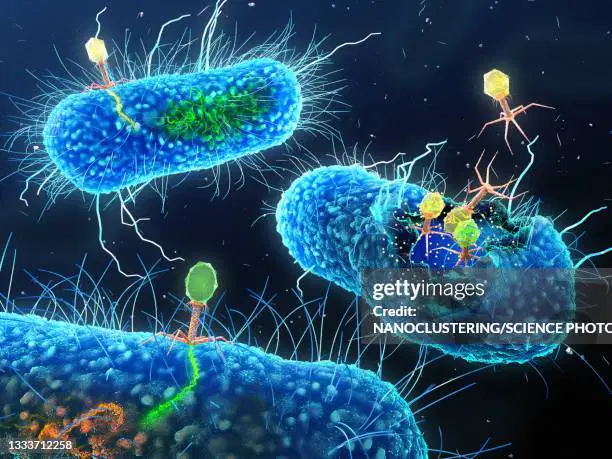
A virus that infects bacteria
retrovirus
bacteriophage
viroids
prions
filovirus
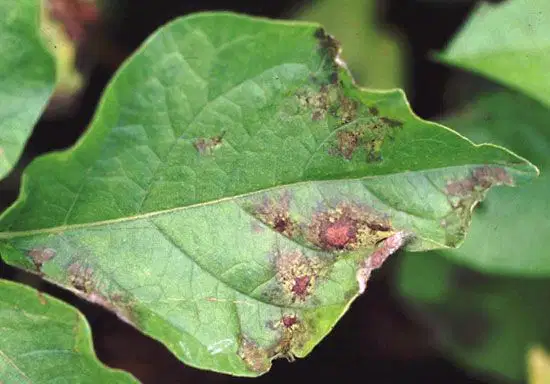
Tightly folded RNA strands that infect plants
retrovirus
bacteriophage
viroids
prions
filovirus
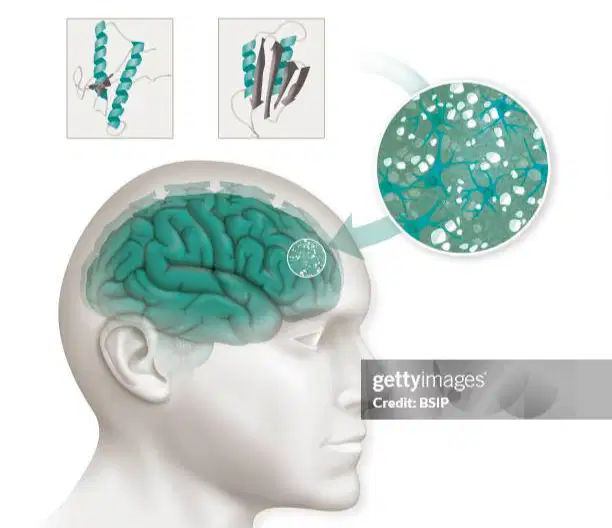
Misfolded proteins that can destroy nervous tissue (e.g. Mad Cow Disease ~ Bovine Spongiform Encephelopathy)
retrovirus
bacteriophage
viroids
prions
filovirus
Disrupts the metabolism of a bacterium, but not of viruses (because viruses do not use energy!)
vaccine
antibiotic
Used to safely stimulate the body's immune response to help prevent a viral disease.
vaccine
antibiotic
HIV causes AIDS when it attacks the T-cells of your
cardiovascular
immune
nervous
digestive
Which of the following could be treated with antibiotics?
common cold (rhinovirus/adenovirus)
influenza virus
human papillomavirus (HPV)
bacterial meningitis
Which of these is NOT a way to classify/group Viruses?
Shape
Nucleic Acid
Host
Function
Color
Even though Viruses are considered _________, we study them in Biology because they affect (and infect!) ____________ things.
nonliving, living
living, nonliving
animal-like, plant-like
bacteria, fungus-like
When comparing a Virus to a cell, select the only structure that they have in common.
Organelles
Nucleic Acids (DNA/RNA)
Cytoskeleton
Cell wall
From the list, select what Viruses CANNOT do.
Replicate using a host
Take over a cell
Use energy
Mutate
From the list, select what Viruses CANNOT do.
Attach to a cell
Destroy cells
Reproduce on their own
Infect plants
Which disease has been completely eradicated (erased) from the entire human population thanks to preventative vaccination efforts?
AIDS
Smallpox
Measles
Mumps
COVID-19
True or False:
Viruses can be treated with antibiotics.
False
True
A student draws a model of the Rhinovirus which is responsible for causing the common cold. The student states that the capsid has a similar function to the nuclear membrane found in animal cells.
According to the student's illustration, which viral structure would be responsible for this function?
Which of the following is a characteristic of viruses that distinguishes them from bacteria?
Viruses require a host cell to replicate
Viruses have a nucleus
Viruses can reproduce independently
Viruses have a cell wall
What is the primary function of a vaccine in relation to viral infections?
To kill the virus directly
To stimulate the immune system to recognize and fight the virus
To provide nutrients to the body
To act as an antibiotic
Which of the following is a common method by which viruses are transmitted between hosts?
Inhalation of clean air
Exposure to ultraviolet light
Consumption of contaminated food
Direct contact with infected individuals
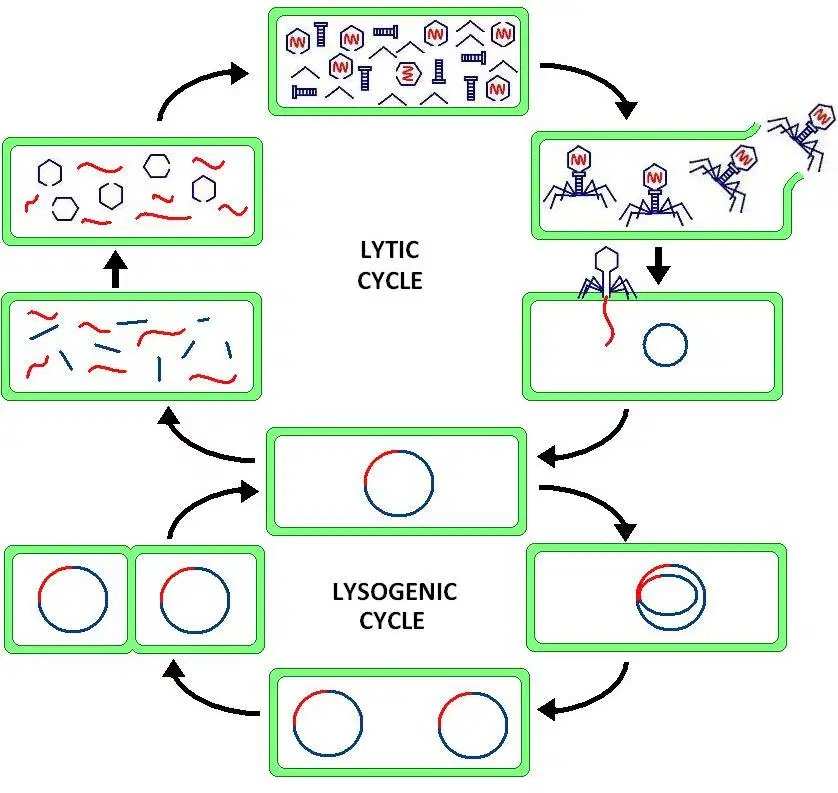
Place the steps of the Lytic Cycle in the correct sequential order
Attachment
Penetration
Replication
(Synthesis)
Assembly
Release
(Lysis)
Which type of nucleic acid is NOT typically found in viruses?
Double-stranded RNA
Single-stranded DNA
Triple-stranded DNA
Double-stranded DNA
A person infected with the human immunodeficiency virus (HIV) may not have any symptoms for a period of time. During this period the virus affects the body by doing which of the following?
The virus produces toxins that weaken immune cells and prevent them from reproducing.
The virus damages immune cells while using their machinery to produce copies of itself.
The virus uses nutrients meant for immune cells to fuel its own cellular respiration.
The virus changes the identity of the nucleotides of immune cells to prevent the immune system from functioning normally.
Viruses are not organisms, instead what are they ?
pathogens
diseases
bacteria
Infectious Particles
A table comparing the characteristics of four samples is shown. Which sample most likely contains viruses?
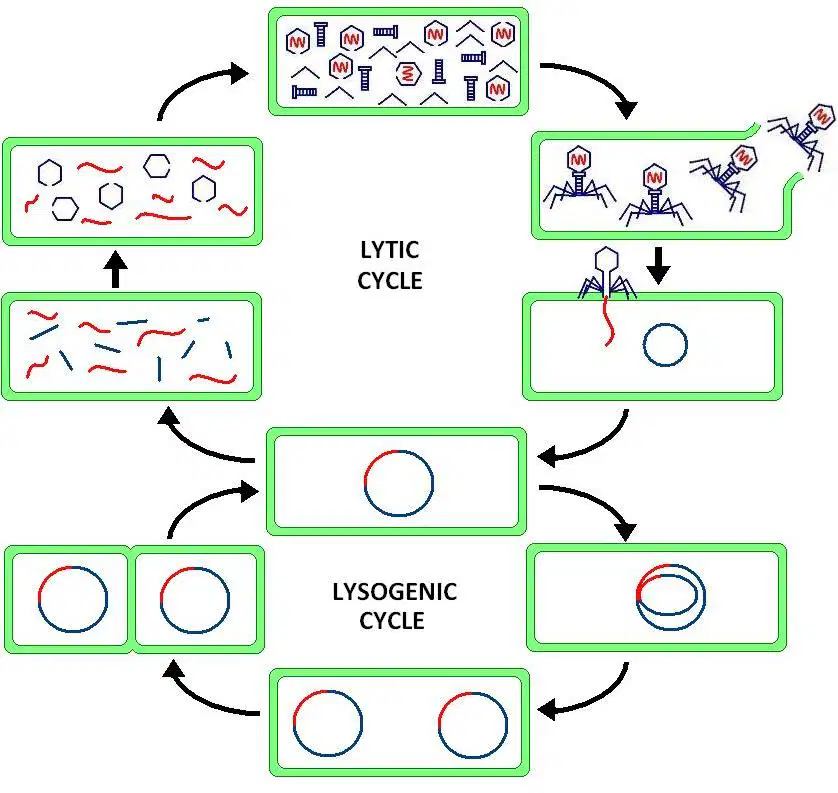
How does the lysogenic cycle differ from the lytic cycle?
The lysogenic cycle involves integration and dormancy before synthesis, while the lytic cycle results in almost immediate viral replication and quicker cell destruction.

