wayground logo

Free Printable Worksheets

NEW

Font size

S
M
L
XL
Worksheets

7th grade Science Review

Total questions: 32

Worksheet time: 56mins

Name
Class
Date
1.
What gas is released by plants from the process of photosynthesis?
a)
air
b)
carbon dioxide
c)
oxygen
d)
hydrogen
2.
What are the products  (what is made)  of photosynthesis?
a)
Glucose and oxygen
b)
sunlight energy
c)
carbon dioxide and water
d)
chlorophyll 
3.
Which gas is removed from the atmosphere during photosynthesis?
a)
hydrogen
b)
oxygen
c)
nitrogen
d)
carbon dioxide
4.

A chemical equation is shown below


6CO2 + 6 H2O --> C6H12O6 + 6O2


Which observation can be made after analyzing the equation?

a)

There are no atoms present

b)

The number of atoms of each element is increased as the reaction occurs

c)

The number of atoms of each element is decreased as the reaction occurs

d)

The number of atoms of each element in the reactants equals the number of atoms of each element in the products

5.
A substance that contains only one type of atom is a(n)
a)
compound
b)
element
c)
heterogeneous mixture
d)
homogeneous mixture
6.
Two or more elements chemically combined:
a)
an atom
b)
a compound
c)
a mixture
d)
a pure substance
7.
Which of the following represents an element?
a)
H2O
b)
H2
c)
NaCl
d)
CaCO3
8.
Salt has a chemical formula of NaCl.  Salt is a...
a)
Compound
b)
Element
c)
Mixture
d)
None of the Above
9.
How many elements are represented in the compound?
Na2CO3
a)
1
b)
2
c)
3
d)
4
10.
All cells need energy to function.  Which cell organelle is responsible for producing energy in the cell?
a)
chloroplasts
b)
mitochondria
c)
nucleus
d)
vacuoles
11.
In what part of the plant cell does the process of photosynthesis take place?
a)
nucleus
b)
mitochondria
c)
chloroplasts
d)
vacuoles
12.
Cells with a nucleus and membrane-bound organelles are called ____________________.
a)
prokaryotes
b)
eukaryotes
c)
bacteria
d)
protists
13.
A gel-like fluid in which many different organelles are found.
a)
cell membrane
b)
nucleus
c)
organelle
d)
cytoplasm
14.
What is the definition of  Selective Permeability?
a)
The movement of materials across the cell membrane that requires NO ENERGY from the cell.
b)
The movement of materials through (or across) the cell membrane
c)
The ability of the cell membrane to allow some things to pass through while preventing other things from passing through.
d)
The movement of molecules from an area of high concentration (where the molecules are more crowded together) to a area of low concentration (where molecules are more spread apart)
15.
Cells of organism must replicate for ?
a)
growth
b)
repair of damaged cells
c)
replacement of dying cells.
d)
All of the above
16.
Asexual reproduction will result in
a)
Identical offspring to the parent
b)
Twins
c)
Meiosis
d)
Non-identical offspring to the parent
17.
Meiosis makes sperm and egg cells. In humans, sperm and egg cells each have _____ chromosomes. Therefore a fertilized human egg cell (sperm and egg cell combined) would create a cell with _____ chromosomes.
a)
23, 46
b)
46, 23
c)
2, 4
d)
50, 100
18.
the passing of genetic traits from parent to offspring.
a)
heredity
b)
trait
c)
gene
d)
allele
19.
T - tall and t = short
In the punnett square below, what belongs in the missing square
a)
tt
b)
Tt
c)
Bb
d)
TT
20.

Which statement reflects a way in which asexual reproduction is beneficial?

a)

it results in genetic variation

b)

it requires a lot of time and energy

c)

organisms can reproduce without a mate

21.

Which statement describes why genetic variation is beneficial to populations of organisms?

a)

individuals look different from one another

b)

only one parent is needed to produce offspring

c)

populations of teh organism increase more rapidly

d)

species can better survive environmental changes

22.
What is an advantage of sexual reproduction?
a)
Allows genetic variation
b)
Only needs one parent
c)
Happens very quickly
d)
Offspring are exact copies of parent
23.
What can you do to help slow down global warming?
a)
Decrease your carbon footprint by eating locally produced food 
b)
 recycle and reuse plastics
c)
use solar or wind power instead of fossil fuels
d)
all of the above
24.
Nonliving things found in an ecosystem.
a)
factories
b)
factor trees
c)
biotic factors
d)
abiotic factors
25.
Which of the following is NOT a consumer
a)
grass
b)
dog
c)
shark
d)
fish
26.
An organism that gets energy from breaking down dead organisms, non-living material or waste
a)
producer
b)
consumer
c)
decomposer
d)
autotroph
27.
What is the role of decomposers in a food chain?
a)
Use sunlight to make food
b)
Eat other organisms to gain energy
c)
Make the food for the whole food chain
d)
Break down dead organisms and add nutrients to the soil
28.
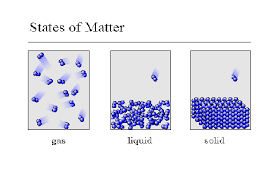
A gas
a)
has a definite shape but no definite volume
b)
has a definite volume but no definite shape
c)
has fast-moving particles
29.
What do the following properties describe? : shiny, ductile, good conductor, high melting point
a)
metal
b)
nonmetal
c)
metalloid
30.
Which of the following describes a mixture?
a)
Chemically combined
b)
Very difficult and often times impossible to seperate
c)
a chemical reaction takes place
d)
Not chemically combined
31.

Mutations are...

a)

Changes in the sequence of DNA

b)

Broken chromosomes

c)

Bad genes

32.

Mutations can be...

a)

Harmful

b)

Beneficial

c)

Neutral

d)

All of the Above