
 Worksheets
Biology Chapter 12 DNA & RNA Review
Total questions: 26
Worksheet time: 26mins
Name
Class
Date
1.
Which sequence of DNA bases would pair with this partial strand
ATG TGA CAG
ATG TGA CAG
a)
ATG TGA CAG
b)
TAC ACT GTC
c)
GTA AGT GAC
d)
CAT TCA CTG
2.
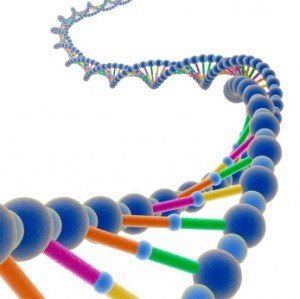
Which of the following best describes a DNA molecule?
a)
double helix
b)
contains ribose
c)
made of amino acids
d)
contains Uracil
3.
Which of the following units are repeatedly joined together to form a strand of DNA?
a)
amino acids
b)
nucleotides
c)
fatty acids
d)
polysaccharides
4.

In a molecule of double-stranded DNA, the amount of Adenine present is always equal to the amount of
a)
cytosine
b)
guanine
c)
thymine
d)
uracil
5.
Adenine bonds with ______________.
a)
Guanine
b)
Thymine
c)
Cytosine
d)
Adenine
6.
Guanine bonds with ______________.
a)
Adenine
b)
Guanine
c)
Cytosine
d)
Thymine
7.
Why is DNA important?
a)
it is very small and very complicated
b)
it's in everything
c)
it serves as the blueprint for traits of all living things
d)
because we eat it every day for energy
8.
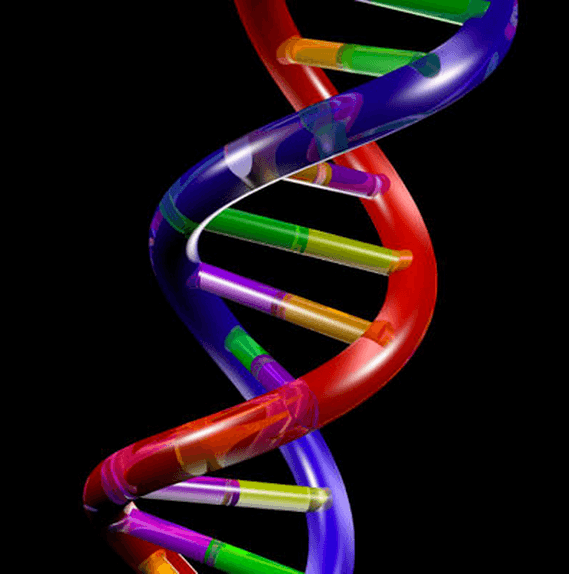
What determines the code, or information, of a DNA molecule?
a)
the shape (structure) of the nitrogen bases
b)
the order (sequence) of the nitrogen bases
c)
the color of the nitrogen bases
d)
the frequency (number) of nitrogen bases
9.
Which 2 molecules form the sides (backbone) of the DNA ladder?
a)
deoxyribose sugar and adenine
b)
deoxyribose sugar and a hydrogen bond
c)
deoxyribose sugar and the nucleus
d)
deoxyribose sugar and phosphate
10.
Which organelle is DNA usually found in?
a)
cell membrane
b)
vacuole
c)
chloroplast
d)
nucleus
11.
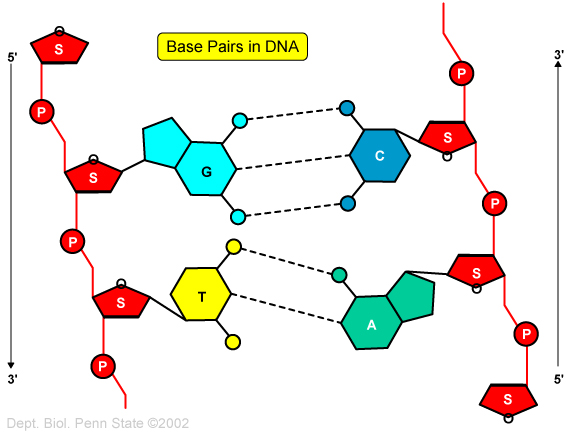
Nitrogenous bases are joined by which type of bond?
a)
polar bonds
b)
ionic bonds
c)
covalent bonds
d)
hydrogen bonds
12.

Replicate the following strand of DNA:
AATCATGGA
AATCATGGA
a)
AATCATGGA
b)
TTAGTACCT
c)
UUAGUACCU
d)
GGATAUCUA
13.
The enzyme that unzips the DNA to prepare for replication
a)
helicase
b)
replicase
c)
polymerase
d)
synthase
14.
DNA replication results in two DNA molecules,
a)
each one with two original strands
b)
each one with two new strands
c)
each one with one new strand and one original strand
d)
one with two new strands and the other with two original strands
15.
A process in which DNA has the unique ability to make an exact copy of itself.
a)
Replication
b)
Translation
c)
Transcription
16.
What is the correct complimentary strand for the following DNA?ATCGAG
a)
TACGAG
b)
ATCGAG
c)
TAGCTG
d)
TAGCTC
17.
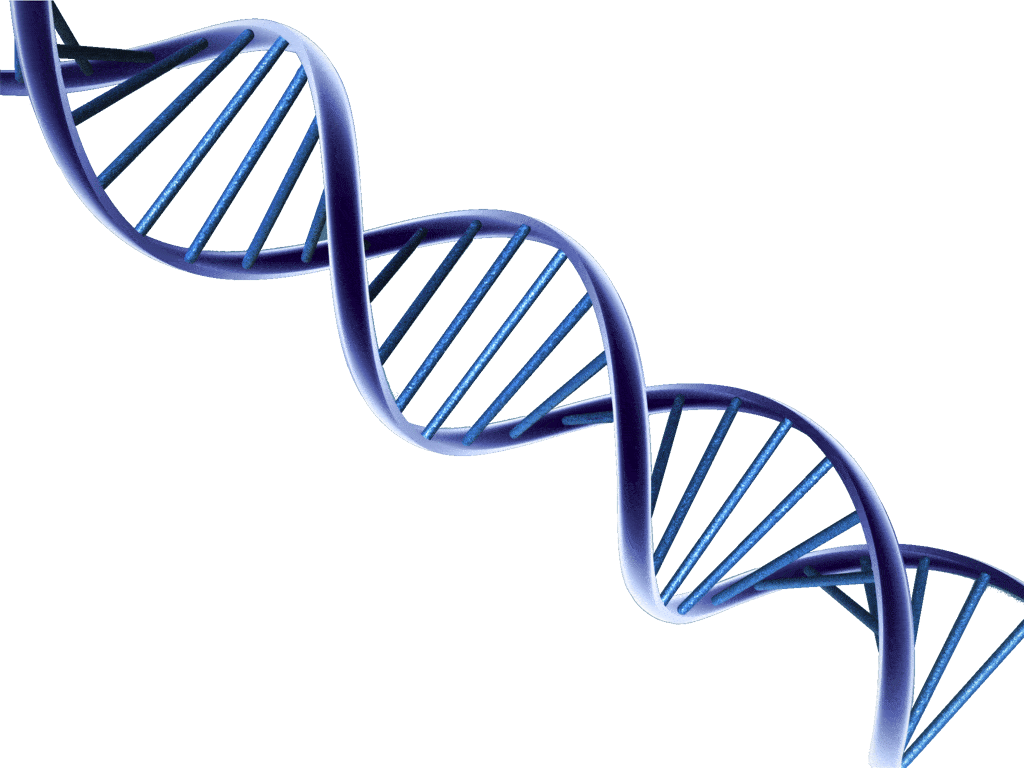
The drawing shows the structure of what molecule?
a)
A DNA molecule
b)
A lipid molecule
c)
A carbohydrate molecule
d)
A protein molecule
18.
In what phase of the cell cycle does DNA replication take place?
a)
G1
b)
S
c)
G2
d)
M
19.
What are the three components of a nucleotide?
a)
sugar, hydrogen, nitrogen base
b)
sugar, oxygen, nitrogen base
c)
sugar, phosphate, nitrogen base
d)
sugar, phosphate, protein
20.
This scientist(s) developed a process to extract the "transforming principle" and directly observe R bacteria transforming into S bacteria
a)
Avery
b)
Griffith
c)
Franklin & Wilkins
d)
Watson & Crick
21.
This scientist(s) conducted experiments that involved injecting mice with S bacteria and R bacteria.
a)
Avery
b)
Griffith
c)
Watson & Crick
d)
Hershey & Chase
22.
The "transforming principle" that Griffith discovered was later determined to be _________
a)
Proteins
b)
Carbs
c)
DNA
d)
Mitochondria
23.
The scientist(s) who settled the debate about whether it was proteins or DNA that was the genetic material of the cell
a)
Avery
b)
Hershey & Chase
c)
Watson & Crick
d)
Griffith
24.
Discovered that A=T and C=G
a)
Griffith
b)
Chargraff
c)
Hershey & Chase
d)
Watson & Crick
25.
How did Hershey and Chase's use of radiolabeled bacteriophages to study the genetic material validate Avery's research?
a)
It demonstrated conclusively that the genetic material is not protein.
b)
It showed that bacteriophages are not digested by bacterial enzymes.
c)
It proved that bacteria will take up phosphorus, but not sulfur.
d)
It confirmed that bacteriophages cannot inject radiolabeled DNA.
26.
Which of the following units are repeatedly joined together to form a strand of DNA?
a)
amino acids
b)
nucleotides
c)
fatty acids
d)
polysaccharides
100 %

