wayground logo

Free Printable Worksheets

NEW

Font size

S
M
L
XL
Worksheets

Ecology Intro

Total questions: 30

Worksheet time: 5hrs 36mins
Name
Class
Date
1.
A __________ includes all living and non-living things in an environment. 
a)
population
b)
niche
c)
abitotic
d)
ecosystem
2.
_______ are consumers that eat only meat.
a)
Herbivore
b)
Omnivore
c)
Carnivore
3.
________ are consumers that eat plants and meat.
a)
Herbivore
b)
Omnivore
c)
Carnivore
4.
Which describes a decomposer?
a)
an organism that eats only plants
b)
an organism that makes its own food
c)
an organism that breaks down dead matter
d)
an organism that recieves energy from the sun
5.
What are interconnected food chains called?
a)
consumers
b)
predators
c)
food web
6.
Examples of how humans negatively affect local ecosystems are
a)
Building dams, deforestation (cutting down trees), adding point sources to nearby streams to allow for run-off, building roads and structures, and salting roads.
b)
Creating laws to prohibit fishing from local streams.
c)
Planting trees and other plants to attract native species.
d)
Removing non-native species from the environment.
7.
All food chains_____________________
a)
have more consumers than producers
b)
produce and use same amount of energy
c)
begin with a producer
d)
are unhealthy 
8.
How does energy enter an ecosystem? 
a)
sunlight
b)
soil 
c)
animals 
d)
invasive species 
9.
A lion, captures and eats other animals. What is he considered? 
a)
prey
b)
predator
c)
producer 
d)
healthy 
10.
A relationship between two organisms in which one organism benefits and the other is unharmed...
a)
Mutualism 
b)
Competition
c)
Parasitsm 
d)
Commensalism 
11.
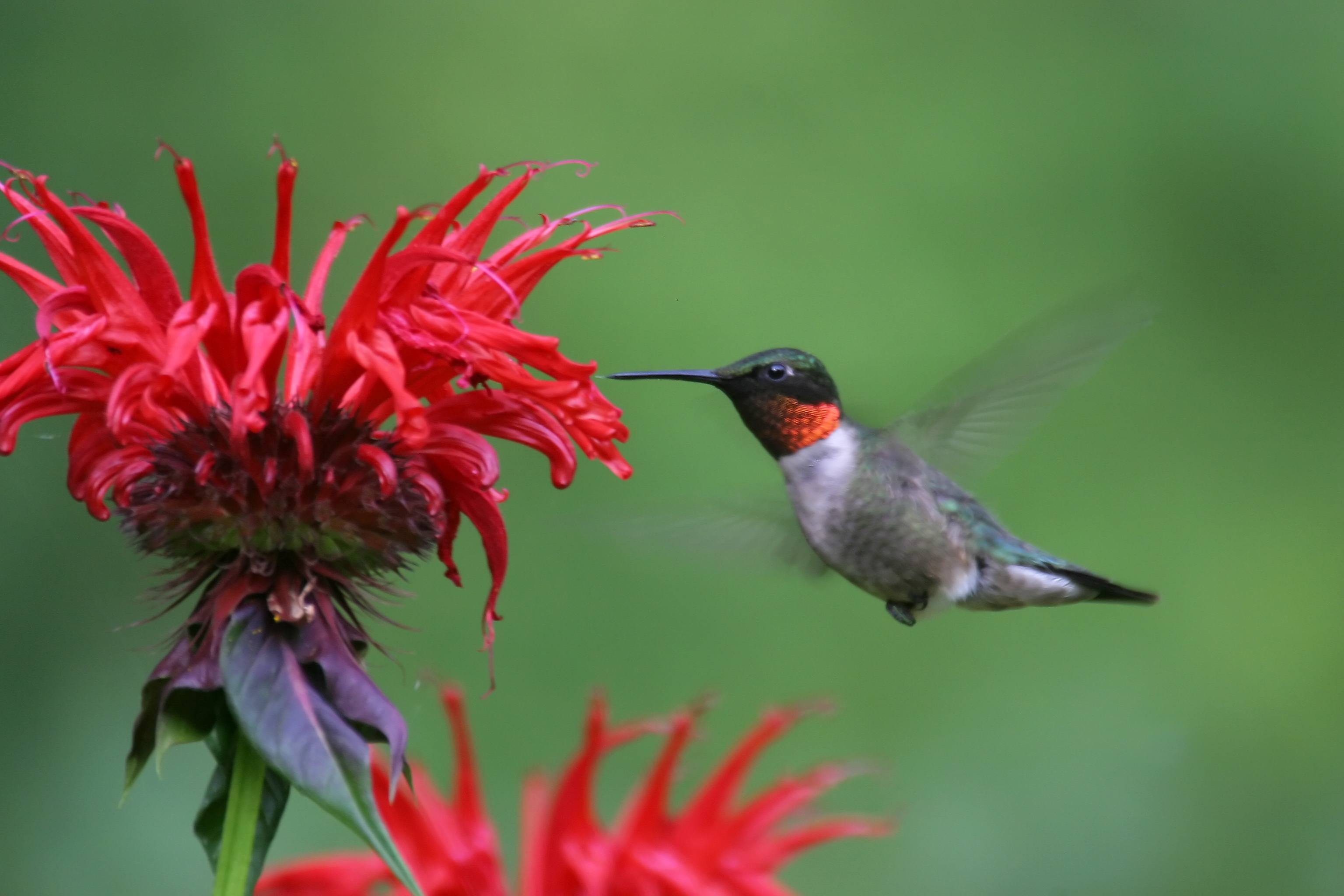
What type of symbiosis?  Hummingbirds feed on nectar from flowers.  The flowers are pollinated by hummingbirds as they move from flower to flower.
a)
commensalism
b)
mutualism
c)
parasitism
d)
predation
12.
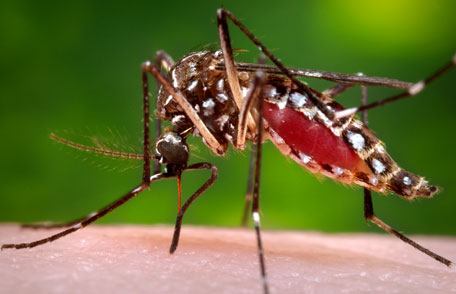
When a mosquito bites you, you are the __________ and the mosquito is the  ____________.
a)
host, hostess
b)
parasite, host
c)
host, parasite
d)
prey, predator
13.
Mistletoe extracts water and nutrients from a spruce tree. The spruce tree is harmed. 
a)
parasitism
b)
commensalism
c)
mutualism
14.
Oxpeckers feed on the ticks found on a rhinoceros. The oxpeckers get a meal and the rhinoceros is helped by the removal of the ticks.
a)
parasitism
b)
commensalism
c)
mutualism
15.
Which are abiotic factors?
a)
fish
b)
humans
c)
rocks
d)
cats
16.
The availability of shelter, food,water and space can change plant and animal survival. These are called
a)
multiplying factors
b)
competitive factors
c)
limiting factors
d)
survival factors
17.
What is an adaptation?
a)
A feature or behavior that helps an animal survie.
b)
The food that an animal eats.
c)
How energy moves in a food web.
18.
In the desert, a bird builds its nest in a cactus to avoid predators.  This behavior does not hurt or help the cactus, but it helps the bird.  What type of relationship is this?
a)
Competition
b)
Parasitism
c)
Commensalism
d)
Mutualism
19.
A(n) ________________ eats mainly plants.
a)
producer
b)
carnivore
c)
herbivore
d)
omnivore
20.
An organism that cannot make its own food
a)
consumer
b)
producer
c)
tree
d)
leaf
21.
An organism that makes its own food for energy
a)
consumer
b)
predator
c)
prey
d)
producer
22.
What is the name for all the animals of the same species living in an ecosystem?
a)
Population
b)
Community
23.
When organisms need the same limited resources, there is ______________ .
a)
an extra resource
b)
competition
c)
extinction
d)
mutation
24.
Choose the complete and logical food chain.
a)
sun-plant-rabbit- eagle
b)
deer - squirrel- plant-sun
c)
sun -deer-plant- eagle
d)
eagle- squirrel-rabbit- plant- eagle
25.

Which sentence best describes how energy flows through this pyramid?

a)

Energy is transferred down each level of the energy pyramid.

b)

The energy lost at each level is consumed by organisms in the top level.

c)

Energy is transferred from organisms in one level to those in the level above.

d)

The organisms at the bottom level provide energy directly to organisms in all other levels.

26.

Which of these human activities is most likely to cause the excessive growth of phytoplankton in the world's ocean?

a)

The use of chemical fertilizers that are carried by runoff into rivers

b)

The logging of old-growth forests, which results in erosion

c)

The spraying of chemical herbicides that reduce carbon dioxide in the air

d)

The mining of fossil fuels, which requires digging underground tunnels

27.
What term defines biodiversity?
a)
a. variety of habitats 
b)
b. number of different species
c)
c. total of all organism in area
d)
d. kingdoms
28.
Which cycle consist of processes by which water circulates between the earth's oceans, atmosphere and land, involving precipitation. 
a)
a. water cycle
b)
b. nitrogen cycle
c)
c. carbon cycle
d)
d. sulphur cycle
29.
What cycle describes the substances returning to the air and soil as a result of the decay of the plants and denitrification?
a)
a. carbon cycle
b)
b. phosphorous cycle
c)
c. nitrogen cycle
d)
d. sulphur cycle
30.
What term describes a cycle that  returns to the atmosphere through respiration, the decay of dead organisms, and the burning of fossil fuels.
a)
a. nitrogen
b)
b. oxygen cycle
c)
c. carbon cycle