
 Worksheets
POV?Text Structure
Total questions: 26
Worksheet time: 45mins
Name
Class
Date
1.
Which type of text structure describes an issue and at least one way to solve it?
a)
Chronological
b)
Cause & Effect
c)
Problem & Solution
d)
Compare/Contrast
2.
Which type of text structure answers the questions what happened and why?
a)
Chronological
b)
Cause & Effect
c)
Problem & Solution
d)
Compare/Contrast
3.
Which type of text structure shows how two or more things are alike and different?
a)
Chronological
b)
Cause & Effect
c)
Problem & Solution
d)
Compare/Contrast
4.
Which type of text structure describes events in sequential order?
a)
Chronological
b)
Cause & Effect
c)
Problem & Solution
d)
Compare/Contrast
5.
Why do we study non-fiction text structure?
a)
All stories have different characters and settings.
b)
Each passage is built differently in order to get its point across.
c)
An author writes a story in order to persuade the reader.
d)
We try to understand the lesson the author has learned.
6.
This type of writing considers similarities and differences.
a)
description
b)
compare & contrast
c)
order & sequence
d)
cause & effect
7.
What genre is informational text?
a)
Non- Fiction
b)
Fiction
c)
Fiction-Non
d)
Fantasy
8.
While oranges and lemons are both citrus fruits that grow on trees, they are different colors and have very different tastes.
a)
description
b)
compare & contrast
c)
order & sequence
d)
problem & solution
9.
Every morning, I wake up at about 7:00 AM. The first thing I do is make my bed and pick out the clothes I’m going to wear. Then, I brush my teeth and take a shower. After my shower, I dry my hair and get dressed.
a)
description
b)
compare & contrast
c)
order & sequence
d)
problem & solution
10.
Students who are frequently absent often have lower average grades than those who have good attendance. When they are out of the classroom, students do notget to see a teacher’s lessons. Even if they attend extra help, it’s usually much shorter and less detailed than the actual lesson. In addition, frequently absent students often miss tests or other assignments and don’t always make up the work.
a)
problem & solution
b)
order & sequence
c)
compare & contrast
d)
cause & effect
11.
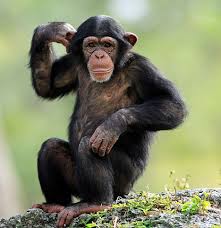
A chimpanzee’s body is made for climbing and swinging in the trees. First, it uses its long arms to reach a branch. Next, with its flexible hands and feet, it grabs and hooks on to the branch. Finally, it swings from that branch to another branch of tree.
a)
Compare & contrast
b)
Sequence
c)
Descriptive
d)
Cause & effect
12.
The sun shone bright yellow in a cloudless blue sky. A faint haze rose from the glistening pavement, suggesting steam rising off a hot surface.
a)
description
b)
compare & contrast
c)
order & sequence
d)
problem & solution
13.
Every morning, I wake up at about 7:00 AM. The first thing I do is make my bed and pick out the clothes I’m going to wear. Then, I brush my teeth and take a shower. After my shower, I dry my hair and get dressed.
a)
description
b)
compare & contrast
c)
order & sequence
d)
problem & solution
14.

It is fun to read about chimpanzees. All wild chimpanzees live in Africa. They live mostly in thick rain forests and in woodlands. There are two types, or species, of chimpanzees—the common chimpanzee and the bonobo, also known as the pygmy chimpanzee.
a)
Descriptive
b)
Cause & Effect
c)
Problem & Solution
d)
Sequence
15.
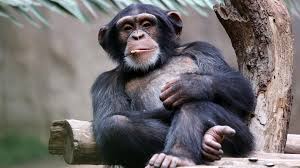
Chimps live in groups and like each other a lot, but sometimes they fight. Because they don’t want to stay angry at each other after a fight, they make up by holding a hand out to the other. They show they are sorry with pats and hugs. Then the anger goes away.
a)
Descriptive
b)
Compare and contrast
c)
Argument and evidence
d)
Cause and Effect
16.

Chimpanzees and humans are alike in many ways. A baby chimp laughs when its mother tickles it. After chimpanzees fight, they kiss and make up. When one chimpanzee comforts another, it gives it a hug or pat on the back. There are, of course, many ways that chimpanzees and humans are different. Chimpanzees are smaller and stronger than humans. An adult male chimpanzee stands three or four feet tall and weighs about 100 pounds. But a chimpanzee can lift more weight than a man who is six feet tall.
a)
Compare & contrast
b)
Problem & solution
c)
Cause and Effect
d)
Argument and evidence
17.
Which point of view do you see these signal words?
you, your
you, your
a)
First person
b)
Second person
c)
Third person
18.
Which point of view do you see these signal words?
I, me, my, mine, we, us
I, me, my, mine, we, us
a)
First person
b)
Second person
c)
Third person
19.
Which point of view do you see these signal words?
he, she, they, them, (character's names)
he, she, they, them, (character's names)
a)
First person
b)
Second person
c)
Third person
20.
Which point of view is the narrator "all - knowing" on the thoughts and feelings of more than two character?
a)
First person
b)
Third person limited
c)
Third person objective
d)
Third person omniscient
21.
Which point of view is when the narrator only knows the thoughts and feelings of ONE character?
a)
Second person
b)
Third person objective
c)
Third person limited
d)
Third person omniscient
22.
What point of view:
John said he was going to the pumpkin patch with his family.
John said he was going to the pumpkin patch with his family.
a)
1st person
b)
2nd person
c)
3rd person
23.
What point of view:
Before you leave you need to clean your room!
Before you leave you need to clean your room!
a)
1st person
b)
2nd person
c)
3rd person
24.
What point of view:
I love pizza. It is my favorite food!
I love pizza. It is my favorite food!
a)
1st person
b)
2nd person
c)
3rd person
25.
What point of view:
Before you leave you need to clean your room!
Before you leave you need to clean your room!
a)
1st person
b)
2nd person
c)
3rd person
26.
What point of view:
I love it when we go to the zoo!
I love it when we go to the zoo!
a)
1st person
b)
2nd person
c)
3rd person
100 %

