
 Worksheets
Grade 6 8 Rock types and Fossil
Total questions: 20
Worksheet time: 14mins
Name
Class
Date
1.

People who study fossils are called ____.
a)
meterologists
b)
fossilologists
c)
paleontologists
d)
fossil hunters
2.

Which of the following is NOT an example of a fossil?
a)
a petrified dinosaur bone
b)
a footprint captured in mud
c)
a seashell found on the beach
d)
an insect stuck in amber
3.

In which kind of rock do we usually find a fossil?
a)
sedimentary rock
b)
metamorphic rock
c)
igneous rock
4.
How are Sedimentary Rocks formed?
a)
Cooling and Hardening
b)
Heat and Pressure
c)
Compacting and Cementing
d)
Melting
5.
Where can the oldest layer be found?
a)
The top layer
b)
The middle layer
c)
They are all the same age
d)
The bottom layer
6.
How are fossils created?
a)
Traces of organisms get turned into stone.
b)
Dead organisms are quickly buried for millions of years.
c)
Animals get trapped.
d)
All of the above
7.
What are the 3 main fossil fuels?
a)
Coal, Oil, and Gasoline
b)
Coal, Oil, and Natural Gas
c)
Electricity, Gasoline, Petroleum
d)
Coal, Oil, Non-renewable Resources
8.
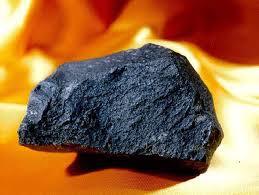
This rock was found near the mouth of a volcano. What type of rock is this?
a)
Sedimentary
b)
Igneous
c)
Metamorphic
9.

After lots of time, pressure, and heat, you get this kind of rock. What type of rock is this?
a)
Sedimentary
b)
Igneous
c)
Metamorphic
10.

This rock was formed by lots of fossils that settled on top of each other over time. What type of rock is this?
a)
Sedimentary
b)
Igneous
c)
Metamorphic
11.
Soil that drains slowly most likely has a high amount of
a)
ash
b)
sand
c)
clay
d)
peat
12.
Which soil component has the least capacity for holding water?
a)
silt
b)
clay
c)
sand
d)
humus
13.

"Molten rock found beneath the surface of the Earth" is the correct definition of:
a)
Lava
b)
Magma
c)
Metamorphic Rock
d)
Igneous Rock
14.

Breaking down a rock is known, scientifically, as:
a)
Weathering
b)
Erosion
c)
Both of those words mean the same thing
15.
What is molten rock that erupts onto or above the Earth’s surface?
a)
grain
b)
lava
c)
magma
d)
sediment
16.
The earliest fossils discovered are of
a)
dinosaurs
b)
fish
c)
bacteria
d)
mammals
17.

The process of rocks changing from one form to another, melting, eroding, and changing is known as ........
a)
The Water Cycle
b)
The Rock Cycle
c)
The Compaction Erosion
d)
trick question...rocks don't change
18.

When we made our crayon rocks....what did putting the textbook on top of them provide?
a)
pressure
b)
heat
c)
fracture
d)
erosion
19.

Fast or Slow....The Rock cycle compared to the water cycle.
a)
fast
b)
slow
20.
When you are describing the sizes of the mineral grains in a rock, you are detailing the rock's _____
a)
Texture
b)
Composition
c)
Sedimentation
d)
Igneous-ness
100 %

