wayground logo

Free Printable Worksheets

NEW

Font size

S
M
L
XL
Worksheets

Steele HS Ecology Quiz #3

Total questions: 20

Worksheet time: 14mins
Name
Class
Date
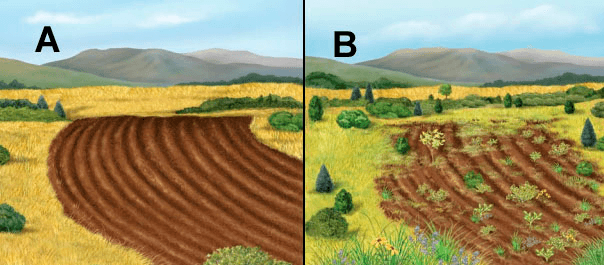
1.
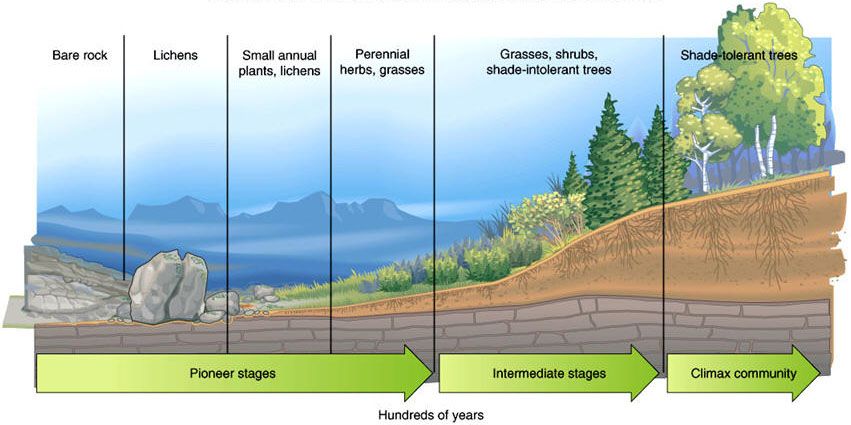
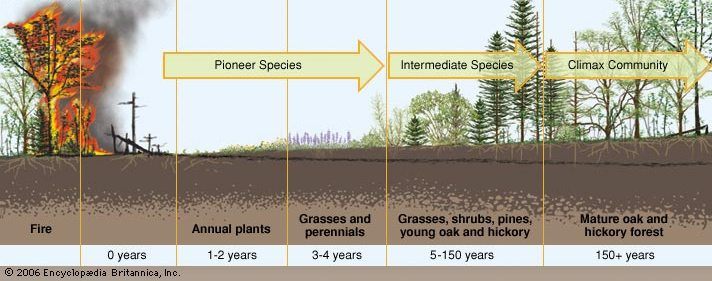
What type of succession is shown going from figure A to figure B?
a)
primary succession
b)
ecological succession
c)
secondary succession
d)
intermediate
2.
The picture shows what type of succession?
a)
primary
b)
secondary
c)
tertiary
d)
quadanary
3.
The picture shows what type of succession?
a)
primary
b)
secondary
c)
tertiary
d)
quadanary
4.
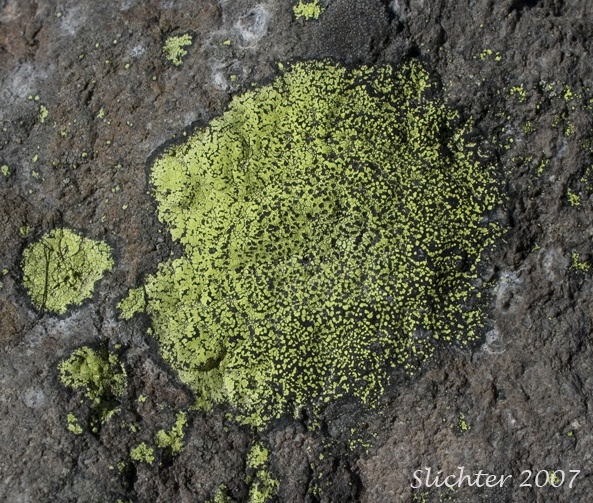
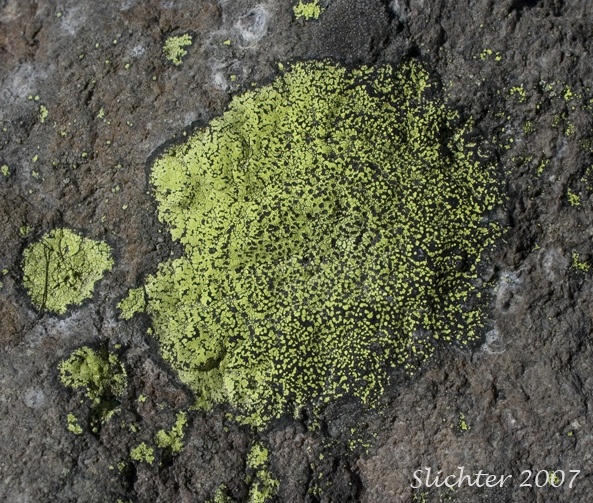
What is the name given to lichen or algae after a primary succession?
a)
pioneer species
b)
volunteer species
c)
founder species
d)
conqueror species
5.
What is the first species you will see after a primary succession? (in picture)
a)
lichens
b)
grasses
c)
small plants
6.
Succession that occurs in an area with NO SOIL
a)
ecological succession 
b)
primary succession 
c)
secondary succession
d)
pioneer speciles
7.
A pioneer species is...
a)
a large organism
b)
the first organisms to adapt to a new environment 
c)
The best organism 
d)
Abiotic organisms 
8.
What is the order of succession shown in this figure?
a)
A, B, C, D
b)
B, A, D, C
c)
C, D, A, B
d)
D, A, B, C
9.
If the plant population decreased, the amount of carbon would _________.
a)
Stay the same
b)
Increase
c)
Decrease
10.

Carbon moves from fossil fuels to the atmosphere when they are

a)

exhaled

b)

stored

c)

burned

d)

broken down

11.

Carbon moves from living things to the atmosphere when they are

a)

exhaled

b)

stored

c)

burned

d)

broken down

12.

When plants and animals die, their bodies containing wood, leaves and flesh decay bringing the ___________ into the ground.

a)

oxygen

b)

nitrogen

c)

carbon

d)

helium

13.

Through the process of _______________, carbon dioxide is pulled from the air to produce food made from carbon for plant growth.

a)

cellular respiration

b)

photosynthesis

14.

Returning nitrogen to the atmosphere by bacteria living deep in swampy sediments is the process ______.

a)

Ammonification

b)

Assimilation

c)

Denitrification

d)

Nitrogen Fixation

15.
Plants and animals cannot use nitrogen directly from the air.
a)
True
b)
False
16.
What converts nitrogen into a useable form for plants and animals?
a)
bacteria
b)
fungi
c)
rain
17.

What is the largest reservoir that contains about 78% of all atmospheric nitrogen?

a)

Bacteria

b)

Atmosphere

c)

Soil

d)

Plants

18.
A drought has hit this grassland biome. How will this effect the rabbit population?
a)
The rabbits will increase in number.
b)
The rabbit population will stay the same.
c)
The rabbit population will decrease.
d)
The rabbit population will become extinct immediately.
19.
In this tundra food web, if grasses were removed what would happen to the sustainability of the ecosystem?
a)
There would be an overpopulation of arctic hares and lemmings.
b)
Polar bears would move to a new ecosystem
c)
The ecosystem would collapse because it lost its main producer
d)
Wildflowers would die out from the ecosystem
20.

An endangered species is

a)

a species in danger of extinction

b)

a species growing on public land.

c)

an organism brought to a place where it has not lived before.

d)

a species that has disappeared entirely.