wayground logo

Free Printable Worksheets

Font size

S
M
L
XL
Worksheets

MIDTERM BASIC GEOGRAPHY TEST

Total questions: 80

Worksheet time: 55mins

Name
Class
Date
1.
The Five Themes of Geography are the Following:
a)
Place, Region, Interaction, Land-forms, Movement
b)
Place, Region, Interaction, Location, Movement
c)
People, Race, Interaction, Location Movement
d)
Power, Region, Interaction, Location Movement
2.

What places have in common: This groups these places together. Latin America and The Middle East are examples.

a)
Region
b)
Place
c)
Movement
d)
Landform
3.
What is movement?
a)
Tells us how people, goods, recourses, and ideas move from one place to another
b)
Tells us what makes an area special and what makes it different from every other area
c)
Tells us ways in which the places in an area are alike.
4.
Cutting down trees to build houses is an example of which?
a)
Location
b)
Place
c)
Human-Environment Interaction
d)
Movement
5.

Midwest, Southwest, Southeast, Northeast, and West are Regions in the USA

a)
movement
b)
H.E.i
c)
place
d)
region
6.

This theme of Geography describes what the location is like. WHAT IS IT LIKE THERE

a)
Absolute Location
b)
Relative Location
c)
Place
d)
Region
7.

Canada is north of the United States is an example of the type of theme called relative ____________

a)
Location
b)
Place
c)
Region
d)
Movement
8.
Describes characteristics of people, Culture, Religion, Buildings, Landmarks, Landforms, and Climate
a)
Movement
b)
Region
c)
Human interaction
d)
Place
9.

Let's meet at Walmart near the mall is an example of relative ___________

a)
Location
b)
Human Interaction
c)
Place
d)
Region
10.
Fruit grown in South America is shipped to your local grocery store.
a)
Region
b)
Location
c)
Movement
d)
Human Interaction
11.
Sending an email to a friend about how to do something is which theme?
a)
Movement
b)
Human Interaction
c)
Region
d)
Location
12.

What are the five themes of geography

a)

Location and Place

b)

Regions and Movement

c)

Human environment interaction

d)

All of the above

13.

what are the two parts of Location ?

a)

Absolute Location

b)

Relative Location

c)

Hemisphere Location

d)

All of the above

14.

what is geography

a)

study of animals

b)

study of humans

c)

study of earths human and physical features

d)

all of the above

15.

What does cartography mean ?

a)

studying and making maps

b)

taking photos

c)

study of cars

d)

all of the above

16.

what are the four hemispheres?

a)

northern and southern hemisphere

b)

western and eastern hemisphere

c)

equator

d)

prime meridian

17.

what does physical and human features describe?

a)

place

b)

regions

c)

location

d)

all of the above

18.

Geography is...

a)

The study of Earth and how we, the people who live there, interact with it.

b)

The study of Earth and its atmosphere.

c)

The study of rocks, minerals, and all physical attributes of Earth

19.
Movement is ...
a)
The way people, goods and ideas travel from place to place.
b)
The way people and the environment affect each other.
c)
Where a place is on Earth.
20.

Regions are ...

a)

Areas of the world that have common physical, human or cultural characteristics.

b)

An absolute location on Earth.

c)

The physical and human characteristics of a place.

21.

THE CITY OF BOULDER IS LOCATED AT 40* N AND 115* W IS AN EXAMPLE OF (a)   LOCATION

22.

What is this type of map?

a)

Political map

b)

Physical map

c)

Climate map

d)

Topographic map

23.

What is this type of map?

a)

Political map

b)

Physical map

c)

Climate map

d)

Topographic map

24.

Click on the map key.

25.

Click on the compass rose.

26.

Click on the map scale.

27.

Click on the map title.

28.
How many states are in the U.S.?
a)
25
b)
100
c)
50
d)
3
29.
How many continents are there?
a)
4
b)
1
c)
5
d)
7
30.
Which of the following is NOT a continent?
a)
Africa
b)
North America
c)
Germany
d)
Europe
31.
What is a map scale?
a)
a tool to measure distance
b)
a tool to tell direction
c)
a tool to start a fire
d)
a tool to build a house
32.
What direction is indicated by the number 5?
a)
northeast
b)
northwest
c)
southeast
d)
southwest
33.
Ocean #4 is ________.
a)
Indian
b)
Atlantic
c)
Pacific
d)
Southern
34.
Name Ocean #1!
a)
Indian
b)
Pacific
c)
Atlantic
d)
Southern
35.
Name Continent C!
a)
Antarctica
b)
Europe
c)
Asia
d)
North America
36.
Continent F is ________.
a)
Antarctica
b)
Australia
c)
Europe
d)
North America
37.
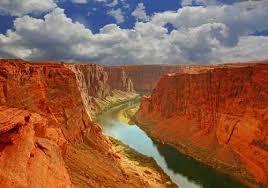
What land form is this?
a)
valley
b)
canyon
c)
mountain
d)
plain
38.
What land form is this?
a)
valley
b)
plain
c)
volcano
d)
canyon
39.
What land form is this?
a)
plain
b)
valley
c)
mountain
d)
canyon
40.
What land form is this?
a)
valley
b)
canyon
c)
plain
d)
mountain
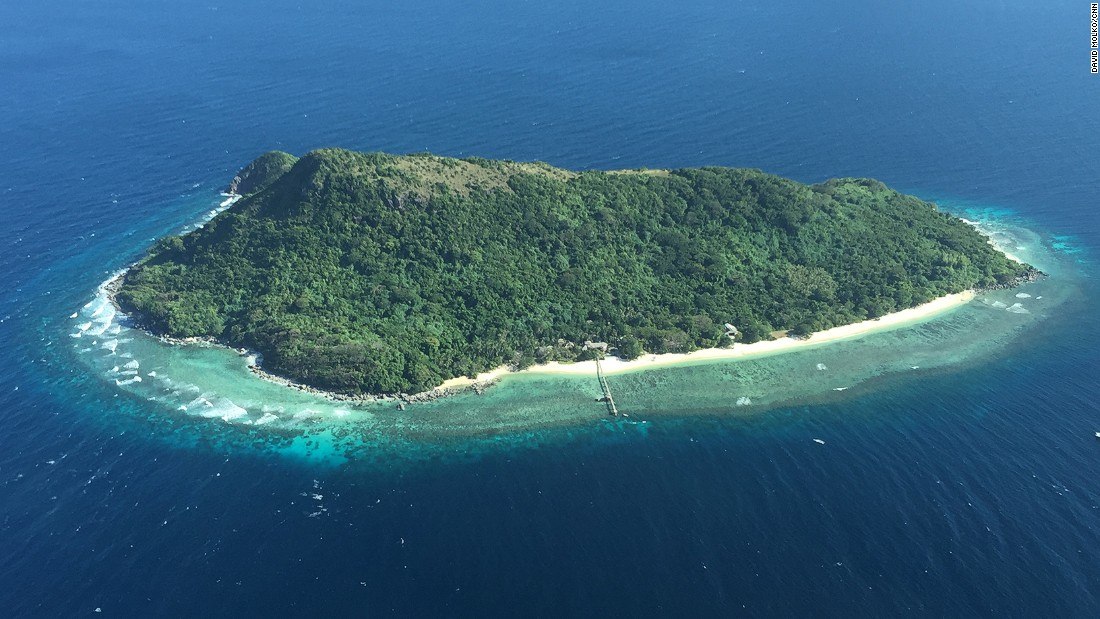
41.
What land form is this?
a)
island
b)
valley
c)
plain
d)
mountain
42.
What land form is this?
a)
valley
b)
plain
c)
volcano
d)
mountain
43.
What is a lowland area between higher lands such as mountains. 
a)
mountain
b)
valley
c)
island
d)
canyon
44.
What land form is land completely surrounded by water?
a)
plain
b)
canyon
c)
mountain
d)
island
45.

A long, man-made strip of water used for irrigation or boat access through a larger body of water.

a)

wetland

b)

bay

c)

peninsula

d)

canal

46.

A large area of flat land that is higher than the land around it.

a)

island

b)

plain

c)

valley

d)

plateau

47.

A channel of water that connects two areas of water.

a)

peninsula

b)

strait

c)

channel

d)

riverr

48.

A thin waterway that allows water to flow into a lake or ocean.

a)

bay

b)

river

c)

strait

d)

pond

49.

A narrow stip of land that connects two large areas of land.

a)

canyon

b)

isthmus

c)

peninsula

d)

valley

50.
Which continent is in the Northern Hemisphere?
a)
Africa
b)
Antarctica
c)
Australia
d)
Europe
51.
Which continent is in the Southern Hemisphere?
a)
North America
b)
Europe
c)
Australia
d)
Asia
52.
Which continent is in the Western Hemisphere?
a)
North America
b)
Europe
c)
Australia
d)
Asia
53.
Which continent is in the Eastern Hemisphere?
a)
North America
b)
South America
c)
Antarctica
d)
Asia
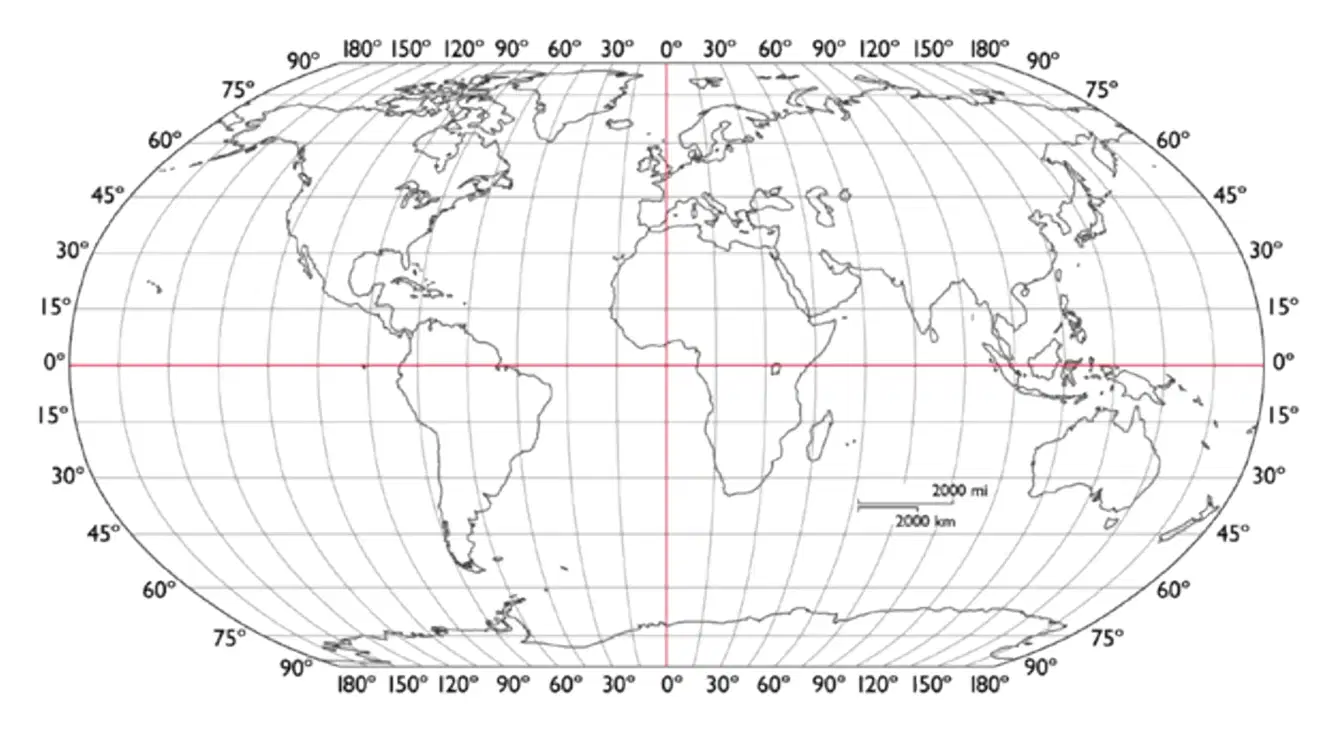
54.
Which ocean is at 45°N  45°W ?
a)
Atlantic
b)
Pacific
c)
Indian
d)
Zabel
55.
Which ocean is at 0°  75°E ?
a)
Atlantic
b)
Pacific
c)
Indian
d)
Zabel
56.
Which ocean is at 15°S  150°W ?
a)
Atlantic
b)
Pacific
c)
Indian
d)
Zabel
57.
Which ocean is at 75°N  0° ?
a)
Atlantic
b)
Pacific
c)
Indian
d)
Arctic
58.
Which continent at is 45°N 105°W ?
a)
North America
b)
South America
c)
Asia
d)
Australia
59.
Which continent at is 45°N 105°E ?
a)
North America
b)
South America
c)
Asia
d)
Australia
60.
Which continent at is 30°S 60°W ?
a)
North America
b)
South America
c)
Asia
d)
Australia
61.
Which continent at is 30°S 135°E ?
a)
North America
b)
South America
c)
Asia
d)
Australia
62.

Which continent at is 50°N 15°E ?

a)

Europe

b)

Africa

c)

Antarctica

d)

North Pole

63.
Which continent at is 5°N 15°E ?
a)
Europe
b)
Africa
c)
Antarctica
d)
North Pole
64.

Which continent at is 86°S 130°E ?

a)

Europe

b)

Africa

c)

Antarctica

d)

North Pole

65.

The Equator is a line of...

a)

Latitude

b)

Longitude

66.

The Prime Meridian is a line of...

a)

Latitude

b)

Longitude

67.

Both the Equator and Prime Meridian are measured reside at _________ degrees?

a)

b)

90°

c)

180°

d)

360°

68.

Latitude Lines are also called...

a)

Parallels (they never touch)

b)

Meridians (they cross at the North and South poles)

69.

Longitude Lines/vertical lines are also called...

a)

Parallels (they never touch)

b)

Meridians (they cross at the North and South poles)

70.

Latitude Lines measure which two directions from the Equator?

a)

North and South

b)

East and West

71.

Longitude Lines measure which two directions from the Prime Meridian?

a)

North and South

b)

East and West

72.

Latitude lines measure from 0° at the EQUATOR to what degree at the North and South Poles?

a)

90°

b)

180°

c)

360°

73.

Longitude lines measure from 0° at the Prime Meridian to what degree at the North and South Poles?

a)

90°

b)

180°

c)

360°

74.

How many degrees are in a circle?

a)

90°

b)

180°

c)

360°

75.

These Lines are ALWAYS listed FIRST! they are on the x axis

a)

Latitude/Parallels(they are the same!)

b)

Longitude/Meridians(they are the same!)

76.

These Lines are ALWAYS listed SECOND! they are on the y axis

a)

Latitude/Parallels(they are the same!)

b)

Longitude/Meridians(they are the same!)

77.

Set of numbers that describe the exact location of a specific place.

a)

absolute location

b)

hemispheres

c)

coordinates

d)

Equator

78.

Line of 0 degree LONGITUDE that divides the Earth into Eastern/Western Hemispheres.

a)

Prime Meridian

b)

Equator

c)

Hemispheres

d)

Absolute Location

79.

One half of a sphere. 4 - Northern, Southern, Eastern and Western

a)

absolute location

b)

hemispheres

c)

Prime Meridian

d)

Equator

80.

Line of 0 degree LATITUDE that divides the Earth into Northern/Southern Hemispheres.

a)

Equator

b)

Prime Meridian

c)

absolute location

d)

coordinates