
 Worksheets
Unit 10 Quiz #1 Review
Total questions: 31
Worksheet time: 21mins
Name
Class
Date
1.
What is water?
a)
An atom
b)
A molecule composed of 2 parts Oxygen and one part Hydrogen
c)
A molecular compound composed of 2 parts Hydrogen and one part Oxygen
d)
A pure substance composed of 2 parts Hydrogen and one part Oxygen
2.
What is the chemical formula for water?
a)
H20
b)
h2o
c)
H2O2
d)
H2O
3.
Why can water have no net charge but have slight charges in different parts of the molecule?
a)
The oxygen end is slightly negative and the hydrogen end is slightly positive
b)
The hydrogen end is slightly negative and the oxygen end is slightly positive
c)
The hydrogen and oxygen ends change in polarity
d)
Because it is hydrophobic
4.
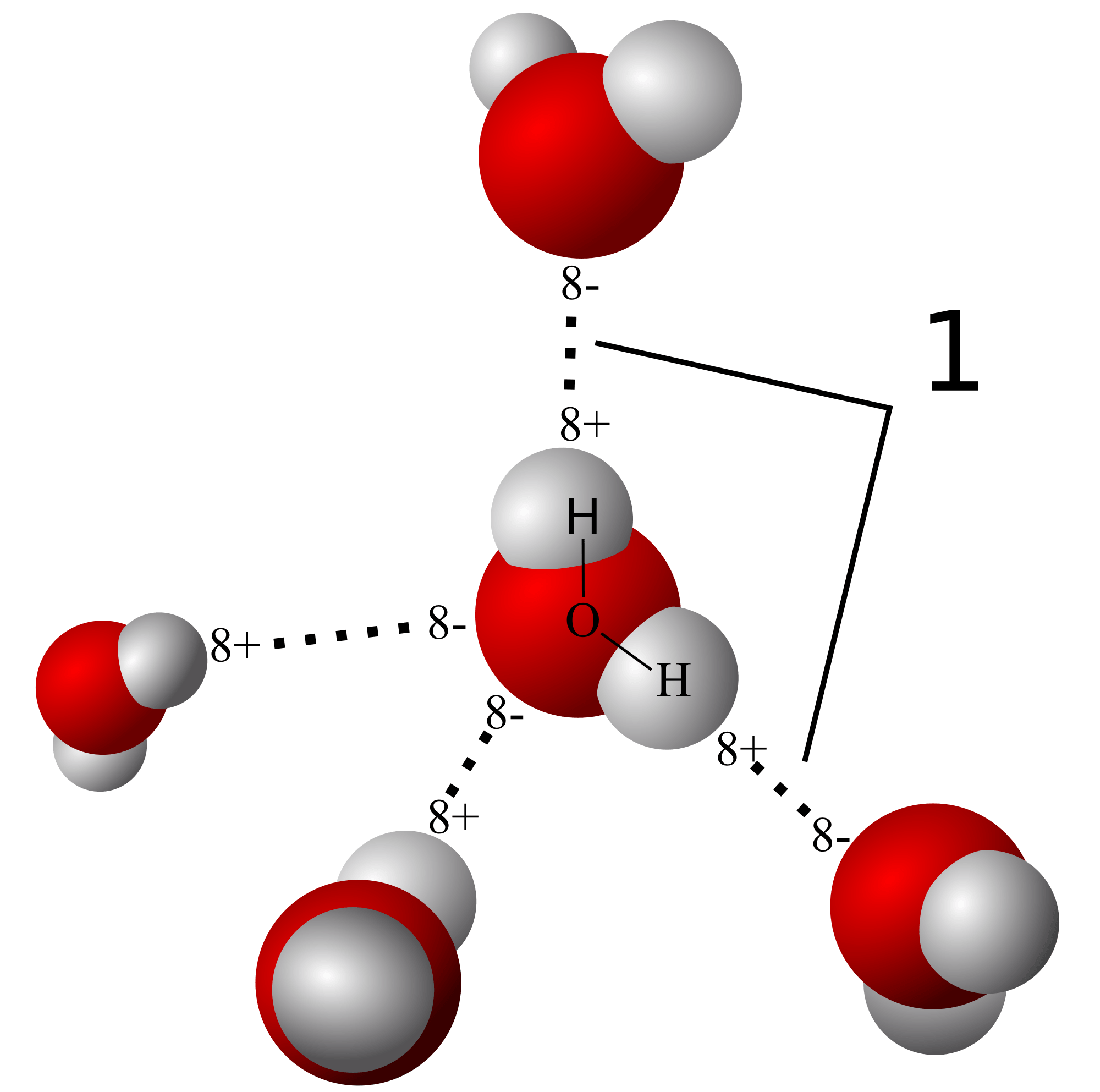
Attractions between water molecules are called
a)
Covalent bonds
b)
Ionic bonds
c)
Polar bonds
d)
Hydrogen bonds
5.
Water is polar because...
a)
The unequal sharing of electrons gives the water molecule a slight negative charge near its oxygen atom and a slight positive charge near its hydrogen atoms.
b)
The molecule has two poles, at which the it is colder than other regions of the molecule.
c)
The unequal sharing of electrons gives the water molecule a slight negative charge near its hydrogen atoms and a slight positive charge near its oxygen atom.
d)
The water molecule is neutral.
6.
Which of the following is an ionic compound?
a)
H2O
b)
CaCl2
c)
NO2
d)
CCl4
7.
What is the name of the compound LiOH?
a)
lithium hydrogen oxide
b)
lithium hydroxide
c)
lithium hydride
d)
lithium oxide hydride
8.
Name this compound:
Cs2S
a)
cesium sulfide
b)
cesium sulfate
c)
cesium (II) sulfate
d)
cesium (II) sulfide
9.
In a solid to liquid mixture, an increase in temperature means...
a)
increase in solubility
b)
decrease in solubility
10.
In a gas to liquid mixture, an increase in temperature means...
a)
increase in solubility
b)
decrease in solubility
11.
Which will dissolve faster crushed table salt or crystal of table salt?
a)
crushed table salt
b)
crystal of table salt
12.
Stirring the solution increases or decreases the solubility?
a)
increases
b)
decreases
13.
Decreasing the pressure of gases in liquids means...
a)
increase in solubility
b)
decrease in solubility
14.
Which solution would be least likely to carry an electric current?
a)
NaCl
b)
HCl
c)
C6H12O6
d)
CsI
15.
a solute whose water solution conducts electricity is called a(n)
a)
nonconductor
b)
electrolyte
c)
nonelectrolyte
d)
aqueous solution
16.
What is a solute?
a)
The substance that does the dissolving in a solution.
b)
The substance that is dissolved into the solution.
c)
The mixing of different substances.
d)
The process in which neutral molecules lose or gain electrons
17.
What is a solvent?
a)
The substance that does the dissolving in a solution.
b)
The substance that is being dissolved in a solution.
c)
The mixing of different substances.
d)
The process in which neutral molecules lose or gain electrons
18.
The thing that does the dissolving
a)
Solute
b)
Solvent
c)
Colloid
d)
Solution
19.
__________ are made up of solutes and solvents.
a)
Solutions
b)
Suspension
c)
Colloid
20.
Water is a universal solvent
a)
true
b)
false
21.
How does a solution become supersaturated?
a)
dissolve lots of solute in it.
b)
dissolve a little solute in it.
c)
dissolve more solute than you should be able to.
d)
dissolve a super amount of solvent in it.
22.
A saturated solution is______
a)
No more solute can be dissolved
b)
More solute can be dissolved
c)
The solvent and solution
d)
A precipitate forms
23.
contains less solute than a saturated solution
a)
unsaturated solution
b)
saturated solution
c)
supersaturated solution
d)
two of the above
24.
Oil molecules are nonpolar. What kind of solvent is required to remove an oil stain?
a)
saturated
b)
unsaturated
c)
polar
d)
nonpolar
25.
Which of the following is an electrolyte?
a)
sodium chloride
b)
sugar
c)
water
26.
Solutions in which electric currents cannot run through are said to be
a)
noncolloidal
b)
electrolytes
c)
nonelectrolytes
d)
conductors
27.
An example of a nonelectrolyte is
a)
sugar water
b)
salt water
c)
sodium chloride
d)
hydrogen chloride
28.
A solute that contains polar molecules will dissolve in a solvent that contains
a)
nonpolar molecules
b)
polar molecules
c)
covalent molecules
d)
equal-sized molecules
29.
The rule that refers to polar molecules dissolving polar and nonpolar dissolving nonpolar is
a)
this dissolves that
b)
like dissolves like
c)
same dissolves same
d)
here dissolves there
30.
Which of the following is an electrolyte?
a)
CH4
b)
I2
c)
LiBr2
d)
CO
31.
Which of the following is a non-electrolyte?
a)
CaO
b)
NaOH
c)
BaCl2
d)
Br2
100 %

