
Font size
 Worksheets
Canada Study Guide- Ashley Dove
Total questions: 63
Worksheet time: 32mins


Which feature does the “4” on the map represent?
Hudson Bay
Pacific Ocean
Atlantic Ocean
St. Lawrence River

Which Ocean Is Pictured?
Indian
Atlantic
Arctic
Pacific
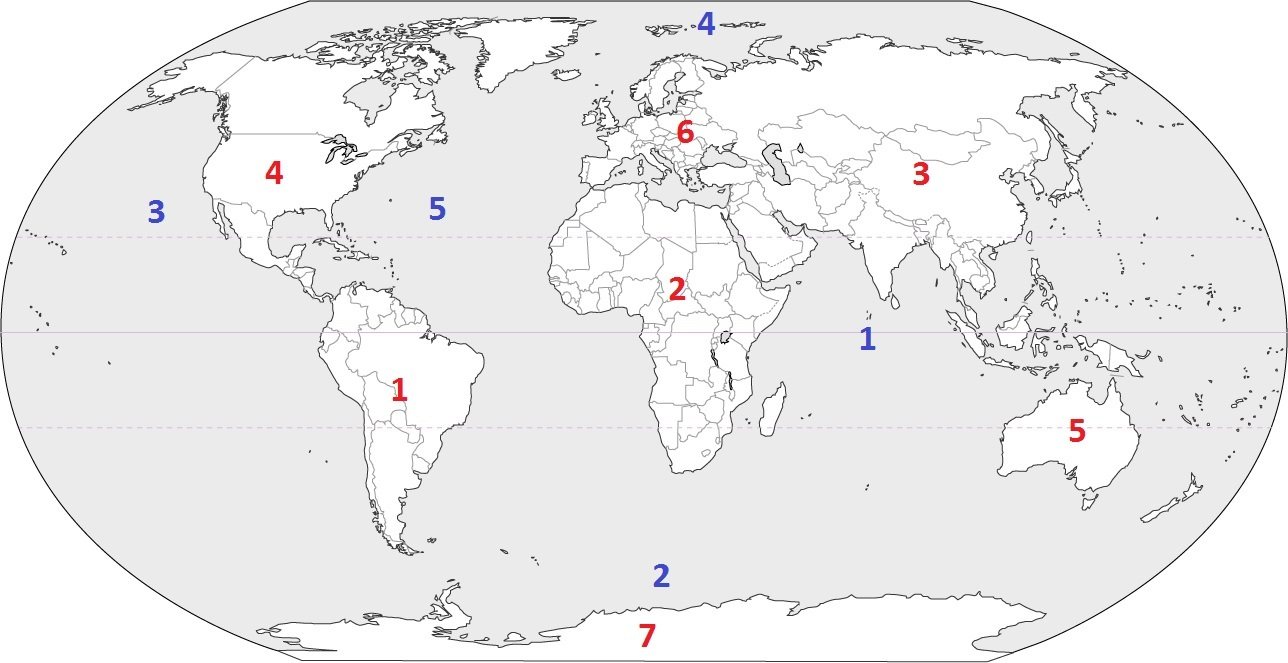
Identify the ocean at the BLACK #4 (towards the top)
Indian Ocean
Pacific Ocean
Arctic Ocean
Atlantic Ocean

Which number is closest to the St. Lawrence River?
2
3
6
7

Which Country Is Larger?
United States
Canada

Which Country Has More People?
Canada
United States

What Kind of Agricultural Activities Take Place in The Interior Plains of Canada?
Lumber Production and Apple Farming
Growing carrots and Raising Cattle
Lumber Production and Raising Cattle
Growing Wheat and Raising Cattle

What is the Rocky Rugged Area That Takes up Half of Canada's Land?
Hudson Bay
Alberta
Canadian Shield
St. Lawrence Lowlands

What Important Natural Resources are Found at the Canadian Shield?
Minerals
Wheat
Water
Wood

Name of the Land Region Where Most People Live in Canada. Most of it's Factories are Located There and Some of Canada's Best Farmland is Found There.
St. Lawrence Lowlands
Tundra
St. Lawrence Highlands
Canadian Shield

Why do Most People Live in The St. Lawrence Lowlands?
Healthy Cattle, Bright Trees, and Minerals
Healthy Chickens, Fun Playgrounds, and Nice Residents
Mild Climate, Good Farmland, Water, and Resources
Warm Climate, Healthy Cattle, and Water

Some Important Bodies of Water are ....
The Atlantic, Pacific, and Arctic Oceans, Hudson Bay, St. Lawrence River, and The Great Lakes
Indian Ocean, The Great Lakes, Hudson Bay, and The St. Lawrence River

What are Canada's Bodies of Water Used For?
Only Exports
Trade
Only Imports
Tariffs

Why is the St. Lawrence River so Important?
It links the Hudson Bay With The Pacific Ocean
It links the Hudson Bay with the Atlantic Ocean
It links the Great Lakes With The Pacific Ocean
It links the Great lakes with the Atlantic Ocean

What is the Name of the Cold, Dry Region in the Far North of Canada That is Covered in Snow for More Than Half of the Year?
Tundra
Arctic Region

What is Permafrost?
Permanently Frozen Water
Soil That is Frozen for a Very Long Time
Snow on the Ground
Permanently Frozen Soil

How Does Canada's Location Contribute to its Ability to Export Goods? (pick 2)
It Has Many Mountains
Access to Water
Trading is Easier
Very Close to U.S.

Canada is the Leading Producer In What?
Wheat
Wood Products
Maple Syrup
Beef

What Kind of Products Do They Make From These Forests? (pick 3)
Pencils
Lumber
Paper
Plywood

What are Some Environmental Issues That Canada Has to Contend With? (pick 3)
Water Pollution/ Rivers Clean
Forest Protection/ Stop Clear Cutting
Clear-Cut Farming/ Desolate Farmland
Air Pollution/ Acid Rain

Where Does Much of Canada's Air Pollution and Acid Rain Problems Come From?
The Northwestern U.S.
The Upper Part of the U.S.
The Northeastern U.S.
The Lower Part of the U.S.

What Type of Economy Does Canada Have?
Mostly Command
Mostly Market
All Command
All Market

In What Type of Jobs do Most Canadian's Work? (pick 2)
Service
Farming
Lumber
Manufacturing

Who is Canada's and Who is the U.S.'s Biggest Trading Partner?
U.S, Mexico
Mexico, Canada
U.S, Canada
Canada, U.S

How Much of Canada's Trade is Done With the U.S ?
90%
50%
25%
75%

What Does The Term "Interdependent" Mean?
We Both Need Each Other to Trade
We Both Need Each Other to be Successful
We Both Need Each Other to Have a Greater Popoulation
We Both Will Fight Against Each Other

Canada is the U.S's Largest Foreign Supplier of Energy.
True
False

Canada has a Substantial Trade _______ With the U.S.
Tariff
Surplus
Quota
Free Trade Barrier

What is NAFTA?
North American Forever Trade Agreement
Northwest American Free Trade Agreement
North American Free Trade Agreement
Northwest American Free Tariff Agreement

Which Countries Belong to NAFTA? (pick 3)
France
Mexico
U.S
Canada

Why was the NAFTA Formed? (pick 2)
To Eliminate Tariffs
To Have Free Trade
To Eliminate Quotas
To Fight Against Other Countries

Has The NAFTA Worked?
Yes, for the most part
No, not really
Yes, but not very well
No, but helps to produce money

What is Some Disadvantages to NAFTA? (pick 4)
Canada's Government Has Suffered
They Went to Mexico/ Cheap Labor
Mexico's Government Has Suffered
Mexico's Farmers Have Suffered (crops can be imported more cheaply)
Americans Lost Jobs/ Lower Wages

What Economic Advantages Does Canada Have? (pick 4)
Natural Resorces
Water Access for Shipping/ Trade
Minerals/ From the Canadian Shield
Capital Resources and Skilled/ Educated Workforce
Good Entrepreneurship

Which Type of Government Does Canada Have?
Parliamentary Democracy/ Constitutional Monarchy
Constitutional Democracy/ Parliamentary Monarchy
Autocratic Democracy/ Oligarchic Monarchy
Presidential Democracy/ Constitutional Monarchy

Who is Canada's Chief of State and Who Represents the Chief of State?
President and Army
President and Legislature
Queen of Great Britain and Governor General
Queen and Prime Minister

Who is the Head of Government in Canada?
Queen
President
Prime Minister
General

What is Canada's Legislative Branch Called?
House of Commons
Senate
Presidential Democracy
Legislature

How is the Prime Minister of Canada Elected?
He/ She is Elected By the Parliament
He/ She is Elected by the Senate
He/She is Voted on by the People

What is the Name of the 54 Independent Countries who all Used to be Colonies of Britain?
The Commonwealth of Nations
The Parliament
The Senate
NAFTA

What Does Britain Offer to These Groups? (pick 3)
Advice
Natural Resources
Military Support
Financial Aid

About 40% of the People Who Live in Canada are Descendants of Whom and About 20% are Descendants of Whom?
British and French
French and British
English and French
Spanish and English

What are the Two Official Languages of Canada?
English
French
British
Spanish

What Language do Most People in Canada Speak?
English
British
French
Spanish

What Language do Most Quebec Speak?
British
English
French
Spanish

What Does "Bilingual" Mean?
Fluent in More Than one Language
Fluent in Only one Language

How did Canada Become a Colony of Britain?
French/Indian War
Cold War
Cuban Missle Crisis
Canadian/ British War

What is the Major Religion in Canada Today?
Christianity (mainly Catholics)
Budhism
Jewish
Islamic

What Does the term “Sovereigny” Mean?
Lawful Country or Undependentquestio
Hard Labor
Pride for One’s Country
Free Country or Independent

What is the Diffrence Between the way that Canada got it’s independence Than how the U.S Got It’s Independence?
Canada Used Peaceful Negotiations, While the U.S. fought War
Canada Fought War, While the U.S Used Peaceful Negotiations
They Both Fought War

What are “Francophones” ?
A Person Who Speaks French and Many Other Languages
A Person Whose First Language is French
A Person Who Speaks British

Who Were the Separists? (They wanted Quebec to ecome it’s Own Country)
People Who Wanted to Break Away From Canada
People Who Wanted to Separate From Great Britain
People Who Waned to Leave the United Nations

Why Did Quebec Want to Become Their own Country?
They Wanted to Use Most of Their Crops, Livestock, and Money So They Could Not Share With Canada.
They Wanted to Make Sure That Their French Culture/ Heritage is Preserved.quebed

What was Going on in Quebec in the 1960s? (Pick 2)
People Were Forced to Speak English at School and Work.
People Were Forced to Give 89.2% of Their Farm- Grown Crops to Canada
People had to Take a Canada United Literacy Test that was very complicated
French Speakers got Mostly Low-Paying Jobs

What was the Quiet Revolution?
Peaceful Change in the Government of Canada that Resulted in French Becoming the Official Language.
Gruesome War that Resulted in the Prime Minister Sam Wiefred to Become the Leader
A Very Peacful, but Horrid Fight Against the Mexican and Canadian Governments

What is a “Referendum” ?
A Event Where Repetition Occurs in the Form of an Idiom
A Yes/No Vote on a Issue
A Gresome Argument or War

What was the Referendum That Quebec Voted on in 1980/1995 and Did it Pass? (Pick 2)
A Vote to Decide Whether Quebec Would Sepaerate From Canada and Become Independent
A Vote to Decide What Percentage of Livestock, Crops, an Money That Would be Given to Canada
A Vote to Decide How Many People Would be in the Legislature
Yes it did Pass
No it Did Not Pass

How Is French Culture Evident In Canada Today? (Pick 3)
French Architecture
French Style Cooking
French Festivals That Promote French Culture
French Customs in Each Houshold

