
NEW
Font size
S
M
L
XL
 Worksheets
Unit 10 Measuring Angles
Total questions: 15
Worksheet time: 22mins
Name
Class
Date
1.

What is this tool called and what is it used for?
a)
A ruler used to measure lines.
b)
A protractor used to measure lines.
c)
A ruler used to measure angles.
d)
A protractor used to measure angles.
2.

What is the measure of the angle shown in the picture?
a)
30 degrees
b)
35 degrees
c)
140 degrees
d)
145 degrees
3.

Measure the given angle to the nearest degree
a)
131
b)
51
c)
49
d)
130
4.

Measure the given angle to the nearest degree.
a)
162
b)
25
c)
23
d)
156
5.

What is the measure of the following angle to the nearest degree?
(¿Cuál es la medida del siguiente ángulo al grado más cercano?)
a)
30°
b)
91°
c)
150°
d)
180°
6.

Which equation can you use to find the m ∠DEG?
a)
67°+90°=■
b)
67°×2=■
c)
180°–90°=■
d)
90°–67°=■
7.

What is the measure of the unknown angle ABD? Angle ABC is a right angle.
a)
80º
b)
105º
c)
165º
d)
75º
8.

What is the measure of the unknown angle in the figure?
a)
25º
b)
115º
c)
125º
d)
180º
9.

What type of angle is shown?
a)
acute
b)
obtuse
c)
right
d)
straight
10.
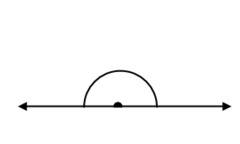
What type of angle is shown?
a)
acute
b)
obtuse
c)
right
d)
straight
11.

What type of angle is shown?
a)
acute
b)
obtuse
c)
right
d)
straight
12.

If m∠XOZ = 74°, find m∠XOY.
a)
37°
b)
74°
c)
90°
d)
148°
13.

What type of angle is shown?
a)
acute
b)
obtuse
c)
right
d)
straight
14.
What are complementary angles?
a)
Angles that add up to 180°
b)
Angles that add up to 90°
c)
Angles that are equal to each other
d)
Angles that are opposite of each other when lines intersect.
15.
What are supplementary angles?
a)
Angles that add up to 180°
b)
Angles that add up to 90°
c)
Angles that are equal to each other
d)
Angles that are opposite of each other when lines intersect
Reset

