
 Worksheets
AQA GCSE Algorithms
Total questions: 60
Worksheet time: 42mins
Sequence is when...
...instructions are executed one after another
instructions are executed one after another in a series
instructions are executed by the user
instructions are executed one after another but not always in series
Selection is when...
...a program will execute instructions regardless of what the user does
...a program will execute certain instructions based on the user's actions
...a program will execute certain instructions based on conditions
....a program will execute all instructions regardless of what the user does
Selection statements include...
IF, THEN, ELSE & CASE
IF, ELSE, & CASE
IF, THAN, ELSE & CASE
IF, THEN, ELSE, ELIF & CASE
In computer programming 'iteration' is used to...
... loop around and around a piece of code until the correct answer is chosen
...loop around a piece of code until a condition is met that activates the next part of the program
...loop around and around a piece of code until a condition is met that ends the iteration
...loop twice around a piece of code until a condition is met that ends the iteration
Logic errors in programs are...
...errors in program statements that mean the outcome is unexpected, even though the program will run
...errors in the algorithm that means the outcome is expected, even though the program will run
...errors in the algorithm that means the outcome is unexpected, even though the program will run
...errors in the algorithm that means the outcome returns nothing as the program will not run
What is the main difference between a constant and a variable?
A constant's value remains the same whereas a variable's value can change
A constant's value only changes if a variable's value changes
A constant's value remains the same whereas a variable's value can be changed by the user
A constant's value remains the same whereas a variable's value can be changed, but only once
A string is a data type that typically takes up 1 byte per character. Which of the following is a string?
hello world
"!£llo world4"
"hello world
hello world"
Which of these is not a sorting algorithm?
Bubble
Insertion
Merge
Binary
Which sorting algorithm is described by: moving through a list repeatedly, swapping elements that are in the wrong order.
Merge
Bubble
Insertion
None of these
Which sorting algorithm is described by: split a list into individual lists, then combine these, two lists at a time.
Bubble
Merge
Insertion
None of these
Which sorting algorithm is described by: take each item in turn, compare it to the items in the sorted list and place it in the ordered position in the sorted list.
Bubble
Insertion
Merge
None of these
The following two lists are to be merged, which element first goes into the
new merged list?
List 1: 2 4 8 9
List 2: 1 6 8 4
0
1
2
3
The following list is to be sorted using a bubble sort:
12, 6, 8, 1, 3
What will the list look like after the first iteration through the list.
6, 8, 1, 3, 12
6, 12, 1, 8, 3
1, 3, 6, 8, 12
6, 8, 1, 12, 3
Which sorting algorithm needs to go through the list repeatedly?
Merge
Bubble
Insertion
None of these
Which sorting algorithm splits a list of items into individual lists?
Merge
Bubble
Insertion
None of these
How many passes will a bubble sort go through?
Only one pass
Two passes
Several passes - until the data is fully ordered
Abstraction is.....
The process of drawing abstract pictures.
The process of assigning values to variables.
The process of breaking down problems.
The process of removing unnecessary details from a problem.
What is a flowchart?
A textual representation of algorithms.
A graphical representation of algorithms.
A cluster of different shapes.
A program code written in Logo.

What does this shape represent in flowchart?
Start/Stop
Decision
Process
Input/Output
What is the correct symbol for an input in a flowchart?
A diamon
A square
A parallelogram
A rectangle
The process carried out in computer systems is represented by _______________ in flowchart.
Rectangle
parallelogram
Square
Diamond

What does this shape represent in flowchart?
Input/Output
Process
Decision
Start/Stop
What is pseudocode?
Simplified programming language, that is not a specific language
Complicated programming language
Simple programming language, which is linked to a specific language
A type of cheese

Which type of sort algorithm is this?
Bubble
Merge
Insertion

Which type of sort algorithm is this?
Bubble
Merge
Insertion
If you have a large amount of data to search through the best algorithm would be a
Binary Search
Linear Search
Which search algorithm is the easiest to understand?
Binary
Linear

Which type of search algorithm is this?
Binary
Linear
If the data is in order the best search to use would be a
Binary Search
Linear Search
Which of these is NOT a search algorithm
Binary
Linear
Bubble


What will be displayed as output?

What will be displayed as output?

What will be displayed as output?

What's missing ?
On/Off
Pink/Blue
Hello/Goodbye
Yes/No
4 5 9 6 2 7
4 5 6 2 7 9
4 5 2 6 7 9
1 4 2 9 3 8 5
What does the list look like after one pass of the bubble sort algorithm.

Which algorithm, will NOT take you from A to B
UP 1
RIGHT 5
UP 2
RIGHT 1
UP 3
RIGHT 4
UP 2
RIGHT 5
UP 1
LEFT 1
UP 3
RIGHT 5
print "Hello"
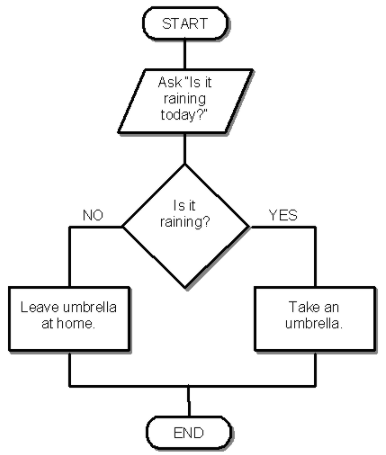
Yes
<

distanceToSchool = 10
What is the value of the variable?
Which of the following assignment statements is assigning a string.
myName = "David"
myAge = 21

