
 Worksheets
History at a glance - exploration/colonization
Total questions: 68
Worksheet time: 1hrs 29mins


Why were the Mid-Atlantic colonies nicknamed "the Bread Basket?"
The rich soil allowed for the growth of many types of grain.
The colonists there ate bread and other grains with every meal.
They purchased more bread than any other colonial region.
How did the Middle Colonies' geography affect its economy?
The cold temperatures pushed colonists to resort to fishing and shipbuilding.
The abundant trees provided excellent shade for livestock so they wouldn't overheat.
The fertile soil made it possible to grow an abundance of grains.
The hot, humid climate allowed for the growth of many cash crops.

How did geography influence the early economic development of New York, Boston, and Charleston?
Long coastlines offered abundant natural resources.
Proximity to flooding rivers limited development.
Natural harbors allowed for easy trading between colonies & countries.
Extreme climates limited productivity.

The Southern colonial region was defined by --
factories, rocky soil, and long winters.
hot and humid climate, factories, and the growth of grain.
hot and humid climate, the growth of cash crops, and fertile land.
cold harsh winters, sandy coasts, and ship building.

The long growing season and fertile soil of the Southern colonies led to the development of ________ that produced cash crops for Great Britain.
factories
plantations
forests
small farms

New Hampshire
Rhode Island
Massachusetts
South Carolina
Virginia
Maryland
Georgia
Deleware
New York
New Jersey
Indiana
Ohio
Wisconsin
New Hampshire
Rhode Island
Massachuttes
South Carolina
Virginia
Maryland
Georgia
Delaware
New York
New Jersey
Arizona
New Mexico
Washington
New Hampshire
Rhode Island
Massachuttes
South Carolina
Virginia
Maryland
Georgia
Delaware
New York
New Jersey
Georgia
Louisiana
Alabama


In what year was Jamestown founded?
1600
1602
1605
1607
Who decide the "No Work, No Food" policy?
John Rolfe
King James
John Smith
VA Company of London
Winter 1609-1610, there was not enough food, colonists died, homes were used as firewood.
Golden Times
Hunger Times
Black Death Times
Starving Times
In what years did Africans and Women arrive in Jamestown?
1607-1608
1612-1613
1617-1618
1619-1620

Pilgrims land at Plymouth and write the Mayflower Compact to establish self-government
1607
1619
1700
1620

Virginia House of Burgesses - first elected legislature in the colonies
1612
1619
1732
1630
The Fundamental Orders of Connecticut was the first constitution...
Written in the colonies.
Written in pen.
Written on a ship.
The Fundamental Orders stated that people had the right to...
Live alone in solitude with no laws.
Allowed people to elect governors, judges and legislature.
Send people back to England is they were naughty.
The Fundamental Orders of Connecticut established the idea of:
self-government in the colonies.
being governed by the King of England in the colonies.
respecting England's laws.
religious tolerance is the idea of
being tolerant of other religions
being intolerant of other religions
not believing in any religions
religious persecution is the...
mistreatment of a group of people based on their religious beliefs.
mistreatment of a group of people based on where they live.
The Magna Carta established that
Everyone but rulers have to follow the law
Even rulers have to follow the law
Anyone can be thrown in jail at any time
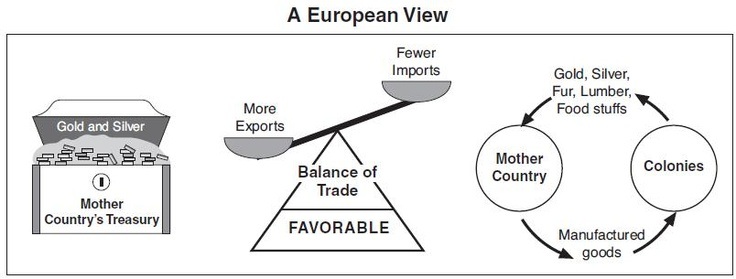
What is mercantilism?
A system where a mother countries gains money and power from natural resources that come from its colonies.
where colonies trade gold and silver with each other.
Wars that start over money.
Plantation colonies trading slaves for money.

EXPORTS of the 13 colonies included:
Manufactured goods
Raw Materials
Slaves
Gold

The impact of mercantilism was that
The rate of slavery in the Americas went down
Trade was limited in the Atlantic
The Colony grew wealthy
The Mother Country grew wealthy


Raw materials are used to make the things we make ourselves or buy in stores. Those things are:___________.
raw materials
manufactured goods
natural resources
from the earth


Believed governments were contracts made by people to preserve "natural rights."
John Locke
Ben Franklin
John and William Bertram
Cotton Mather
Changed the people’s way of looking at religion, it rebelled against religious leaders’ authority
Great Awakening
Enlightenment
He believed that God created the world but allowed it to operate through laws of natural science- Deism
John Locke
Ben Franklin
John and William Bertram
Cotton Mather
Believed in the sovereignty of god, importance of religious rebirth, and how everyone's in danger of damnation in hell.
John Locke
Ben Franklin
Johnathan Edwards
George Whitfield
How did George Whitefield jump start the First Great Awakening?
He published pamphlets
He wrote a famous almanac
He went to settlements and preached there to gather crowds
We was appointed the royal governor and set strict laws
His ideas encouraged the development of a system of checks and balances, which allows one branch to stop another from becoming too powerful.
John Locke
William Penn
Charles Montesquieu
Thomas Hooker
He explained English law in a language that commoners could understand. He argued that the English system of laws was based on years of traditions rather than logic.
William Penn
John Locke
Charles Montesquieu
William Blackstone
Favored the vote for all men, regardless of any religious or property qualifications.
William Penn
Thomas Hooker
John Locke
William Blackstone
He used the idea that the main purpose of government was to protect the life, liberty and property of its citizens. This is also known as the unalienable rights.
Thomas Hooker
William Penn
John Locke
Charles Montesquieu
The Fundamental Orders of Connecticut was a model for our US Constitution.
John Locke
Thomas Hooker
William Blackstone
William Penn
Pennsylvania was a safe place for Quakers. People of diverse backgrounds were welcomed into the colony. Everyone was welcome; including Indians, African Americans, and people of any religion. He insisted that women deserved equal rights along with men.
William Blackstone
Thomas Hooker
William Penn
Charles Montesquieu

