
NEW
Font size
S
M
L
XL
 Worksheets
Matter review
Total questions: 45
Worksheet time: 2hrs 10mins
Name
Class
Date
1.
How does a liquid turn to a gas?
a)
Freezing
b)
Melting
c)
Evaporation
d)
Condensati
2.
How does a liquid turn to a gas?
a)
Freezing
b)
Melting
c)
Evaporation
d)
Condensati
3.
What is the law of conservation of mass?
a)
Mass cant be created or destroyed
b)
Matter is everything
c)
Everything has mass
d)
Everything is made of atoms
4.
What is a chemical change?
a)
When a substance changes into a new substance
b)
When the properties of a substance doesnt change
c)
When an object stays the s
5.

Anything that takes up space and has mass is
a)
Matter
b)
Volume
c)
Liquid
d)
Atom
6.

When a gas (vapor, steam) cools and changes into a liquid
a)
gas
b)
balance
c)
physical property
d)
condensation
7.
Particles move quickest
a)
solid
b)
liquid
c)
gas
d)
solid, liquid and gas
8.
Particles closest together
a)
solid
b)
liquid
c)
gas
d)
solid, liquid and gas
9.
When the temperature of matter increases the particles...
a)
speed up and move closer
b)
speed up and move farther apart
c)
slow down and move closer together
d)
slow down and move farther apart
10.

Which state of matter do the particles in this picture represent?
a)
solid
b)
liquid
c)
gas
d)
plasma
11.

What does this picture represent?
a)
solid
b)
liquid
c)
gas
d)
plasma
12.
In which state of matter are molecules moving the slowest?
a)
solid
b)
liquid
c)
gas
d)
all of the above
13.
Gas particles have the _______ energy.
a)
most
b)
middle amount of
c)
least
14.

The speed of the molecules determines the _____.
a)
Temperature
b)
density
c)
pressure
15.
Matter changes state when...
a)
energy is added or removed
b)
energy is added
c)
energy is removed
d)
there is no energy
16.

When a solid changes into a liquid
a)
melting
b)
freezing
c)
vaporization
d)
condensation
17.
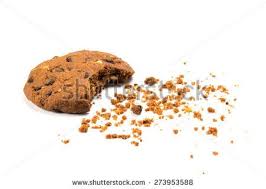
The Law of Conservation of matter states that the total amount of matter ______________ after it undergoes change.
a)
disappears
b)
stays the same
c)
weighs less
d)
explodes
18.
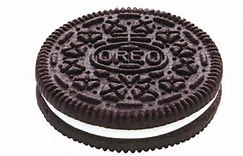
An oreo cookie weighs 20 grams. It gets crushed into crumbs for a recipe. How much do its crumbs weigh?
a)
15 grams
b)
25 grams
c)
20 grams
19.
Mrs. Roth's tea cup and hot tea weigh 100 grams. She stirs in 10 grams of sugar. How much is the total amount of matter in Mrs. Roth's tea cup and tea now?
a)
100 grams
b)
110 grams
c)
90 grams
20.

How much does a 5 gram Hershey's kiss weigh after it is melted in the microwave?
a)
5 grams
b)
3 grams
c)
7 grams
21.
12g of Carbon react with 16g of Oxygen, how much carbon monoxide (CO) is formed?
a)
28 g
b)
4g
c)
30g
d)
12g
22.
In a reaction A + B ----> C, reactant A has 5g and product C has 9g. How many grams does reactant B should have?
a)
4g
b)
5g
c)
9g
d)
14g
23.
True or false. Law of conservation of mass means that the number of atoms of the products is more than the number of atoms in the reactants.
a)
True
b)
False
24.
Which are chemical changes
a)
Iron rusting
b)
Glass breaking
c)
Clothing ripping
d)
Hair cut
25.
Can matter be created or destroyed?
a)
Yes, it can be created.
b)
Yes, it can be destroyed.
c)
No, matter is always conserved
d)
None of these
26.
The mass after a physical change, such as ice melting into water, stays the same
a)
True
b)
False
27.
What is the law of conservation of mass?
a)
Matter changes when reacted or changed.
b)
The mass of all reactants are changed during a physical or chemical change
c)
The mass of the reactants is the same as the mass of the products
d)
The mass of the products is different than the mass of the reactants.
28.
The total amount of matter (atoms) before and after a chemical reaction (change), remains the same.
a)
True
b)
False
29.
Describe a solute.
a)
part of solution present in largest amount
b)
gets dissolved
c)
water
d)
surrounds and breaks apart
30.
If I dissolve sugar in water, what is the solute?
a)
Water
b)
Hydrogen
c)
Sugar
d)
Carbon
31.
If I dissolve carbon dioxide in water, what is my solvent?
a)
Carbon Dioxide
b)
There is no solvent
c)
Oxygen
d)
Water
32.
What is a solvent
a)
the liquid in which a solute is dissolved to form a solution.
b)
Another word for solution
c)
A thing that make drinks turn colors
d)
Its a metal molecole
33.
You and your friend have a contest to see who can make iced tea the fastest. Which of the following would NOT help you win?
a)
Cooling the water
b)
Using smaller crystals
c)
Heating the water
d)
Stirring quickly
34.

A copper penny turning greenish after a few years is an example of ...
a)
Chemical Change
b)
Physical Change
35.
A change in which NEW substances are formed.
a)
Chemical change
b)
Physical change
c)
Casual change
d)
Formal change
36.
Which of the following is NOT an example of chemical change?
a)
sour milk
b)
burning wood
c)
breaking a pencil
d)
rust
37.
Which of the following is NOT an example of a physical change?
a)
crumpled paper
b)
pencil sharpening
c)
shrunken clothing
d)
sour milk
38.
Which of the following IS a physical change?
a)
Getting a haircut
b)
Rusty metal
c)
sour milk
d)
A compound
39.
Is a rusting bicycle a chemical or physical change?
a)
chemcial
b)
physical
40.

Ripping up paper ...
a)
Chemical Change
b)
Physical Change
41.

A change in phase ...
a)
Chemical Change
b)
Physical Change
42.

An explosion occurs ...
a)
Chemical Change
b)
Physical Change
43.
Grinding of peanuts into peanut butter
a)
chemical change
b)
physical change
44.
Condensing water vapor is
a)
chemical change
b)
physical change
45.
Making paper into a paper airplane
a)
chemical change
b)
physical change
Reset

