
 Worksheets
Chemical Bonding
Total questions: 24
Worksheet time: 17mins
Name
Class
Date
1.
What are ionic bonds?
a)
valence electrons transferred between atoms
b)
Inner most electrons transferred between atoms
c)
Sharing of valence electrons
d)
sharing of inner most electrons
2.
An electron has what kind of charge?
a)
no charge
b)
positive
c)
negative
d)
it depends
3.
a proton has what charge?
a)
positive
b)
negative
c)
no charge
d)
it depends
4.
When the number of electrons equals the number of protons the atom has what charge?
a)
sponge bob
b)
positive charge
c)
negative charge
d)
neutral charge
5.
An atom that has gained or lost electrons is called ...
a)
a winner
b)
an isotope
c)
an ion
d)
a loser
6.
Atoms that lose electrons become...
a)
negatively charged
b)
postively charged
c)
remain neutral, no charge
d)
losers
7.
What type of elements will form an ionic bond?
a)
Metals + Metals
b)
Nonmetals + Nonmetals
c)
Metals + Nonmetals
d)
None of the above
8.

What type of bond is this? Lithium with Fluorine?
a)
ionic
b)
covalent
9.
In a neutral atom, the number of electrons must equal the number of these.
a)
proton
b)
neutron
c)
electron
10.

As an ion, sulfur has a ____ charge.
a)
1+
b)
1-
c)
2+
d)
2-
11.

As an ion, potassium has a ____ charge.
a)
1+
b)
1-
c)
2+
d)
2-
12.
Chlorine has a 1- charge, lithium has a 1+ charge. What is the formula for a lithium chloride compound?
a)
LiCl
b)
Li2Cl
c)
LiCl2
d)
Li2Cl2
13.
Fluorine has a 1- charge, magnesium has a 2+ charge. What is the formula for a magnesium fluoride compound?
a)
MgF
b)
Mg2F
c)
MgF2
d)
Mg2F2
14.
What two types of atoms make a covalent bond?
a)
2 Nonmetals
b)
1 Nonmetal and 1 Metal
c)
2 Metals
d)
2 Noble Gases
15.
In chemical compounds, covalent bonds form when
a)
the electronegativity difference between two atoms is very large.
b)
electrons are completely transferred between two metals.
c)
pairs of electrons are shared between two nonmetal atoms.
d)
two nonmetal atoms are attracted to each other by opposite charges.
16.
What region of the periodic table contains atoms that form covalent bonds?
a)
the left side
b)
the middle
c)
the right side
d)
top left
17.
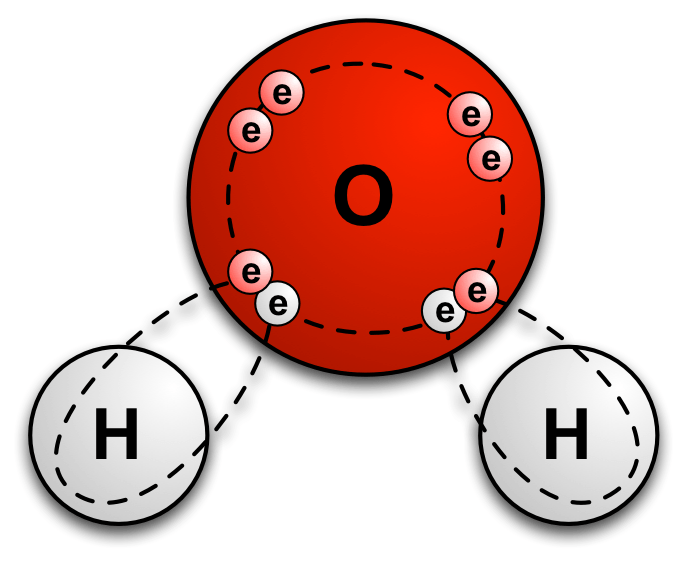
What would you name this molecule?
a)
SNa3
b)
H3O
c)
NaCl
d)
H2O
18.

What molecule is this?
a)
CO
b)
CO2
c)
C2O
d)
C2O2
19.
How many electrons are shared in a double bond?
a)
2
b)
4
c)
6
d)
8
20.
Ionic compounds can conduct electricity as a solid
a)
true
b)
false
21.
Which of the following is a property of an ionic compound?
a)
high melting point
b)
soft
c)
malleable
d)
liquid at room temperature
22.

The following properties are all characteristics of ionic compounds EXCEPT
a)
high melting and boiling points
b)
soft
c)
crystal lattice structure
d)
conduct electricity when dissolved in water
23.
Molten compound conducts electricity.
a)
ionic compound
b)
covalent compound
24.
Have a high m.p. (1000°C-3000°C)
a)
ionic compounds
b)
covalent compounds
100 %

