wayground logo

Free Printable Worksheets

Font size

S
M
L
XL
Worksheets

Year 9 Rivers

Total questions: 21

Worksheet time: 9mins
Name
Class
Date
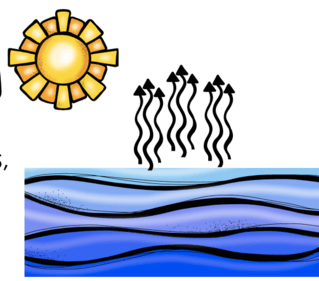
1.

What part of the hydrological cycle does this picture show?

a)

condensation

b)

precipitation

c)

evaporation

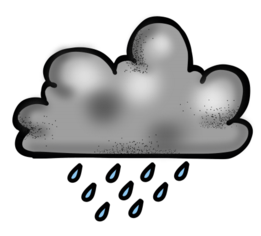
2.

What part of the hydrological cycle does this picture show?

a)

condensation

b)

precipitation

c)

evaporation

3.
Precipitation happens when clouds of water droplets are too ______________.
a)
cold
b)
light
c)
heavy
d)
hot
4.

What is the term for water flowing back to the sea over the land.

a)

Groundwater Flow

b)

Surface Runoff

c)

Through Flow

d)

Infiltration

5.

What is it called when trees get in the way of rain reaching the surface?

a)

Evapotranspiration

b)

Interception

c)

Infiltration

d)

Photosynthesis

6.

What is it called when moisture from plants and leaves is lost to the atmosphere?

a)

Transpiration

b)

Condensation

c)

Throughflow

d)

Percolation

7.

What is an area of land drained by a main river and its tributaries?

a)

Watershed

b)

Bath Tub

c)

Drainage Basin

d)

Water Cycle

8.

What marks the boundary between two drainage basins?

a)

A fence

b)

A river

c)

A watershed

d)

A confluence

9.

Which of the following is an INPUT to a drainage basin?

a)

Surface Runoff

b)

Evaporation

c)

Interception

d)

Precipitation

10.
When rocks bang together becoming rounder, smaller  and smoother.
a)
Hydraulic Action
b)
Attrition
c)
Abrasion
d)
Corrosion
11.
Which of these is the odd one out?
a)
Traction
b)
Saltation
c)
Suspension
d)
Abrasion
12.
This method of erosion is when the force of water breaks the river bed and banks.
a)
Attrition
b)
Abrasion
c)
Corrosion
d)
Hydraulic Action
13.
Small particles which are carried in the water is what type of transportation?
a)
Traction
b)
Solution
c)
Suspension
d)
Saltation
14.
This type of erosion occurs when the rocks being carried by the river scrape away the bed and banks.
a)
Abrasion
b)
Hydraulic Action
c)
Attrition
d)
Corrosion
15.
Which method of transportation is 'bouncing' medium sized particles along the river bed?
a)
Traction
b)
Saltation
c)
Suspension
d)
Solution
16.
Which is the odd one out?
a)
Hydraulic Action
b)
Abrasion
c)
Corrosion
d)
Attrition
17.
Which of the following is the key term that describes the point at which a small river enters another river
a)
Tributary
b)
Watershed
c)
Source
d)
Confluence
18.
A small stream or river feeding into the main river is known as...
a)
Confluence
b)
Source
c)
Tributary
d)
Mouth
19.
What is the name of the point where a river starts?
a)
 Source
b)
 Point A
c)
 Heart
d)
Opening 
20.
Why are the rocks and pebbles found in riverbeds usually smooth?
a)
The rocks are very old.
b)
Animals in the river keep rubbing against the rocks.
c)
Rivers only flow where rocks are smooth.
d)
The rocks are worn smooth by rubbing against other rocks.
21.
Dissolved material is carried along and cannot be seen in the water
a)
Saltation
b)
Suspension
c)
Solution
d)
Traction