wayground logo

Free Printable Worksheets

Font size

S
M
L
XL
Worksheets

Collision theory

Total questions: 35

Worksheet time: 30mins

Name
Class
Date
1.
If the reactant particles collide with less than the activation energy, the particles will be rebound, and no reaction will occur.
a)
True
b)
False
2.
More collisions correspond to a: 
a)
Faster reaction rate  
b)
Slower reaction rate
c)
Constant reaction rate 
d)
None of the above
3.
How can you increase the rate of a reaction
a)
Decrease the pressure
b)
Increase the rate of collisions
c)
Decrease the concentration
d)
Increase the concentration
4.

List four factors that affects the rate of a reaction

a)

temperature

b)

concentration

c)

surface area

d)

volume

e)

catalysts

5.

A temperature increase causes the particles ......

a)

to slow down

b)

move faster

c)

collide higher

d)

in the right order

6.

Why does a higher concentration increase the rate of reaction?

a)

it increases the amount of reactants

b)

it lowers the activation energy

c)

it increases the energy of particle collisions

d)

it increases the frequency of particle collisions

7.
What makes an effective collision?
a)
When molecules collide.
b)
When molecules collide with the proper orientation.
c)
When molecules collide with proper orientation and enough kinetic energy.
d)
High Temperature.
8.
Why don't all collisions between particles cause a reaction?
a)
the particles also need to collide with a catalyst
b)
not all the particles collide with enough energy
c)
not all the particles collide at a high enough temperature
d)
the particles need to collide with each other twice
9.

List four factors that affects the rate of a reaction

a)

temperature

b)

concentration

c)

surface area

d)

volume

e)

catalysts

10.

Objects hitting each other

a)

Collision

b)

Catalyst

c)

Explosion

d)

Reaction

11.

Icing sugar has a greater ______ _____ than a solid cube of

sugar.

a)

Surface Area

b)

Catalyst

c)

Temperature

12.

Which of the following increase the reaction rate?

a)

less surface area

b)

lower temperature

c)

increased concentration

13.

Which factors increase the rate of a reaction?

a)

increasing temperature

b)

increasing concentration

c)

increasing surface area

d)

all of these

14.

Grinding a effervescent tablet into powder increases the rate of reaction due to increased

a)

concentration

b)

surface area

c)

temperature

d)

reactants

15.

Increasing the temperature gives particles more __________.

a)

Time

b)

Energy

c)

Space

d)

Frequency

16.

As the frequency of ______________ increases, the rate of reaction increases.

a)

Time

b)

Reactions

c)

Collisions

d)

Reactants

17.
In an endothermic reaction, heat is ,,,
a)
taken in
b)
given out
18.
What type of reaction occurs in a hand warmer
a)
exothermic
b)
endothermic
19.
If a chemical reaction is EXOTHERMIC, the temperature would....
a)
Stay the same
b)
Increase
c)
Decrease
20.
When iron nails get rusty, heat is released.  What process is this?
a)
Exothermic
b)
Endothermic
21.
Is the combustion of gasoline endothermic or exothermic?
a)
Endothermic
b)
Exothermic
22.
Is photosynthesis an exothermic or endothermic reaction?
a)
Endothermic
b)
Exothermic
23.
During an endothermic reaction in a beaker if we are part of the surroundings and touched the beaker, it would feel _______. 
a)
Warm
b)
Cold
24.
If they energy required to break the bonds is greater than the energy given out by making new bonds the reaction is
a)
Exothermic
b)
Endothermic
c)
Neutralisation
25.
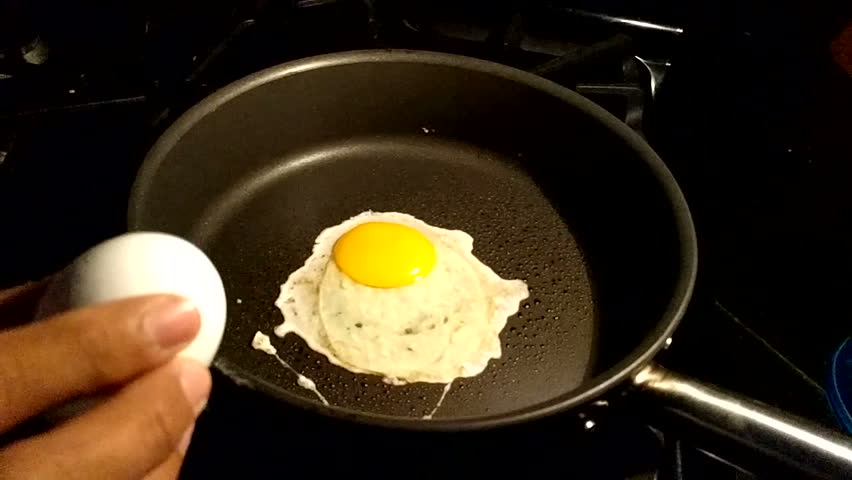
Baking bread and cooking an egg are examples of....?
a)
Endothermic processes
b)
Exothermic processess
c)
None of these 
26.
What happens to particles as they heat up?
a)
They slow down
b)
Nothing
c)
They don't move
d)
They speed up
27.
Which of the following is a sign that a chemical reaction has occurred?
a)
change in shape
b)
melting
c)
bubbles of gas appear
d)
dissolving
28.

02 (g)+ 2H2-------------2H20 + Energy

a)

endothermic

b)

exothermic

29.

6CO2 + 6H20 + Energy --------------- C6 H12 06 + 6O2

a)

endothermic reaction

b)

exothermic reaction

30.
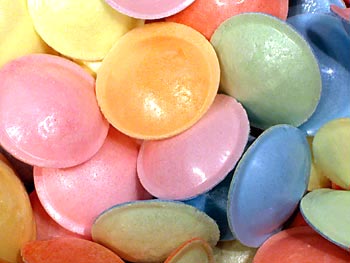
Have you ever eaten sherbet sweets candy? They fizz in your mouth and your tongue feels cold. Why do you think that is?
a)
It is an exothermic reaction
b)
It is an endothermic reaction
c)
It is made of ice
d)
It is dissolving your mouth
31.

Endo means in or _______.

a)

absorbed

b)

released

32.

Exo means out or ________.

a)

absorbed

b)

released

33.

What instrument would you use to detect an endothermic or exothermic reaction?

a)

triple beam balance

b)

ruler

c)

thermometer

34.

Is this diagram endothermic or exothermic

a)

Endothermic

b)

Exotermic

c)

Exothermic

d)

Endote

35.

This diagram is exothermic. Why?

a)

products are always at a lower energy compared to the reactants

b)

Products are always at a higher energy compared to the reactants

c)

Reactants are always the same as the products

d)

Whaaaaattttttttt?????