Wayground logo

Free Printable Worksheets

Font size

S
M
L
XL
Worksheets

SCIENCE FCAT REVIEW

Total questions: 196

Worksheet time: 4hrs 25mins

Name
Class
Date
1.
What does it mean if an object is transparent?
a)
Light cannot pass through the object.
b)
Light is refracted by the object.
c)
Light passes through the object.
d)
Light is absorbed by the object.
2.
The picture shows light being ________________.
a)
Refracted
b)
Absorbed
c)
Split
d)
Reflected
3.
When you see a rainbow, light is _________________ and ___________________.
a)
Refracted and Reflected
b)
Refracted and Absorbed
c)
Reflected and Absorbed
d)
Reflected, Absorbed, and Refracted.
4.
Explain what is happening in the picture.
a)
Light is reflected.
b)
Light is absorbed.
c)
Light is diffused.
d)
Light is refracted.
5.
_________________ is the change in direction of light waves as the waves pass from the air into water.  The light appears to bend.
a)
Reflection
b)
Refraction
c)
Defraction
d)
Mirror Image
6.
What is a prism?
a)
A transparent object that reflects light.
b)
A transparent object that refracts light.
c)
A translucent object that refracts light.
d)
A translucent object that reflects light.
7.
Objects that do not allow light to pass through are _____________ .
a)
Transparent
b)
Opaque
c)
Translucent
d)
Prisms
8.
Select the term that best identifies the picture.
a)
Translucent
b)
Transparent
c)
Opaque
d)
Prism
9.
Select the term that best describes the picture
a)
Transparent
b)
Translucent
c)
Opaque
d)
Prism
10.
Select the term that best describes the picture.
a)
Opaque
b)
Transparent
c)
Translucent
d)
Absorption
11.
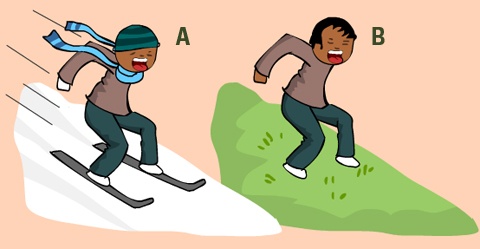
Why is it harder for the boy in Image B to get down the hill?
a)
Motion
b)
Friction
c)
Work
d)
Displacement
12.
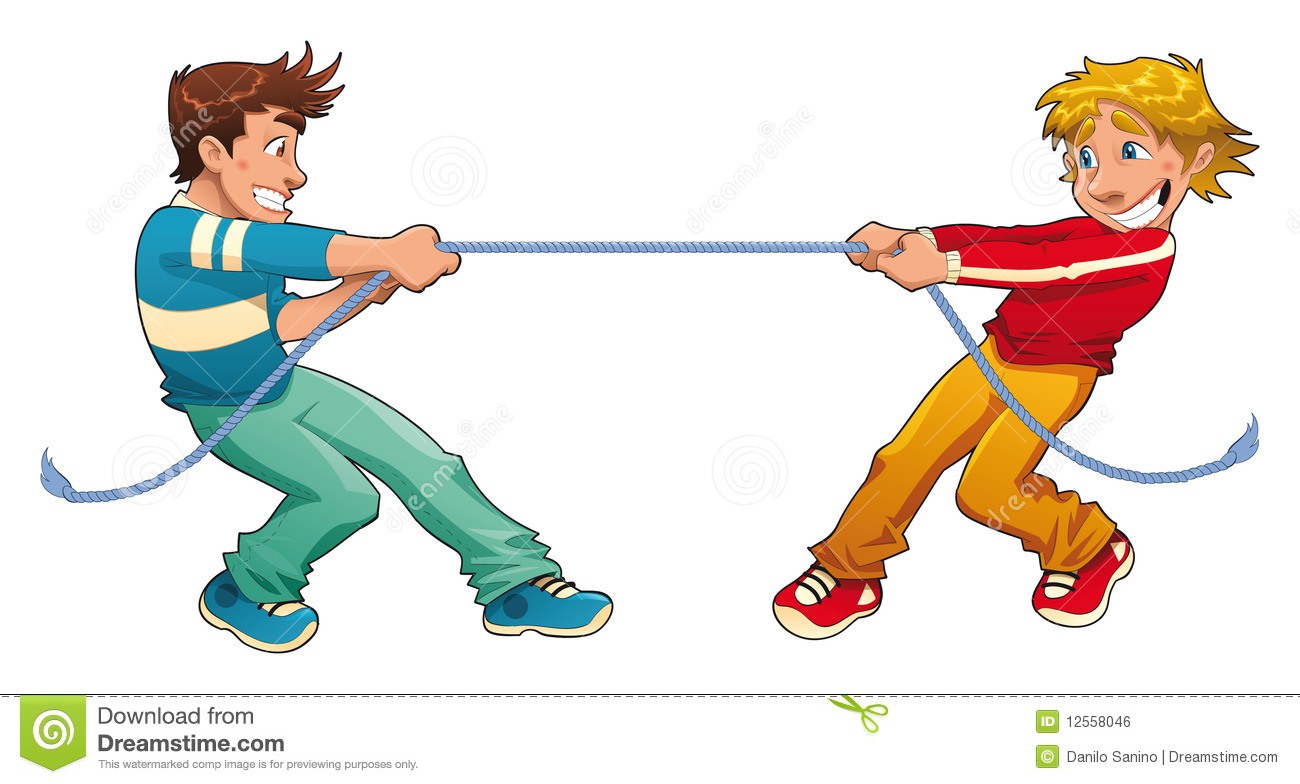
If these boys are pulling with the same amount of force.  What will happen?
a)
The boy in blue will win.
b)
They will not move at all.
c)
The boy in red will win.
d)
Both will fall down.
13.
 The diagram shows forces acting on a box. 
Which statement best describes what will happen to the box as a result of these forces being applied? 
a)
The box will move up. 
b)
The box will move to the left.
c)
The box will move to the right. 
d)
The box will remain stationary.
14.

Students design an experiment to determine how much force is needed to move bricks with different masses slowly across a platform. Which procedure should student include in their design?

a)

conduct 5 trials, using a different spring scale to pull each brick

b)

conduct 5 trials, pulling each brick in the same way for each trial

c)

conduct 5 trials, using a different platform for each trial

d)

conduct 5 trials, pulling a different side of brick each time

15.

Our teacher has an aquarium in which fish and aquatic plants are growing. How is carbon dioxide directly involved in the survival of organisms in the aquarium?

a)

The plants release carbon dioxide into the water to control the water temperature.

b)

The plants need carbon dioxide to make sugar.

c)

Both the plants and the fish need carbon dioxide to make their own nutrients.

d)

The fish must absorb carbon dioxide through their gills for energy.

16.

Aquatic plants have adaptations that help them live in water. For example, the structures needed for making food are located on the tops of floating plant leaves. This adaptation helps the plants __

a)

avoid predators

b)

stay anchored

c)

absorb sunlight

d)

capture fish

17.

Claire has salt, gravel, shampoo, and sugar. She stirs 15 g of each into 200 mL of water to create four different mixtures. She then tries to separate the water from each mixture by pouring the mixture through a tea strainer. Which mixture can Claire separate most easily with the strainer?

a)

salt and water

b)

sugar and water

c)

gravel and water

d)

shampoo and water

18.
An organism that lives by breaking apart dead organic matter into simpler parts is...
a)
scavenger
b)
consumer
c)
decomposer
d)
carnivore
19.
Lions often hide in the tall grass while stalking their prey.  This is an example of...
a)
camouflage
b)
warning coloration
c)
mimicry
d)
hibernation
20.
Hot coffee is stirred with a spoon.  The spoon gets hot due to
a)
conduction
b)
convection
c)
radiation
21.
An iron is placed on your clothes to smooth out the wrinkles.  The iron transfers heat to your clothes through
a)
conduction
b)
convection
c)
radiation
22.
A pot is placed directly on a stove.  The pot gets hot due to
a)
conduction
b)
convection
c)
radiation
23.
Is making a cake physical or chemical
a)
physical
b)
chemical
c)
ducktile
d)
maluable
24.
Which of the following is a producer
a)
Blueberry Bush
b)
Tree
c)
Flower
d)
All of the above
25.
16.  What is shown in the image below?
a)
F.  The force needed to use a pulley
b)
G.  The path light takes when it is refracted
c)
H.  The flow of an electrical current
d)
J.  The path light takes when it is reflected
26.
the outer planets in order 
a)
Jupiter, Saturn, Neptune, Uranus
b)
Saturn, Jupiter, Uranus, Neptune
c)
Jupiter, Saturn, Uranus, Neptune
d)
Venus, Mercury, Earth, Mars
27.
What causes the sun to look like it moves across the sky
a)
the rotation of the Earth
b)
the seasons of the Earth
c)
the sun revolving around the Earth
d)
the moon revolving around the Earth
28.
Where does the sun rise?
a)
East
b)
West
c)
South
d)
North
29.
What would it mean if a fossil of a shark tooth is found in the Rocky Mountains?
a)
That the Rocky Mountain area used to be a desert
b)
That the rocks in the mountains had once been under water
c)
That the wind had blown the fossil into the mountains
d)
That the ocean used to be a desert
30.
What kind of sedimentary rock is made from compacted sand?
a)
limeston
b)
sandstone
c)
conglomerate
d)
marble
31.
Where do most sediments come from?
a)
evaporation
b)
meteor showers
c)
cooling of magma
d)
weathering of older rocks
32.
Which of the following are an example of a predator-prey relationship?
a)
two deer
b)
sheep and a cow
c)
otter and a fish
d)
baby and mom giraffe
33.
When an earthworm feeds upon the remains of a dead raccoon, it is acting as a .....
a)
producer
b)
consumer
c)
decomposer
d)
parasite
34.
The ultimate source of energy for almost all living organisms is
a)
animals
b)
plants
c)
the Sun
d)
bacteria
35.
In this diagram, what is the producer?
a)
sea lamprey
b)
trout
c)
phytoplankton
d)
plankton-eating fish
36.
Jeff is working with a graduated cylinder. The graduated cylinder is filled with 18 milliliters of water. He drops a small rock into the graduated cylinder, and the rock sinks to the bottom. After the water level settles, the graduated cylinder reads 21 milliliters. Which of the following is true?
a)
The weight of the rock is 3 grams.
b)
The volume of the rock is 3 milliliters.
c)
The graduated cylinder is not working correctly.The rock contained 3 milliliters of water.
d)
The graduated cylinder is not working correctly.
37.
What do you call the step in the Scientific Method where the scientist makes a prediction?
a)
Hypothesis
b)
Analysis
c)
Experiment
d)
Conclusion
38.
What is a combination of 2 or more substances called when each ingredient maintains their physical properties?
a)
Molecule
b)
Solution
c)
Ingredient
d)
Mixture
39.
What process makes food for  plants?
a)
reproduction
b)
photosynthesis
c)
respiration
d)
condensation
40.
In the diagram,  what essential part of an electric circuit is missing at position X?
a)
load
b)
on/off switch
c)
wires
d)
electrical source
41.
Which of these experimental designs would best test this hypothesis?
a)
A
b)
B
c)
C
d)
D
42.
Fossil fuels such as gas, oil, and coal have what kind of energy?
a)
mechanical energy
b)
chemical energy
c)
nuclear energy
d)
electrical energy
43.
 After fishing in the ocean, a student left his fishing gear in the sun to dry. Later, he noticed that small white crystals had formed on the rod, reel, and fishing line. Which of these is the best explanation of what occured?
a)
The fish that were caught left scales on the fishing gear.
b)
The water evaporated from the fishing gear, and salt from the ocean was left behind.
c)
The water evaporated from the fishing gear, and sand was attracted to it.
d)
The salt in the ocean water reacted with the fishing fear and caused it to rust.
44.
What is a hypothesis?
a)
A theory
b)
An educated guess based on information that uses the words "if" and "then"
c)
What is changed in an experiment
d)
The first step in the Scientific Process
45.
A good testable question and a good hypothesis must be..
a)
Approved by the National Science Committee
b)
Based on prior knowledge
c)
Written in present tense
d)
Testable & measurable (independent & dependent variables)
46.
The first step in the scientific method is to
a)
Write a testable question
b)
Make a hypothesis
c)
Go as someone for help
d)
Write the results
47.
Which step from the Scientific Method is missing:
Testable question
Hypothesis
Experiment
Conclusion
a)
Gather materials
b)
Write down steps
c)
Results
d)
Run tests
48.
What is a dependent variable?
a)
The one change of an experiment
b)
What is measured in an experiment
c)
Things that must stay the same
49.
Which step of the scientific method tells what happened and includes the averages of data collected in the experiment?
a)
Hypothesis
b)
Conclusion
c)
Experiment
d)
Results
50.
What is the independent variable in the following testable question:
How does changing the size of the tail affect how long a kite will fly in minutes?
a)
How long the kite will fly
b)
The size of the tail
51.

What is the dependent (OUTCOME) variable in the following testable question:

How does changing the color of the can affect how hot it will get in the sun?

a)

How hot it will get in the sun

b)

The color of the can

52.
In the following experiment, which of the choices below should be kept constant?
"Three baseball players investigate to see who can throw a baseball the farthest. They mark off an area on the playground for their investigation."
a)
Color of ball
b)
Throwing order
c)
Throwing spot
53.
In the following experiment, time is what variable?
"To determine the boiling point of an unknown liquid, a student heats 10 ml of the liquid in a test tube and records the temperature every minute for 20 minutes."
a)
Independent
b)
Control
c)
Dependent
54.

In the following experiment, which of the variables in the independent (TESTED) variable?

"Students plan to use rain gauges to compare average monthly rainfall in different areas of their state."

a)

Height of gauge

b)

Location of gauge

c)

Brand of gauge

55.

A change in some properties of matter without forming different kinds of matter

a)

Mass

b)

Solvent

c)

Physical change

d)

chemical change

56.
Water on the bathroom mirror after a hot bath or shower is an example of — 
a)
evaporation
b)
condensation
c)
percipitation
d)
sleet
57.
Hail, sleet, and snow are examples of —
a)
evaporation
b)
condensation
c)
percipitation
d)
storage
58.
Hypothesis 
a)
 a conclusion made after an experiment
b)
Facts and information scientists gather during an experiment
c)
Uses information you already know to make a prediction or good guess to answer a question or solve a problem 
d)
None of the above
59.
This is used specifically to TEST a hypothesis or prediction - by collecting data and using variables to analyze and solve problems. 
a)
Theory
b)
Variable
c)
Hypothesis
d)
Experiment
60.
Which of the following is required to be a good, scientific question?
a)
Scientific questions that are easy to answer
b)
Scientific questions that you do not need measurements to answer
c)
Investigation results that other scientists can repeat
d)
Investigation results that depend only on observations made by other scientists 
61.
All scientific discoveries should  
a)
be Supported by strong evidence
b)
be agreed upon by everyone's opinions
c)
Should make everyone happy
d)
be boring
62.
What is the shape of our milky way galaxy?
a)
Irregular (not normal)
b)
Globular
c)
Spiral
d)
Constellation 
63.
Inner planets are mostly made of
a)
Gas
b)
Hydrogen
c)
Rock
d)
Rings
64.
All planets contain rings.
a)
True
b)
False
65.
Something that all planets have in common is that they ______________ around stars
a)
Rotate
b)
Revolve (orbit)
c)
asteroid
d)
Comet
66.
Which of the following describes a comet?
a)
A large collection of burning hot gas
b)
A collection of ice, dust, and small rock particles with a tail
c)
A large rocky ball that orbits in a regular pattern around the sun
d)
A small rocky object that burns up in earth's atmosphere.
67.
Which of the following pairs the term correctly with the change of water?
a)
1. Evaporation - water heats up 2. Condensation - water cools down 3. Precipitation - water falls from the sky.
b)
1. Evaporation - water cools down 2. Condensation - water heats up 3. Precipitation - water falls from the sky.
c)
1. Evaporation - water heats up 2. Condensation - water falls from the sky 3. Precipitation - water cools down
68.
What is the function of this organ?
a)
Filters waste from the blood in order to make Urine
b)
Holds waste (Urine) in it until it's time to excrete (pee).
c)
To be a command center for all other organs
d)
None of these
69.
Which organ is this?
a)
Hearts
b)
Lungs
c)
Bladders
d)
Kidneys
70.
What is the function of this organ?
a)
Pump blood to the rest of the body
b)
Supply the body with oxygen by breathing
c)
Hold urine until its time to pee
d)
Filter and clean the blood by removing waste, creating URINE
71.
The purpose of this organ is to:
a)
Digest food for the first time
b)
Supply the body with blood
c)
Remove water from digested food, bringing it back to the body so we don't get dehydrated
d)
Supply the body with oxygen
72.
The job of this organ is to:
a)
Produces bile - this helps break down food. Also eliminates toxins from the blood.
b)
Release insulin to break down sugar
c)
Be the body's first organ to digest food after falling from the esophagus
d)
Supply the body with oxygen
73.
The job of this organ is to 
a)
Supply the body with blood
b)
Digest food
c)
Supply the body with oxygen
d)
Clean and filter the body's blood
74.
Which organ in the fish is most similar to the human respiratory system?
a)
The fins
b)
The gills
c)
The skin
d)
The swim bladder
75.
Which part of the human body protects organs, provides support, and forms blood cells?
a)
The brain
b)
The heart
c)
The liver
d)
The skeleton 
76.
About how much time does it take the Earth to complete one rotation?
a)
24 hours
b)
7 days
c)
28 days
d)
1 year
77.
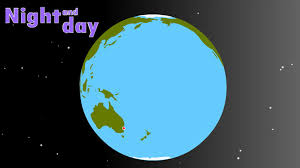
The change from day time to night time, and back again, is caused by
a)
the position of the Moon
b)
the movement of the tides
c)
the brightness of the Sun
d)
the rotation of the Earth
78.
The Sun appears to move across the sky due to the
a)
rotation of the Earth
b)
gravity of the Moon
c)
large size of the Sun
d)
movement of the tides
79.
In the morning, the Sun is low in the sky and by noon the Sun is much higher in the sky because
a)
the Sun has increased its temperature
b)
Earth has rotated on its axis
c)
the SUn has turned to face the Earth
d)
the Earth has moved closer to the Sun
80.
Which of the following best describes why the Earth has the four seasons?
a)
The sun is closer to the Earth during summer and farther away during winter
b)
The sun shines directly onto the equator all year long
c)
The tilt of the Earth is the primary reason for the seasons
81.
What motion of the Earth takes 365 days?
a)
Rotation
b)
Tilting 
c)
Revolution
d)
Spinning
82.
Which happens in one year’s time?
a)
The moon makes one complete revolution around Earth.
b)
Earth makes one complete revolution around the sun.
c)
Earth makes one complete spin on its axis.
d)
The sun makes one complete spin on its axis.
83.
The Earth spins on a tilted angle called a (an) 
a)
Axis
b)
Invert
c)
Revolution
d)
Bounce
84.
What type of rock is granite?
a)
Sedimentary
b)
Metamorphic
c)
Igneous
d)
Clastic
85.
Which type of rock comes from this?
a)
metamorphic
b)
sedimentary
c)
igneous
d)
all rocks
86.
Which mineral property is being shown here?
a)
luster
b)
hardness
c)
cleavage
d)
streak
87.
All of the things we use from the environment or the world around us...
a)
Living Resources
b)
Nonrenewable Resources
c)
Renewable Resources
d)
Natural Resources
88.
What causes wind to blow?
a)
Differences in longitude 
b)
Shock waves from clouds 
c)
Differences in air temperature and pressure 
d)
The rotation of the earth
89.
What word best describes our sun?
a)
Average
b)
Supergiant
c)
Dwarf
d)
Red Giant
90.
Why do other stars appear so much smaller than the sun?
a)
They are much smaller
b)
They are so far away
c)
They are not as bright
d)
They are dwarf stars
91.
What color of star is the hottest?
a)
Blue
b)
Red
c)
Yellow
d)
Orange
92.
What color of star is the coolest?
a)
Red
b)
Yellow
c)
Blue
d)
White
93.
True or False
Stars are really close together in outer space.
a)
True
b)
False
94.
Which best explains why runoff is important?
a)
It returns water to other locations on Earth
b)
It increases the chance of flooding
c)
It makes evaporation occur faster
d)
It increases condensation
95.
Does evaporation happen before or after condensation?
a)
before
b)
after
c)
during
96.
What is it called when plants give off water vapor as a waste product?
a)
condensation
b)
evaporation
c)
sublimation
d)
transpiration
97.
When water _________, dew forms.
a)
Melts
b)
Evaporates
c)
Condenses
d)
Precipitates
98.
Which would make the highest pitch on this instrument?
a)
Plucking without pressing the rubber band down
b)
Plucking while pressing the rubber band to the red tape
c)
Plucking while pressing the rubber band to the white tape
d)
Plucking while pressing the rubber band to the yellow tape
99.
A note is played on a guitar.  Next, a lower note is played on the guitar.  Which of these statements describes the lower note?
a)
Both notes vibrated at the same speed.
b)
The second note vibrated slower.
c)
The first note vibrated slower.
d)
The second note vibrated faster.
100.
A shorter pipe makes a _______ pitch than a long pipe.
a)
louder
b)
softer
c)
higher
d)
lower
101.
What is pitch?
a)
the back and forth movement of matter
b)
how loud a sound is
c)
how high or low a sound is
d)
the number of vibrations per second
102.
A change in energy from one form to another is called an _________.
a)
energy conversion
b)
electrical circuit
c)
force
d)
work
103.
Food is a form of this type of energy.
a)
Light energy
b)
chemical energy
c)
Sound energy
d)
Thermal energy
104.
What is an example of nonrenewable energy?
a)
Coal
b)
Solar
c)
Wind
d)
Hydropower
105.
Objects in motion have ______ energy.
a)
Sound
b)
Thermal
c)
Mechanical
d)
Electrical
106.
Turning on the radio is what type of energy conversion?
a)
sound to light
b)
electrical to sound
c)
electrical to light
d)
light to electrical
107.
Which is NOT an insulator.
a)
Wool
b)
Plastic
c)
Copper
d)
Glass
108.
Something electricity can't move through is called a(n) ______.
a)
conductor
b)
wire
c)
shoe
d)
insulator
109.
What is a example of a conductor?
a)
wood 
b)
metal
c)
rubber
d)
rock
110.
What is a example of a insulator?
a)
metal 
b)
rubber
c)
water
111.
Which force produces a change in motion?
a)
unbalanced force
b)
balanced force
c)
gravitational force
d)
frictional force
112.
a)
Egg
b)
Caterpillar
c)
Pupa
d)
Adult
113.
a)
Instinct
b)
Duplication
c)
Reproduction
d)
Metamorphosis
114.
List the correct order of the three stages in an incomplete life cycle. 
a)
egg, nymph, adult
b)
adult, nymph, egg
c)
egg, adult, nymph
d)
nymph, egg, adult
115.

How many stages are in an incomplete life cycle?

a)

1

b)

2

c)

3

d)

4

116.

Complete or Incomplete Metamorphosis?

a)

Complete because it has 3 stages

b)

Complete because it has 4 stages

c)

Incomplete because it has 3 stages

d)

Incomplete because it has 4 stages

117.
How do you know this insect is undergoing incomplete metamorphosis? 
a)
The insect changes color when it becomes an adult.
b)
The first stage of the insects development is as an egg.
c)
The insect undergoes more than four stages in its development.
d)
The insect has similar body parts throughout its development.
118.
In incomplete metamorphosis which stage doesn't belong?
a)
egg
b)
nymph
c)
pupa
d)
adult
119.
What is the name of the structure where photosynthesis takes place?
a)
roots
b)
stems
c)
leaves
d)
flowers
120.
A plant’s vascular system is a system of tubes inside the plant that 
a)
carries food, water, and nutrients to all parts of the plant.
b)
uses energy from light to make food.
c)
takes in water and nutrients from the soil.
d)
holds up the leaves so they can absorb sunlight
121.
What is the male fertilizing organ called
a)
Pistil
b)
Anther
c)
Filament
d)
Stamen
122.
What is the female organ of the flower
a)
Ovary
b)
Pistil
c)
Stigma
d)
Style
123.
FILTRATION would be used for which of the following situations?
a)
removing iron nails that have fallen into a box of aluminum screws
b)
removing salt that has dissolves in water
c)
separating marbles into groups of different sizes/diameters
d)
separating sea shells from a tank of ocean water
124.
EVAPORATION would be used for which of the following situations?
a)
removing iron nails that have fallen into a box of aluminum screws
b)
removing salt that has dissolves in water
c)
separating marbles into groups of different sizes/diameters
d)
separating sea shells from a tank of ocean water
125.
Which method of separation would I use if I wanted to remove iron nails that have fallen into a box of wood chips?
a)
Sifting
b)
Filtration
c)
Magnetic Attraction
d)
Evaporation
126.
Ms. Meeks mixed together sand, salt, and metal filings in water. What series of steps will she need to take to easily separate each of the substances?
a)
Filter out the salt and attract the iron filings with a ma
b)
Filter out the salt, attract the metal filings with a magnet, and evaporate the water from the sand
c)
Filter out the sand and salt and heat the solution that is left
d)
Filter out the sand, attract the metal filings with a magnet, and evaporate off the water from the salt
127.
Which form of matter does not take the shape of its container?
a)
liquid
b)
gas
c)
solid
d)
air
128.
Which state of matter has particles arranged like this?
a)
solid
b)
liquid
c)
gas
129.
Which state of matter has particles arranged like this?
a)
solid
b)
liquid
c)
gas
130.
Which state of matter has particles arranged like this?
a)
solid
b)
liquid
c)
gas
131.
Which state of matter has particles that are still close together, but can move around each other?
a)
solid
b)
liquid
c)
gas
132.
Which state of matter has particles that are very far apart and zing around?
a)
solid
b)
liquid
c)
gas
133.
The amount of matter in an object is a measure of the object's ________________.
a)
volume
b)
density
c)
mass
d)
solubility
134.
What are the five properties of matter?
a)
solid, liquid, gas, plasma and fire
b)
protons, neutrons, electrons, nucleus and molecules
c)
color, mass, volume, texture and temperature
d)
freezing, melting, evaporation, condensation
135.
Which weather tool measures air pressure?
a)
thermometer
b)
barometer
c)
anemometer
d)
psychrometer
136.
What kind of weather is usually associated with a high pressure system?
a)
Sunny weather
b)
Precipitation (rain, snow, etc.)
137.
Mark looks at the clouds in the sky and decides that he does not need to
take his umbrella with him today. Which clouds did Mark most likely see
in the sky?
a)
cirrus
b)
nimbostratus
c)
cumulonimbus
138.
Which type of cloud is most often observed during a thunderstorm?
a)
cirrus
b)
stratus
c)
cumulus
d)
cumulonimbus
139.
Hot air (RISES / FALLS) __________.
a)
RISES
b)
FALLS
140.
Cold air (RISES/ FALLS)  _________.
a)
RISES
b)
FALLS
141.
Which condition usually means cloudy, stormy weather?
a)
high pressure
b)
low pressure
142.
A violently rotating column of air called a _____ when it comes in contact with the ground.
a)
hurrican
b)
tornado
c)
trade wind
d)
local wind
143.
The amount of water vapor present in the air is called ________________.
a)
weather
b)
humidity
c)
air mass
d)
dew point
144.
The moon is half lit by the sun at all times.        
a)
True
b)
False
145.
The moon is not visible in the night sky during which phase? 
a)
Waning Crescent
b)
Full Moon
c)
Waxing Gibbous
d)
New Moon
146.
The moon is a natural  ______ of Earth.
a)
comet
b)
axis
c)
satellite
d)
space probe
147.
During the phases of the Moon, the Moon appears to change shape.  This change in appearance is due to the Moon
a)
physically changing size and shape.
b)
moving closer and then farther away from Earth.
c)
reflecting a different amount of light due to the position with Earth and the Sun.
d)
having craters on its surface.
148.
The moon cycle (lunar cycle) takes approximately _______________ to complete.
a)
a year
b)
29.5 days/about one month
c)
1 day
d)
1 week
149.
In which science tool would you measure in ML (milliliters)?
a)
beaker and graduated cylinder
b)
beaker and ruler
c)
graduated clinder and meter stick
d)
triple beam balance
150.
microscopes would be useful for looking at...
a)
blood cells
b)
cows
c)
candy
d)
criminals
151.
What is this tool?
a)
binoculars
b)
microscope
c)
hand lens
152.
What is this scientific tool?
a)
beaker
b)
tube
c)
graduated cylinder
d)
balance
153.
What is another word for hypothesis?
a)
evidence
b)
graph
c)
investigation
d)
prediction
154.
Why should an experiment be repeated?
a)
to form a hypothesis
b)
to reduce the chance of error
c)
to change constants
d)
to identify the problem
155.
The tree branch is broken.
a)
inference
b)
observation
156.
If the boy crawled out of the water, the goat would push him in.
a)
inference
b)
observation
157.
A large ecosystem is called a ______
a)
Ecosystem
b)
Habitat
c)
Biome
d)
Niche
158.
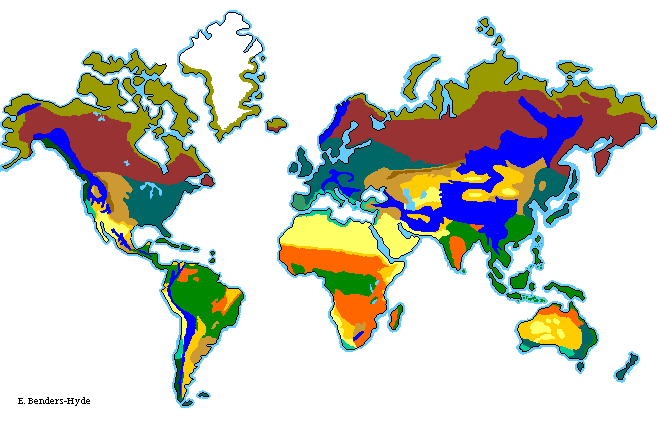
What is the main factor that separates the biomes?
a)
Land
b)
Water
c)
Climate
d)
Longitude
159.
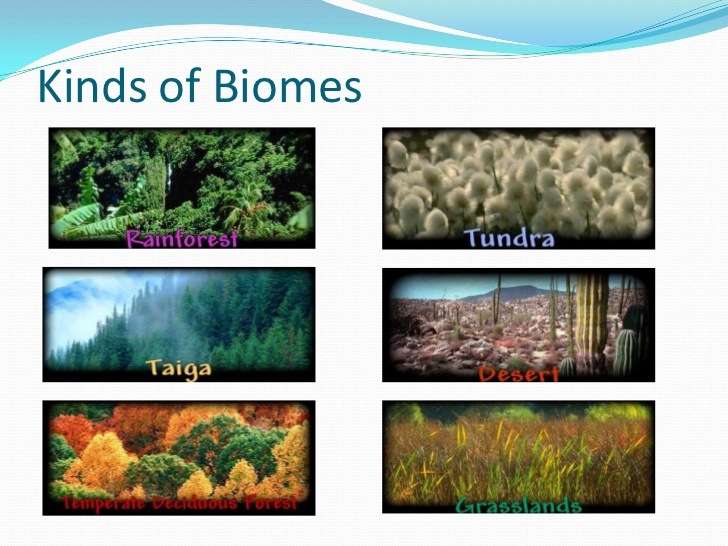
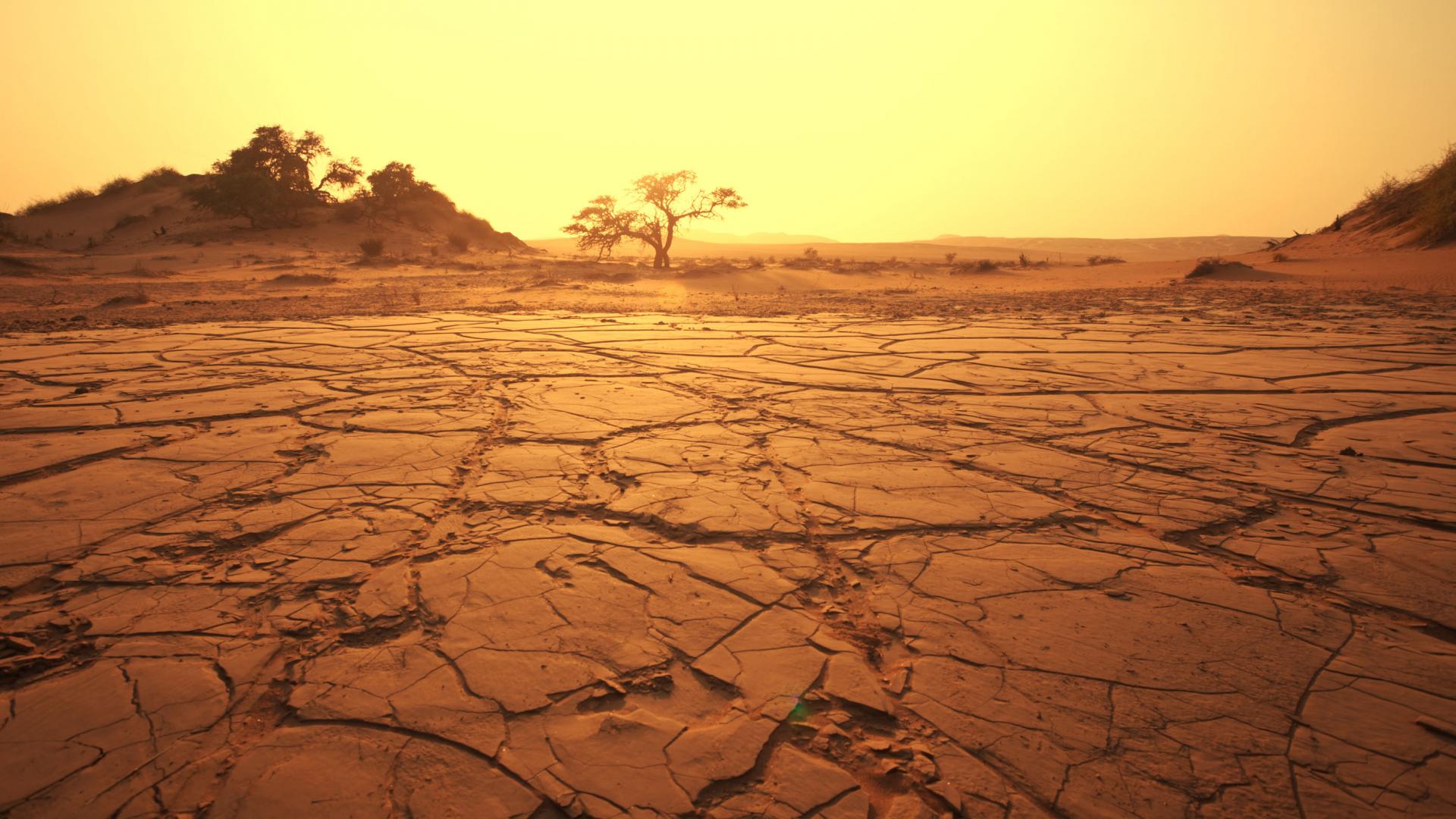
Which biome is the driest?
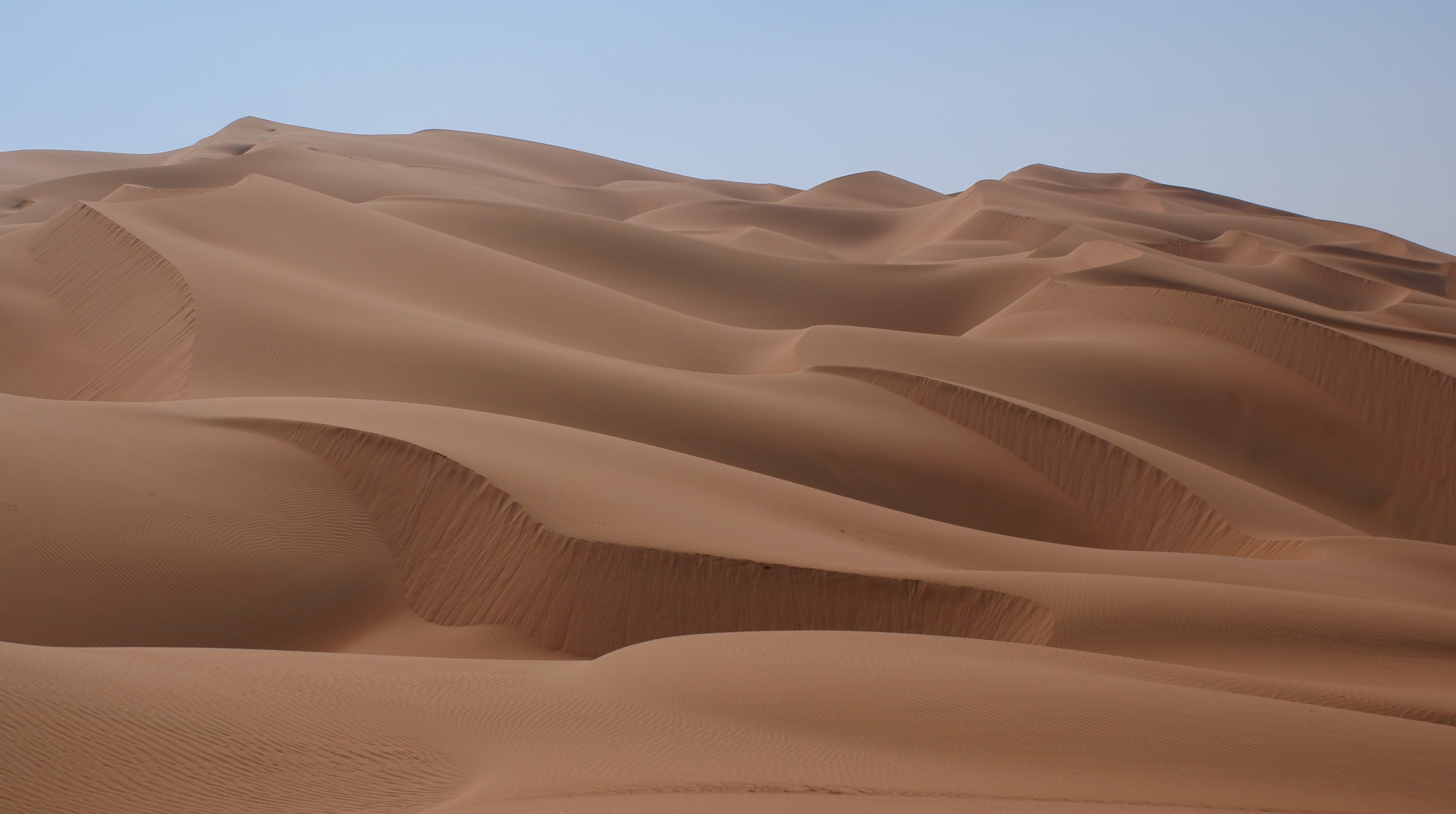
a)
Desert
b)
Tundra
c)
Taiga
d)
Rainforest
160.
Which biome has deciduous trees (which lose their leaves)?
a)
Temperate Forest
b)
Rainforest
c)
Grasslands
d)
Taiga
161.
Which biome has wide-open fields of grass?
a)
Taiga
b)
Grasslands
c)
Temperate Forest
d)
Rainforest
162.
Which biome has 4 seasons?
a)
Taiga
b)
Tundra
c)
Grasslands
d)
Temperate Forest
163.
In which 2 biomes can only plants/animals with adaptations survive?
a)
Taiga/Temperate Forest
b)
Grasslands/Desert
c)
Tundra/Desert
d)
Rainforest/Tundra
164.
Which biome is home to lions, zebras, wildebeests, giraffes, and elephants?
a)
Grasslands
b)
Tundra
c)
Rainforest
d)
Temperate Forest
165.
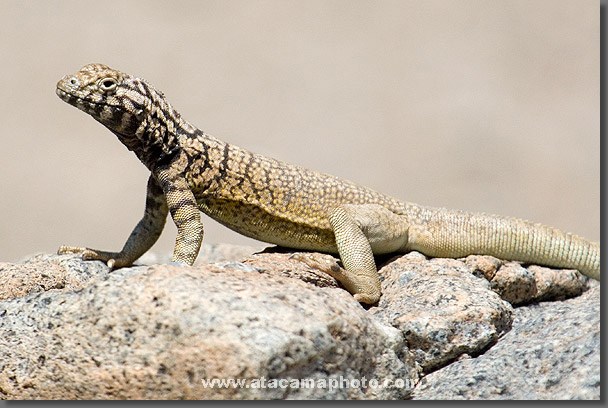
Which biome is home to cacti, scorpions, coyotes, kangaroo rats, and lizards?
a)
Desert
b)
Grasslands
c)
Temperate Forest
d)
Taiga
166.
Which biome is represented by the rainfall amounts in letter C?
a)
desert
b)
prairie
c)
deciduous forest
d)
tropical rain forest
167.
Which biome is MOST LIKE the "desert" in terms of precipitation?
a)
tropical rainforest
b)
temperate deciduous forest
c)
tundra
d)
coniferous forest
168.

What is the process of moving sediments from location to another?

a)

Deposition

b)

Erosion

c)

Weathering

d)

Compaction

169.
The process of breaking up Earth's surface into sediment is called...
a)
sediment
b)
erosion
c)
weathering
d)
deposition 
170.
What is sediment?
a)
the process of rocks being broken down and carried away
b)
bits of rock, sand, and silt caused by the weathering of rocks
c)
the top layer of the soil
d)
decaying plant or animal material 
171.
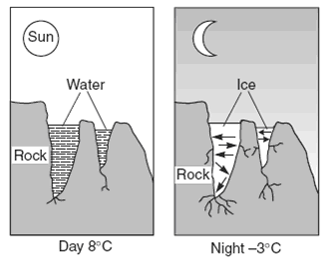
The diagrams  shows a natural process that weathers rock.
 Which statement best explains why this process results in weathering?
a)
frozen water acts as a solute
b)
water expands when it freezes
c)
the mass of water increases when it freezes
d)
frozen water dissolves most types of rock
172.
The process that breaks down rocks and other materials on Earth's surface is called
a)
weathering
b)
erosion
c)
soil conservation
d)
decomposition
173.
Rain washing away soil from a hillside
a)
Weathering
b)
Erosion
c)
Deposition
174.
The moon seems to change shape from day to day in a cycle that lasts about a month as it goes through _.
a)
revolutions
b)
phases
c)
rotations
d)
eclipses
175.
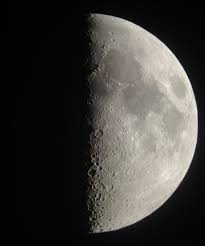
Name the moon phase
a)
First Quarter
b)
Last Quarter
c)
New Moon
d)
Full Moon
176.
Name the moon phase
a)
First Quarter
b)
Last Quarter
c)
New Moon
d)
Full Moon
177.
Name the moon phase
a)
First Quarter
b)
Last Quarter
c)
New Moon
d)
Full Moon
178.
Name the phase of the moon for letter a
a)
First Quarter
b)
Last Quarter
c)
Waxing Gibbous
d)
Waning Gibbous
179.
When the moon is in between the earth and the sun it is a
a)
New Moon
b)
Full Moon
c)
First Quarter
d)
Third Quarter
180.
The Moon gets its light from the
a)
Earth
b)
Stars
c)
Sun
181.
Name the phase of the moon that comes one week BEFORE this moon phase.
a)
waxing gibbous
b)
waning gibbous
c)
1st quarter
d)
3rd/last quarter
182.
Name the phase of the moon that comes one week BEFORE this moon phase. (NO MOON SEEN)
a)
full moon
b)
waxing crescent
c)
1st quarter
d)
3rd quarter
183.
Name this moon phase.
a)
new moon
b)
1st quarter moon
c)
last quarter moon
d)
waning gibbous
184.
When the Earth is between the Moon and the Sun, it is most likeky a:
a)
Full Moon
b)
Half Moon
c)
3rd Quarter Moon
185.
The moon revolves around Earth about once every...
a)
24 Hours
b)
29 Days (One Month)
c)
365 1/4 Days (One Year)
186.
At which point will a person on Earth see a last quarter moon?
a)
3
b)
7
c)
6
d)
5
187.

Which climate zone is #1?

a)

Tropical Rain Forest

b)

Desert

c)

Grassland

d)

Tundra

188.

What climate zone is the white area in the picture?

a)

Polar zone

b)

Temperate zone

c)

Tropical zone

189.

What climate zone is the red area in the picture?

a)

Polar zone

b)

Temperate zone

c)

Tropical zone

190.

Temperatures in the TEMPERATE ZONES are...

a)

cold all year

b)

always warm

c)

warm in summer and cold in winter

191.

Temperatures in the TROPICAL ZONES are...

a)

cold all year

b)

always warm

c)

warm in summer and cold in winter

192.
In a food chain the arrows always point in which direction?
a)
from the consumer to the producer
b)
in the direction that the energy is being transferred
c)
away from the direction that the energy is being transferred
d)
towards the producer
193.
Is the rabbit in the same food chain as the owl?
a)
No
b)
Yes
194.
An animal that eats only plants is an...
a)
carnivore
b)
omnivore
c)
herbivore
d)
decomposer
195.
What is this called?
a)
Food Web
b)
Food Chain
c)
Abiotic Factors
d)
Biotic Factors
196.
Ethan is observing chemical and physical properties of a substance. He heats a substance and observes that the substance turns from a brown solid to a black powder. He refers to several chemistry journals that claim this represents a chemical reaction. From his observation and research, he concludes that the substance goes through a chemical change when heated. How can Ethan best defend his conclusion?
a)
by demonstrating that the substance will eventually melt if the temperature continues to increase
b)
by verifying that the substance is now made up of different molecules than before it was heated
c)
by verifying that the substance is made up of only one type of element
d)
by demonstrating that the substance is less dense after it is heated