
 Worksheets
Soil
Total questions: 15
Worksheet time: 14mins
Name
Class
Date
1.
How does freezing water cause the weathering of rocks? The freezing water—
a)
keeps the rocks in place
b)
makes the rocks last longer
c)
expands cracks and breaks rocks
d)
causes rocks to fall in landslides
2.

The diagrams shows a natural process that weathers rock.
Which statement best explains why this process results in weathering?
Which statement best explains why this process results in weathering?
a)
frozen water acts as a solute
b)
water expands when it freezes
c)
the mass of water increases when it freezes
d)
frozen water dissolves most types of rock
3.

What is mechanical weathering?
a)
Process through which rocks are physically broken into smaller pieces.
b)
Rocks are broken down through chemical changes.
c)
Rocks are worn away from acid in plant roots.
d)
Rocks broken down by machinery.
4.

What are the two factors that affect the rate at which weathering occurs?
a)
climate and mass of rock
b)
climate and size of rock
c)
type of rock and size of rock
d)
type of rock and climate
5.

decayed organic matter in soil
a)
abrasion
b)
exfoliation
c)
humus
d)
erosion
6.

a soil layer with physical and chemical properties that differ from those soil layers above and below it
a)
soil profile
b)
soil horizon
c)
humus
d)
deposition
7.

the soil horizon in a specific location; a cross section of soil layers that display all soil layers
a)
soil profile
b)
soil horizon
c)
humus
d)
deposition
8.
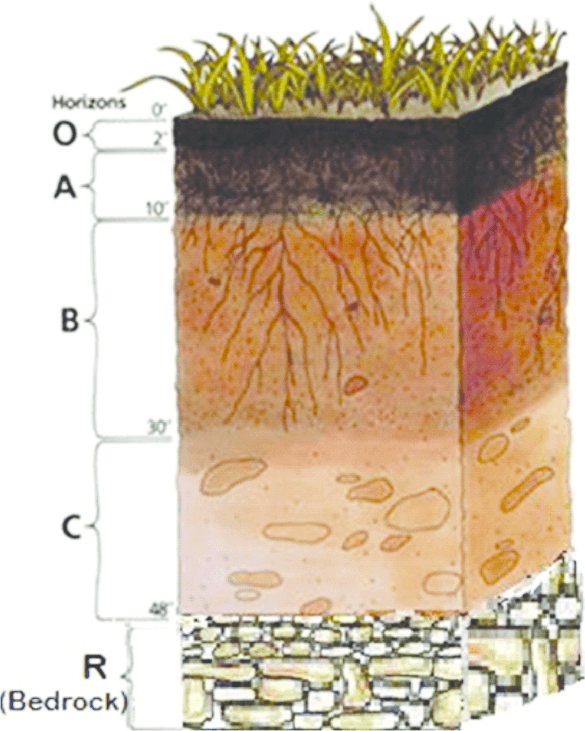
What is the name of Soil Horizon O?
a)
Bedrock
b)
Topsoil
c)
Organic Layer
d)
Subsoil
9.
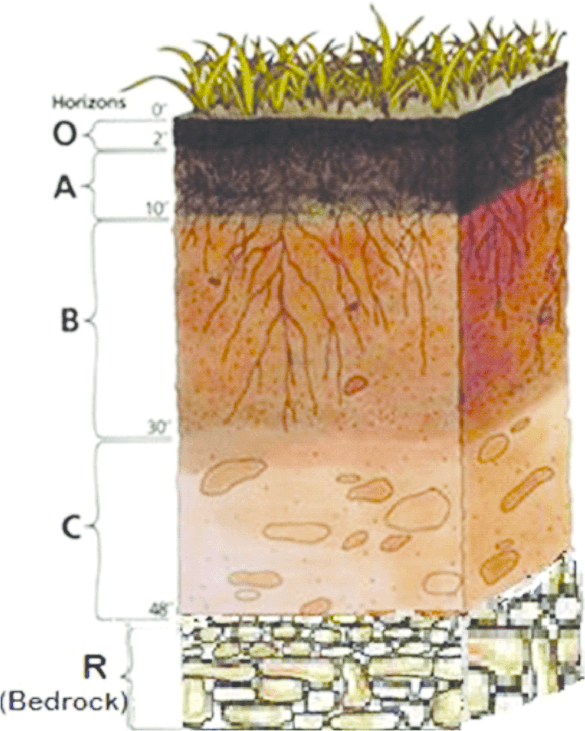
What is the name of Soil Horizon B?
a)
Subsoil
b)
Topsoil
c)
Bedrock
d)
Transition Zone
10.
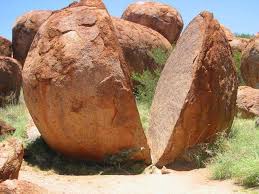
What are the two types of weathering?
a)
Rain and Snow
b)
Precipitation and Temperature
c)
Physical and Chemical
d)
Metal and Nonmetal
11.
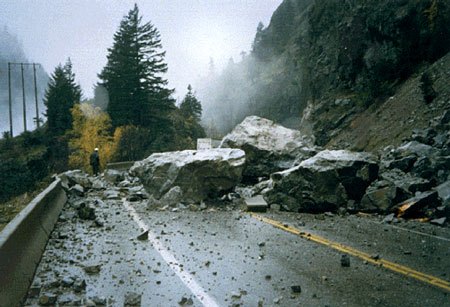
Large rocks fall from mountainsides
a)
Chemical weathering
b)
Mechanical weathering
12.
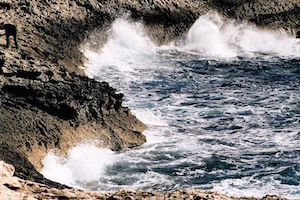
Water (usually from powerful waves) rushes into cracks in rocks; but a tiny bit of air is compressed at the crevice of the crack;
a)
hydration
b)
hydraulic action
c)
extreme flooding
d)
oxidation
13.
What do we call the layers of soil?
a)
Deposits
b)
Horizons
c)
Minerals
d)
Rocks
14.
The very top layer of soil is mostly made of
a)
Solid rock
b)
Clay and mineral deposits
c)
A mixture of minerals and organic material
d)
Mostly organic material (humus)
15.

Soil is made of
a)
weathered rocks and minerals
b)
dead plants and animals
c)
air and water
d)
all of the above
100 %

