
 Worksheets
5th Grade Science Review
Total questions: 129
Worksheet time: 2hrs 38mins
Name
Class
Date
1.

What is a change of position of an object?
a)
motion
b)
weight
c)
mass
2.

______________________ is any push or pull on an object.
a)
Force
b)
Mass
c)
Gravity
d)
Air Resistance
3.
What is the meaning of acceleration?
a)
any change in the speed or direction of an object
b)
where an object is located
c)
the pull of gravity on an object
4.

If I kick a soccer ball across the field, what vocabulary word tells me why the ball would slow down in the grass?
a)
acceleration
b)
friction
c)
gravity
5.

Which is harder to stop - an 18 wheeler or a motorcycle?
a)
motorcycle
b)
18 wheeler
6.
What is a PUSH or PULL of an object?
a)
Motion
b)
Force
c)
Friction
d)
Gravity
7.
Which force produces a change in motion?
a)
unbalanced force
b)
balanced force
c)
gravitational force
d)
frictional force
8.
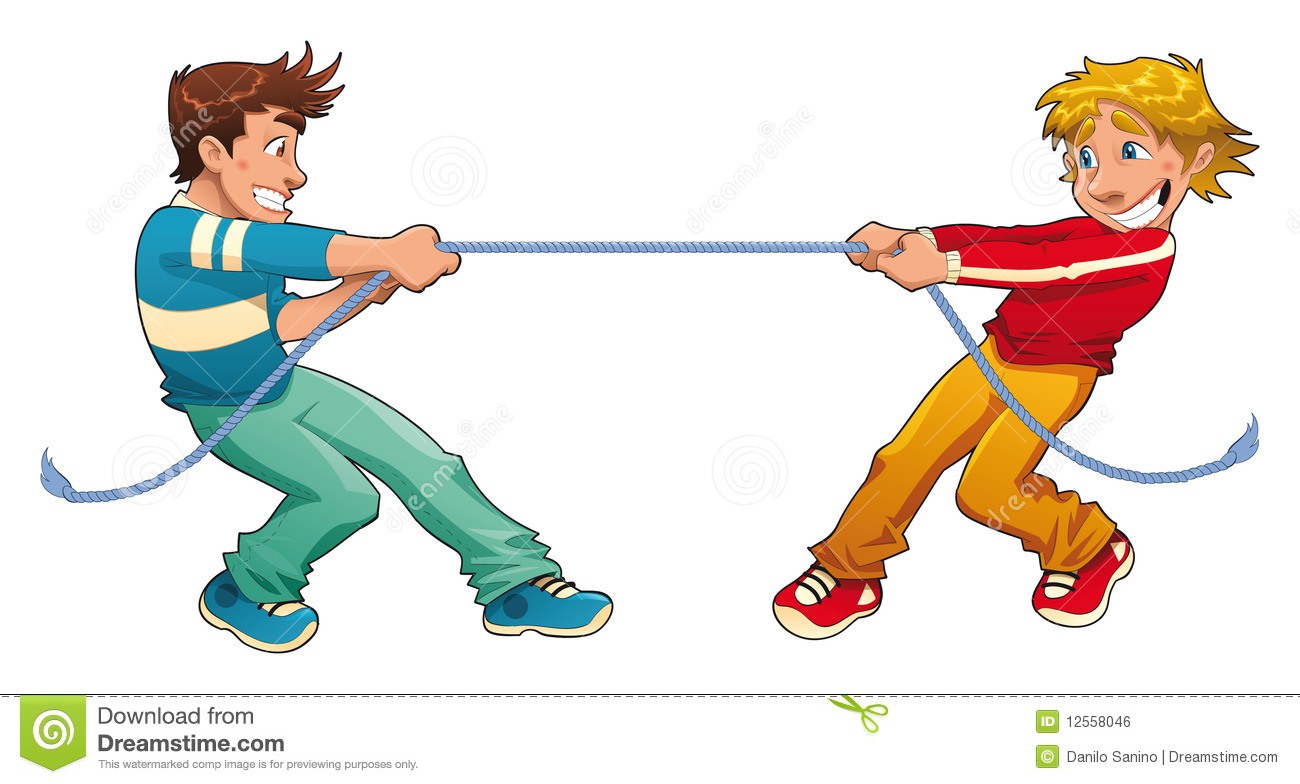
If these boys are pulling with the same amount of force. What will happen?
a)
The boy in blue will win.
b)
They will not move at all.
c)
The boy in red will win.
d)
Both will fall down.
9.
Which of the following statements is true?
a)
Balanced forces cause a change in motion.
b)
Unbalanced forces cause a change in motion.
c)
Forces do not effect the change in motion.
10.
What are two examples of forces?
a)
Art and Music
b)
A push or pull
c)
A stand or ground
d)
The dark side and the light side
11.
What pulls a ball back to earth?
a)
Gas
b)
Gravity
c)
Friction
d)
Molecules
12.
When you type on the keys of your Chromebook you are using a
a)
pull
b)
push
c)
gravity
d)
friction
13.
All energy on Earth ultimately comes from what source?
a)
Water
b)
Sun
c)
Consumers
d)
Oxygen
14.
The animals that predators eat
a)
Predators
b)
Consumer
c)
DOODOO
d)
Prey
15.

What does a food chain represent?
a)
How all living organisms within a habitat are connected.
b)
All of the things that a particular animal eats.
c)
How plants create their own food.
d)
A single path of energy transfer within a habitat.
16.
The arrows in a food chain or web represents what?
a)
They point to the organism that is being eaten.
b)
It shows how sunlight flows within an ecosystem.
c)
They show what direction the energy is flowing between organisms.
d)
They represent how water is transferred within a habitat.
17.

What does a food web represent?
a)
All connections of energy flow throughout all organisms in a habitat.
b)
The specific ways that mutualism is carried out.
c)
A single pathway or energy flow between organisms.
d)
How carnivores get their food.
18.

An energy pyramid represents what?
a)
How much sunlight is available for the ecosystem to use.
b)
How much energy a particular organism needs.
c)
How much energy is needed to build a pyramid.
d)
The amount of energy available to the next 'feeder' in a food web.
19.
Why is there a limited amount of energy that can be passed on to the next feeding level?
a)
There is never enough sunlight available.
b)
Some ecosystems have limited resources.
c)
Organisms use some of the energy they get from eating.
d)
All the energy is available to be passed on.
20.

The largest group of organisms found in a food web would be:
a)
Primary Consumers
b)
Producers
c)
Decomposers
d)
Tertiary Consumers
21.

What may happen if the snowshoe hare was removed from the food web pictured?
a)
The insects in the habitat would increase.
b)
The shrew population would decrease due to being only hawk food source.
c)
The willow tree population would decrease.
d)
Foxes would dies due to no food source.
22.

The rabbit in this food web would be considered a:
a)
Decomposer
b)
Producer
c)
Secondary Consumer
d)
Primary Consumer
23.

The mouse in this food web would be considered a:
a)
Primary Consumer
b)
Producer
c)
Tertiary Consumer
d)
Secondary Consumer
24.

The shrew provides energy for the _______?
a)
cricket
b)
grasshopper
c)
frog
d)
snake
25.

What is this called?
a)
Food Web
b)
Food Chain
c)
Abiotic Factors
26.

Where does the energy start in this food chain?
a)
Plant
b)
Sun
c)
Deer
d)
Wolf
27.

Which organism do the owl and the weasel compete for in the food web?
a)
Hawk
b)
Spider
c)
Grasshopper
d)
Shrew
28.

Does this food web have arrows pointing the right way?
a)
Yes
b)
No
29.

Which of the following would be the most likely effect, if there were a sudden increase in the cricket population?
a)
There would be a decrease in the small bird population.
b)
There would be a decrease in the grass/flowers population.
c)
There would be a decrease in the mice population.
d)
There would be an increase in the grass/flowers population.
30.

Which organism has the most energy and which organism has the least amount of energy? Choose the best answer.
a)
mosquito and grass
b)
mouse and grass
c)
grass and owl
d)
grass and small bird
31.

Does this food web have arrows pointing the right way?
a)
yes
b)
no
32.

What is this called?
a)
Food Web
b)
Food Chain
c)
Abiotic Factors
33.
What does a Primary Consumer eat?
a)
Tertiary Consumers
b)
Secondary Consumers
c)
Producers
34.

An organism that lives by breaking apart dead organic matter into simpler parts is...
a)
scavenger
b)
consumer
c)
decomposer
d)
carnivore
35.
In a food web, arrows point at:
a)
who gets energy.
b)
who gets eaten.
36.
What is missing from this food chain?
Grass > Grasshopper > Bird > Snake
Grass > Grasshopper > Bird > Snake
a)
Producer
b)
Primary Consumer
c)
Secondary Consumer
d)
Decomposer
37.

Which of the following is a herbivore?
a)
cricket
b)
frog
c)
hawk
d)
shrew
38.

__________ is an organism that eats BOTH plants and animals for energy.
a)
Omnivore
b)
Darnivore
c)
Carnivore
d)
Herbiovre
39.

Lions only eat buffalo, antelopes, zebras and crocodiles. They are called __________.
a)
Omnivore
b)
Herbivore
c)
Carnivore
d)
Delivore
40.

Bears eat fish, insects, plants, seeds, nuts and young elk. They are called __________.
a)
Franivore
b)
Carnivore
c)
Herbivore
d)
Omnivore
41.

Which organism recieves the least amount of energy from the producer?
a)
Owl
b)
Grasshopper
c)
Lilypad
d)
Mouse
42.

Which level will contain plants?
a)
A
b)
B
c)
C
d)
D
43.
Which is a producer?
a)
deer
b)
tall grass
c)
lion
d)
worm
44.
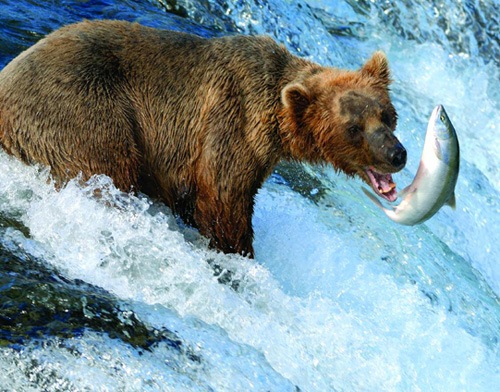
An organism that needs to eat other organisms to obtain energy is known as a:
a)
Autotroph
b)
Producer
c)
Consumer
d)
Mutualist
45.
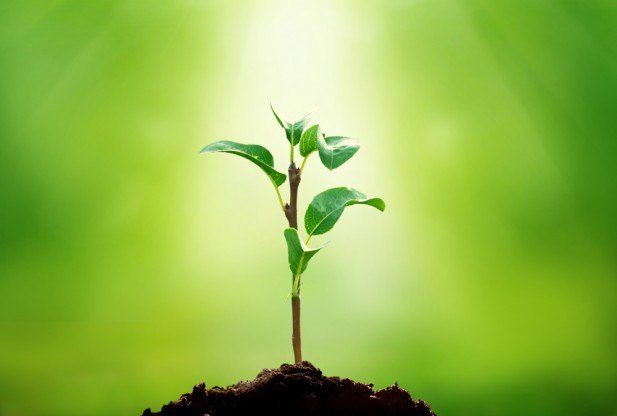
An organism that uses sunlight to create its own food is known as a:
a)
Producer
b)
Heterotroph
c)
Consumer
d)
Decomposer
46.
How much energy is available to be passed on to the next trophic level in an ecosystem?
a)
100%
b)
10%
c)
50%
d)
75%
47.
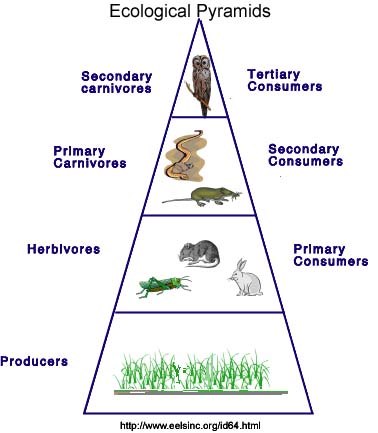
The largest group of organisms found in a food web would be:
a)
Primary Consumers
b)
Producers
c)
Decomposers
d)
Tertiary Consumers
48.
Which of the following symbiotic relationships is considered parasitic?
a)
Ticks feeding on a dog
b)
Bees transporting pollen from flowers
c)
Pilotfish swimming under sharks
d)
Birds eating the insects fromo the back of hippo
49.
Which of these describes a mutually beneficial relationship between two organisms?
a)
A dog with worms in its intestine
b)
A turtle and a snail that both eat grass live in a river
c)
A honeybee pollinating a plant and receiving nectar for food
d)
A small fish attached to a shark, eating tiny pieces of the shark's food as it floats
50.
An organism that kills and eats another for food
a)
Predator
b)
Prey
c)
Parasite
d)
Plant
51.
An organism that is killed and eaten by another organism
a)
Predator
b)
Prey
c)
Parasite
d)
Host
52.
Relationship where both organism benefit
a)
Competition
b)
Commensalism
c)
Mutualism
d)
Parasitism
53.
Relationship where one organism benefits and the other is neither harmed nor helped
a)
Commensalism
b)
Parasitism
c)
Mutualism
d)
Competition
54.
An organism where one organism benefits and another is harmed
a)
Commensalism
b)
Parasitism
c)
Mutualism
d)
Competition
55.
Which symbols best describe parasitism?
a)
+,+
b)
+,-
c)
+,0
d)
-,0
56.
Material that allows light to pass through allowing you to see "clearly" to the other side
a)
opaque
b)
translucent
c)
transparent
57.
Light travels in a straight line
a)
True
b)
False
58.
What does refract mean?
a)
To shrink
b)
To bend
c)
To widen
d)
To enlarge
59.
Light bounces when it is
a)
reflected
b)
absorbed
c)
refracted
60.
Light bends when it is
a)
refracted
b)
reflected
c)
absorbed
61.

prism
a)
reflection
b)
refraction
c)
absorption
62.
black
a)
refracts
b)
absorbs
c)
reflects
63.

mirror
a)
absorbs
b)
reflects
c)
refracts
64.
Which object would keep in the least light?
a)
White t-shirt
b)
Brown sock
c)
Orange jacket
d)
Black sweater
65.

Which images are opaque?
a)
A & C
b)
A,C,E, & F
c)
D, E, & F
d)
A & E
66.

When a rainbow is formed outside naturally, what causes the light to refract?
a)
A. Small raindrops
b)
B. Sunlight rays
c)
C. Tiny mirrors
d)
D. Glass prisms
67.

Which explains why the fork looks different under water?
a)
light can't pass through the glass
b)
the wavelength of light lengthens
c)
the amount of light increases when going through water
d)
light is refracted at an angle
68.
Why do we see objects as white?
a)
They absorb all light
b)
They reflect all light
c)
They absorb some light and reflect some light
69.
Another name for light bending is ....
a)
Reflaction
b)
Absorbing
c)
Refraction
d)
mirror
70.
Opaque means...
a)
No light passes through it
b)
All light passes through it
c)
Some light passes through it
71.
The color you see is the color that is ___.
a)
reflected
b)
absorbed
72.
___________ is a from of energy that we can see with our eyes.
a)
shadow
b)
light
c)
energy
d)
reflection
73.
Which term means to bounce off the surface of something?
a)
Refract
b)
Absorb
c)
Reflect
d)
prism
74.

The bending of waves as they pass from one substance into another.
a)
Reaction
b)
Reflection
c)
Refraction
d)
Repost
75.

The term for any wave that hits a surface and bounces off
a)
Transparent
b)
Translucent
c)
Refraction
d)
Reflection
76.

Blurs light as it passes through
a)
Transparent
b)
Translucent
c)
Opaque
d)
Refraction
77.

Allows most light through
a)
eflection
b)
Refraction
c)
Translucent
d)
Transparent
78.

White light is made up of _________________ colors.
a)
10
b)
3
c)
7
d)
70
79.

Which color absorbs all light?
a)
White
b)
Black
c)
Orange
d)
Green
80.

Which color reflects all light?
a)
White
b)
Black
c)
Orange
d)
Green
81.
Sound travels FASTEST through which of these materials?
a)
Air
b)
Empty space
c)
Metal
d)
Water
82.
Sound is caused by?
a)
force
b)
vibrations
c)
instruments
83.
Sound is caused by?
a)
force
b)
vibrations
c)
instruments
84.
What is vibration?
a)
how loud a sound is
b)
the back and forth movement of matter
c)
how high or low a sound is
d)
the loudness or softness of a sound
85.

What is frequency?
a)
the number of vibrations per second
b)
how high or low a sound is
c)
the loudness or softness of a sound
d)
the back and forth movement of matter
86.

Sound is a form of?
a)
energy
b)
pitch
c)
volume
87.
Sound does not travel in space because
a)
Space is too far away.
b)
There is no matter in space.
c)
Space is the final frontier
d)
Space has planets.
88.

How is sound produced?
a)
By the vibration of particles
b)
By the transfer of particles
89.
How loud or soft a sound is called ____
a)
Pitch
b)
Volume
c)
Vibration
90.
A sound wave for a HIGH sound would be
a)
Tall
b)
Short
c)
Stretched out
d)
Crammed together
91.
What occurs when light is reflected?
a)
light "APPEARS" bent or broken, zoomed, enlarged or magnified
b)
light is transmitted
c)
light is absorbed
d)
light bounces back at the same angle, but opposite direction
92.
Earth's revolutions around the sun cause __.
a)
tides
b)
day and night
c)
seasons
d)
months
93.
Which of the following groups are all terrestrial planets?
a)
Venus, Mars, Mercury
b)
Mars, Venus, Saturn
c)
Jupiter, Mars, Neptune
d)
Mercury, Saturn, Jupiter
94.
Which of the following groups of planets are all gas giants?
a)
Neptune, Saturn, Jupiter
b)
Venus, Mars, Saturn
c)
Mars, Venus, Mercury
d)
Mars, Jupiter, Neptune
95.
The path one body takes in space as it revolves around another body
a)
Orbit
b)
Path
c)
Ellipse
d)
Orbital
97.
A grouping of gas, dust, and many stars plus any objects that orbit those stars
a)
Universe
b)
Space
c)
Galaxy
d)
Solar System
97.
A grouping of gas, dust, and many stars plus any objects that orbit those stars
a)
Universe
b)
Space
c)
Galaxy
d)
Solar System
98.
A grouping of gas, dust, and many stars plus any objects that orbit those stars
a)
Universe
b)
Space
c)
Galaxy
d)
Solar System
99.
An imaginary line that passes through Earth's center and its North and South Poles
a)
Axis
b)
Equator
c)
Tilt
d)
Orbit
100.
One complete revolution of Earth moving around the Sun takes one ______.
a)
month
b)
year
101.
_________ are patterns of temperature and weather changes through the course of a year.
a)
seasons
b)
eclipses
102.
It takes Earth _____ to turn once on it's axis.
a)
24 hours
b)
one week
103.
It is hotter in summer than winter because....
a)
earth turns faster in some seasons
b)
the Sun strikes the ground at different angles
104.
The order of the planets is:
a)
Mars,Venus,Earth,
Mercury,Saturn
Jupiter, Uranus, Neptune
Mercury,Saturn
Jupiter, Uranus, Neptune
b)
Earth,Venus,Mars
Jupiter, Neptune,
Mercury,Saturn,
Uranus
Jupiter, Neptune,
Mercury,Saturn,
Uranus
c)
Mercury,Venus,Earth
Mars,Jupiter,
Saturn,Uranus
Neptune
Mars,Jupiter,
Saturn,Uranus
Neptune
105.
Which planet is seventh from the sun?
a)
Saturn
b)
Earth
c)
Venus
d)
Uranus
106.
which planet is the third from the sun?
a)
Mercury
b)
Neptune
c)
Pluto
d)
Earth
107.
Which is the fourth planet from the sun?
a)
Mars
b)
Saturn
c)
Earth
d)
Jupiter
108.
Which Planet comes after Earth in the solar system?
a)
Mercury
b)
Mars
c)
Venus
d)
Eros
109.
The spinning of an object on its axis is called______
a)
orbit
b)
rotation
c)
revolution
d)
tide
110.
Day and night is caused by the _____________ of earth on its axis.
a)
revolution
b)
orbit
c)
rotation
111.
The motion of a body orbiting another body in space is called _____.
a)
revolution
b)
period of revolution
c)
rotation
d)
period of rotation
112.
The Earth's axis is tilted _____ degrees.
a)
23.5
b)
25.3
c)
30.2
d)
24
113.

At position A, which hemisphere would have summer?
a)
Northern hemisphere
b)
Southern hemisphere
114.

What happens when the area in which you live tilts away from the sun?
a)
It is summer.
b)
It is spring.
c)
It is winter.
d)
It is fall.
115.

The sun is a...
a)
planet
b)
star
c)
asteroid
d)
moon
116.

Earth has seasons because its axis is tilted in the same direction as it moves around the Sun. Which position of the Earth corresponds to spring in the Northern Hemisphere?
a)
Position W
b)
Position X
c)
Position Y
d)
Position Z
117.
Which day has the least sunlight in the United States?
a)
June 18
b)
March 25
c)
September 26
d)
December 19
118.

At position D in the Northern hemisphere it would be _____?
a)
Summer
b)
Winter
c)
Spring
d)
Fall
119.

What happens when the area in which you live tilts away from the sun?
a)
It is summer.
b)
It is spring.
c)
It is winter.
d)
It is fall.
120.
The imaginary line that separates the northern and southern hemispheres is called the....
a)
axis
b)
equator
c)
solstice
d)
equinox
121.
Day and night is caused by the _____________ of earth on its axis.
a)
revolution
b)
orbit
c)
rotation
d)
Tilt
122.
One factor that makes life possible on Earth is
a)
an atmospher
b)
water
c)
greenhouse effect
d)
gravity
123.
What is the difference between the inner planets and the outer planets?
a)
The outer planets are smaller than the inner planets
b)
The inner planets are smaller than the outer planets
c)
The outer planets have more rocks than the inner planets
d)
the inner planets are heavier than the outer planets
124.
The four inner planets are...
a)
Rocky and small
b)
Very large and made of ice
c)
Small and made of ice
d)
Very large and made of gases
125.
The outer planets are...
a)
Rocky and small
b)
Very large and made of ice
c)
Small and made of ice
d)
Very large and made of gases
126.
All of the outer planets--
a)
have many moons
b)
are small
c)
have a short orbit around the Sun
d)
are rocky
127.

What is located between the inner and outer planets.
a)
Sun
b)
Asteroid belt
c)
Uranus
d)
Moons
128.

Which planets are terrestrial planets
a)
Inner planets
b)
Outer planets
c)
Both
d)
Asteroid belt
129.
Which of the following is a common characteristic of outer planets?
a)
have rings
b)
shorter years
c)
terrestrial
d)
less than 5 satellites
100 %

