wayground logo

Free Printable Worksheets

Font size

S
M
L
XL
Worksheets

Final Exam Review

Total questions: 153

Worksheet time: 4hrs 44mins

Name
Class
Date
1.

How many sig figs are in 100.00 ?

a)

1

b)

3

c)

4

d)

5

2.

How many sig figs are in 100000000

a)

1

b)

9

c)

10

3.

How many sig figs are in 4004

a)

1

b)

2

c)

3

d)

4

4.

How many sig figs are in 0.000008

a)

1

b)

2

c)

6

d)

7

5.

How many sig figs are in 0.00400

a)

1

b)

3

c)

5

d)

6

6.

How many sig figs are in 9009.00

a)

2

b)

4

c)

5

d)

6

7.

How many sig figs are in 4.000 x 10³

a)

1

b)

3

c)

4

8.

Round 0.02040 to two significant figures

a)

0.02040

b)

0.020

c)

0.0

d)

2.04 x 10⁻²

9.

What is the correct answer for: 1.31 cm x 2.3 cm

a)

3.013

b)

3.01

c)

3.02

d)

3.0

10.

What is the correct answer for: 20.2 cm ÷ 7.41 s

a)

2.726045884

b)

2.72604

c)

2.73

d)

2.7

11.

What is the correct answer for: (2 X 10⁷ ) x (8 X 10⁻⁹ )

a)

0.22

b)

1.6 x 10⁻¹

c)

4 x 10⁻¹

d)

2 x 10⁻¹

12.

What is the correct answer for: 12.00 m +15.001m =

a)

27.001

b)

27.00

c)

27.0

d)

27

13.
How would you write -5.6 x 10⁻³ in standard form?
a)
0.0056
b)
-5,600
c)
0.00056
d)
-0.0056
14.
How would you write 0.0005 in scientific notation?
a)
50 x 105
b)
5 x 10⁴
c)
5 x 10³
d)
.5 x 103
15.
Each morning Paul rides 500m on an exercise bike. How many kilometers does he ride in one week?
a)
5 km 
b)
0.5 km 
c)
3.5 km 
d)
2 km
16.

A butterfly has a wingspan of 66 mm and a height of 6.0 cm. Which is greater, its wingspan or its height?

a)

Wingspan

b)

Height

c)

They are equal

17.
4 cm = ___mm
a)
400
b)
40
c)
4
d)
4,000
18.

42 L = ___mL

a)

4,200

b)

0.042

c)

4.20

d)

42,000

19.
What is the formula for density?
a)
density = mass x volume
b)
density = mass / volume
c)
density = mass + volume
d)
density = mass - volume
20.
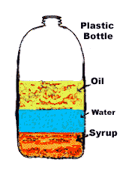
Which liquid is the least dense?
a)
oil
b)
water
c)
syrup 
d)
plastic bottle
21.
Frank has an eraser. It has a mass of 4g, and a volume of 2cm3. What is its density?
a)
8 g/cm3
b)
2 g/cm3
c)
1/2 g/cm3
d)
24 g/cm3
22.
What is the measuring unit for mass?
a)
centimeter 
b)
millimeter 
c)
grams 
d)
pounds
23.
Which units of measurement are used for volume?
a)
grams
b)
centimeters
c)
grams/milliliter
d)
milliliter
24.
A crayon has a mass of 10g and volume of 5 mL. What is the density?
a)
30 g/mL
b)
15 g/mL
c)
1 g/mL
d)
2 g/mL
25.
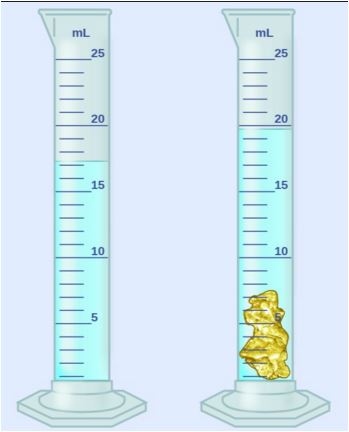
An irregularly shaped piece of gold was lowered into a graduated cylinder holding a volume of water equal to 17 ml. The height of the water rose to 20 ml. If the mass of the gold was 27 g, what was its density?
a)
9 g/mL
b)
10.5 g/mL
c)
6.5 g/mL
d)
8 g/mL
26.
If an object is huge, then it's density must be...
a)
A majority of mass and little-to-no volume
b)
Extremely heavy making it sink in water 
c)
Low, so it will float 
d)
Size does not determine the density of an object
27.
The conversion  fact when finding how many inches are in 23.45 cm is ___.
a)
254 cm = 100 inches
b)
100 cm = 2.54 inches
c)
2.54 cm = 1 inch
d)
2.54 cm = 2.54 inches
28.
Convert 23 cm to m
a)
2.3
b)
0.23
c)
2,300
d)
230
29.

A change in the state of a sample is a _______.

a)

chemical change

b)

physical change

30.
A change in a substance that involves a change in the identity or chemical makeup of that substance.
a)
chemical change
b)
physical change
31.
Grinding of peanuts into peanut butter
a)
chemical change
b)
physical change
32.
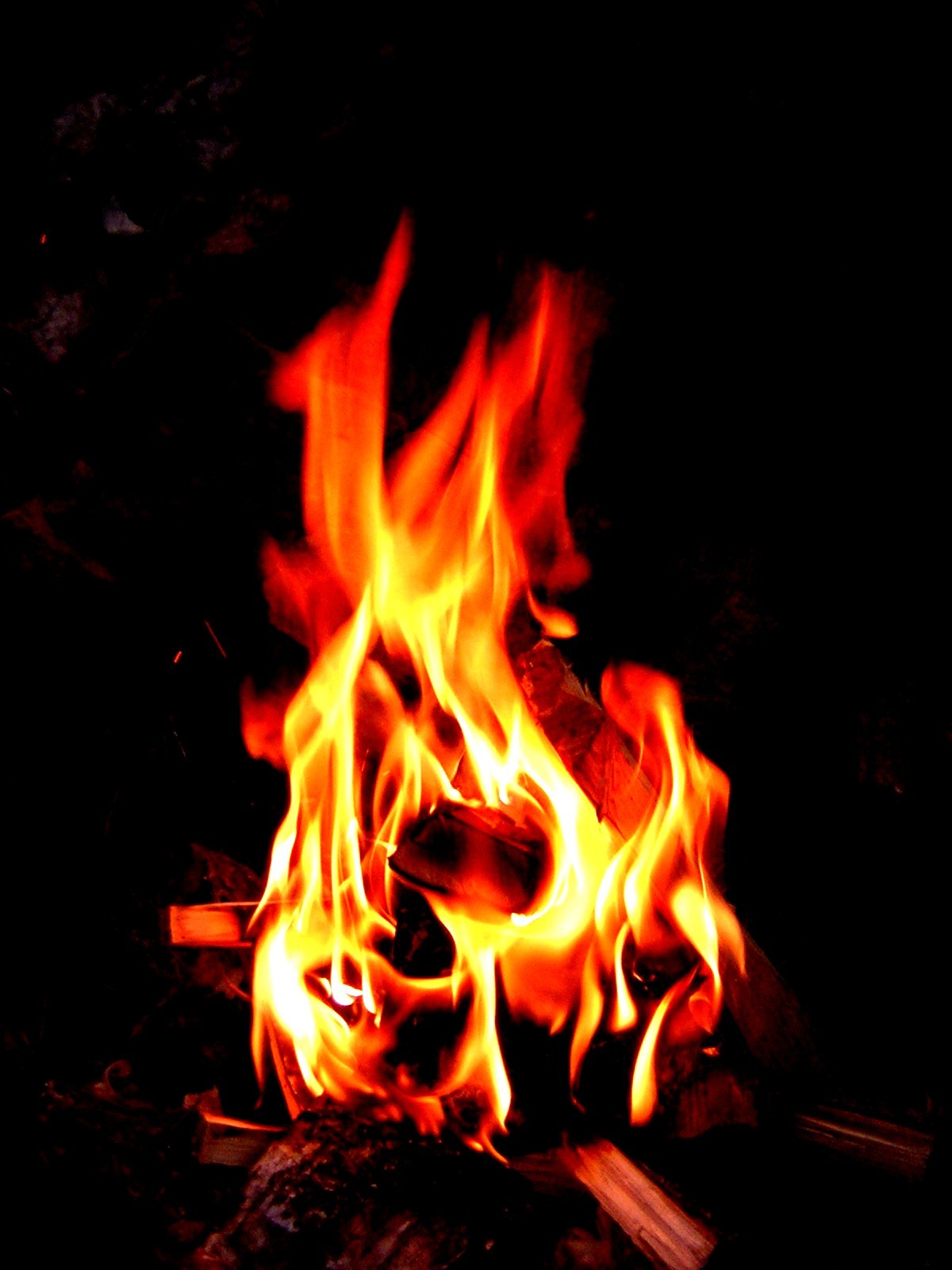
Combustion of gasoline
a)
chemical change
b)
physical change
33.
Turning water into H2 and O2 gas
a)
chemical change
b)
physical change
34.
Sublimation of dry ice
a)
chemical change
b)
physical change
35.

____ reactions usually feel cold.

a)

endothermic

b)

exothermic

36.

_____ reactions usually feel hot!

a)

endothermic

b)

exothermic

37.

The graph above is from which type of reaction?

a)

Endothermic reaction

b)

Exothermic Reaction

38.

Which of the following are examples of an Endothermic Reaction?

a)

Cooking an egg

b)

Plants making sugar through photosynthesis

c)

Burning a match

d)

Dynamite exploding

39.

Elements in the same group or family have _____________.

a)

the same number of valence electrons and different properties.

b)

the same number of valence electrons and similar properties

c)

different number of valence electrons and similar properties.

d)

different number of valence electrons and different properties.

40.

What is the name of Group 1 elements?

a)

Alkali Metals

b)

Alkaline Earth Metals

c)

Transition Metals

d)

Halogens

41.

What is the name of the elements that are unreactive and have a full octet?

a)

Halogens

b)

Noble Gases

c)

Alkali Metals

d)

Transition Metals

42.

What is the term of an atom that has lost electron(s) and has a positive change?

a)

cation

b)

anion

c)

electronegativity

d)

ionic radius

43.

The Halogen group form ions with a charge of -1. Why?

a)

The Halogen group will gain one electron, therefore have a charge of -1.

b)

The Halogen group will lose one electron, therefore a charge of -1.

c)

The Halogen group will lose seven electrons, therefore have a charge of -1.

44.

Where are metalloids located on the Periodic Table?

a)

In the s block.

b)

In the f block.

c)

In the d block.

d)

The elements that touch the staircase except aluminum.

45.

What is the trend for atomic radius (radii)?

a)

It increases left to right on the Periodic Table and decreases down a group.

b)

It decreases left to right on the Periodic Table and increases down a group.

c)

It increases left to right on the Periodic Table and increases down a group.

d)

It decreases right to left on the Periodic Table and decreases down a group.

46.

Why does the atomic radius decrease across a period?

a)

There are more protons in the nucleus that pull electrons closer.

b)

There are more electrons in the nucleus that pull protons closer.

c)

There are more protons in the nucleus that pull neutrons closer.

d)

There are more neutrons in the nucleus that pull protons closer.

47.

What of the following elements has the largest atomic radius?

a)

oxygen

b)

neon

c)

carbon

d)

sodium

48.

Which of the following elements has the highest ionization energy?

a)

oxygen

b)

sulfur

c)

silicon

d)

potassium

49.

Which of the following elements has the largest electronegativity?

a)

barium

b)

oxygen

c)

iron

d)

lithium

50.
The positive particles of an atom are 
a)
electrons 
b)
positrons 
c)
neutrons 
d)
protons 
51.

The central region of an atom where its neutrons and protons is called the

a)

nucleus

b)

electron cloud

c)

core

d)

center

52.

An atom with atomic number 6 would have how many protons

a)

6

b)

12

c)

3

d)

cannot be determined

53.

subatomic particles in an atom that are neutral and have no charge are

a)

negatrons

b)

electrons

c)

neutrons

d)

protons

54.
An atoms overall charge is 
a)
positive 
b)
depends on its mood 
c)
neutral 
d)
negative 
55.
An atom's mass number equals the number of...
a)
protons plus the number of electrons
b)
protons plus the number of neutrons
c)
protons
d)
neutrons
56.
Atoms have no electric charge because they...
a)
have an equal number of charged and non charged particles
b)
have neutrons in their nuclei
c)
have an equal number of electrons and protons
d)
have an equal number of neutrons and protons
57.
What does the 1.00794 stand for?
a)
Hydrogen
b)
atomic number
c)
atomic mass
d)
atomic explosion
58.
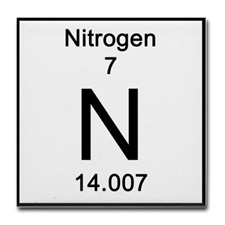
What is the number of protons that the element in this image contain?
a)
14
b)
7
c)
15
d)
18
59.

The atomic weight represents the weighted average of the

a)

electrons

b)

isotopes

c)

protons

60.

What is an hypothesis?

a)

a guess

b)

a testable, tentative explanation

c)

a theory

d)

data

61.

What is the correct representation of 702.2g in scientific notation?

a)

7.02 x 10³g

b)

70.22 x 101 g

c)

7.022 x 10² g

d)

70.22 x 10² g

62.
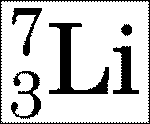
How many protons are in this atom?
a)
3
b)
4
c)
6
d)
10
63.
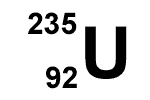
How many neutrons are in this isotope of Uranium?
a)
235
b)
92
c)
327
d)
143
64.
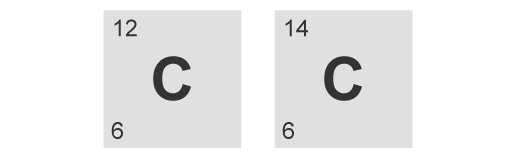
How are these isotopes different?
a)
Different atomic numbers
b)
Different number of protons
c)
Different number of neutrons
d)
Different number of electrons
65.

What does this picture portray?

a)

atom of an element

b)

elemental substance

c)

molecule of a compound

d)

compound

66.

Are these molecules also compounds?

a)

YES

b)

NO

67.
What is gold?
a)
element
b)
compound
c)
mixture
68.

What is sugar? (C6H12O6)

a)

element

b)

compound

c)

mixture

69.

Which of the following substances are pure? (you may choose more than one)

a)

copper (Cu)

b)

spaghetti

c)

magnesium sulfate (MgSO4)

d)

vegetable soup

e)

butter

70.

Is this a molecule, compound, both, or neither?

a)

molecule

b)

compound

c)

both

d)

neither

71.

Is this a molecule, compound, both, or neither?

a)

molecule

b)

compound

c)

both

d)

neither

72.

Does the following represent a solid, liquid, or gas?

a)

solid

b)

liquid

c)

gas

73.

Does the following represent a solid, liquid, or gas?

a)

solid

b)

liquid

c)

gas

74.

What is a compound?

a)

Two different elements bonded together.

b)

Two of the same elements bonded together.

c)

A mixture of different substances.

d)

Two substances stuck together with glue.

75.

What does the law of conservation of mass state

a)

Mass cannot be created nor destroyed

b)

Mass is a concept

c)

Atoms are actually fake

d)

elements don’t contain mass

76.
Covalent bond forms between....
a)
Nonmetals
b)
Metals
c)
Nonmetal and a Metal
d)
Metal and a Nonmetal
77.
What is the chemical formula for dinitrogen trioxide?
a)
N2O3
b)
NO2
c)
N3O
d)
N2O4
78.
What happens when an atom loses an electron?
a)
Neutral (no charge)
b)
Positive charge
c)
Negative charge
79.
What elements generally make an ionic bond?
a)
metal and nonmetal
b)
2 or more nonmetals
c)
metal
d)
none of the above
80.
What is a valence electron?
a)
an electron that is found in the outermost shell of an atom. 
b)
an electron found in the innermost shell of an atom.
c)
an electron found in the middle shell.
81.
What is the electron geometry of a molecule with this structure ?
a)
trigonal pyramid
b)
linear
c)
bent
d)
angular
82.

The geometry of carbon dioxide is...

a)

tetrahedral

b)

square

c)

planar

d)

linear

83.
What shape does CH2Br2 have?
a)
Tetrahedral
b)
Trigonal Planar
c)
Bent 
d)
Trigonal Pyramidal
84.

A compound with an empirical formula of CHN and a molar mass of 119 grams per mole. What the molecular formula of this compound?

a)

C2H2N2

b)

C3H3N3

c)

C5H5N5

d)

C7H7N7

85.

How many oxygen atoms are in acetate ion (C2H3O21-)?

a)

2

b)

3

c)

4

d)

7

86.

How many hydrogen atoms are in a molecule of acetic acid (HC2H3O2)?

a)

1

b)

2

c)

3

d)

4

87.

How many total atoms are in a molecule of magnesium phosphate (Mg3(PO4)2)?

a)

3

b)

7

c)

13

d)

4

88.
The chemical formula of dinitrogen textroxide is
a)
Ni₂O₄
b)
NiO
c)
N₂O₄
d)
NiO₂
89.
The name of P₄S₁₀ is
a)
phosphorous sulfide
b)
phosphorus sulfide
c)
tetraphosphorus decasulfide
d)
phosphorus (X) sulfide
90.
The name of SO₃ compound is
a)
sulfate
b)
sulfur oxide
c)
sulfur trioxide
d)
monosulfur trioxide
91.
What is the correct name for NO?
a)
Mononitrogen Monoxide
b)
Nitrogen Monoxide
c)
Mononitrogen Dioxide
d)
Nitrogen Oxide
92.
SiCl4
a)
silicon tetrachloride
b)
silicon quadchloride
c)
monosilicon tetrachloride
d)
silicon chloride
93.
ammonium phosphate
a)
(NH4)3PO4
b)
NPO4
c)
NH4PO4
d)
NH4(PO4)3
94.
aluminum sulfite
a)
Al2(SO3)3
b)
Al2(SO4)3
c)
AlSO3
d)
Al3(SO3)2
95.
What is the formula for copper(I) sulfate?
a)
CuSO3
b)
CuSO4
c)
Cu2SO3
d)
Cu2SO4
96.
The chemical formula of magnesium hydroxide is
a)
MgOH₂
b)
Mg(OH)₂
c)
Mg(OH)
d)
MgH₂
97.
Which of the following elements would require Roman Numerals when it is named?
a)
Ga
b)
Ca
c)
B
d)
Au
98.
What is the charge of Ni in NiBr3?
a)
+2
b)
+3
c)
-3
d)
+6
99.
What is the formula for iron(II) carbonate?
a)
Fe2CO3
b)
FeCO3
c)
Fe2CO2
d)
FeCO4
100.
What is Avogadro's Number? 
a)
6.02 x 10²³
b)
- 6.02 1023
c)
6.02 x 10²²
d)
6,020,000,000,000
101.
Avogadro's number of representative particles is equal to one_____.
a)
kilogram
b)
gram
c)
kelvin
d)
mole
102.
What can be determined from a balanced chemical equation?
a)
Mole ratio of any two substances in the reaction
b)
Energy released in the reaction.
c)
Electron configuration of all elements in the reaction. 
d)
Mechanism involved in the reaction. 
103.
What is the Molar mass of one mole of Iron (Fe)?
a)
55.93 amu
b)
55.93 g
c)
111.86 amu
d)
111.86 g
104.
What is the molar mass of Carbon Dioxide (CO2)?
a)
12 amu
b)
12 g
c)
44 g
d)
44 amu
105.
Find the percent composition of N2S2.
a)
N: 69.6%  S: 30.4%
b)
N:36% S: 75.6%
c)
N: 96.6% S: 3.4%
d)
N: 30.4% S: 69.6%
106.
Find the percent composition of Mg in Mg3(PO4)2.
   

a)
27.75% Mg
b)
23.57% Mg
c)
48.68% Mg
d)
13.45% Mg
107.

Which Chemical Equation is Balanced?

a)

CH₄+O₂------CO₂+2H₂O

b)

H₂+O₂-----2H₂O₄

c)

4Al+3O₂-----2Al₂O₃

108.

In this image, the information in red are called the_______.

a)

Products

b)

Reactants

c)

Chemical Subscripts

109.
How many moles are there in 12.7g of CaF2?
a)
0.20 mol
b)
1,000.76 mol
c)
6.14 mol
d)
0.16 mol
110.
What is the mass of 9.4 moles of B2(Cr2O7)3?
a)
6.41 x 10²²g
b)
5.67x1024 g
c)
49.11 g
d)
4,339.23 g
111.
Formula mass of KBr
a)
119
b)
117g
c)
54
d)
62g
112.
N2 + 3H2 --> 2NH3
What is the total number of moles of NH3 produced when 10 moles of H2 reacts completely with N2?
a)
6.7
b)
2.0
c)
3.0
d)
15.0
113.
N2 + 3H2 --> 2NH3
How many moles of N2 is needed to react with 6 moles of H2?
a)
6.7
b)
2.0
c)
3.0
d)
15.0
114.
6CO2 + 6H2O --> C6H12O6 + 6O2 
What is the total number of moles of CO2 needed to make 2 moles of C6H12O6?
a)
2.5
b)
6
c)
12
d)
15
115.
For the reaction represented by the equation Cl2 + 2KBr → Br2 + 2KCl, how many grams of potassium chloride can be produced from 356 grams potassium bromide?
a)
749 g
b)
225 g
c)
479 g
d)
814 g
116.

What coefficients would balance the following reaction :


CaC₂(s) + H₂O(l) -> C₂H₂(g) + Ca(OH)₂(aq)

a)

1,2,2,2

b)

1,2,1,1

c)

2,1,1,1

d)

2,1,2,1

117.
B2H6 + 3O2 -->2 HBO2 + 2 H2O
 What mass of O2 will be needed to burn 36.1 g of B2H6?
a)
13.8 g O2
b)
3.86 mol of O2
c)
124 g O2
118.

What is the molarity of a solution made from 325.4g of AlCl3 with enough water to make 500.0 mL of solution?

a)

16.9 M

b)

4.88 M

c)

2.440 M

d)

3.6 M

119.

How many grams of solute are dissolved in 125.0 mL of 5.00M NaCl?

a)

0.625 g NaCl

b)

56.3g NaCl

c)

36.5 g NaCl

d)

0.625 mol NaCl

120.
When an ionic compound is added to water it
a)
breaks up into its ions
b)
breaks into its elements
c)
stays together as a compound
d)
it depends on what kind of ionic compound
121.

CaCO3(s) –> CaO(s) + CO2(g)

If 4.74 g of calcium carbonate is heated, what volume of CO2(g) would be produced when collected at STP?

a)

0.0474L

b)

1.06L

c)

0.0474mol

d)

0.697L

122.
Mg3N2(s) + 3H2O(l) ––> 3 MgO + 2NH3(g)
If 10.3 g of magnesium nitride is used, what volume of ammonia gas would be collected at 20˚C and 0.989 atm?
a)
27.1 L H2
b)
4.96 L H2
c)
0.204 L H2
d)
10.3 L H2
123.

You dissolved enough lithium carbonate (Li2CO3) in water to make a 2.5M solution. What is the concentration of lithium ions in the solution?

a)

2.5M Li+

b)

5M Li+

c)

1.25M Li+

d)

Mr. Besel is awesome

124.
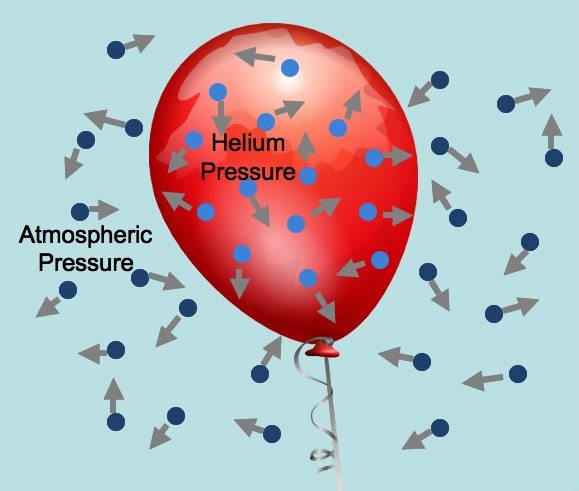
For example, if you increase the temperature of a gas inside a balloon, the balloon will....
[pressure is constant (k)]
a)
Expand (increase in volume)
b)
Deflate (decrease in volume
125.

How do you convert C to Kelvin (K)?

a)

C + 273

b)

C x 273

c)

C / 273

d)

C + 32 + 273

126.
What causes pressure?
a)
The walls of the container
b)
The vacuum in the container
c)
The collisions of the particles
d)
Atmospheric pressure acting on the outside walls
127.

The pressure of a sample of dry air is held constant 2.25 atm while the temperature is decreased from 100.°C to 7.0°C. The original volume of the sample is 43 L. Which of the following is closest to the final volume of the sample?

a)

3.0 L

b)

32 L

c)

57 L

d)

610 L

128.
A gas has a volume of 1400 milliliters at a temperature of 20 K and a pressure of 1.0 atm. What will be the new volume when the temperature is changed to 40 K and the pressure is changed to 0.50 atm?
a)
5600 mL
b)
1400 mL
c)
750 mL
d)
350 mL
129.
At STP, which gas sample has a volume of 11.2 liters?
a)
0.500 mole of CO2
b)
1.00 mole of CO2
c)
0.750 mole of NH3
d)
0.250 mole of NH3
130.

Calculate:

How many moles of gas does it take to occupy 120 liters at a pressure of 2.3 atmospheres and a temperature of 340 K?

a)

9.89 mol

b)

5.48 mol

c)

0.100 mol

131.
What is standard temperature and pressure?
a)
1 atm and 0K
b)
1 atm and 273 K
c)
0 atm and 273 K
d)
0 atm and 0 C
132.
What electron configuration matches an oxygen atom?
a)
1s22s22p63s2, 3p64s23d104p5
b)
1s22s22p4
c)
1s22s22p6
d)
1s22s22p63s23p64s23d1
133.
What atom matches this electron configuration?
1s22s22p63s23p64s23d10
a)
Zinc
b)
Copper
c)
Nickel
d)
Germanium
134.
Which electron configuration belongs to Chlorine (Cl)?
a)
1s2s2p3s3p5
b)
1s2s2p3s3p6
c)
1s2s2p3s3p7
135.

Which electron configuration belongs to Chloride ion (Cl1-)?

a)

1s2 2s2 2p6 3s2 3p4

b)

1s2 2s2 2p6 3s2 3p5

c)

1s2 2s2 2p6 3s2 3p6

d)

1s2 2s2 2p6 3s2 3p7

136.
a)

17 protons, 19 neutrons, 18 electrons

b)

36 protons, 17 neutrons, 16 electrons

c)

19 protons, 36 neutrons, 35 electrons

d)

17 protons, 36 neutrons, 16 electrons

137.

Which of the following nuclear particles contribute to the MASS of an atom?

a)

protons

b)

neutrons

c)

electrons

d)

croutons

138.

The other atomic notation for this element

a)

beryllium-4

b)

beryllium-9

c)

beryllium-2

d)

beryllium-13

139.
How many neutrons in C-14?
a)
6
b)
7
c)
14
d)
8
140.
How many neutrons does the isotope below have?     89 36Kr
a)
53
b)
36
c)
89
d)
125
141.
Ions are: 
a)
atoms with a positive or negative charge
b)
atoms with no charge
c)
atoms with ONLY a positive charge
d)
atoms with ONLY a negative charge
142.
What type of bond shares a pair of electrons?
a)
atomic
b)
hydrogen
c)
covalent
d)
ionic
143.
Unequal sharing of a pair of electrons within a bond is
a)
ionic
b)
polar covalent
c)
nonpolar covalent
d)
hydrogen
144.

Why do elements share electrons and form bonds?

a)

They are more stable

b)

They are greedy and always want more

c)

Positive and negative forces attract

d)

To complete an octet

145.
Which of the following bonds has an atom that steals electrons from another atom?
a)
ionic
b)
polar covalent
c)
nonpolar covalent
d)
hydrogen
146.
A charged atom is a(n)
a)
compound
b)
element
c)
ion
d)
mixture
147.
Which of the following pairs is unlikely to form a compound?
a)
K and I
b)
Ca and Cl
c)
Fe and S
d)
Ne and Ar
148.
When an atom of sodium and an atom of fluorine combine, an ionic bond is formed. Which statement correctly describes the behavior of the valence electron in the ionic bond?
a)
An electron from the fluorine atom moves to the sodium atom forming two ions
b)
An electron from the sodium atom moves to the fluorine atom forming two ions
c)
An electron from the fluorine atom is shared with the sodium atom forming one cation
d)
An electron from the sodium atom is shared with the fluorine atom forming one anion
149.
The lewis dot structure for a compound is shown. Which element could be represented by element X?
a)
Bromine (Br)
b)
Sulfur (S)
c)
Nitrogen (N)
d)
Silicon (Si)
150.
Under standard conditions, water exists as a liquid, but H2S is a gas. This difference in phase can be explained by:
a)
The hydrogen bonding between molecules in water
b)
The hydrogen bonding between molecules in H2S
c)
The greater molecular mass of H2S
d)
The greater atomic radii of H2S
151.
Which of the following is the correct Lewis structure for ammonia?
a)
A
b)
B
c)
C
d)
D
152.

Compare the carbon bonds in C2H2 and C2H6.

a)

The triple bonds in C2H2 are longer and stronger than the single bonds in C2H6

b)

The triple bonds in C2H2 are shorter and stronger than the single bonds in C2H6

c)

The triple bonds in C2H2 are shorter but weaker than the bonds in C2H6

d)

Both molecules are nonpolar with identical bonds

153.

How many valence electrons does Carbon have?

a)

6

b)

4

c)

2

d)

cannot be determined