wayground logo

Free Printable Worksheets

Font size

S
M
L
XL
Worksheets

Reading Milestone Practice

Total questions: 208

Worksheet time: 5hrs 38mins

Name
Class
Date
1.

IDENTIFY THE MAIN IDEA

Being a clown isn't all fun and games. Rodeo clowns expose themselves to great danger every time they perform. When cowboys dismount or bulls buck them off, rodeo clowns jump in front of the bulls and motion wildly to get their attention. In this way rodeo clowns provide an alternate target, and in doing so protect the rider. Of course, this is a very dangerous thing to do. So you see, sometimes clowning around can be serious business.

a)

Sometimes clowns can mean serious bussiness.

b)

Rodeo clowns protect cowboys by putting themselves in danger.

c)

Cowboys and Rodeo Clowns are constantly in danger.

d)

A Rodeo bull's attention is easily caught by Rodeo clowns.

2.

IDENTIFY THE MAIN IDEA

Sometime in December of 1891, Dr. James Naismith was teaching gym at the YMCA College in Springfield, Massachusetts. It was raining, and Dr. Naismith was trying to keep his students active. He wanted them playing a rough game that would keep them moving. He didn't like a few ideas that were too rough. Then Naismith had his breakthrough. He wrote out the rules for a game with peach baskets fixed to ten-foot elevated tracks. Naismith's students played against one another, passing the ball around and shooting it into the peach baskets. Dribbling wasn't a part of the original game. Also it took a while to realize that the game would run more smoothly if the bottoms of the baskets were removed. But this game grew to be one of the most popular sports in America today. Can you guess which one?

a)

The most popular sport in America

b)

Dr. James Naismith's career in teaching

c)

The invention of Basketball

d)

How to get students active

3.

IDENTIFY THE MAIN IDEA

Before you put on that skeleton costume and rove door-to-door pandering for candy, take a minute to reflect on this tradition. Halloween is believed to have come from an ancient Celtic festival dating back some 2,000 years. November 1st was the Celtic New Year and marked the end of summer to the Celts. They celebrated on its eve by wearing costumes made of animal skins and dancing around bon fires. Over the next two millennia, this primitive celebration grew to be the candy fueled costume ball that we know today.

a)

The origins of Halloween

b)

The New Celtic Year

c)

Primitive traditions

d)

Why the skeleton costume is the best for Halloween

4.

IDENTIFY THE MAIN IDEA

You might think that all automobile fuels are the same, but they aren't. Automobiles can run on one of three types of fuel: gasoline, diesel, and biodiesel. All these fuels are burned inside of the engine, which creates the heat and energy that is used to power the car. But there are important differences between these fuels. Gasoline and diesel are more common than biodiesel. But each burns differently. Diesel fuel is heavier and less flammable than gasoline, so it has to be compressed before it will burn. Gasoline may be lighter than diesel, but both fuels are made from crude oil. On the other hand, biodiesel fuel is made from vegetables. Both biodiesel and diesel fuels must be burned in diesel engines, which only use diesel fuel. If gasoline is pumped into a diesel engine, it will have to be pumped out. These fuels may look pretty similar at the gas station, but remember that there are important differences between them or it may cost you.

a)

Which fuel is best to use for your car

b)

Gasoline, diesel, and biodiesels area all fuels, but they have important differences in how they are made and used.

c)

The benefits of biodiesel

d)

How fuels change the way we drive

5.
Weather reporters have to give out a lot of information. That's why they use pictures. The pictures help them tell us about the weather without using so many words. Weather reporters need to know where the cold air is. They need to know where the warm air is. They have to know where it is raining and what types of clouds are in the area. Their reports need to be correct, but they also need to be short. The pictures help weather reporters get the information out in a fast way.
Which sentence best describes the main idea of the paragraph?
a)
Weather reporters need to know where the cold air is
b)
Pictures help weather reporters get information out in a fast way
c)
Their reports need to be correct, but they also need to be short
d)
They have to know where it is raining and what types of clouds are in the area
6.
Jenny visited her grandmother in the hospital.  She saw how kind and helpful the nurses were to her grandmother.  Now she wants to be a nurse when she grows up.  She wants to help sick people get well. 
What is the main idea?
a)
Jenny got sick.
b)
Jenny wants to be a nurse.
c)
Her grandmother was in the hospital.
d)
Jenny was glad the nurses were being kind to her grandmother.
7.

Which is not a synonym to strange

a)

bizzare

b)

bubby

c)

weird

d)

freak

8.

Crazy

a)

arrogant

b)

nut

c)

withdrawn

d)

considerate

9.

Disappointed

a)

bewildered

b)

shattered

c)

disillusioned

d)

stunned

10.

Stunned

a)

bewildered

b)

relieved

c)

smug

d)

cross

11.

Which is not a synonym to scared

a)

petrified

b)

frightened

c)

nasty

d)

afraid

12.
Which character trait means being good at drawing, painting, dancing, performing, etc.?
a)
artistic
b)
cruel
c)
impulsive
d)
pessimistic
13.
Which character trait means you don't stop until you get what you want?
a)
ambitious
b)
efficient
c)
calm-hearted
d)
hateful
14.
Which character trait means not getting overly excited or angry in situations where other people might
a)
artistic
b)
calm
c)
loyal
d)
generous
15.
Which character trait means thinking of other people's feelings before your own?
a)
extroverted
b)
ignorant
c)
artisitc
d)
considerate
16.
Which character trait means trying to cause people pain; enjoying it when others are hurting?
a)
ambitious
b)
cruel
c)
generous
d)
hateful
17.
Which character trait means doing something well but in a short amount of time; doesn't waste time?
a)
ambitious
b)
cold-hearted
c)
efficient
d)
introverted
18.

What's up?

a)

I am sad.

b)

I am happy.

c)

I am sleepy.

19.

What's up?

a)

I am angry.

b)

I am sleepy.

c)

I am nervous.

20.

What's up?

a)

I am tired.

b)

I am angry.

c)

I am happy.

21.

What's up?

a)

I am angry.

b)

I am sleepy.

c)

I am happy.

22.

Which of the following is true when a text is written in third person limited point of view?

a)

A character is telling what all characters do/say and knows what all characters think/feel.

b)

A narrator is telling what all characters do/say and knows what all characters think/feel.

c)

A narrator is telling what all characters do/say and knows what some characters think/feel.

d)

A character is telling what all characters do/say and knows what some characters think/feel.

23.
The one who tells the story is called the...
a)
moderator
b)
narrator
c)
poem
d)
colonist
24.
Point of view refers to...
a)
I and me
b)
narrative writing
c)
a writer's choice of narrator
d)
your eyes
25.

A story that takes p lace in the future; it often includes science and technology

a)

Science Fiction

b)

Historical Fiction

c)

Historical Nonfiction

d)

Mystery

26.

A story that is written to make readers laugh

a)

Humor

b)

Fantasy

c)

Realistic Fiction

d)

Informational

27.

A story that takes place in the present time; it includes event that could happen

a)

Realistic Fiction

b)

Fantasy

c)

Historical Fiction

d)

Play

28.

A fictional story that takes place in the past; often the setting is real but the characters are made up

a)

Historical Fiction

b)

Fantasy

c)

Realistic Fiction

d)

Mystery

29.

A suspenseful story centered around a puzzling event; it includes clues

a)

Mystery

b)

Historical Nonfiction

c)

Fantasy

d)

Humor

30.

A story that contains events that could never happen in real life

a)

Fantasy

b)

Humor

c)

Realistic Fiction

d)

Mystery

31.

An informative writing about events that happened in the past

a)

Historical Nonfiction

b)

Informational

c)

Historical Fiction

d)

Science Fiction

32.

A story that is act out; it contains a script, stage directions, and dialogue

a)

Play

b)

Humor

c)

Fantasy

d)

Mystery

33.

A story written by a person in which he tells about his own life

a)

Autobiography

b)

Biography

c)

Legend

d)

Myth

34.
helps you to group information and provides a prediction for what you are about to read
a)
graph
b)
picture
c)
index
d)
heading
35.
draws readers attention to important terms or concepts 
a)
diagram
b)
bold face print/colored text
c)
glossar
d)
title
36.
helps to identify sections that provide additional details and supporting information
a)
caption
b)
index
c)
subheading
d)
picture
37.
illustrates specific points or presents information  from the text in a visual format
a)
glossar
b)
charts or graphs
c)
title
d)
heading
38.
This is an example of a _______________.
a)
table of contents page
b)
index
c)
glossary
d)
title page
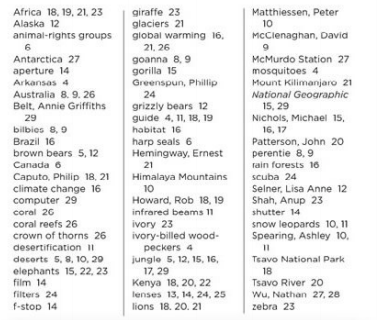
39.
This is an example of _______________.
a)
a table of contents page
b)
an index page
c)
a glossary
d)
a title page
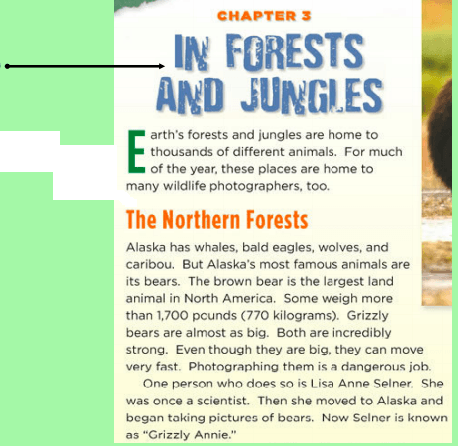
40.
The black line is pointing to which text feature?
a)
caption
b)
heading
c)
subheading
d)
diagram
41.
The dark word "boldface" stands out and is called what text feature?
a)
a keyword
b)
a caption
c)
a subheading
d)
a heading
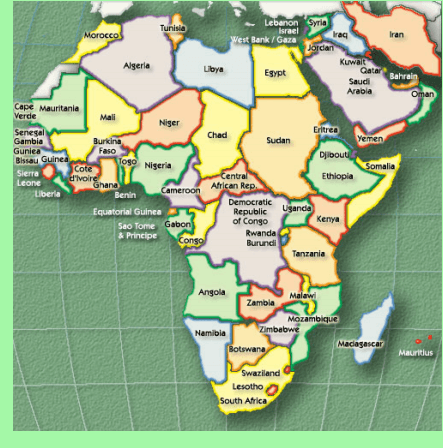
42.
This is a ________________.
a)
caption
b)
diagram
c)
map
d)
label
43.
What is a caption?
a)
words that describe what is happening in a picture
b)
a word that stands out
c)
a picture
d)
what page you can find information on
44.
This is an example of _______________.
a)
a table of contents page
b)
an index page
c)
a glossary
d)
a title page
45.
What graphic feature is shown in this example?
a)
photograph
b)
table
c)
map
d)
diagram
46.
Found under pictures, diagrams, charts or photographs to help the reader better understand the picture of diagram.
a)
Illustrations
b)
Captions
c)
Glossary
d)
Chart
47.
Usually found at the end of a passage or the back of the book to help the reader understand the meaning of important words.
a)
Illustrations
b)
Captions
c)
Glossary
d)
Chart
48.
Photos or pictures used to help the reader visualize something in the  passage
a)
Index
b)
photographs
c)
Index
d)
Labels
49.
Helps the readers see where the places in the passage are in relation to geographic regions of the world
a)
Illustrations
b)
Glossary
c)
Index
d)
Maps
50.
Added to help provide more information about photographs, illustrations, or diagrams
a)
Illustrations
b)
subheadings
c)
special print
d)
labels
51.
Choose the correct vocabulary word-  helps the reader learn about other important ideas that go along with the topic or main idea of a passage.
a)
Illustrations
b)
Captions
c)
Glossary
d)
Chart
52.
Noun: a picture, drawing, or graph used as a decoration or to make something (such as magazine article) easier tounderstand
a)
graphic
b)
contribute
c)
sidebar
d)
header
53.
BOLD print, Italics, and underlining are used to show important words in the passage
a)
print variations
b)
insert
c)
captions
d)
illustrations
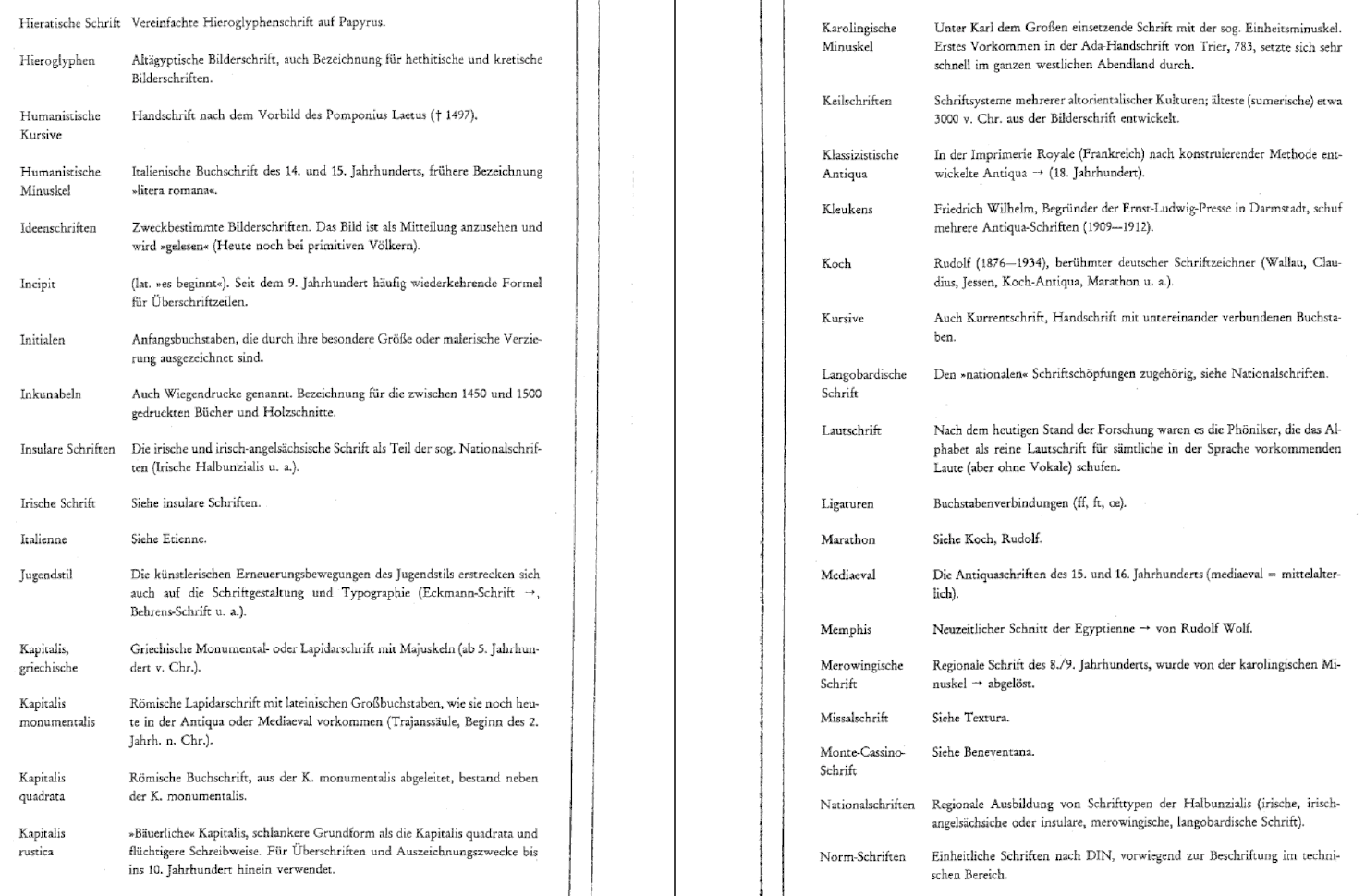
54.
This is an example of a _______________.
a)
title page
b)
index
c)
glossary
d)
table of contents
55.
The black lines represent or point to what in this image.
a)
Labels
b)
Diagram
c)
Caption
d)
Pictures
56.
What text feature gives the definitions of important vocabulary words?
a)
Captions
b)
Index
c)
Glossary
d)
None of the above
57.
What is the term for the words that appear below a picture? 
a)
glossary
b)
caption
c)
description
d)
photo
58.
A list of chapters in a book and the page numbers where each chapter starts.
a)
Index
b)
Table of Contents
c)
Glossary
d)
Framed Text (Text Box, Insert)
59.
This is an example of a ___________?
a)
Index
b)
Table of contents
c)
Graph
d)
Caption
60.
What graphic feature is shown in this example?
a)
photograph
b)
table
c)
map
d)
diagram
61.
What is this text feature called?
a)
caption
b)
timeline
c)
heading
d)
graph
62.
Which type of text structure shows how two or more things are alike and different?
a)
Chronological
b)
Cause & Effect
c)
Problem & Solution
d)
Compare/Contrast
63.
Which type of text structure answers the questions what happened and why?
a)
Chronological
b)
Cause & Effect
c)
Problem & Solution
d)
Compare/Contrast
64.
Which type of text structure describes events in sequential order?
a)
Chronological
b)
Cause & Effect
c)
Problem & Solution
d)
Compare/Contrast
65.
What is/are the results of something happening?
a)
Sequence 
b)
Cause/effect 
c)
Effect
d)
 Cause
66.
What does the word drizzle mean?
a)
when water covers land
b)
tiny drops of water that float together
c)
a light, misty rain
d)
a long time without rain
67.
Helps the readers see where the places in the passage are in relation to geographic regions of the world
a)
Illustrations
b)
Glossary
c)
Index
d)
Maps
68.
What text feature is used on the list to the left?
a)
numbered list
b)
white space
c)
captions
d)
bulleted list
69.
This feature informs the reader of important words/vocabulary found within the paragraph.
a)
Glossary
b)
Bold words
c)
Captions
d)
Table of contents
70.
A stanza is made up of....
a)
Multiple lines in a poem
b)
Rhythm
c)
Different types of alliteration
d)
Paragraphs
71.
The repetition of sound at the end of words is called ________.  
a)
stanzas
b)
lines
c)
rhyme 
d)
figurative language
72.
A _______ in a poem is like a sentence in a paragraph.  
a)
stanza
b)
line
c)
rhyme 
d)
figurative language
73.
True or False: All poems must rhyme.
a)
True
b)
False
74.
_________ is the feeling the READER gets as he/she reads the text.
a)
mood
b)
tone
c)
metaphor
d)
imagery
75.
Rhythm gives poetry a ____ quality.
a)
Musical
b)
Old-fashioned
c)
Important
d)
Difficult
76.
The _________ are like paragraphs in a poem. 
a)
stanzas
b)
lines
c)
rhyme scheme
d)
figurative language
77.
What structure is poetry written in?
a)
Sentences & paragraphs
b)
Sentences & stanzas
c)
Lines & paragraphs
d)
Lines & stanzas
78.
The writer of a poem is called...
a)
poet
b)
illustrator
c)
author
d)
smart person
79.
All are found in poetry except...
a)
rhyme scheme
b)
rhythm
c)
stanza
d)
paragraphs
80.
Two words that have the same ending sound are called...
a)
rhythm words
b)
repetitive words
c)
rhyming words
d)
stanza words
81.

What is a poem?

a)

a form of literature that uses aesthetic and rhythmic qualities of language

b)

A paragraph

c)

A short paragraph that contains figurative language

d)

A person that explains things without stuttering

82.
"Over the cobbles he clattered and clashed..." is what type of figurative language? 
a)
alliteration
b)
simile
c)
metaphor
d)
hyperbole
83.
What is it to imagine a picture
a)
an image
b)
a pic
c)
imagination 
d)
imagery
84.

Which of the following best describes the theme of "The Clock Man" poem?

a)

People care about time more as they get older.

b)

Children often feel like they will never get old.

c)

There’s nothing more important to people than staying young.

d)

People are afraid of death their entire lives.

85.

What does the clock man represent in the poem?

a)

death

b)

living forever

c)

time

d)

money

86.

How does the quote “‘Not one penny,’ the answer came, / ‘For my days are as many as smiles’” (Lines 3-4) contribute to the overall theme of "The Clock Man" poem?

a)

The child knows he cannot buy time.

b)

The child’s response shows that he is happy and doesn’t think about the length of life.

c)

The child has many reasons to be happy.

d)

The child's response shows that he does not have money to buy time.

87.

Which statement best explains the metaphorical meaning of blue skin in the poem "Masks"?

a)

In the poem, only two people in the whole world have blue skin, which means that they must be soulmates.

b)

In the poem, blue skin is such a common trait that people must wear masks in order to appear unique.

c)

In the poem, blue skin represents a quality that people are afraid to share even though it is an important part of their identity.

d)

In the poem, blue skin represents the sadness that people try to hide by always being polite and keeping smiles on their faces. In the poem, blue skin represents the sadness that people try to hide by always being polite and keeping smiles on their faces.

88.

Freddie's parents bought him a new bicycle on his birthday. His dad taught him how to ride it. Freddie learned quickly. He could ride the bicycle well. Freddie's dad told him to be careful while riding the bicycle, but Freddie would not listen. Sometimes, he would ride too fast.


What does the illustration tell you about Freddie's dad?

a)

Freddie's dad is tired.

b)

Freddie's dad is happy.

c)

Freddie's dad is proud.

d)

Freddie's dad is angry.

89.

Which passage would most likely be on the same page as this picture?

a)

John wanted to touch his snake, but it pulled away from him in fear. John hoped his new pet would learn to like him.

b)

All the kids made fun of John because he was afraid of snakes. Whenever he saw a snake, he would run away.

c)

John saw the grass shake and heard a hissing sound. He saw a long, brown body slither through the grass.

d)

The snake tried to hide when the boy came closer, but it was too slow. The boy held the snake tightly in one hand.

90.

Rory wanted to build a large sand castle at the beach. He wanted to show his sister, Christy, how talented he was. But no matter how hard Rory tried, his sand castle kept breaking! Christy saw Rory struggling and decided to help him out. They built a beautiful sand castle together.


What does the illustration tell you about Rory and Christy?

a)

They enjoy building the sand castle together.

b)

They keep fighting with each other.

c)

They cannot keep the sand castle from breaking.

d)

They decide to go play in the water.

91.

adapted from The Tale of Mrs. Tiggy Winkle

by Beatrix Potter


Once upon a time there was a little girl called Lucie, who lived at a farm called Little-town. She was a good little girl—only she was always losing her pocket-handkerchiefs! One day little Lucie came into the farmyard crying—"I've lost my pocket-handkerchief! Have you seen it, Tabby Kitten?"


What does the illustration tell you about the setting?

a)

Lucie's farmhouse is freshly painted.

b)

There are many trees around Lucie's house.

c)

There are some chickens and a kitten on Lucie's farm.

d)

Lucie's white handkerchief is on the ground.

92.

Baxter was excited to be invited to the birthday party. He took a bath and got nice and clean before he left. At the party, he danced and had so much fun. Then he saw the cake. He went straight for it. It tasted so good!


What does the illustration tell you about Baxter?

a)

No one wanted cake, so Baxter got to eat it.

b)

He was told by a woman to eat the whole cake.

c)

He did not really like the cake.

d)

He will get in trouble for eating the cake.

93.

Which passage matches the illustration?

a)

The animals were all watching Freddy jump. Hooray Freddy!

b)

The animals were all swimming in the water. It was nice!

c)

The animals wouldn't let Pokey eat any cookies. Poor Pokey!

d)

The animals were all waiting to eat some cake. It was good!

94.

Which passage goes with this illustration?

a)

Freddie wanted to play with his monster friends, but they were all sick. Their moms would not let them come over. Freddie sat on the floor in his room, bored and sad.

b)

Vincent was a bad monster. He never hid under little kids' beds. He did not like kids, and his head was too big to fit in the hole in their floor. He liked to watch TV instead.

c)

Mumbly was scared. He thought there might be a boy under his bed, but he was too afraid to look. Boys were the scariest things to ever hide under this monster's bed!

d)

Just when George thought it was safe to go back to sleep, he looked over the side of his bed. Suddenly, he saw a monster looking back at him!

95.

My _____ door is red.

a)

front

b)

hold

c)

above

96.

Do you know how to _____?

a)

cook

b)

moved

c)

sometimes

97.

A chick is a _____ hen.

a)

big

b)

young

c)

tall

98.

They like the cat story the _____.

a)

now

b)

many

c)

most

99.

We can help _____ there are many things to cook.

a)

because

b)

listen

c)

why

100.

He can draw a _____.

a)

picture

b)

listen

c)

different

101.

Camila wants Abuelita to tell a story about _____.

a)

long ago

b)

her father

c)

animals

102.
In nature, predators and prey seem to play a game of hide-and-seek. Prey need to hide so predators do not find them and eat them. Predators need to hide, too, so smaller prey do not see them approaching. Some animals have special coloring or marks on their bodies that help them hide among rocks and trees. This is called camouflage.
What does this illustration demonstrate from the text?
a)
Hiding in water
b)
Animals in groups
c)
Special coloring to blend in
d)
Building a nest
103.
Lions have a tan body coloring. However, lions use this coloring not to hide from predators, but to hide in the savanna grasses while watching for prey. A lion can sneak up without being seen more easily by blending into the grassy environment.
According to the text, what might a lion's mane be mistaken for?
a)
Rocks
b)
Grass
c)
Flowers
d)
Clouds
104.
Although this car is painted camouflaged, is it working according to the definition of camouflage?
a)
Yes, it is difficult to see.
b)
No, it is easy to see because the surrounding colors don't blend in.
c)
Yes, it is invisible.
d)
Yes, it is in the forest.
105.
Just as important as camouflage, mimicry is another important means of survival. This is when an animal, insect, or plant tries to look like something else to scare off predators.
How does this illustration support the text?
a)
The moth is trying to look like an owl.
b)
The moth will eat the owl.
c)
The owl will eat the moth.
d)
The animals are brightly colored.
106.
The standard RI3.7 says: Use information gained from illustrations (e.g., maps, photographs) and the words in a text to demonstrate understanding of the text (e.g., where, when, why, and how key events occur). 
How do the illustrations in this quiz help you understand the story?
a)
They confuse the reader.
b)
They are fun to look at.
c)
They show what the text is explaining.
d)
They don't help at all.
107.
What does it mean to compare things?
a)
look at differences
b)
look at similarities
108.
What does it mean to contrast?
a)
To tell what is alike and what is the same.
b)
To tell what is different.
c)
To tell what is the same.
d)
To tell what is alike and what is different.
109.
Which graphic organizer can be used for compare and contrast?
a)
Timeline
b)
Venn Diagram
c)
Flowchart
d)
T-Chart
110.
Stella was born in Poland. She lived with her family in a small house near the Oder River. Both Stella's parents are teachers. Stella's friend Tim was born in Mexico. He likes to play soccer. Tim lived in a big house by the Rio Grande River. Tim's parents are doctors.
What is different about Stella and Tim?
a)
Their parents have different jobs.
b)
They both live by water.
c)
Stella likes Tim.
d)
Tim likes Stella.
111.
Messi likes to eat ice cream after a soccer game. Aguero likes to drink coffee. Both are really good soccer players but Messi runs faster than Aguero. Aguero is really good at scoring. Messi and Aguero both played on the same team for World Cup.
What is different for Messi and Aguero?
a)
Messi runs faster than Aguero.
b)
Messi and Aguero played for different teams at the World Cup.
c)
Messi is a better at Math than Aguero.
d)
Before soccer games, Aguero and Messi eat different things.
112.
Cinderella is kind, sweet, and charming, while her step sisters are mean and cruel.  How are Cinderella and her step sisters different?
a)
They both want to marry the prince.
b)
The step sisters are kind, but Cinderella is not.
c)
Cinderella is kind, but her step sisters are not.
113.
Kate lived in a large house with many animals. Her best friend, Jill, lived in a small house without pets.  How were the friends' homes different?
a)
Kate had a large house, but Jill's was small.
b)
Kate doesn't have pets, but Jill does.
c)
Both Kate and Jill have homes.
114.
The Fourth of July and Veteran's Day are both U.S. holidays.  However, the Fourth of July celebrates our independence and Veteran's Day celebrates military veterans.  How are these holidays different?
a)
Both holidays are celebrated in the U.S.
b)
Fourth of July celebrates independence, while Veteran's Day celebrates veterans.
c)
Both holidays are in the summer.
115.
I have a pet dog and cat in my house.  My dog, Spot, likes to chew on his bone, while my cat, Stripes, likes to sleep.  They both love to cuddle with me on the couch.  How are my pets similar? 
a)
They both chew on things.
b)
They both love to cuddle.
c)
They both sleep a lot.
116.
The key word same
a)
Contrast
b)
Compare
117.
The key word different is…
a)
Contrast
b)
Compare
118.
A teacher and a doctor both work with many people every day.  The teacher works with children at the school, however, the doctor sees patients at the hospital.  How are a teacher and doctor alike?
a)
They work with children.
b)
They work in hospitals.
c)
They work with many people.
119.

what is one difference between the two in this picture?
a)
one is red and one is orange
b)
one is good and one is not
120.

what two things are being compared in this picture?
a)
minions and spongebob
b)
houses and trees
121.
When purchasing goods or services, most consumers have a choice of using cash or a credit card. Credit cards are very convenient.Credit cards charge interest, which is an additional charge on topof whatever the product or service costs. If a credit card user doesn’t pay his bill immediately, the interest compounds (increases), which can make an everyday purchase turn into long-term debt. On the other hand, using cash means a person is only using only money he has and is not accumulating debt to pay in the future.  What is a difference between cash and credit cards?
a)
cash leaves you with no interest and credit cards have interest
b)
one is paper and one is bigger paper
122.
The power of the crocodile is like that of a monstrous machine. With one lunge it can destroy its prey and protect the kill from other predators.  What type of story is this structured as?
a)
directions
b)
problem solution
c)
cause and effect
d)
compare and contrast
123.

Kelvin is writing about the Greek myths that he recently read. He describes how they each focus on a hero’s quest and how each hero is different. Kelvin is ________.

a)

comparing Greek myths but not contrasting them

b)

comparing Greek myths with Roman myths

c)

comparing and contrasting Greek myths

d)

not comparing or contrasting

124.
Crocodiles and Alligators are covered with scales and have backbones. They have short legs and long, powerful tails. Also, baby crocodiles and alligators both hatch from eggs.
According to the paragraph, how are alligators and crocodiles alike?
a)
They both have short legs and powerful tails.
b)
They both eat eggs.
c)
They are both green.
d)
They both have hairy skin.
125.
Crocodiles and Alligators are covered with scales and have backbones. They have short legs and long, powerful tails. Also, baby crocodiles and alligators both hatch from eggs.
Which is the best summary for this paragraph?
a)
Crocodiles live in the ocean.
b)
Alligators are stronger than crocodiles.
c)
Crocodiles and alligators are alike in many ways.
d)
They both eat eggs.
126.
What is the difference between a biography and an autobiography?
a)
One is a folktale and one is not.
b)
One is fiction and the other is nonfiction.
c)
One is written by the person it is about and the other is written about a person.
d)
One is a book and one is an article.
127.
Kate lived in a enormous house with many animals. Her best friend, Jill, lived in a tiny house without pets.
  How were the friends' homes different?
a)
Kate had a large house, but Jill's was small.
b)
Kate doesn't have pets, but Jill does.
c)
Both Kate and Jill have homes.
128.
The key word both is…
a)
Compare
b)
Contrast
129.
The key word difference is…
a)
Contrast
b)
Compare
130.
Which word shows only one (singular)?
a)
Crocodiles
b)
Alligators
c)
Animals
d)
mouth
131.
Which word shows only one (singular)?
a)
Crocodiles
b)
Alligators
c)
Animals
d)
mouth
132.
Which word shows more than one (plural)?
a)
head
b)
alligators
c)
eye
d)
scale
133.
Identify the clue word:Dogs and cats are animals, however, cats meow and dogs bark.
a)
animals
b)
however
c)
bark
134.
What is the clue word in this sentence for compare and contrast?Frogs and toads are alike in many ways.
a)
many
b)
alike
c)
frogs
d)
toads
135.
Which type of text structure shows how two or more things are alike and different?
a)
compare and contrast
b)
cause and effect
c)
sequence
136.
Sally is having strawberry ice cream and Juan is having chocolate ice cream. If I am comparing Sally and Juan, what do they have in common?
a)
they both like ice cream
b)
they are eating with a spoon
c)
they like dogs
d)
it is hot outside
137.
2.Frogs and toads can live in the water and on the land. They both catch food with long, sticky tongues. They eat insects and small animals. You can tell them apart by their bodies. Frogs have long, strong back legs and thin, moist skin. Toads have shorter back legs and drier skin.  What two things are we comparing?
a)
legs and twigs
b)
frogs and toads
c)
cats and dogs
138.
There are some similarities between the T.Rex and the Gigantosaurus. Both were meat-eaters. Both were saurischians, or "lizard-hipped" dinosaurs , as contrasted with "bird-lipped" dinosaurs. Each dinosaur was the dominant predator of its time and place.  What is something they have in common?
a)
directions and age
b)
one is dead and one is alive
c)
both are dinosaurs
d)
problem and solution
139.
Identify the key word: Turtles and frogs have many qualities in common. 
a)
Many
b)
Qualities
c)
In common
d)
Dogs
140.
Molly and Sara are sisters.  They like to swim during the summer.  Molly is in the school band and Sara is on the basketball team.  How are these sisters alike?
a)
They are both in band.
b)
They are both on the basketball team.
c)
They enjoy swimming.
141.
Thousands of years ago the native people of North America had to build houses that fit their life. One kind of house was a tipi. The Plains people lived in tipis. Tipis were easy to put up and take down. In fact, it only took about half an hour to build a tipi. This was perfect for the Plains people who spent their time hunting and hunting animal. The Inuit, who lived in the cold Artic region, spent part of the year living in Igloos. Igloos were temporary homes like tipis. However, they were built for the cold winter months whereas a tipi could be used year round. Both tipis and igloos had one main room that the family lived in and were usually made for a single family. Tipis and igloos were made of very different materials. Igloos were made from blocks of snow stacked on top of each other, while tipis were made of buffalo hide, tree branches or grass. The shape of tipis and igloos were also different. Tipis were cone-shaped, using three or four poles for support, in contrast, igloos were dome-shaped. How were tipis different from igloos?  
a)
Tipis were dome-shaped, but igloos were dome-shaped
b)
Tipis were used by Native Americans, but igloos were used by the 
Inuit people.
c)
Tipis were used year round, but igloos were only used during the winter months.
d)
All of the above.
142.
The Twins   Sarah and Ruth are twins. They were born on the same day and look alike. But Sarah and Ruth are very different people. Sarah is shy and quiet but Ruth is not shy and she loves talking to people. Sarah’s favorite school class is math, but Ruth’s favorite class is reading. The twins each have a pet. Sarah has a cat named Sally and Ruth has a pet bird named Polly. There are also more differences in the twins. Sarah’s favorite color is pink and Ruth’s favorite color is blue. Ruth likes to eat vegetables, but Sarah doesn’t like many vegetables. Also, Ruth’s favorite drink is fruit juice while Sarah’s favorite drink is milk. The twins look alike, but they are different on the inside and they are still best friends. Sarah and Ruth love each other very much. Both Sarah and Ruth...
a)
look alike
b)
are shy and quiet
c)
love the color purple
d)
enjoy celebrating their birthday
143.
Tara and Lua like to go hiking. While Lua loved to bring her dog and walk the trail, Tara loved to bike. Both girls really enjoyed finding natural waterfalls to swim in. Tana and Lua also really loved eating fresh fruit along the trails. Tana loved the hike up, while Lua loved the trek down. In what ways can you compare the two girls? 
a)
Tana and Lua both liked to bring their dogs on the trail. 
b)
Tana and Lua both liked finding natural waterfalls to swim in. 
c)
Tana and Lua both were scared to eat fruit along the trial. 
d)
Tana loved the hike up, while Lua loved the trek back down. 
144.
What is the effect in this sentence?
Due to peanut allergies, students aren't permitted to bring in baked goods.
a)
peanut allergies
b)
students aren't permitted to bring in baked goods
c)
yummy
d)
delicious
145.
What are possible causes for not doing your homework?
a)
You earn a 100% on a test.
b)
You left your folder at school.
c)
You are in trouble with your teacher!
d)
You are sitting out of recess doing your missed work.
146.
Peter walked quickly down the dark street.  It was very quiet.  Suddenly, a dog howled.  Peter walked even faster after that.
CAUSE: A dog howled.
What was the EFFECT?
a)
Peter went inside.
b)
Everything was quiet.
c)
Peter walked even faster.
147.
Jason and Kate were not alone on the path.  They could hear footsteps behind them.  "Walk quickly," whispered Jason.  "I think somebody is following us."
EFFECT: Jason thought somebody was following him.
What was the CAUSE?
a)
He could hear footsteps.
b)
He saw Kate on the path.
c)
He and Kate were alone.
148.
At one time, policemen rode horses or went on foot.  Today, outlaws use fast cars to get away.  Many policemen now ride in fast cars or motorcycles.  They could not chase a fast car on horseback.  
CAUSE: Outlaws use fast cars to get away.
What was the EFFECT?
a)
Policemen chase cars on foot.
b)
Horses are used by most policemen.
c)
Policemen ride in cars or on motorcycles.
149.
Cause: Today is Alanna's birthday.
a)
She got into trouble.
b)
She did not get any presents.
c)
She got birthday cake.
d)
She scraped her leg.
150.
All of the cows ran out of the pen!
What was the cause?
a)
A truck came speeding by.
b)
The farmer milked his cows.
c)
The gate was open.
d)
A dish fell off the table.
151.
What was the effect?
Dark clouds appeared in the sky.
a)
Rain began to pour down from the sky.
b)
A chilly wind was blowing.
c)
A cow began to moo loudly.
d)
I got a headache.
152.
What's the effect ?
 Paul overslept. 
a)
He was late for school.
b)
He was very hungry.
c)
His dog kept barking.
d)
His parents bought a new car.
153.
When I woke up, I found that a beautiful, cold blanket of white covered my yard.
What was the cause?
a)
It rained last night!
b)
A giant chef sneezed flour over my neighborhood!
c)
It must have snowed while I slept.
d)
The trees were frosty white too.
154.
Effect: I got in trouble.
a)
I gave my mom a rose I picked.
b)
I did my homework after school.
c)
I cleaned my room.
d)
I lied to mom.
155.
Cause: The dishes were dirty.
a)
Mom put them on the table.
b)
They broke.
c)
Mom put them in the dish washer.
d)
I put them in the trash can.
156.
Cause: We are out of milk.
a)
My dog ran away.
b)
We missed the bus.
c)
We could not have cereal for breakfast.
d)
We had sandwiches for lunch.
157.
Cause: Jill left a glass of water outside when it was very cold.
a)
The glass turned blue.
b)
It turned into orange juice.
c)
The water was poured out.
d)
The water froze.
158.

What's the effect ?

Paul overslept.

a)

He was late for school.

b)

He was very hungry.

c)

His dog kept barking.

d)

His parents bought a new car.

159.

All of the cows ran out of the pen!

What was the cause?

a)

A truck came speeding by.

b)

The farmer milked his cows.

c)

The gate was open.

d)

A dish fell off the table.

160.

What was the effect?

Dark clouds appeared in the sky.

a)

Rain began to pour down from the sky.

b)

A chilly wind was blowing.

c)

A cow began to moo loudly.

d)

I got a headache.

161.

When I woke up, I found that a beautiful, cold blanket of white covered my yard.

What was the cause?

a)

It rained last night!

b)

A giant chef sneezed flour over my neighborhood!

c)

It must have snowed while I slept.

d)

The trees were frosty white too.

162.

What are possible causes for not doing your homework?

a)

You earn a 100% on a test.

b)

You left your folder at school.

c)

You are in trouble with your teacher!

d)

You are sitting out of recess doing your missed work.

163.

Name the UNDERLINED part of the sentence.

Bailey could not find her slipper because her new puppy buried it in the yard.

a)

Cause

b)

Effect

164.

Name the UNDERLINED part of the sentence.

Due to the upcoming storm, we put our bikes in the garage.

a)

Cause

b)

Effect

165.

Name the UNDERLINED part of the sentence.

Brandon misplaced his drumsticks, so he was unable to play in the concert.

a)

Cause

b)

Effect

166.

Name the UNDERLINED part of the sentence.

Mom cooked dinner because we were all hungry.

a)

Cause

b)

Effect

167.

Name the UNDERLINED part of the sentence.

My feet grew over the summer, so I needed new shoes.

a)

Cause

b)

Effect

168.

Name the UNDERLINED part of the sentence.

There was a car accident on the highway, so we arrived late to school.

a)

Cause

b)

Effect

169.

Name the UNDERLINED part of the sentence.

Carlos fell asleep in the car because he went to bed late last night.

a)

Cause

b)

Effect

170.

Name the UNDERLINED part of the sentence.

Since the weather was so hot, we went to the swimming pool.

a)

Cause

b)

Effect

171.

Name the UNDERLINED part of the sentence.

Nadia arrive home later than usual and missed her favorite TV show.

a)

Cause

b)

Effect

172.

Name the UNDERLINED part of the sentence.

Jessica had a stomachache because she ate too many peanut butter cookies.

a)

Cause

b)

Effect

173.

Name the UNDERLINED part of the sentence.

My button was loose, so my grandmother sewed it on tightly.

a)

Cause

b)

Effect

174.

Name the UNDERLINED part of the sentence.

Since Andre had a fever, his mother gave him lots of liquids to drink.

a)

Cause

b)

Effect

175.
Jason and Kate were not alone on the path.  They could hear footsteps behind them.  "Walk quickly," whispered Jason.  "I think somebody is following us."
EFFECT: Jason thought somebody was following him.
What was the CAUSE?
a)
He could hear footsteps.
b)
He saw Kate on the path.
c)
He and Kate were alone.
176.
Which of the following is a signal word or phrase that can point out a cause or effect?
a)
because
b)
unless
c)
and
d)
in other news
177.
What is a moral? 
a)
a fact
b)
an opinion
c)
a lesson
d)
a direction
178.
Normally fables have _______ as characters?
a)
children
b)
bugs
c)
animals
d)
teachers
179.
Fables ____________.
a)
teach us a lesson
b)
are non-fiction stories
c)
tell a funny story
d)
show us how to draw
180.
What is the moral of The Tortoise and The Hare?
a)
Don’t be greedy
b)
Always tell the truth
c)
Slow and steady wins the race
d)
be kind to others
181.
What kind of story is a fable?
a)
fiction
b)
non-fiction
182.
What is the moral of The Boy Who Cried Wolf?
a)
Don’t be greedy
b)
Work hard and plan ahead
c)
Liars will not be believed even if they tell the truth. 
d)
Playing tricks on people is FUN
183.
What is personification?
a)
Giving food to an animal 
b)
An animal or non-human character acting like a person
c)
Helping a friend
d)
Going on vacation with your favorite person
184.
What is the moral of the Lion and the Mouse? 
a)
Prepare ahead
b)
Even small people can be a big help. 
c)
Work is better than play
185.
What are typical characteristics of foxes in fables? 
a)
Sneaky and Sly
b)
Kind and Caring
c)
Honest and Trustworthy
186.
Once, a cat was in a hurry. She ran across the street without looking and narrowly escaped being hit by a car. What is NOT the moral of the story?
a)
Don't steal
b)
Look both ways before crossing the street
c)
There are always consequences for your actions
d)
Take time to slow down
187.
A long time ago, a beautiful princess had many expensive dresses. She bragged about them to her friends. They got so tired of hearing about it that they stopped being friends with her. What is the theme?
a)
Always be polite
b)
Necessity is the mother of invention
c)
Friends can be found in unlikely places
d)
Don't brag; be modest
188.
A long time ago there was a king who wanted nothing but gold. He made a wish that everything he touched would turn to gold. A fairy made his wish come true. However, all the food he tried to eat would turn to gold as soon as he touched. He starved and died. What lesson did he learn?
a)
All play and no work is never good
b)
Be careful what you wish for
c)
Treat others like you want to be treated
d)
What goes around comes around
189.
A long time ago there was a king who wanted nothing but gold. He made a wish that everything he touched would turn to gold. A fairy made his wish come true. However, all the food he tried to eat would turn to gold as soon as he touched. He starved and died. What lesson did he learn?
a)
All play and no work is never good
b)
Be careful what you wish for
c)
Treat others like you want to be treated
d)
What goes around comes around
190.
There was once an ugly duckling. The other ducks laughed at her, and she felt ashamed. However, as she grew, they saw that she was not a duck at all. Instead, she grew into a beautiful swan. What is the moral of this story?
a)
Slow and sure wins the race
b)
Don't judge a book by its cover
c)
Don't be greedy
d)
Hard work pays off
191.
A long time ago there was a king who wanted nothing but gold. He made a wish that everything he touched would turn to gold. A fairy made his wish come true. However, all the food he tried to eat would turn to gold as soon as he touched. He starved and died. What lesson did he learn?
a)
All play and no work is never good
b)
Be careful what you wish for
c)
Treat others like you want to be treated
d)
What goes around comes around
192.
There was once an ugly duckling. The other ducks laughed at her, and she felt ashamed. However, as she grew, they saw that she was not a duck at all. Instead, she grew into a beautiful swan. What is the moral of this story?
a)
Slow and sure wins the race
b)
Don't judge a book by its cover
c)
Don't be greedy
d)
Hard work pays off
193.
A lion was about to eat a mouse, but he pleaded with the lion to let me go. He promised that one day he would help the lion in return. Soon, hunters caught the lion in a trap. The mouse came and chewed through the ropes to set the lion free. What is the theme of this fable?
a)
Necessity is the mother of invention
b)
Don't steal
c)
All play and no work is never good
d)
Always treat others kindly, because you never know when you'll need their help
194.
Once, a frog jumped off an embankment into what he thought was a pond. There was not a pond down below, but instead a ditch. In this ditch lived a raccoon. He promptly ate the frog. What was the lesson?
a)
Don't leave your house
b)
Raccoons are evil
c)
Look before you leap
d)
Exploring can be fun
195.
How is a fairy tale different than a fable?
a)
Only fables uses animals
b)
Only fairy tales use magic
c)
Only fairy tales have real people
d)
Only fables teach a lesson.
196.
Which is an example of a myth?
a)
The Tortoise and the Hare
b)
Little Mermaid
c)
King Arthur
d)
Hercules
197.
Which is an example of a fable?
a)
The Tortoise and the Hare
b)
Little Mermaid
c)
King Arthur
d)
Hercules
198.
Which is an example of a fairy tale?
a)
The Tortoise and the Hare
b)
Little Mermaid
c)
King Arthur
d)
Hercules
199.
What is the time and place of a story?
a)
character
b)
plot
c)
problem
d)
setting
200.
Greek god Atlas holds up the sky on his shoulders (explains why earth is separated from sky).
a)
myth
b)
legend
c)
fable
d)
folktale
201.
A story that starts with ". . . Once upon a time. . ." and ends with ". . .they lived happily ever after. . ." is a . . .
a)
Fable
b)
Folk Tale
c)
Fairy Tale
d)
All of These
202.
________ means to fight, battle or struggle 
a)
character
b)
folktale
c)
conflict
d)
resolution
203.
_____________ means  to resolve a problem
a)
conflict
b)
resolution
c)
setting
d)
folktale
204.
A story that has been passed down from generation to generation.
a)
fairy tale
b)
folk tale
c)
tall tale
205.
____________ is a traditional story that has been handed down through the generations. 
a)
nonfiction
b)
drama
c)
chapter book
d)
folktale
206.

__________ is a person or animal in a story.

a)

setting

b)

character

c)

plot

d)

genre

207.

What was the moral of the fable, "The Tortoise and the Hare"?

a)

Big things come in small packages.

b)

The hare is always the winner because he's fast.

c)

Don't give up. Slow and steady wins the race.

d)

Don't nap during races.

208.

"Snip, snap, snout

This tale's told out!"


Why might a folktale have this kind of an ending?

a)

Storytellers sometimes end stories with a rhyme to let listeners know they are finished.

b)

A rhyme teaches a lesson so that people will understand what they need to know.

c)

This is a funny way to end the story.

d)

This ending is faster.