
 Worksheets
Science 8 State Test Review Part 2
Total questions: 40
Worksheet time: 53mins

The diagram shows bone structures that demonstrate some evolutionary relationships between organisms. Based on the diagram,
The bird and bat have analogous structures and homologous structures
The bat and the whale have homologous structures but not analogous structures
The bird and the whale have neither homologous or analogous structures
The bat and the whale have analogous structures and homologous structures

What statement correctly identifies the structure and the relationship between them?
A chromosome unravels to form proteins, which then reorganize to form genes
A chromosome is composed of genes, which direct the formation of specific proteins
Proteins instruct the organization of genes, which coil to form chromosomes
Proteins form by combining sections of chromosomes, which are made of genes
Deforestation is the clearing or removal of forest land for use by humans for other purposes. Deforestation is common in areas that are used to raise cattle and grow crops. Which set of information describes the best way humans could reduce this impact on the environment?
Proposal: Make new products by recycling parts of the trees that are removed
Explanation: This proposal would decrease the amount of forest land used for cattle and crops
Proposal: Make new products by recycling the parts of trees that are removed
Explanation: This proposal would decrease the amount of trash placed in landfills every year
Proposal: Reduce the consumption of meat and dairy products
Explanation: This proposal would increase the amount the forest land used for cattle and craps
Proposal: Reduce the consumption of meat and dairy products
Explanation: This proposal would increase the amount of trash placed in landfills every year

The map shows the movement of the Indian landmass over the past 71 million years. Which observation would provide the best evidence of the northward movement of India?
A change in water level in the Indian Ocean
A large rift between the Indian plate and the Eurasian plate
The formation of the island of Sri Lanka in the Indian Ocean
The presence of a mountain range where the Indian plate meets the Eurasian plate
Fill in the blanks with the correct set of words to construct an explanation about the transfer of genetic information during meiosis. During meiosis, a parent cell first replicates its genetic information and then exchanges sections of DNA before dividing _______ ______, producing _______ ______ daughter cells that are genetically ______ _______ the parent cell.
one time, two haploid, similar to
two times, four haploid, similar to
two times, four haploid, different than
one time, four diploid, different than
While studying about reproduction in organisms, a student made the following list: -produces genetic diversity, -allows for disease resistance, -offers a chance to reduce or remove undesirable traits from a species. Which title for the list is the most accurate?
Advantages of Sexual Reproduction
Advantages of Asexual Reproduction
Disadvantages of Sexual Reproduction
Disadvantages of Asexual Reproduction
A student researching Gregor Mende recorded the following notes about the scientist. Notes about Gregor Mendel: -When a yellow pea plant is bred with a green pea plant, the generation 1 offspring are 100% yellow, - When the generation 1 offspring are bred, the generation 2 offspring are 25% green, Mendel described the green pea plant color as "recessive" and the yellow pea plant color as "dominant." Which statement best explains a concept of heredity that is supported by Mendel's findings?
The environment in which plants are grown affects their appearance
Recessive traits are more likely to be expressed that dominant traits
The appearance of certain traits is predictable and is controlled by genes
Crossing pea plants in the wild produces results without observable patterns.

In rock pocket mice, fur color is mostly controlled by a single gene. In these mice, dark fur (R) is dominant to light fur (r). The Punnett square shows a cross between a rock pocket mouse with dark-colored fur and a rock pocket mouse with light colored fur. What percentage of the rock pocket mice offspring could have light-colored fur?
25%
50%
75%
100%

The medium ground finch is a bird common to the Galapagos Islands. The bird uses its beak to crush and eat seeds from plants. Small, soft seeds are easier for the ground finch to crush. However, the plants that produce small seeds do not grow well during seasons with low precipitation amounts. Instead, the medium ground finches with larger beak depths are better able to crush large seeds which are available during these dry seasons. Which statement is the most likely explanation for the relationship between beak depths and environmental factors?
Genetics determines medium ground finch beak depths and raifall has no effect on the birds
Rainfall has no effect on medium ground finch beak depths because seed production is abundant
Smaller beak depths are more beneficial during dry seasons since medium ground finches prefer small seeds
Larger beak depths give some medium ground finches a feeding advantage to consume larger seeds

The diagram represents how one ancestor population of snakes became separate species over time. What are the correct steps that represents the steps that led to this speciation?
Populations are geographically isolated, reproductive isolation produces 2 species, & mutations and natural selection operate to form 2 subspecies
Mutations and natural selection operate to form 2 subspecies, populations are geographically isolated, & reproductive isolation produces 2 species
Reproductive isolation produced 2 species, Mutations and natural selection operate or form 2 subspecies, and populations are geographically isolated
Populations are geographically isolated, mutations & natural selection operate to form 2 subspecies
An earthquake originating at which location would have the least impact on society?
Under ocean water near a coastal city
Under a field near a small town
Under a forest area with no nearby settlements
Under a city with a population of less than one million
How does the process of meiosis affect the genetic information of an offspring?
Meiosis creates mutations in an offspring to decrease the variety of genetic information being passed from both parents
Meiosis passes on the genetic information from only the mother to an offspring since the process of mitosis passes on genetic information from the father
Meiosis is a type of asexual reproduction that prevents genetic information from being altered when passed from parents to an offspring
Meiosis forms sperm and eggs, which unite during fertilization to determine the genetic information of an offspring
A factory located near a river experienced an accident, causing the release of hundreds of liters of chemicals into the river. Scientists investigating the accident found that young crayfish in the river near the factory had white coloring instead of their normal dark orange color. Which statement provides a likely cause for the scientists' observation?
The chemical made the crayfish sleep more than usual, giving them white coloring because they were not awake to produce their normal dark orange color
The chemical caused a mutation in the gene for color in the crayfish, resulting in proteins giving the next generation white coloring rather than their normal dark orange color
The chemical caused the young crayfish to eat extra proteins in the water, giving them a white color rather than their normal dark orange color
The chemical destroyed all the genes in the crayfish, causing them to have white coloring rather than their normal dark orange color
Which of the following would produce the most variety offspring when compared to the parent organism?
Cutting a portion of a potato that contains an eye or bud and planting it in a vegetable garden.
Yeast producing a bud that falls off and forms an offspring yeast.
A bee that cross-pollinates flowers in several fields.
A starfish regenerating a new limb.
A homozygous recessive (g) for blue eyes is crossed with an unknown genotype. 100% of the offspring are born with the recessive blue eye phenotype. What is the unknown genotype?
gg
GG
gG
Gg

The diagram shows a bacterium cell reproducing asexually by binary fission. The resulting daughter cells undergo binary fission. What is an advantage of this method of reproduction?
Only one organism is required to create a population
The organism reproduces at a slow rate
Only the genetic material that is free of mutations and diseases is copied and passed to daughter cells
The genetic material passed to daughter cells makes them more resistant to environmental changes


The graph shows the changes in beak size of a finch. The finch feeds on seeds. Which historical finding by Charles Darwin can be supported from the data shown in the graph?
Organisms prefer stronger mates when the environment changes
Organisms produce more offspring when there is a change in the environment
Species adapt to the changing environment to continue their existence
Species change their feeding preferences when their is a change in the environment
Gregor Mendel crossed two pea plants with purple flowers and observed that some offspring had purple flowers, and others had white flowers. What is the most likely reason for this observation?
Both parent pea plants have only dominant genes for flower color
Both parent pea plants have only recessive genes for flower color
Both parent pea plants have a mix of one dominant and one recessive gene for flower color
Both parent pea plants are homozygous, but one has only dominant genes, and the other has only recessive genes for flower color

The image shows the formation of gametes through the process of meiosis. What is the result of meiosis on the genetic material of the gametes?
Meiosis produces gametes that are genetically identical to the parent cell
Meiosis produces gametes that are genetically different from the parent cell
Meiosis produces gametes that contain twice the number of chromosomes as the parent cell
Meiosis produces gametes that contain the same number of chromosomes as the parent cell

Which statement is the best conclusion based on this scientific evidence?
A
B
C
D
Tetrachromatic vision is caused by a mutation on a gene that codes for red and green color vision. The mutation causes a person to see an additional color different than red or green. Only women, not men, are affected by this mutation. A student claims that the mutation in neutral. Which statement best supports the student's claim?
The mutation is neutral because the eyes are not able to determine the color of traffic signs
The mutation is neutral because seeing extra colors allows a person to be a better painter
The mutation is neutral because it does not change a person's ability to obtain food
The mutation is neutral because it only affects women and not men

The photograph shows two daughter cells formed in a plant during mitosis. How will the two daughter cells' genetic identities most likely compare to the parents cell from which they were formed?
One will be genetically identical to the parent cell, but the other will be genetically different
They will be genetically different from each other and from the parent cell
They will be genetically identrical to each other and to the parent cell
They will be genetically identical to each other but genetically different from the parent cell

The photograph shows okapis and giraffes. Okapis, the closest living relative of giraffes, evolved from a common ancestor more than sixteen million years ago. Which statement explains how natural selection may have influenced the separate evolution of okapis and giraffes?
Giraffes evolved in areas with more intense competition from other animals for eating leaves on lower branches than the okapis
Giraffes evolved primarily in grasslands that were completely free of trees other than small shrubs, whereas okapis lived in more forested regions of central Africa
Okapis evolved in areas that allowed them to interbreed with other grazers like zebras, whereas giraffes evolved in savannas that had few grazing animals
Okapis evolved in savannas having grasses and shrubs that were lighter brown color, but giraffes lived in areas with greener grasses and shrubs
What is the primary advantage of sexual reproduction over asexual reproduction?
Sexual reproduction allows the environment to modify genetic expression
Sexual reproduction ensures that the environment has no impact on genetic expression
Sexual reproduction ensures that the offspring will have traits identical to the parents
Sexual reproduction results in more genetic variety among the offspring
What is a benefit of an animal population having a variety of phenotypes?
Certain phenotypes may make some organisms in the population have better camoflage
Certain phenotypes may make some organisms in the population have a higher need for water
A greater variety of phenotypes makes the entire population claim more feeding ground
A greater variety of phenotypes makes the entire population immune to bacterial infections
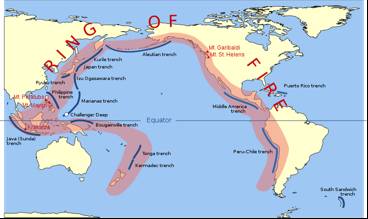
In some areas of the world, like California and Japan, earthquakes are a common occurrence. How can this best be explained?
The strong ocean currents are undermining both areas causing earthquakes.
Both areas are located near the edge of the Pacific Ocean, the unstable sand causes earthquakes.
Both areas are subjected to strong ocean wind and waves that causes earthquakes.
Both areas are on the boundary of active plates, the motion of the plates causes earthquakes.

Using biotechnology, a scientist genetically modifies a crop to be more resistant to droughts. What is an intended benefit of using this technology?
The technology will help reduce the use of fertilizers for growing crops
The technology will reduce the costs of good-quality seeds available in the marker
The technology will help farmers spend less money on irrigation every year
The technology will allow farmers to grow more crops in less space

The graph below shows the various rates of running speed in a prey population. Which of the following statements supports the idea that genetic variation in a population increases the chance that some individuals will survive more than others?
The number of prey that run at a medium rate is highest, so over time there will be an overpopulation of prey that run an average rate of speed.
Because more prey run at an average rate, more average runners will survive to pass their traits on to offspring.
Slow prey will become faster out of a need to avoid predators and there will be fewer prey that run slowly in the next generation.
Over time prey that run faster than predators will survive, which will lead to an increase in the population of fast runners over time.
According to the theory of natural selection, what would happen to a species of lizards when a new predator is introduced into the environment where the lizards live?
The lizards that have the traits needed to avoid the new predator would be more likely to survive and reproduce
All of the lizards would try to develop new physical traits to avoid the new predator.
Some of the lizards would try to develop new physical traits to avoid the new predator, and the other lizards would die.
Because all lizards of the same species have the same physical traits they would either all survive or all die.

In Leslie's family, two of the children have attached earlobes and one child has unattached earlobes. Which of these processes is responsible for the variety of traits in this family?
Binary Fisson
Sexual Reproduction
Asexual Reproduction
Regeneration
Which of these occurs in asexual reproduction but not in sexual reproduction?
Genes carry genetic information
An offspring is made of cells
The genetic information from two organisms combines
An offspring inherits a set of traits identical to the parents

Which statement could explain the trend in the graph?
A
B
C
D

