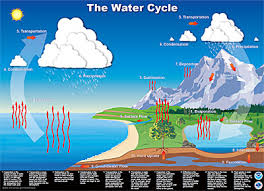
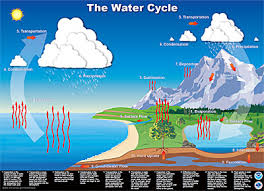
wayground logo

Free Printable Worksheets

NEW

Font size

S
M
L
XL
Worksheets

5th Gr. SSA Water Cycle & Precipitation

Total questions: 23

Worksheet time: 21mins

Name
Class
Date
1.
What is the energy source for the water cycle?
a)
the sun
b)
the earth
c)
water
d)
the moon
2.
Which is the opposite of condensation?
a)
runoff
b)
evaporation
c)
precipitation
d)
transpiration
3.
Which best explains why runoff is important?
a)
It returns water to other locations on Earth
b)
It increases the chance of flooding
c)
It makes evaporation occur faster
d)
It increases condensation
4.
Snow, sleet, hail, and rain are all examples of  ________________. 
a)
evaporation
b)
condensation
c)
accumulation
d)
precipitation
5.
What is it called when plants give off water vapor as a waste product?
a)
condensation
b)
evaporation
c)
sublimation
d)
transpiration
6.
What is the water cycle?
a)
the 3 forms of water
b)
the movement of water on, above, or below the surface of the Earth
c)
when water melts
d)
when clouds form
7.
During which stage do clouds form?
a)
condensation
b)
evaporation
c)
precipitation
8.
Which stages does liquid water from the ocean turn into water vapor?
a)
condesantion
b)
evaporation
c)
precipitation
d)
run off
9.
What is water doing when it is changed to water vapor?
a)
evaporating
b)
condensing
c)
transpiring
d)
freezing
10.
On which kind of day would you expect the most evaporation from the surface of a  pond?
a)
sunny and hot
b)
sunny and cold
c)
rainy and hot
d)
rainy and cold
11.

When changing from a liquid to a gas, the water molecules are ____________________________.

a)

freezing and moving away from each other.

b)

evaporating and moving away from each other

c)

condensing and moving closer to each other

d)

evaporating and moving closer to each other

12.

When changing from a liquid to a solid, the water molecules are ____________________________.

a)

freezing and moving away from each other.

b)

evaporating and moving away from each other

c)

condensing and moving closer to each other

d)

freezing and moving closer to each other

13.

When changing from a solid to a liquid, the water molecules are ____________________________.

a)

melting and moving away from each other.

b)

evaporating and moving away from each other

c)

melting and moving closer to each other

d)

freezing and moving closer to each other

14.
What is condensation?
a)
The part of the water cycle when the sun heats up water, turning it from a liquid into water vapor or steam. It rises from the ground into the air.
b)
The part of the water cycle when the water vapor in the air gets cold. The water turns back into a liquid and forms clouds.
c)
The part of the water cycle when clouds get heavy and can no longer hold the liquid water. This causes the water to fall from the sky to the earth as rain, snow, sleet, or hail.
15.
What is precipitation?
a)
The part of the water cycle when the sun heats up water, turning it from a liquid into water vapor or steam. It rises from the ground into the air.
b)
The part of the water cycle when the water vapor in the air gets cold. The water turns back into a liquid and forms clouds.
c)
The part of the water cycle when clouds get heavy and can no longer hold the liquid water. This causes the water to fall from the sky to the earth as rain, snow, sleet, or hail.
16.
How much of our planet is estimated to be covered with water?
a)
68%
b)
50%
c)
97%
d)
75%
17.
What is a layer of rock or sediment that holds water?
a)
glacier
b)
well
c)
aquifer
d)
natural spring
18.
How much of our planet's water is saltwater?
a)
75%
b)
1%
c)
99%
d)
97%
19.
True or False: Hail is formed in the cloud and then falls to the ground.
a)
True
b)
False
20.
Precipitation MUST start from where?
a)
Sky
b)
Clouds
c)
Sun
d)
Ground
21.
Snow is most common is which season?
a)
Summer
b)
Winter
c)
Fall
d)
Spring
22.
The most common form of precipitation in the summer is...
a)
Rain
b)
Snow
c)
Sleet
d)
Hail
23.
How is sleet formed?
a)
Snowflakes fall, go through an area of cold air and turns into sleet before hitting the ground
b)
Rain falls, freezes in an area of cold air above the ground to make sleet
c)
Snowflakes fall and are melted a bit by warm air near the ground
d)
Sleet is not real