wayground logo

Free Printable Worksheets

NEW

Font size

S
M
L
XL
Worksheets

Science Terms I should know 3

Total questions: 25

Worksheet time: 28mins
Name
Class
Date
1.
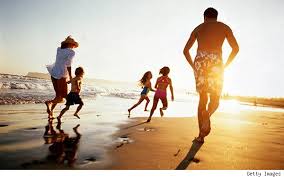
The sun shines down on this family as the play on the beach.
a)
conduction
b)
convection
c)
radiation
2.
A group of friends gather around a fire to stay warm.
a)
conduction
b)
convection
c)
radiation
3.
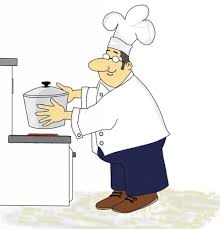
The man goes to take the hot pot off the stove with his bare hands.
a)
conduction
b)
convection
c)
radiation
4.
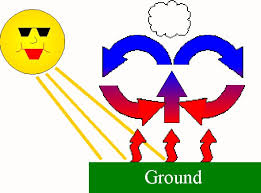
Warm air rises and the cool air sinks.
a)
conduction
b)
convection
c)
radiation
5.
Molecules in cold things move more _________
than in hot things.
a)
quickly
b)
slowly
c)
happily
d)
merrily
6.
The transfer of heat by currents through liquids of gases is called
a)
Perspiration
b)
Radiation
c)
Conduction
d)
Convection
7.
What are waves that can transfer heat through the vacuum of empty space?
a)
Electromagnetic waves
b)
Convection
c)
Conduction
d)
Heat
8.
The way the heat is moving from the hot coffee is called...
a)
convection
b)
radiation
c)
insulation
d)
conduction
9.
A toaster toasting bread is an example of 
a)
condensation
b)
conductio
c)
convection
d)
radiation
10.
The phase of matter that has definite shape and definite volume is:
a)
solid.
b)
liquid.
c)
gas.
d)
plasma.
11.

How does heat transfer when you hold an ice cube in your hand?

a)

from the cold ice cube to your warm hand

b)

the cold ice cube makes your hand cold

c)

from your warm hand to the cold ice cube

d)

very carefully

12.

When I cook bacon, it touches the pan. It is cooked because

a)

heat transfers from the pan to the bacon through convection

b)

heat transfers from the pan to the bacon through conduction

c)

heat transfers from the bacon to the pan through conduction

d)

heat is transferred as energy

13.

What is Specific Heat?

a)

The amount of thermal energy required to increase the temperature of 1kg of a material by 1°C.

b)

The amount of radiant energy required to increase the temperature of 1kgof a material by 1°C

c)

The amount of energy required to increase the temperature of 2 kg of a material by 1°C.

d)

The amount of friction required to increase the temperature of 1 kg of a material by 1°C.

14.

What happens in thermal expansion?

a)

The number of atoms increase

b)

the size of each atom increases

c)

the space between each atom increases

15.

How does the air on a hot day compare with the air on a cold day?

a)

On a hot day, air molecules have more energy

b)

On a cold day, air molecules move faster

c)

On a hot day, the air contains more nitrogen

d)

On a cold day, air molecules don't move at all

16.
A measure of the average kinetic energy of the individual particles in an object is called:
a)
thermal energy
b)
conduction
c)
convection
d)
temperature
17.
Energy that moves particles of matter is 
a)
temperature
b)
thermal energy
c)
heat
d)
friction
18.
The temperature of a substance increases as___.
a)
the substance expands
b)
the average kinetic energy of its particles increases
c)
the substance's volume increases
d)
the substance's mass increases
19.
Energy is measured in units called.....
a)
pounds
b)
meters
c)
horsepower
d)
joules
20.
What  is the formula to calculate heat energy required to raise the temperature of any substance?
a)
Q=mc∆t
b)
Q=mc
c)
Q= ½mv
d)
m=QC
21.
What unit do you use to measure Thermal Energy?
a)
J/Kg ºC
b)
Kg
c)
ºC
d)
J
22.
A metal cube at temperature of 10°C immersed in a liquid at temperature of 70°C.
What is the temperature of the metal cube when thermal equilibrium is achieved between the cube and the liquid?

a)
Between 10°C and 70°C
b)
More than 70°C
c)
Less than 10°C
d)
Same as the room temperature
23.
heat always travels from _____ to ______ objects
a)
hot to cold
b)
cold to hot
c)
cold to cold
d)
hot to hot
24.
The average kinetic energy in a substance is its...
a)
Heat
b)
Temperature
c)
Internal energy
d)
Work
25.
Which sentence explains why a cold metal spoon placed in a pot of boiling water becomes hot?
a)
Thermal energy is transferred from the spoon to the water.
b)
Thermal energy is transferred from the water to the spoon.
c)
Thermal energy in the water is transformed into kinetic energy in the spoon.
d)
Thermal energy in the spoon is transformed into kinetic energy in the water.