
 Worksheets
APHG: Units 6 & 7 (Development, Industrialization, & Urbanization)
Total questions: 49
Worksheet time: 25mins
Name
Class
Date
1.
Which of the following might best characterize the Maquiladora districts in Mexico
a)
Special Economic Zones (SEZ)
b)
Export Processing Zones (EPZ)
c)
Islands of Development
d)
Trade Districts
2.

The Brandt Line might best relate to which of the following ideas?
a)
Rostow's Ladder
b)
Location of Alpha World Cities
c)
Divisions in First and Second World States
d)
Wallerstein's Core-Periphery Model
3.

a)
Weber's Least Cost Theory
b)
Nash Equilibrium
c)
Losch's Zone of Profitability
d)
Hotelling's Locational Interdependence Theory
4.
The mining of rare earth metals in Sub-saharan Africa for electronic products consumed in Europe and North America best reflects
a)
Dependancy Ratio
b)
High Mass Consuption
c)
Irredentism
d)
Neocolonialism
5.

a)
Break of Shipping Point
b)
Special Economic Zone (SEZ)
c)
Exclusive Economic Zone (EEZ)
d)
Break of Bulk Point
6.
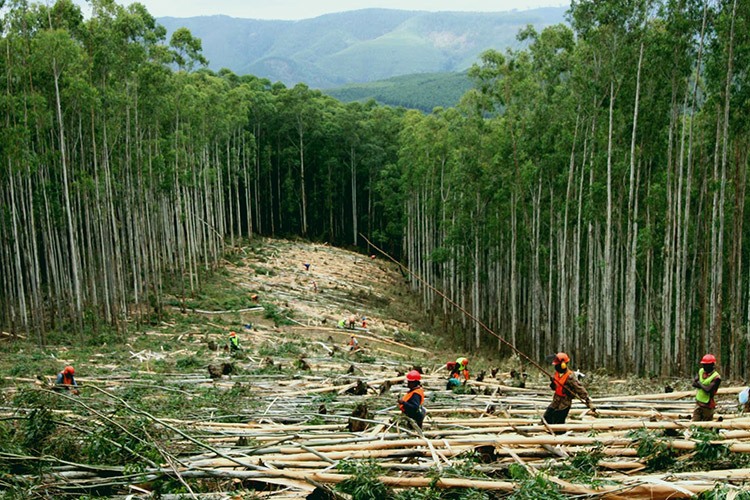
a)
Tertiary Sector
b)
Secondary Sector
c)
Primary Sector
d)
Quaternary Sector
7.
The U.N. measure of development known as the Human Development Index (HDI), focuses on which four factors?
a)
Poverty Rates, Life Expectancy, Literacy Rates, and Healthcare
b)
Income, Life Expectancy, Literacy Rates, and Healthcare
c)
Income, Life Expectancy, Literacy Rates, and Education
d)
Poverty Rates, Education, Healthcare, and GNI per capita
8.
The hearth of the Industrial Revolution
a)
Great Britain
b)
France
c)
Belgium
d)
Germany
9.
A bulk gaining product would be produced
a)
Close to the source of material
b)
Far away from cities
c)
Next to a mine
d)
Near the market
10.
Which of the following reflects the comparative advantage of placing factories that produce similar products close together
a)
Hotelling's Theory of Locational Interdependance
b)
Agglomeration
c)
Deglomeration
d)
Weber's Least Cost Theory
11.

a)
Primary Sector
b)
Quinary Sector
c)
Secondary Sector
d)
Tertiary Sector
12.
Silicon valley might best be considered a(n)
a)
Technopole
b)
Rust belt
c)
Export Processing Zone (EPZ)
d)
Special Economic Zone (SEZ)
13.
Which of the following is not considered one of the four Asian tigers?
a)
South Korea
b)
Japan
c)
Hong kong
d)
Singapore
14.
Which of the following is not considered a renewable energy source
a)
Biofuel
b)
Natural gas
c)
Hydro electric Power
d)
Geothermal Power
15.
Deglomeration occurs when a location
a)
Experiences a natural disaster
b)
Is saturated with businesses offering similiar services
c)
Sees an increase in large firms moving in
d)
experiences a rapid lose in manufacturing activity
16.
The industrial Revolution coincides with what event in Europe
a)
The 1st Urban Revolution
b)
The Green Revolution
c)
The Glorious Revolution
d)
The 2nd Agricultural Revolution
17.
1. Situation costs are critical to a firm that wishes to
a)
avoid skilled laborers.
b)
minimize production costs inside the plant.
c)
minimize transport costs.
d)
identify unique characteristics of a particular industry.
18.
According to Alfred Weber, which one of the following costs of production is the most important factor in locating a new industry?
a)
Labor
b)
Transportation
c)
Raw Materials
d)
Agglomeration Costs
19.
Shows the influence of women in a society by measuring women's income, participation in labor force, and political influence.
a)
Human Development Index
b)
GNP
c)
Gender Empowerment Index
d)
GDP
20.
The set of goals that were made by the UN in 2000 and were revisited in recent years to evaluate progress on development of LDC's in the world.
a)
HDI
b)
Millennium Development Goals
c)
Informal Economy
d)
UNHCR
21.
What is per capita income?
a)
the total amount of money a country makes in a year
b)
the average amount of money earned by each person in a country
c)
the amount of capital a person owns
d)
none of the above
22.
Newly industrialized countries (NICs) like Brazil and Mexico are considered part of the
a)
Core
b)
Periphery
c)
Semi-Periphery
d)
External
23.
The central city and its surrounding suburbs is known as a
a)
Megalopolis
b)
Zoning Laws
c)
Urban Morphology
d)
Urban Area
24.
A model of the internal structure of cities in which social groups are spatially arranged in a series of rings.
a)
Concentric Zone Model
b)
Griffen-Ford Latin American City Model
c)
Peripheral Model
d)
Sector Model
25.
A model showing a CBD that is divided into three groups/sections: a colonial CBD, a periodic and informal market place and a traditional business center. The neighborhoods in this model are often based on ethnic connections and the periphery of the city is composed of squatter settlements due to rapid industrialization.
a)
Sector Model
b)
De Blij Sub-Saharan City Model
c)
Burgess' Model
d)
New Donut Model
26.
Small county subdivisions, usually containing 5,000 persons, delineated by the U.S Census Bureau as areas of relatively uniform population characteristics, economic status, and living conditions.
a)
Census Tract
b)
Exurbs
c)
Suburbs
d)
Disamenity Sector
27.
A ring of land maintained by parks, agriculture, or other types of open space to limit the sprawl of an urban area
a)
Greenbelt
b)
Urban Land
c)
Green Land Usage
d)
Sprawl Limitation
28.
A model of the internal structure of cities, created by Harris and Ullman, in which social groups are arranged around in a collection of nodes of activities
a)
Multiple Nuclei Model
b)
Concentric Zone Model
c)
Peripheral Model
d)
Sector Model
29.
A model of North American urban areas consisting in an inner city surrounded by large suburban residential and business areas tied together by a belt way or ring road.
a)
Peripheral Model
b)
New Donut Model
c)
Filtering
d)
Urban Area Model
30.
A model of the internal structures of cites in which social groups are arranged around a series of sectors, or wedges, radiating out from the central business district.
a)
Sector Model
b)
Multiple Nuclei Model
c)
Zone in Transition
d)
Concentric Zone Model
31.
The process of converting a neighborhood from a predominantly low-renter renter-occupied area to a predominantly middle-class owner-owned area
a)
Renewal
b)
Gentrification
c)
Conversion of Area
d)
Urban Renewal
32.
Which urban model best explains the spatial impact of automobiles and the construction of interstate highways on metropolitan areas in the United States?
a)
concentric ring
b)
peripheral/galactic city model
c)
sector model
d)
multiple nuclei model
33.
Which of the following settlement types is likely to use the largest percentage of land space for residents?
a)
town
b)
suburb
c)
hamlet
d)
physical city
34.
Unrestricted low-density development of residential and commercial activities over a large expanse of land is
a)
sprawl
b)
edge city
c)
new urbanism
d)
smart growth
35.
What type of land use dominates on the periphery of the Latin American Model?
a)
squatter settlements
b)
industrial activity
c)
commerical
d)
middle class residental
36.
The minimum number of people needed to support a business is called the
a)
range
b)
threshold
c)
bid rent
d)
radius
37.
Young single recent college graduates who move into distressed inner city neighborhoods and refurbish their new residences would be an example of
a)
blockbusting
b)
red lining
c)
gentrification
d)
white flight
38.
The largest major population concentration of North America is
a)
from Toronto to Montreal.
b)
A. from Miami to Jacksonville.
c)
from San Diego to San Francisco
d)
from Washington D.C. to Boston.
39.
In Hoyt’s Sector Model lower income neighborhoods are usually located
a)
in a wedge that extends from the CBD to the suburbs.
b)
adjacent to the industrial and transportation corridor
c)
on the east side of the city.
d)
in the first ring around the CBD.
40.
Formulated by Christaller to explain the size and distribution of cities in terms of a competitive supply of goods and services dispersed to populations. Bigger centers have a larger hinterland, while smaller centers have smaller hinterland and less specialty and high-order goods.
a)
Central Place Theory
b)
Christaller's Theory
c)
Christaller's Place Theory
d)
Central Hinterland Theory
41.
A pattern of settlements in a country such that the largest settlement has more than twice as many people as the second-ranking settlement and is over twice as significant.
a)
Primate City Rule
b)
Secondary City Rule
c)
Dense Cuty
d)
Dense Settlements
42.
A pattern of settlements in a country such that the nth largest settlement is 1/n the population of the largest settlement. Developed countries tend to conform to this rule, while developing countries tend to have one primate city.
a)
Rank-Size Rule
b)
City-Size Rule
c)
City Development Rule
d)
Primate City Size Rule
43.
What was the first hearth of civilization?
a)
Peru
b)
Nile
c)
Indus
d)
Mesopotamia
44.
What geometric pattern is associated with Christaller’s Central Place Theory?
a)
square
b)
hexagon
c)
circle
d)
pentagon
45.
According to the classic bid-rent curve, what happens to the value of land as one gets closer to the Central Business District (CBD)?
a)
Land gets used more extensively.
b)
Land gets more expensive.
c)
Land gets used less intensively.
d)
Land gets more affordable along busy streets.
46.
From largest to smallest the urban hierarchy of the following would go...
City, Town, ________, Hamlet
City, Town, ________, Hamlet
a)
Suburb
b)
Mega-City
c)
Village
d)
County
47.
________ is the process of settlement, formation, expansion, and change.
a)
Suburbanization
b)
Urbanization
c)
Urban Sprawl
d)
City Growth
48.
Industries during the 1800s located near the CBD to be close to
a)
Transportation lines
b)
The expanding urban population
c)
Affordable land
d)
Low-cost storage
49.
What is the population of the fourth largest city in a country where the rank-size rule applies if the largest city is two million in population?
a)
250,000
b)
1,000,000
c)
500,000
d)
100,000
100 %

