wayground logo

Free Printable Worksheets

Font size

S
M
L
XL
Worksheets

SOL Morning Review

Total questions: 42

Worksheet time: 57mins

Name
Class
Date
1.
Aa is
a)
homozygous dominant
b)
homozygous recessive
c)
heterozygous
2.
AA is
a)
homozygous dominant
b)
homozygous recessive
c)
heterozygous
3.
Based off this punnett square, what fraction of the offspring will have wrinkled, yellow seeds?
a)
9/16
b)
3/16
c)
1/16
d)
16/16
4.
A male shark has 40 chromosomes in each of its sperm. How many would be present in its body cells?
a)
20
b)
40
c)
80
d)
160
5.
Crossing over helps promote 
a)
male genotype
b)
genetic variation
c)
DNA replication
d)
mitosis
6.
How many daughter cells are produced from meiosis ?
a)
10
b)
6
c)
4
d)
2
7.
If a parent cell has 88 chromosomes, following MITOSIS, the daughter cells will have ___ chromosomes.
a)
44
b)
88
c)
Impossible to know
d)

176

8.
a)
Anaphase
b)
Cytokinesis
c)
Telophase
d)
Metaphase
9.
a)
prophase
b)
metaphase
c)
anaphase
d)
telophase
10.
What are the steps of the cell cycle in order?
a)
Interphase, Mitosis, Cytokinesis
b)
Interphase, Cytokinesis, Mitosis
c)
Mitosis, Cytokinesis, Interphase
d)
Cytokinesis, Mitosis, Interphase
11.
What is the acronym we can use to remember the steps of mitosis? 
a)
Interphase 
b)
T-A-M-P
c)
P-M-A-T 
d)
none of the above 
12.
The table shows the results of measuring the percentages of the four bases in the DNA of several different organisms. Some of the values are missing from the table. Based on Chargaff’s rule, the percentages of guanine bases in chicken DNA should be approximately what?
a)
28.8%
b)
19.9%
c)
21.5%
d)
13.4%
13.
What is an observation for this picture?
a)
The man is scared
b)
The man is going to get eaten
c)
There is a man in a kayak
d)
The man is paddling fast
14.
The boy is not going to school today
a)
observation
b)
inference
15.
What is one of the reactants of cellular respiration?
a)
energy
b)
glucose
c)
carbon dioxide
d)
water
16.
Cellular Respiration's goal is to
a)
make water
b)
make ATP
c)
make glucose
d)
make  oxygen
17.
What gas is released into the air during cellular respiration?
a)
oxygen
b)
carbon dioxide
c)
water 
d)
glucose
18.
What are the products of photosynthesis?
a)
water and carbon dioxide
b)
oxygen and glucose
c)
oxygen and carbon dioxide
d)
oxygen and water
19.

Plants need ________ to conduct photosynthesis

a)

Oxygen

b)

Soil

c)

Carbon dioxide

d)

Sugar

20.
Which macromolecule is shown?
a)
lipid
b)
protein
c)
nucleic acid
d)
carbohydrate
21.
Which macromolecule is shown?
a)
lipid
b)
protein
c)
nucleic acid
d)
carbohydrate
22.
Which macromolecule is shown?
a)
lipid
b)
protein
c)
nucleic acid
d)
carbohydrate
23.
What macromolecule is this?
a)
protein
b)
carbohydrate
c)
lipid
d)
nucleic acid
24.
All organic compounds contain the element
a)
carbon
b)
nitrogen
c)
phosphorus
d)
sulfur
25.
This picture is an enzyme-substrate complex.  What is being shown at point A?
a)
substrate
b)
enzyme
c)
protein
d)
product
26.
Enzymes speed up chemical reactions by
a)
lowering activation energy needed for a chemical reaction to occur
b)
heating up the substrate
c)
creating more reactions
d)
increasing activation energy
27.
An experiment is performed on plants to see how different liquids affect plant growth. Each plant in the experiment is given a different liquid; water, apple juice, or milk. Each plant has the same amount of soil, sunlight, and listens to the same music. In this investigation, the independent variable is ...
a)
The type of plant
b)
The amount of sunlight
c)
The type of music
d)
The type of liquid
28.

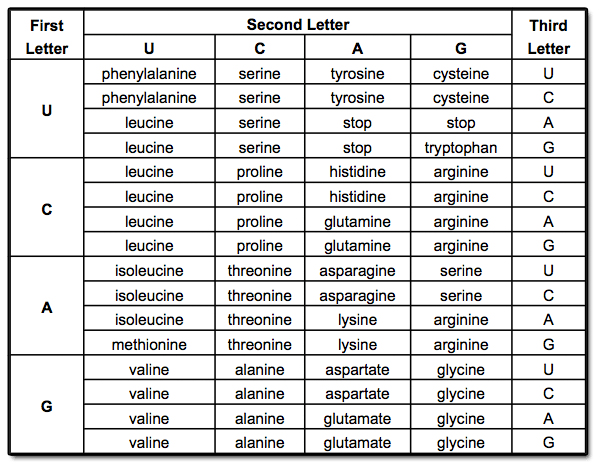
Use the CODON CHART to answer the following question.


What amino acid is coded for by the codon CAG?

a)

histidine

b)

tyrosine

c)

valine

d)

glutamine

29.

AAA-TTT is the DNA TRIPLET


WHAT AMINO ACIDS ARE MADE

a)

SERINE-LEUCINE

b)

LEUCINE-PHENYLALANINE

c)

PHENYLALANINE-LYSINE

d)

TYROSINE-LYSINE

30.
What amino acid is represented by the codon UUA?
a)
Phenylalanine
b)
Tyrosine
c)
Leucine
d)
Stop codon
31.

If there is 2000 kcal of energy in this particular ecosystem, how many kcal of energy will be available for hawk?

(a)  

32.

Which organism receives the least amount of energy from the producer?
a)
Owl
b)
Grasshopper
c)
Lilypad
d)
Mouse
33.
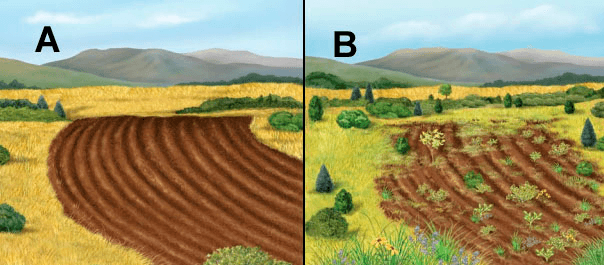
What type of succession is shown going from figure A to figure B?
a)
primary succession
b)
ecological succession
c)
secondary succession
d)
intermediate
34.
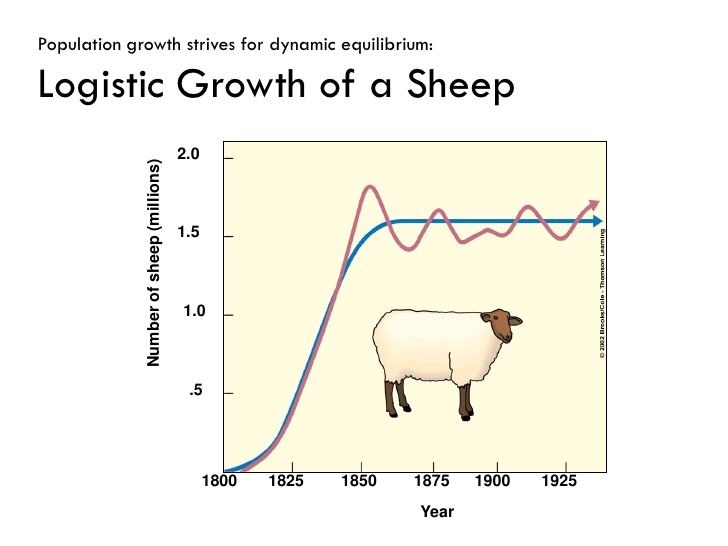
What is the carrying capacity for this sheep population?
a)
1.8 million
b)
1.25 million
c)
1.6 million
d)
1.o million
35.

a)

Cell 1 is eukaryotic, and Cell 2 is prokaryotic.

b)

Cell 1 is prokaryotic, and Cell 2 is eukaryotic.

c)

Both Cell 1 and Cell 2 are eukaryotic.

d)

Both Cell 1 and Cell 2 are prokaryotic.

36.

Both euglena and cyanobacteria are photosynthetic unicellular organisms found in pond water. The feature that distinguishes euglena from cyanobacteria is the _

a)

ability to maintain homeostasis.

b)

presence of ribosomes.

c)

ability to reproduce.

d)

presence of a nuclear membrane.

37.

a)
b)
c)
d)
38.

a)

Cell W

b)

Cell X

c)

Cell Y

d)

Cell Z

39.

Which of the following processes is shown in the picture? (a)  

Choose from the below words
replication
protein synthesis
transcription
translation
40.

If brown is dominant to blue, how many offspring would have brown eyes if a cross occurs between homozygous brown eye female and blue eyed male?

a)

25 %

b)

50%

c)

75%

d)

100%

41.

If black is dominant to white, what would be the probability of having black rat if a heterozygous black rat was crossed with a white rat?

a)

25 %

b)

50%

c)

75%

d)

100%

42.

If black is dominant to white, what would be the probability of having black rat if two heterozygous black rats were crossed?

a)

25%

b)

50%

c)

75%

d)

100%