
NEW
Font size
S
M
L
XL
 Worksheets
6th Grade iLearn Review 2019
Total questions: 30
Worksheet time: 26mins
Name
Class
Date
1.
Temperature, light, air, water, and soil are all _____ parts of the environment
a)
alive
b)
biotic
c)
abiotic
d)
living
2.
A producer?
a)
Eats other plants and animals
b)
Makes its own food
c)
Eats dead plants or animals
d)
Makes toys for kids
3.
This organism draws its nutrients from dead organisms as it releases enzymes to cause the organisms to break down and break apart. Is it a...
a)
Producer
b)
Consumer
c)
Decomposer
4.
the place where an organism lives
a)
home
b)
nest
c)
habitat
d)
car
5.
a symbiotic relationship in which both animals benefit from the relationship
a)
mututalism
b)
parasitism
c)
commensalism
d)
predation
6.
A symbiotic relationship in which one animal benefits and the other is unaffected.
a)
mutualism
b)
parasitism
c)
commensalism
d)
predation
7.
a symbiotic relationship in which one animal is harmed, but the other benefits
a)
mutualism
b)
parasitism
c)
commensalism
d)
predation
8.

What system of measurement is used in Science?
a)
metric
b)
standard
c)
my favorite
d)
the one that's most available
9.
Something that takes up space and has mass.
a)
volume
b)
matter
c)
mass
d)
density
10.
A measure of how much mass is contained in a given unit of volume.
a)
mass
b)
density
c)
volume
d)
matter
11.
The amount of space something takes up
a)
density
b)
volume
c)
mass
d)
matter
12.

The deer, grasshopper, and bird are all examples of which type of consumers on this food pyramid?
a)
decomposers
b)
omnivores
c)
carnivore
d)
herbivore
13.

What is the law that states that energy cannot be created or destroyed only transform form one energy to another?
a)
Law of Conservation of Energy
b)
Law of Gravity
c)
Law of Inertia
d)
None of these
14.

Identify the state of matter shown in this image.
a)
solid
b)
liquid
c)
gas
15.

Identify the state of matter shown in this image.
a)
solid
b)
liquid
c)
gas
16.

What is this scientific instrument of measuring called?
a)
Triple Beam Balance
b)
Scale
c)
Thermometer
d)
Wheel and Axle
17.
To find the volume of a rectangular box
a)
divide the length by the height
b)
multiply the length, width, and height
c)
subtract the mass from the weight
d)
multiply one atom's mass by the total
18.
The top of the wave is called the
a)
Trough
b)
Crest
c)
Amplitude
d)
Frequency
19.
The bottom of a wave is called the
a)
Crest
b)
Trough
c)
Amplitude
d)
Frequency
20.

This table lists the density of four different substances.
If water has a density of 1.0 g/cm3 , which substance will float on the surface of water?
If water has a density of 1.0 g/cm3 , which substance will float on the surface of water?
a)
Substance B, because it is less dense than water
b)
Substance A, because it is more dense than water
c)
Substance D, because it is more dense than water
d)
Substance C, because it is less dense than water
21.

When a solar eclipse occurs, what phase is the moon in?
a)
full moon
b)
new moon
c)
waxing gibbous
d)
waning gibbous
22.

What causes longer summer days (more light)?
a)
Earth tilt's away from the sun in summer
b)
Earth's revolves slower in summer
c)
Earth tilts toward the sun in summer
d)
Earth is closer to the sun
23.

the amount of matter in an object
a)
displacement
b)
mass
c)
friction
d)
friction
24.
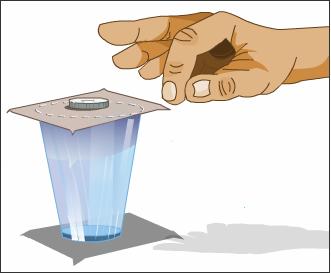
What is the tendency of an object to resist a change in motion?
a)
coffee
b)
motion
c)
inertia
d)
gravity
25.
Australia is in which hemisphere
a)
Northern
b)
Southern
26.

At position A, which hemisphere would have summer?
a)
Northern hemisphere
b)
Southern hemisphere
27.
Inner rocky terrestial planets have all of the following in common except:
a)
rings
b)
few or no moons
c)
small in size
d)
solid surface
28.
Outer gas giant planets have all of the following in common, except:
a)
many moons
b)
thick atmospheres
c)
a crust to walk on
d)
rings
29.
What is the shape of the planet's orbits?
a)
ellipse
b)
circle
c)
square
d)
no particular shape
30.

Located between the inner and outer planets.
a)
Sun
b)
Asteroid belt
c)
Uranus
d)
Moons
Reset

