wayground logo

Free Printable Worksheets

Font size

S
M
L
XL
Worksheets

2nd Semester Earth/Space Final Exam

Total questions: 126

Worksheet time: 2hrs 36mins
Name
Class
Date
1.
What does bio mean
a)
life
b)
living
c)
animals
d)
plants
2.
What does geo mean
a)
minerals
b)
rock
c)
earth
d)
crust
3.
Energy can be classified into..
a)
Renewable and non renewable
b)
Natural and non renewable
c)
Renewable and Natural
d)
All of them
4.
Why is solar energy considered renewable energy?
a)
It's cheaper than fossil fuels
b)
The sun's energy would not run out for billions of years
c)
Solar energy recharges batteries
d)
All of them
5.
Which of the following is not a renewable resource?
a)
wind
b)
sunlight
c)
water
d)
fossil fuels
6.
What is a non renewable resource?
a)
water
b)
wind
c)
coal
d)
biomass
7.
There are 3 Main Fossil Fuels. We Know Them As --
a)
Carbon Dioxide, Oxygen, Nitrogen
b)
Cookies, Nutella, Granola
c)
Coal, Oil, Natural Gas
d)
Canyons, Oceans, Nymph
8.
Natural Gas is a __________ energy resource.
a)
Renewable
b)
Nonrenewable
9.
__________ is an energy resource that WILL NOT run out in the next several hundred years.
a)
Renewable Energy Resource
b)
Nonrenewable Energy Resource
10.
Geothermal energy is energy from 
a)
the sun
b)
heat from deep in the earth
c)
wind
d)
inexhaustable
11.
Energy from the sun is called
a)
Biofuels
b)
Solar
c)
Geothermal
d)
Hydroelectric
12.
Which of the following is NOT an alternative energy source?
a)
fossil fuels
b)
geothermal energy
c)
hydroelectric energy
d)
wind energy
13.
_____ uses dams to turn flowing water into electricity.
a)
hydropower
b)
tidal power
c)
biomass
d)
nuclear
14.

What is the definition of "Greenhouse Effect?"

a)

Gases that increase Earth's temperature

b)

when the gases in Earth’s atmosphere trap heat from the Sun and keep the planet warm

c)

the pattern of weather that occurs over time

d)

When our climate changes

15.
The main human activity that releases greenhouse gases is
a)
using bottled water
b)
burning fossil fuels
c)
texting on cellphones
d)
eating meat
16.
Melting of glaciers and polar ice caps....
a)
will result in cooler temperatures in the Arctic
b)
will result in sea-levels rising
c)
Will have no effect on ecosystems
d)
None of the above
17.
A solar eclipse only happens during a ________ moon.
a)
New
b)
Cresent
c)
Gibbous
d)
Full
18.
A lunar eclipse only happens during a ________ moon.
a)
New
b)
Cresent
c)
Gibbous
d)
Full
19.
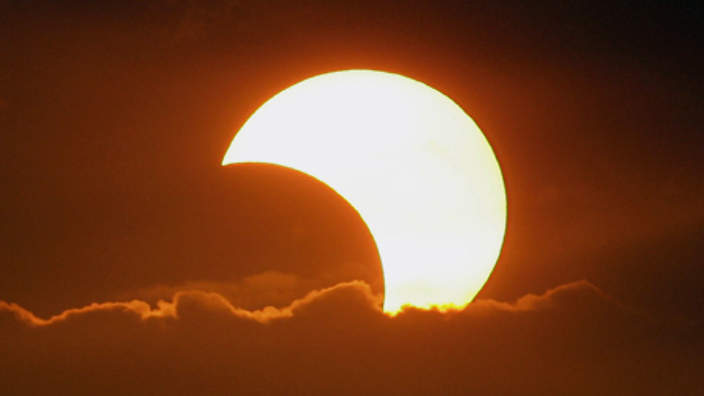
This image is an example of
a)
Lunar Eclipse
b)
Full Moon
c)
New Moon
d)
Solar Eclipse
20.
For a solar eclipse to occur, what has to happen?
a)
The sun must be directly between Earth and the moon.
b)
The moon must be directly between Earth and the Sun.
c)
Earth must be directly between the Sun and the moon.
21.
Tides are caused mainly by what?
a)
Moon’s gravitational pull
b)
Sun’s gravitational pull
c)
Earth’s gravitational pull
22.
The bulge of water on the side of the Earth closest to the moon produces ___________.
a)
high tide
b)
low tide
c)
neap tide
d)
spring tide
23.
What part of the moon do we see from Earth?
a)
all of it
b)
the same side
c)
none of it
d)
only one quarter
24.
Which moon phase is when you can't see the moon at all?
a)
Waning crescent
b)
Full moon
c)
Waxing gibbous
d)
New moon
25.
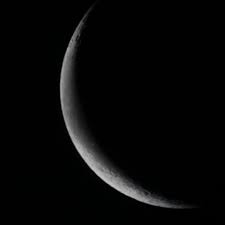
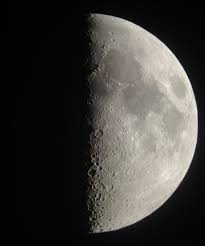
Name the moon phase
a)
waning crescent
b)
waxing crescent
c)
waning gibbous
d)
waxing gibbous
26.
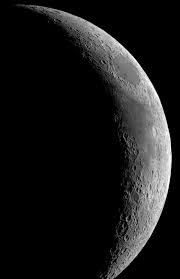
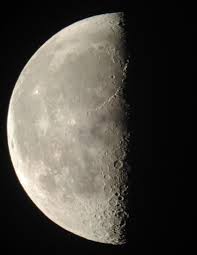
Name the moon phase
a)
waning crescent
b)
waxing crescent
c)
waning gibbous
d)
waxing gibbous
27.
Name the moon phase
a)
waning crescent
b)
waxing crescent
c)
waning gibbous
d)
waxing gibbous
28.
Name the moon phase
a)
First Quarter
b)
Last Quarter
c)
New Moon
d)
Full Moon
29.

Name the moon phase

a)

First Quarter

b)

Third Quarter

c)

New Moon

d)

Full Moon

30.
Which of the following is not necessary in the formation of sedimentary rocks?
a)
deposition
b)
compaction
c)
cementation
d)
earthquakes
31.
Why do we have night and day?
a)
Earth's rotation
b)
Earth's revolution around the Sun
c)
The Sun rotating
d)
The moon block the sun
32.
Earth's rotation causes all of the following EXCEPT
a)
day and night
b)
apparent movement of the sun across the sky
c)
changing shadows
d)
weather
33.
An ancient fossil of a fish was found in present day Midland. What does this tell us about the environment in the past?
a)
it used to be a forest
b)
there once was a desert
c)
there have only been land animals
d)
there was once water in the area
34.
What planet is 5th from the Sun?
a)
Jupiter
b)
Saturn
c)
Earth
d)
Mars
35.
Energy formed form moving water
a)
biofuels
b)
hydroelectric
c)
wind
d)
geothermal
36.
What keeps Earth revolving around the sun?
a)
the force of gravity
b)
the pull of the moon
c)
the tilt of Earth's axis
d)
the rotation of Earth
37.
What is a revolution?
a)
The movement of one object around another.
b)
The spinning of a planet, moon, or star around its axis.
c)
A small, frozen object that orbits the sun.
d)
A large, ball-shaped object that moves around a star.
38.
What is a rotation?
a)
The movement of one object around another.
b)
Occurs when an object in space gets between the sun and another object and casts its shadow on the other object.
c)
The spinning of a planet, moon, or star around its axis.
d)
Occurs when the moon passes through Earth's surface.
39.
Which of these is a mineral?
a)
Diamond
b)
Fossil
c)
Sandstone
d)
Basalt
40.
Where is most of the freshwater on Earth?
a)
in the ocean
b)
in rivers and ponds
c)
under ground
d)
in glaciers and icecaps
41.
_________ is produced at the mouth of a river by deposition.
a)
delta
b)
dome mountain
c)
underwater canyon
d)
cavern
42.

What do Jupiter, Saturn, Uranus, and Neptune have in common?

a)

They all have rocky surfaces.

b)

They all appear to be similar to Earth.

c)

They are all gaseous planets.

d)

They all appear to be made of rock and ice.

43.

Which is an object in the solar system that is a frozen mass of ice and dust?

a)

asteroid

b)

comet

c)

moon

d)

planet

44.

What characteristics do all the inner planets share?

a)

thick atmosphere

b)

rocky surface

c)

liquid water on the surface

d)

ability to support life

45.

Which is NOT a characteristic of all planets?

a)

All planets rotate.

b)

All planets rotate around a star.

c)

All planets are large, round objects.

d)

All planets have rings of particles orbiting them.

46.

Between which two planets will we find the asteroid belt?

a)

Earth & Mars

b)

Mars & Jupiter

c)

Jupiter & Saturn

d)

Saturn & Uranus

47.

What does the atmosphere contain?

a)

nitrogen

b)

oxygen

c)

carbon dioxide

d)

all of the above

48.

What is the hydrosphere?

a)

ground

b)

soil

c)

fire

d)

earth water

49.

what is the geosphere?

a)

Earths ground

b)

earths soil

c)

earths entire solid body

d)

earth fully

50.

what is the biosphere?

a)

earths organisms

b)

earths rocks

c)

earths paper

d)

earths rain

51.

how do scientists know that there is a inner core?

a)

earthquake waves

b)

wells

c)

mines

d)

cars

52.

Is the oceanic crust thick or thin?

a)

Thick

b)

thin

c)

neither

d)

both

53.

Is the continental crust thin or thick?

a)

thin

b)

thick

c)

neither

d)

both

54.

What is the outer core made out of?

a)

liquid iron

b)

liquid iron and nickel

c)

solid iron

d)

solid iron and nickel

55.

What is the inner core made out of?

a)

solid iron and nickel

b)

plain gold

c)

iron

d)

nickel

56.

The time in which Earth makes one rotation:

a)

~24 hours

b)

~365 days

c)

~28 days

d)

~one school year

57.

The picture shows sand used to make a model of a galaxy, each grain of sand best represents:

a)

a comet

b)

an asteroid

c)

a black hole

d)

a star

58.

This is what type of boundary?

a)

divergent

b)

convergent

c)

transform

d)

suduction zone

59.

Which boundary creates mountains?

a)
b)
c)
d)
60.

Rocks at the base of the trees were separated from the cliff by water freezing and thawing. The process describing the breaking of the rocks is:

a)

Soil Erosion

b)

Mountain building

c)

Chemical Weathering

d)

Physical Weathering

61.
What does a glacier form?
a)
a v shape
b)
u shape valley
c)
an o shape valley
d)
a canyon
62.
All of the following are properties of the Moon except what?
a)
is a solid rocky sphere
b)
has volcanoes 
c)
orbits the sun
d)
has an atmosphere
63.
The moon's surface has many more craters than the Earth. Why?
a)
The moon rarely gets hit
b)
The Earth's atmosphere protects it from impacts
c)
the moons gravity attracts more than earth
d)
The earth rotates on its axis
64.
If Marble is a rock that has large crystals and formed by exposure to high heat and pressure, what type of rock is it?  
a)
Igneous
b)
Metamorphic
c)
Sedimentary
d)
Sediment
65.
When magma is cooled and solidified it becomes what type of rock?
a)
igneous
b)
metamorphic
c)
sedimentary
d)
conglomerate
66.
Which of the following explains how mountains are formed?
a)
Plates collide at divergent boundaries causing the crust to push upward.
b)
Plates collide at convergent boundaries causing the crust to push upward.
c)
Plates slide past each other at transform boundaries causing the crust to push upward.
d)
Plates collide at convergent boundaries causing the mantle to push upward
67.
Why does oceanic crust sub-duct under continental crust?
a)
The oceanic crust is more dense.
b)
The oceanic crust is less dense.
c)
The oceanic crust is hotter.
d)
The oceanic crust is cooler. 
68.
How are ridges formed? 
a)
Two plates collide with one another.
b)
Two plates sink below Earth's surface.
c)
Two plates slide beside each other. 
d)
Two plates move away from one another.
69.
If plates move in the direction show in the picture, what will likely occur?
a)
Mountain Formation
b)
Earthquakes
c)
Trench formation
d)
Volcanic island formation
70.
What type of boundary does the picture show and what does it form? 
a)
divergent; mountains
b)
divergent; mid ocean ridge
c)
convergent; mid ocean ridge
d)
transform; earthquake
71.
Why do plates move? 
a)
Convection currents in the mantle cause plates to move.
b)
The outer core spins
c)
The inner core is magnetic
d)
The plates are floating on an ocean
72.
The picture gives a description of what type of rock? 
a)
Sedimentary
b)
Igeneous
c)
Metamorphic
d)
Lava
73.
The picture gives a description of what type of rock? 
a)
Sedimentary
b)
Igneous
c)
Lava/maga
d)
Sediment
74.
When the sea floor spreads apart, ridges are formed because....
a)
sediments are deposited where the sea floor spreads
b)
as the plates pull apart, magma moves to the surface
c)
ocean water pushes down on the surrounding sea floor
d)
underwater earthquakes lift the sea floor into long ridges
75.

A classmate asserts that the continents and oceans have changed shape due to plate tectonics, which is a proven theory that cannot change. Why is this classmate incorrect?

a)

Plate tectonics is a hypothesis, not a theory.

b)

The theory of plate tectonics applies only to the continents.

c)

The theory of plate tectonics can change with the discovery of new evidence.

d)

The theory of plate tectonics is a new theory that has not been supported by evidence.

76.
What is a place where groundwater seeps out of the ground called?
a)
Well
b)
Reservoir
c)
Aquifer
d)
Spring
77.

What type of rock is common in the cavernous region and is the rock needed to create Karst topography because it can be dissolved by the weak acid of Carbon Dioxide dissolved in water

a)

Sandstone

b)

Granite

c)

Basalt

d)

Limestone

78.
A depression or hole formed when the roof of a cave collapses
a)
Cavern
b)
Cave
c)
Sinkhole
d)
Bedrock
79.
An underground layer of rock or sediment that holds water?
a)
Reservoir
b)
Aquifer
c)
Groundwater
d)
Watershed
80.

Limestone can be slowly dissolved by rainwater or groundwater.

a)

True

b)

False

81.

Sometimes a large underground hollow or passage called a _________ is formed as water wears away limestone.

a)

underground river

b)

cave

c)

cockpit

d)

karst landscape

82.

The name given to the distinctive landscapes which form in limestone areas is:

a)

cockpits

b)

sinkholes

c)

cave systems

d)

karst

83.
Lakes that form near volcanoes considered to be....
a)
Craters
b)
Conduits
c)
Vents
d)
Calderas
84.
What types of landscapes are featured near or with volcanoes?
a)
Uplifts, Erosion, and Weathering
b)
Hot Spots and Flood Basalts
c)
Vents, Craters, and Calderas
d)
Batholiths, Stocks and Sills
85.
Where can you find a rift or divergent area of volcanism?
a)
Mid-Atlantic Ridge
b)
Pacific Ocean
86.

Which type of volcano is the most explosive?

a)

Shield

b)

Cinder cone

c)

Composite/Stratovolcano

87.

The Ring of Fire is located around which major tectonic plate?

a)

North American plate

b)

South American plate

c)

Pacific plate

d)

Eurasian plate

88.

Volcanoes can form either from a plate subjecting under another plate (convergent boundary) OR...

a)

Transform boundaries

b)

Hot spots

c)

Earthquakes

89.

What is a fissure?

a)

A crack in the crust

b)

The top of a volcano

c)

The pipe that transports magma to the opening of a volcano

d)

None of the above

90.

Hawaii only contains which type of volcanoes?

a)

Shield

b)

Cinder cone

c)

Composite/stratovolcano

91.

Which type of volcano is Mount St. Helen's in Washington state?

a)

Shield

b)

Cinder cone

c)

Composite/stratovolcano

92.

Which type of volcano is Mount Fuji in Japan?

a)

Shield

b)

Cinder cone

c)

Composite/stratovolcano

93.

Which type of volcano is Mount Vesuvius in Italy (Pompeii)?

a)

Shield

b)

Cinder cone

c)

Composite/stratovolcano

94.

A large volcanic eruption that emits high gas/ash into the atmosphere can have what type of effect on the Earth's climate?

a)

It can warm the climate

b)

It can cool the climate

c)

The climate stays the same

95.
The formation of the Hawaiian Islands is one example of
a)
volcanoes forming over a hot spot
b)
volcanoes forming along plate boundaries
c)
the Ring of Fire
d)
continental drift
96.
What is an epicenter? 
a)
Where an earthquake started
b)
The surface right above where an earthquake started 
97.
What is a fault?
a)
A crack in a plate.
b)
Where two plates move toward each other.
98.
Which travels fastest, always being the first detected by seismic stations?
a)
P waves
b)
S waves
99.
Liquefaction is when...
a)
the soil behaves like liquid
b)
the ground becomes liquid
c)
magma rises to the surface
d)
buildings are damaged, crumbling like liquid
100.
An instrument that detects and measures earthquakes is a 
a)
seismogram
b)
focus seismic map
c)
focus
d)
seismograph 
101.

Most earthquakes happen along _________________.

a)

coast

b)

fault lines

c)

desert

d)

directions

102.
Earthquakes under the water can cause _________________________________.
a)
tornadoes
b)
tsunamis
c)
lightening
d)
hailstorms
103.
A tracing of earthquake motion that is created by a seismograph. This can be on a huge sheet of paper, shows P-waves 
a)
Seimogram 
b)
Seismic wave
c)
Carrollton 
d)
Deformed 
104.
Seismology
a)
Branch of science that studies earthquakes 
b)
Earthquakes 
c)
The sudden return to elastically deformed rock to its original shape. 
d)
Focus 
105.
P-wave 
a)
The center of a earthquake. 
b)
Also know as shear or secondary wave. 
c)
Always the first to arrive;  seismic wave that causes particles of rock to move in back-and-forth direction
d)
Hilbert
106.
Many earthquakes happen along the borders of...
a)
Countries
b)
Tetonic Plates
c)
Climate Zones
d)
None of the above.
107.
Second waves to arrive that cause earthquakes
a)
P waves
b)
S waves
c)
Surface waves
108.
Smaller earthquakes that occur in the same area after a larger earthquake has occurred.
a)
aftershock
b)
liquefaction
c)
tsunami
109.
This famous transform fault is located in the western United States creates significant earthquake activity for California
a)
New Madrid
b)
Denali Fault
c)
Ramapo Seismic Zone
d)
San Andreas
110.
The Richter scale measures:
a)
the amount of radon gas released
b)
the movement of plates
c)
the strength of an earthquake
d)
the weight of tectonic plates
111.
The Modified Mercalli scale rates the amount of damage from an earthquake
a)
true
b)
false
112.
An earthquake scored high on the Richter scale but low on the Mercalli scale. Why?
a)
it probably happened in an area with no people
b)
it was a fast earthquake
c)
because it damaged a lot
d)
impossible to tell
113.

In a diagram depicting the solar system as heliocentric, what is located at the center?

a)

Earth

b)

the sun

c)

the moon

d)

Mars

114.

Which of the following helps explain why the planets remain in motion around the sun?

a)

density

b)

gravity

c)

inertia

d)

Both gravity and inertia

115.

Which of the following objects does NOT orbit directly around the sun?

a)

planets

b)

comets

c)

moons

d)

all of the above

116.

The moon most likely formed

a)

from a collision of Earth with a Mars-sized object.

b)

in another region of space and drifted toward Earth.

c)

from material in the solar system that came together.

d)

in the same way as Earth was formed.

117.

The distance between stars is typically measured in

a)

light-years

b)

liometers

c)

astronomical units

d)

miles

118.

The big bang theory explains the

a)

origin of the universe.

b)

life cycle of a star.

c)

Doppler effect.

d)

arrangement of constellations.

119.
Why Can't Astronauts go to Mars yet?
a)
scientist don't know how to get them there safely and ho to get them back safely 
b)
its not fun 
c)
they don't have food 
d)
there way too sleepy 
120.
Earth and the rest of the solar system are located in the galaxy ___________________.
a)
Milky Way
b)
star
c)
Andromeda
121.
What object is launched into orbit and designed to send and receive information?
a)
rover
b)
satellite
c)
space shuttle
122.
A tool for viewing and observing
a)
telescope
b)
space shuttle
123.
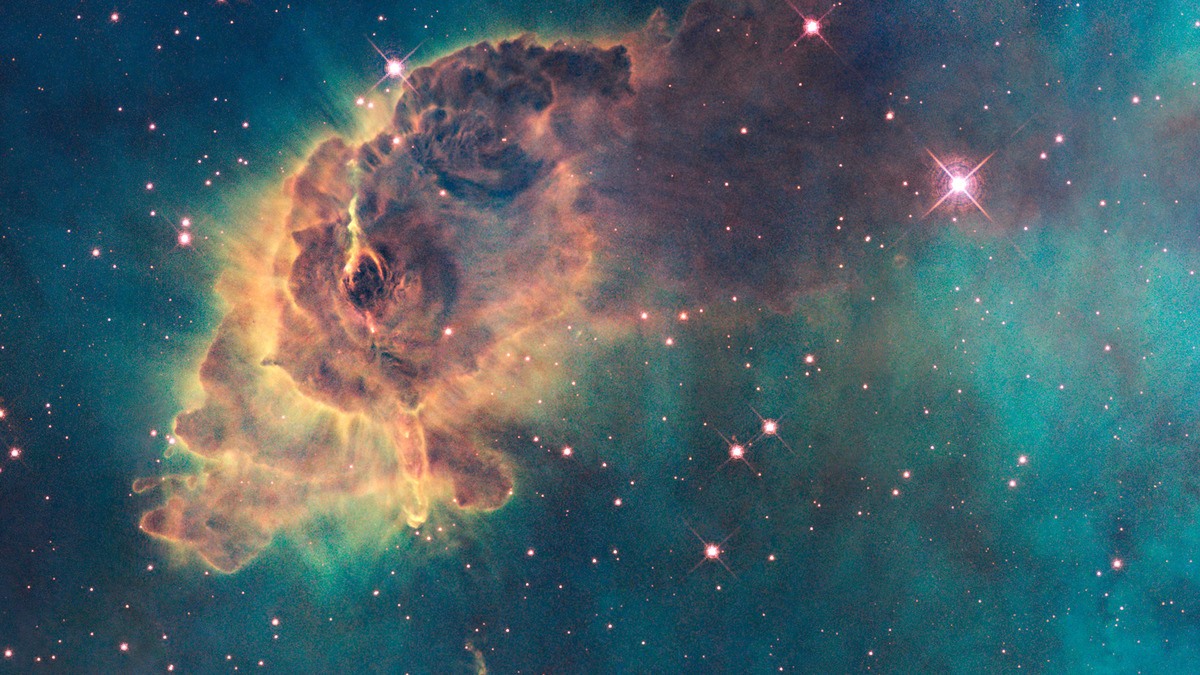
What is the name of the gas/dust clouds where all stars form?
a)
Nebulas
b)
Protostars 
c)
Supernova
d)
Neutron Star
124.
What are stars?
a)
Rocky bodies
b)
Burning balls of gas
c)
5 pointed shapes
d)
Hollywood actors
125.
True or False
The Sun is the biggest star in the sky.

a)
True
b)
False
126.
Galaxies are composed of 
a)
billions of stars
b)
a star and the planets that orbit around it
c)
all of the bodies and objects in space