
 Worksheets
Physical Science Review
Total questions: 40
Worksheet time: 32mins
Name
Class
Date
1.
What units do we use to measure mass?
a)
milliliters (mL)
b)
liters (L)
c)
centimeters (cm)
d)
grams (g)
2.
The unit of measurement for volume is:
a)
Meter
b)
Gram
c)
Liter
d)
Pounds
3.

What is the mass?
a)
190.0 g
b)
194.0 g
c)
190.4 g
d)
90.4 g
4.
How many millimeters are there in a centimeter?
a)
1
b)
10
c)
100
d)
1000
5.

What do we call these instruments?
a)
buret
b)
erlenmeyer flask
c)
graduated cylinder
d)
beaker
6.

Students filled a graduated cylinder with the amount of water shown. How much more water needs to be added to the cylinder to measure 25 mL?
a)
2 mL
b)
4 mL
c)
6 mL
d)
9 mL
7.
This variable in an experiment is the one being changed by the scientist.
a)
dependent variable
b)
independent variable
c)
data
d)
control group
8.
Testing a hypothesis often involves a(n):
a)
answer
b)
experiment
c)
problem
d)
safety check
9.
An experiment is performed on plants to see how different liquids affect plant growth. Each plant in the experiment is given a different liquid; water, apple juice, or milk. Each plant has the same amount of soil, sunlight, and listens to the same music. In this investigation, the independent variable is ...
a)
The type of plant
b)
The amount of sunlight
c)
The type of music
d)
The type of liquid
10.
What is the speed of a man who runs 10 miles in 1 hr?
a)
20 miles
b)
10 m/min
c)
10 miles/hr
d)
20 hrs
11.
What is the equation to calculate speed?
a)
speed = distance/time
b)
speed = time/distance
c)
speed = time x distance
d)
speed = speed/time
12.
Which property of matter is determined by dividing its mass by its volume?
a)
elasticity
b)
buoyancy
c)
density
d)
viscosity
13.
The tool used to measure the mass of a substance or object is a ______________.
a)
balance
b)
graduated cylinder
c)
ruler
d)
thermometer
14.
Jack has a rock. The rock has a mass of 14g and a volume of 2cm3. What is the density of the rock?
a)
7 mL
b)
7 g/cm3
c)
28 g/cm3
d)
1/7 g/cm3
15.

What is the volume of Object X?
a)
10.0 cm3
b)
15.0 cm3
c)
20.0 cm3
d)
25.0 cm3
16.
How would you write 4.3756 x 10⁴ in standard form?
a)
437,560,000
b)
0.00043756
c)
43,756
d)
4,3756
17.
How would you write 0.0005 in scientific notation?
a)
50 x 10-5
b)
5 x 10⁻⁴
c)
5 x 10³
d)
.5 x 103
18.
Density: Chemical or Physical Property
a)
Chemical Property
b)
Physical Property
19.
Reacts with Acid: Chemical or Physical Property
a)
Chemical Property
b)
Physical Property
20.
Boiling Point: Chemical or Physical Property
a)
Chemical Property
b)
Physical Property
21.

The number of protons and electrons are the same as
a)
Neutrons
b)
Atomic number
c)
atomic mass
d)
Electron shells
22.

The section labeled D is known as the?
a)
Electron cloud
b)
Neutron
c)
Nucleus
d)
Electron
23.

Which of the following does the nucleus contain?
a)
protons and electrons
b)
neutrons and electrons
c)
protons and neutrons
24.

Who is credited with developing model D?
a)
Thomson
b)
Dalton
c)
Bohr
d)
Rutherford
25.

In the energy pyramid here, which organisms have the most energy available?
a)
Producers
b)
Carnivores
c)
Herbivores
d)
Top Predator
26.

Which organism recieves the least amount of energy from the producer?
a)
Owl
b)
Grasshopper
c)
Lilypad
d)
Mouse
27.

In which layer of the atmosphere would you find the top of Mount Everest?
a)
Troposphere
b)
Stratosphere
c)
Mesosphere
d)
Thermosphere
28.
The higher you go, the air becomes _____ _____.
a)
More dense
b)
Less dense
29.
Which sentence is TRUE?
a)
Acquired traits are passed from parents to offspring
b)
Inherited traits are passed from parents to offspring
c)
Behaviors are never inherited
d)
Behaviors are always inherited
30.

Both parents in this Punnet square
a)
are homozygous dominant
b)
are homozygous recessive
c)
are heterozygous
d)
have blue eyes
31.

The genotypic ratio here is
a)
25% blue eye 75 % brown eye
b)
BB = 25% Bb = 50% bb = 25%
c)
BB= 50 % bb = 50%
d)
All brown eye
32.

The vertical (up and down) columns in the Periodic Table are called
a)
groups
b)
towers
c)
periods
d)
atomic numbers
33.
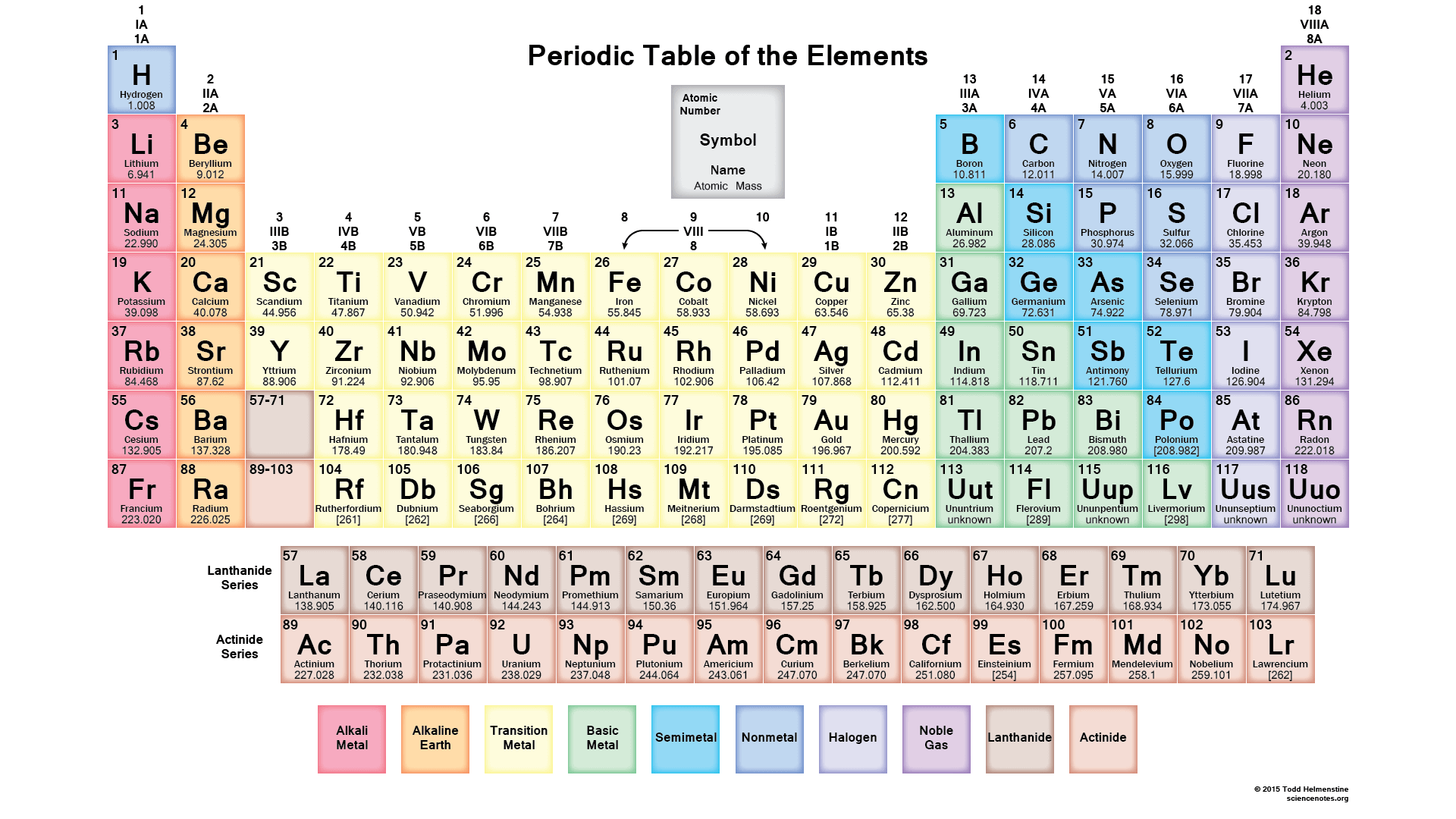
Sodium (Na) is found in group
a)
1
b)
2
c)
3
d)
4
34.
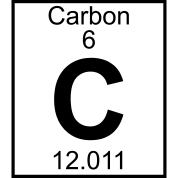
What does the 6 represent?
a)
atomic mass
b)
atomic number
c)
element name
d)
chemical symbol
35.
About how long does it take the Moon to complete it's cycle?
a)
1 week
b)
1 month
c)
1 year
36.
The Moon gets its light from the
a)
Earth
b)
Stars
c)
Sun
37.
Every living organism is made up of one or more cells
a)
True
b)
False
38.
Which of the following are NOT found in animal cells
a)
chloroplasts and cytoplasm
b)
chloroplasts and cell wall
c)
cell wall and cell membrane
d)
mitochondria and nucleus
39.

In an exothermic reaction, heat is ...
a)
taken in or absorbed
b)
given out or released
40.
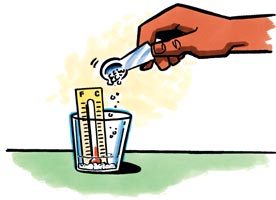
In an endothermic reaction, heat is ...
a)
taken in or absorbed
b)
given out or released
100 %

