wayground logo

Free Printable Worksheets

NEW

Font size

S
M
L
XL
Worksheets

HBS - 3.3 Oxygen & Respiration

Total questions: 40

Worksheet time: 3hrs 20mins

Name
Class
Date
1.
The volume of air remaining in lungs after maximum exhalation
a)
Residual Volume
b)
Minute Volume
c)
Tidal Volume
d)
Expiratory Volume
2.
An instrument for measuring the air entering and leaving the lungs
a)
Cathometer
b)
Breathometer
c)
Pirometer
d)
Spirometer
3.
The volume of air breathed in and out without conscious effort.
a)
Minute Volume
b)
Expiratory Volume
c)
Residual Volume
d)
Tidal Volume
4.
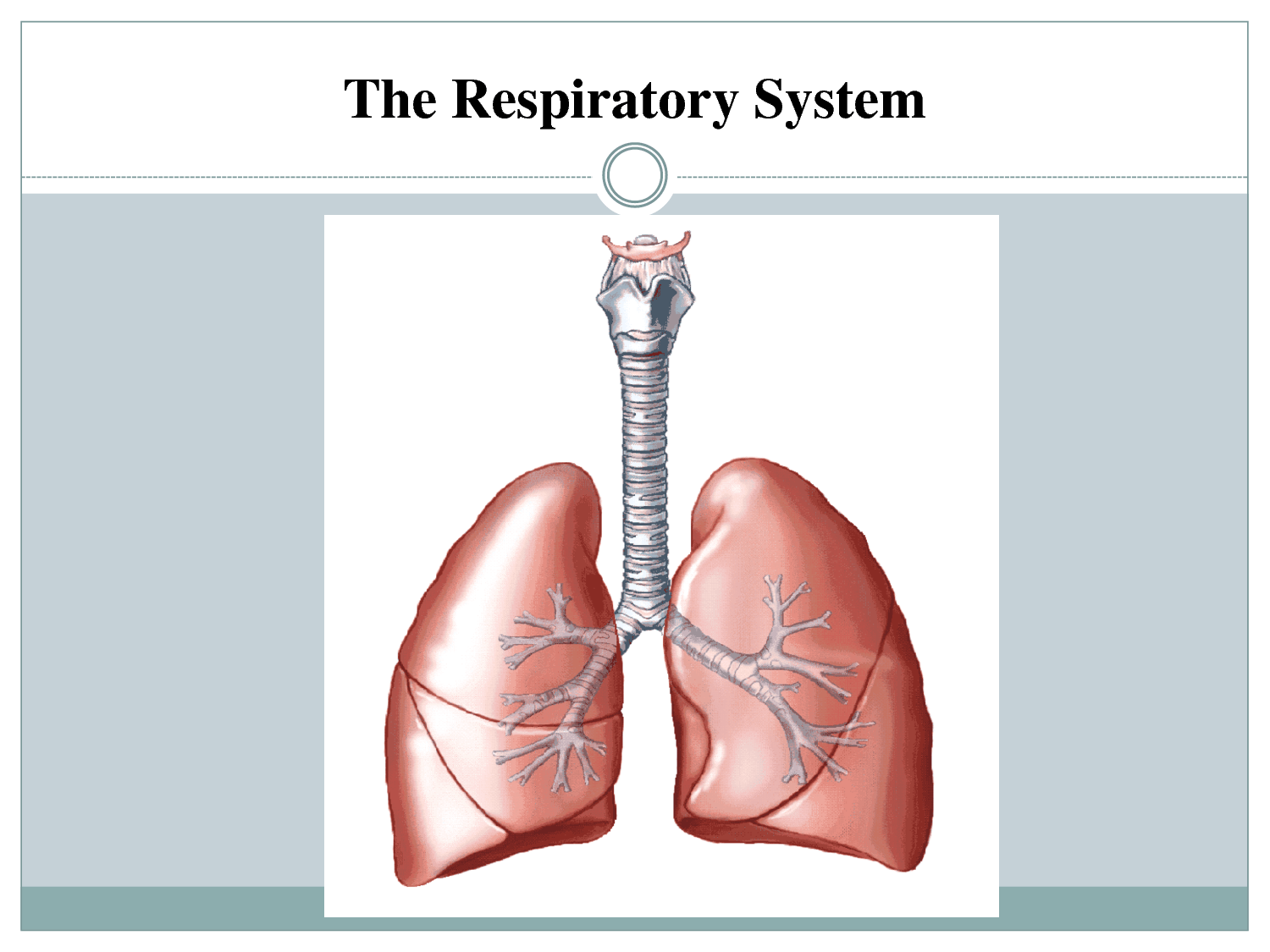
Pair of breathing tubes that branch from the trachea into the lungs
a)
Alveoli
b)
Bronchi
c)
Bronchioles
d)
Trachea
5.
Muscle located between the ribs
a)
Interosseous Muscle
b)
Intermuscular Muscle
c)
Intercostal Muscle
d)
Costal Muscle
6.
Air passage from the mouth into the lungs
a)
Alveoli
b)
Trachea
c)
Bronchi
d)
Bronchioles
7.
Oxygen is diffused into and carbon dioxide is taken out of the blood
a)
Alveoli
b)
Diaphragm
c)
Capillaries
d)
Bronchioles
8.
Identify Letter A
a)
Vital Capacity
b)
Inspiratory Reserve Volume
c)
Expiratory Reserve Volume
d)
Tidal Volume
9.
Identify Letter B
a)
Vital Capacity
b)
Residual Volume
c)
Expiratory Reserve Volume
d)
Tidal Volume
10.
Identify Letter E
a)
Vital Capacity
b)
Residual Volume
c)
Expiratory Reserve Volume
d)
Tidal Volume
11.
The results of drug therapy that are beyond the desired therapeutic effects
a)
Side Effects
b)
Pharmacology
c)
Proprietary Name
d)
Chemical Name
12.
The study of drugs, including their actions and effects in the living body systems
a)
Dosage
b)
Pharmacology
c)
Proprietary Name
d)
Generic Name
13.
Injections given directly to large muscle groups
a)
Intramuscular
b)
Transdermal
c)
Nasal
d)
Buccal
14.
Administered by drawing in breath, gas or vapor
a)
Intravenous Injection
b)
Ophthalmic
c)
Inhalation
d)
Subcutaneous
15.
What is the main function of the respiratory system?
a)
to provide oxygen and remove carbon dioxide from the body
b)
to bring oxygen to the body
c)
to break down food and absorb nutrients
d)
to remove oxygen from the body and deliver carbon dioxide
16.
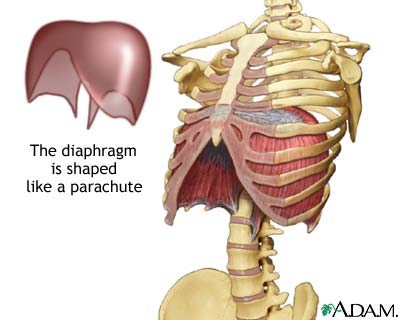
What is function of the dome-shaped diaphragm?
a)
This is where gas exchange happens.
b)
Air passes through the diaphragm on the way to the lungs.
c)
It attaches to the lungs to help in breathing.
d)
It is under the lungs and keeps them from falling down to your stomach.
17.

What is Asthma?

a)

lung condition where your airways or bronchial tubes narrow and swell

b)

an infection that causes fluid to fill the lungs

c)

a condition that affects only children and causes the secretion of thick mucus that blocks airways, pancreatic duct, and digestive tract

d)

a chronic disorder in the alveoli

18.
Asthma doesn't have a cure
a)
True
b)
False
19.
Which of these is not a symptom of Asthma?
a)
Shortness of Breath
b)
Coughing blood
c)
Chest tightness 
d)
Wheezing
20.

Joe blows into a spirometer and relaxes his diaphragm. This process is:

a)

aspiration

b)

exhalation

c)

inhalation

d)

sound production

21.
this lung condition is an inflammation of the mucus membrane that lines the bronchial tubes.
a)
bronchitis
b)
pneumonia
c)
cystic fibrosis
d)
cancer
22.
Which of the following are features of the alveoli that adapt them to gas exchange?
I. High surface area
II. Thin walls
III. Dry surfaces
a)
I and II only
b)
I only
c)
II and III
d)
I, II and III
23.

Disease that is characterized by production of abnormally thick mucus, leading to the blockage of the pancreatic ducts, intestines, and bronchi.

a)

Emphysema

b)

Lung cancer

c)

Asthma

d)

Cystic fibrosis

24.

Bronchodilators are effective to treat some diseases of the respiratory system because they:

a)

prevent bacterial and viral infections.

b)

diminish the production of mucus.

c)

open up the airways.

d)

constrict the airways.

25.

Corticosteroids are effective medications to treat some respiratory diseases because they:

a)

reduce number of white blood cells.

b)

eliminate infections,

c)

reduce inflammation.

d)

do not have side effects.

26.

Smoking can cause the following, EXCEPT:

a)

Bronchitis

b)

Cystic fibrosis

c)

Lung Cancer

d)

Emphysema

27.
As much as desired
a)
sid.
b)
tid.
c)
ad lib.
d)
qd
28.
Every hour
a)
qh.
b)
qd.
c)
bid.
d)
w/o
29.
One time daily
a)
ad lib.
b)
sid
c)
bid
d)
tid
30.
Every day
a)
w/o
b)
stat
c)
qh
d)
qd
31.
Two times daily
a)
qd
b)
bid
c)
qh
d)
tid
32.

How and when should the patient take their medication?

a)

one tablet orally every morning

b)

one tablet orally morning and night

c)

50 ug injected every morning

d)

50 ug injected morning and night

33.

How often in the patient supposed to take their medication every day?

a)

twice a day

b)

three times a day

c)

every 4-6 hours

d)

only in the morning

34.

What test assesses a patients severity of lung obstruction.

a)

FEV1/FVC

b)

FVC

c)

FEV1

d)

None of these

35.

Maggie undergoes pulmonary testing and learns that her TV = 550mL; IRV = 3100mL; ERV = 1250mL; and FEV1 = 65%. Which of the values is ABNORMAL?

a)

TV

b)

IRV

c)

ERV

d)

FEV1

36.

What is the direct cause of asthma attacks?

a)

muscle contractions and spasms of the intercostal muscles

b)

Swelling and excess mucous in the airways

c)

Excess fluid in the air sacs

d)

Infection of the lungs

37.

What is the inner lining of the bronchi called?

a)

Mucosa

b)

Alveolus

c)

Lumens

d)

trachea

38.

When an asthmatic is triggered, the muscles around their airways

a)

Paralyze

b)

Multiply

c)

Expand

d)

Contract

39.

Corticosteroids treat asthma

a)

immediately

b)

over the long term

c)

during an attack

d)

by curing it

40.

What does FEV1 stand for and how is it used to diagnose asthma?

a)

Forced Expiratory Volume for 1 second; Value is usually HIGH for asthmatic patients.

b)

Forced Expiratory Volume for 1 minute; Value is usually HIGH for asthmatic patients.

c)

Forced Expiratory Volume for 1 second; Value is usually LOW for asthmatic patients (< 80%)

d)

Forced Expiratory Volume for 1 second; Value is usually LOW for asthmatic patients (< 95%)