
 Worksheets
7th Grade End of Module 6 Review
Total questions: 76
Worksheet time: 1hrs 17mins
Name
Class
Date
1.
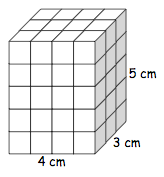
Find the surface area of the rectangular prism.
a)
94 cm. squared
b)
60 cm. squared
c)
12 cm. squared
d)
19 cm. squared
2.

Find the total surface . ?
a)
10.30cm2
b)
130cm3
c)
144cm2
d)
130cm2
3.
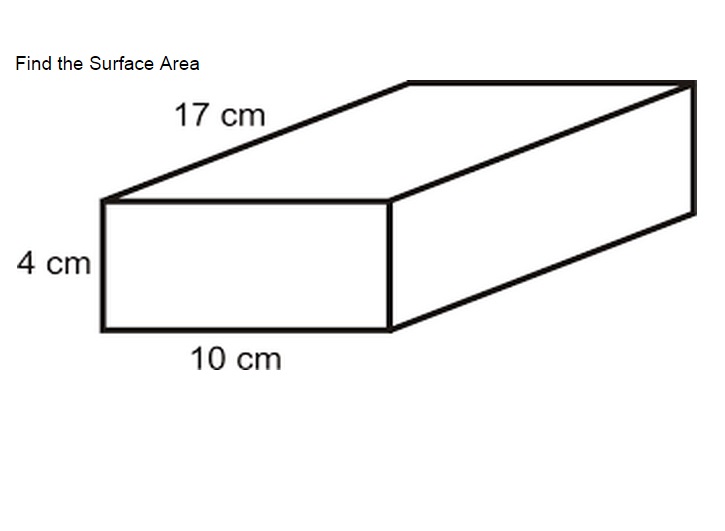
Find the Surface Area
a)
556 cm2
b)
278 cm2
c)
680 cm2
d)
340 cm2
4.

What is the total surface area of the triangular prism shown?
a)
468 in2
b)
540 in2
c)
576 in2
d)
700 in2
5.

Find the total surface area of the prism.
a)
1,909,440 in2
b)
876 in2
c)
792 in2
d)
1,872 in2
6.
Which is NOT a test to prove triangles congruent?
a)
SAA
b)
SSS
c)
SSA
d)
SAS
7.

Determine the unknown angle measure.
a)
A
b)
B
c)
C
d)
D
8.

Are these triangles congruent? If so, state the rule which you used to determine congruence.
a)
SAS
b)
SSS
c)
Both SSS and SAS
d)
Not necessarily congruent
9.

Find the measure of x.
a)
75°
b)
30°
c)
25°
d)
20°
10.

a)
obtuse scalene
b)
right isosceles
c)
equilateral right
d)
obtuse isosceles
11.

a)
obtuse scalene
b)
right isosceles
c)
scalene acute
d)
acute isosceles
12.

Name the postulate, if possible, that makes the triangles congruent.
a)
SAS
b)
ASA
c)
AAS
d)
Not enough information
13.

Name the postulate, if possible, that makes the triangles congruent.
a)
SSS
b)
SAS
c)
ASA
d)
AAS
14.

Name the postulate, if possible, that makes the triangles congruent.
a)
SAS
b)
ASA
c)
AAS
d)
Not enough information
15.

Which additional information will prove the triangles congruent by HL?
a)
GH≅SR
b)
FG≅RT
c)
FH≅ST
d)
GH≅ST
16.

Are the triangles congruent, if yes, why?
a)
SSS
b)
SAS
c)
ASA
d)
Not Congruent
17.

Are the triangles congruent, if yes, why?
a)
SAS
b)
ASA
c)
SSS
d)
Not Congruent
18.

State if the two triangles are congruent. If they are, state how you know.
a)
A
b)
B
c)
C
d)
D
19.
Two angles that form a straight line are called _______ angles
a)
complementary
b)
supplementary
c)
adjacent
d)
vertical
20.
Two angles that form a 90 degree (right angle) are called ____________ angles
a)
complementary
b)
supplementary
c)
adjacent
d)
vertical
21.
__________ angles are directly across from each other and share a vertex. They are also congruent.
a)
complementary
b)
supplementary
c)
vertical
d)
adjacent
22.

In the figure below, ∠KLP is a right angle. ∠NLO and ∠OLP are congruent angles. What is the measure of ∠OLP?
a)
52
b)
45
c)
30
d)
26
23.

In the figure below, ∠1 measures x ° and ∠2 measures 5x°. What is the measure of ∠1?
a)
20
b)
30
c)
36
d)
45
24.

In the figure below, ∠1 measures (3x+ 20)° and ∠2 measures x°. What is the measure of ∠4?
a)
40
b)
60
c)
120
d)
140
25.

In the figure below, ∠OQP is a right angle. What is the measurement of ∠LQM?
a)
19
b)
22
c)
31
d)
38
26.

In the figure below, ∠PQR is 180°. What is the measure of ∠SQT?
a)
55
b)
75
c)
110
27.

Two lines intersect to form the angles in the figure below. What is the value of x?
a)
-1/2
b)
2/3
c)
3
d)
5
28.

In the figure below, line PS is perpendicular to line UR. What is the measure of <PVQ?
a)
24
b)
45
c)
68
d)
72
29.

What is the m < PQS in the figure below?
a)
36
b)
60
c)
72
d)
108
30.

What is the value of x in the figure below?
a)
9
b)
14
c)
45
d)
81
31.

BONUS: Line HJ and line LK intersect in the figure below. What is the measure of < LMJ?
a)
25
b)
60
c)
75
d)
80
32.

Find the measure of the indicated angle.
a)
26
b)
36
c)
85
d)
144
33.

What is the measure of angle b?
a)
36o
b)
56o
c)
63o
d)
117o
34.

What is the measure of ∠2?
a)
38
b)
58
c)
71
d)
142
35.

Find the value of x.
a)
A
b)
B
c)
C
d)
D
36.

Name this angle.
a)
acute
b)
right
c)
obtuse
d)
none of the above
37.
A right angle is at what degree
a)
180
b)
20
c)
90
d)
80
38.

Name this angle.
a)
acute
b)
right
c)
obtuse
d)
none of the above
39.

Name this angle.
a)
acute
b)
right
c)
obtuse
d)
none of the above
40.

Which type of angle is pictured?
a)
Acute
b)
Right
c)
Obtuse
d)
Straight
41.
Define Obtuse
a)
Less than 90
b)
Exactly 90
c)
Greater than 90 and less than 180
d)
Exactly 180
42.
Define Right Angle
a)
Less than 90
b)
Exactly 90
c)
Greater than 90 and less than 180
d)
Exactly 180
43.
Define Acute
a)
Less than 90
b)
Exactly 90
c)
Greater than 90 and less than 180
d)
Exactly 180
44.
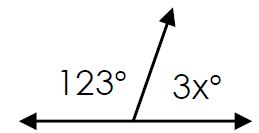
Find the value of x.
a)
15
b)
16
c)
18
d)
19
45.
What is an example of a pair of complementary angles?
a)
13° and 45°
b)
10° and 170°
c)
81° and 9°
d)
90° and 3°
46.

What kind of angles are shown?
a)
complementary
b)
supplementary
c)
adjacent
d)
corresponding
47.
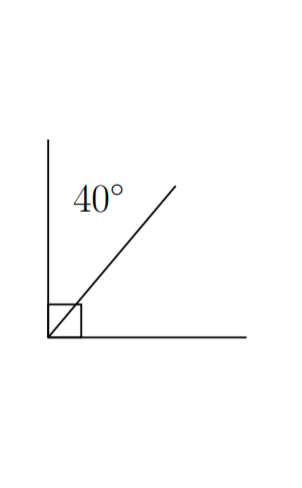
Find the missing angle.
a)
60°
b)
70°
c)
50°
d)
140
48.

complementary, supplementary, or neither?
a)
Complementary
b)
Supplementary
c)
Neither
49.
What are complementary angles?
a)
Angles that add up to 180°
b)
Angles that add up to 90°
c)
Angles that are equal to each other
d)
Angles that are opposite of each other when lines intersect.
50.

Find the unknown angle measure x.
a)
75 degrees
b)
15 degrees
c)
13 degrees
d)
105 degrees
51.
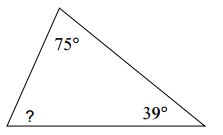
Find the measure of the missing angle.
a)
139°
b)
66°
c)
138°
d)
116°
52.
Do the sides make a triangle: 7, 9, 13
a)
Yes
b)
No
53.
Do the sides make a triangle: 1, 2, 10
a)
Yes
b)
No
54.
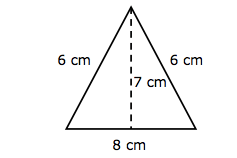
Area of triangle?
a)
20 cm2
b)
56 cm2
c)
28 cm2
d)
27 cm2
55.

Find the area of the triangle
a)
48 sq cm
b)
24 sq cm
c)
30 sq cm
56.
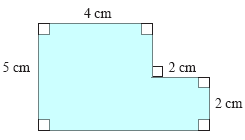
What is the area of the shaded region?
a)
20 sq cm
b)
4 sq cm
c)
30 sq cm
d)
24 sq cm
57.
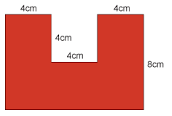
What is the area of the composite figure?
a)
80 cm2
b)
16 cm2
c)
96 cm2
d)
32 cm2
58.
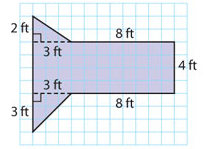
Find the area of the composite figure
a)
3
b)
51.5
c)
32
d)
44
59.
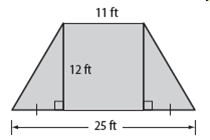
What is the area of the figure?
a)
48 ft2
b)
216 ft2
c)
65 ft2
d)
128 ft2
60.
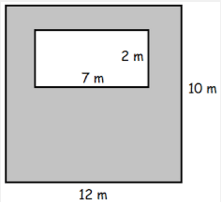
What is the area of the shaded region?
a)
14 m2
b)
120 m2
c)
106 m2
d)
134 m2
61.
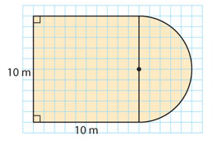
Find the area of the composite figure.
a)
100
b)
400
c)
137.5
d)
175
62.
Is it possible for a cross section of a
cylinder to have a triangular shape?
a)
yes
b)
no
c)
sometimes
63.
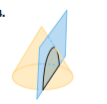
Describe the cross section.
a)
circle
b)
oval
c)
semi-circle
d)
trapezoid
64.
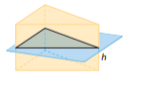
Describe the cross section.
a)
triangle
b)
rectangle
c)
oval
d)
trapezoid
65.
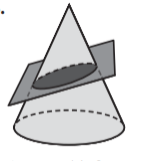
Describe the cross section.
a)
rectangle
b)
trapezoid
c)
oval
d)
parallelogram
66.

Describe the cross section.
a)
rectangle
b)
square
c)
parallelogram
d)
circle
67.
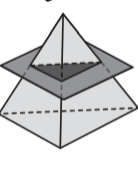
Describe the cross section.
a)
triangle
b)
rectangle
c)
trapezoid
d)
square
68.
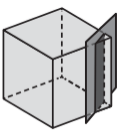
Describe the cross section.
a)
trapezoid
b)
triangle
c)
rectangle
d)
square
69.
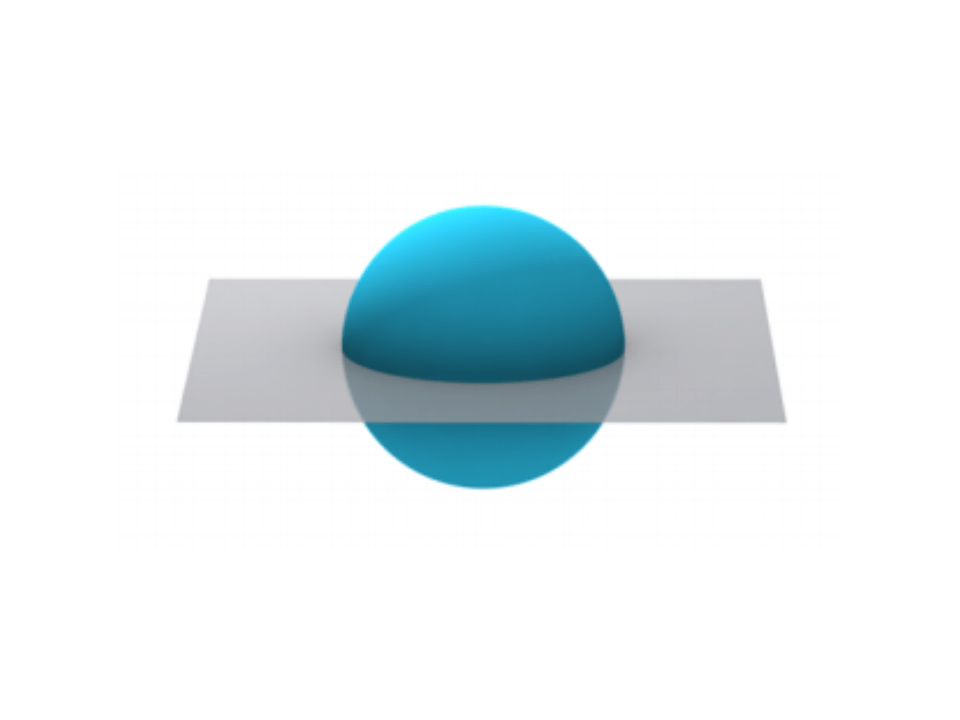
What shape will the horizontal cross-section of a sphere be?
a)
Dome
b)
Circle
c)
Ellipse
d)
Rectangle
70.

What shape will the vertical cross-section of a cube be?
a)
Square
b)
Triangle
c)
Trapezoid
d)
Circle
71.

What shape does this cross section make?
a)
Rectangle
b)
Circle
c)
Triangle
d)
Square
72.

What shape does this cross section make?
a)
Rectangle
b)
Circle
c)
Triangle
d)
Square
73.

Describe the cross section.
a)
rectangle
b)
square
c)
parallelogram
d)
circle
74.
What cross-section is formed by slicing through a cube parallel to any face?
a)
rectangle
b)
parallelogram
c)
square
d)
triangle
75.

The diagram below shows the dimensions of Mrs. Prothro’s new swimming pool. A cover is needed for the pool, what will be the approximate area of the cover?
a)
720
b)
139.08
c)
580.92
d)
238.5
76.
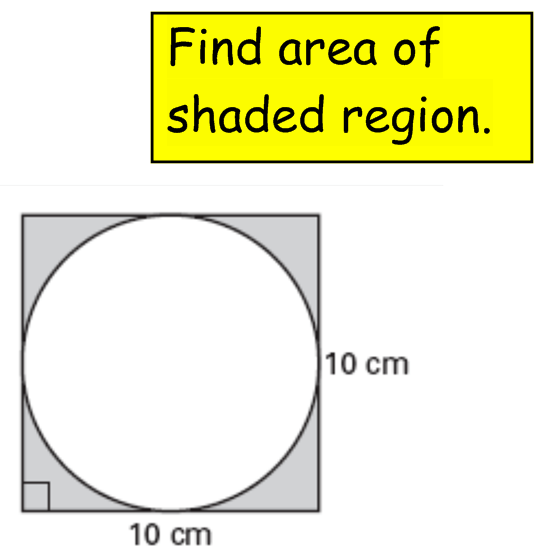
Solve.
a)
78.5 cm2
b)
100 cm2
c)
21.5 cm2
d)
121.5 cm2
100 %

