Wayground logo

Free Printable Worksheets

Font size

S
M
L
XL
Worksheets

5th grade science review

Total questions: 31

Worksheet time: 27mins

Name
Class
Date
1.
Which statement is true?
a)
Oil is the most dense substance.
b)
Corn syrup is less dense than water.
c)
Oil is less dense than water.
d)
Oil and corn syrup have the same density but different masses.
2.
This is testing ___________
a)
relative density
b)
solubility
c)
mass
d)
conductivity 
3.
What kind of energy is represented in this picture?
a)
Thermal
b)
Potential
c)
Nuclear
d)
Mechanical
4.

What kind of energy does this device use?

a)

Chemical

b)

Electrical

c)

Thermal

d)

wonder twin power

5.
The second stage in incomplete metamorphosis is a/an_.
a)
embryo
b)
adult
c)
nymph
d)
larva
6.

select the order of the butterfly life cycle

a)

adult, larva, pupa, egg

b)

egg, larva, pupa, adult

c)

larva, egg, adult, pupa

d)

egg, adult, pupa, larva

7.

The adult cricket lays eggs to create offspring. What is one characteristic of the cricket life cycle?

a)

The cricket offspring looks muck like the adult cricket

b)

The cricket offspring forms a cocoon before it becomes an adult.

c)

The cricket offspring has wings but no legs.

d)

The cricket offspring does not resemble the adult cricket.

8.
Which is an example of a learned behavior?
a)
blinking
b)
riding a bike
c)
swallowing
d)
crying
9.
Smelts are fish that lay their eggs in the sand of a beach. When the eggs hatch, the babies know to go to the water. This is an example of...
a)
inherited behavior
b)
camouflage
c)
hibernation
d)
learned behavior
10.
What causes nighttime and daytime on Earth?
a)
the Moon revolving around the Earth
b)
the Earth rotating around the Sun
c)
the Earth rotating on its tilted axis
d)
the Sun rotating on its axis
11.
How long does it take for the Earth to rotate one complete time?
a)
24 hours
b)
28 days
c)
1 month
d)
365 days
12.

The sun appears to __________.

a)

rise in the east, set in the west

b)

rise in the west, set in the east

13.

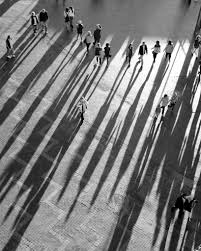
When was this picture most likely taken?

(Hint: think about the shadow's length)

a)

morning or evening

b)

night

c)

noon

d)

afternoon

14.
The ability of a substance to dissolve is called...
a)
malleability
b)
ductility
c)
solubility
15.

The temperature at which a gas turns into a liquid

a)

Melting point

b)

Freeing point

c)

Boiling point

d)

Condensation point

16.

The temperature at which a substance changes from a liquid to a gas

a)

Melting point

b)

Boiling point

c)

Freezing point

d)

Condensation point

17.
The handle of a frying pan is often coated in rubber because rubber provides...
a)
Heat insulation
b)
Heat conduction
c)
A low melting point
d)
A nonstick surface
18.
Which of the following is NOT an insulator?
a)
Wool
b)
Plastic
c)
Copper
d)
Styrofoam
19.
Conductors are materials that...
a)
Allow heat to pass through
b)
Stop heat from passing through
c)
Allow cold to pass through
d)
Stop cold from passing through
20.
An object that doesn't conduct heat well is known as:
a)
a conductor
b)
an insulator
21.
A combination of 2 or more substances that cannot be easily separated is called- 
a)
a mixture
b)
a solution 
c)
a solute 
d)
a solvent 
22.
Which of the following is a method of separating solutions?
a)
hand seperation
b)
filtering
c)
screening
d)
evaporation 
23.

How would you separate a mixture of sand and salt?

a)

Mix them with water and let the water evaporate

b)

Mix them with water, pour the mixture through a filter, then let the water evaporate

c)

Heat the sand and salt mixture for 5 minutes, then let it cool

d)

I would not do any of these because none of these options would work

24.

A tablespoon of a substance is added to warm water and stirred. The result was that the substance could no longer

be seen.

We can conclude from the results that the substance –

a)

is less dense that water

b)

heated the water

c)

flavored the water

d)

dissolved in water

25.

Frogs in a pond interact with both living and nonliving components in their ecosystem. Frogs interact with nonliving components when they–

a)

eat swimming insects for energy.

b)

lay their eggs in bodies of water.

c)

become food for another animal.

d)

hide beneath plants in the pond.

26.

All of the following are examples of living things interacting with each other EXCEPT —

a)

birds preying on insects living in the grass

b)

squirrels spreading the seeds of trees by burying them

c)

fish eating plants and other smaller fish

d)

frogs sleeping in the mud at the bottom of the pond

27.
This circuit does not work because…
a)
the bulbs are not connected properly
b)
the single cell is not powerful enough
c)
there is a break in the circuit
d)
there is a short crcuit
28.

What will a student observe in this circuit?

a)

Lightbulb 1 and 2 will be on

b)

Light bulb 1 will be on, Lightbulb 2 will be off

c)

Both lightbulbs will be off

d)

Lightbulb 1 will be off, Lightbulb 2 will be on

29.
Water freezes in a crack in an asphalt street and a pothole begins to form.
a)
Weathering
b)
Erosion
30.
Deltas are built up by -
a)
deposition
b)
leaching
c)
abrasion
d)
erosion
31.

Sally observed a U shaped valley. This was most likely caused by?

a)

Giants

b)

glaciers weathering and eroding the land

c)

fast moving water carving the rock

d)

the sun shining on the sediment