
 Worksheets
Evolution and Biodiversity Final Exam Review
Total questions: 16
Worksheet time: 10mins

What does it mean when we say 2 different organisms are related? Ex: humans & chicks are related
humans can become chickens
chickens will become humans eventually
they are identical to each other
The have a common ancestor organism that they both came from

What was the one major flaw about Lamarck's theory of evolution?
He believed evolution could only happen to certain animals
He believed in "Aquired Traits" (that individuals change themselves over their lifetime)
He didn't believe traits pass on from parent to offspring
He didn't believe in evolution
How do scientists study evolution?
Comparing the genetics of 2 organisms?
Comparative Morphology (Looking at fossils)
Looking at similarities between embryos
All of the above!

I am comparing the bones of these animals and I notice that the structures I am looking at are?
Vestigial Structures
Fossils
Homologous Structures
Analogous structures

Because these bones are homologous structures... what do we know about these animals?
They came from the same common ancestor
It doesn't tell us anything
They do not have a common ancestor
They use these bones for the same function

Knowing Fossil B is 2 million years (yrs.) old, what do you know about Fossil D
It is younger than 2 million yrs. old
It is older than 2 million yrs. old
We can't tell the age of Fossil A
It is also 2 million yrs. old

Meiosis forms the cells needed to do this type of reproduction...
Asexual Reproduction
Sexual Reproduction
Mitosis
Binary Fission
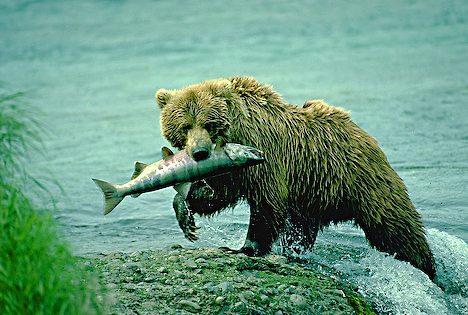
A grizzly bear survives because he is well-adapted to his environment. When he reproduces he passes on those traits to his offspring. this process is called
Natural Selection
Selective Breeding
Random mutations
Variations in a species

With speed for animals faster is always better so a population will tend to get faster over time. This is an example of which type of natural selection?
This is Directional Selection
This is Stabilizing selection
This is disruptive selection

Name a selective pressure that exists in the desert.
High amounts of sand
Being found in the west coast of the United States
Lack of water (rainfall and rivers)
Genetic drift leads to allele frequencies in a population to change because of
A dramatic reduction in population size
A change in the phenotypes within a popualtion
Isolation leads to differences between populations

A female bird is not connecting with the way that the male is performing the ritualistic dance.
This is Geographic Reproductive Isolation
This is Behavioral Reproductive Isolation
This is Temporal Reproductive Isolation
Porcupines & Hedgehogs aren't related species but both have quills to defend themselves. This describes which pattern of evolution?
Adaptive Radiation
Gradualism
Coevolution
Convergent Evolution

A bee and a flower because of their mutualistic relationship must evolve at the same time. This represents which pattern of evolution?
Convergent Evolution
Adaptive Radiation
Punctuated Equilibrium
Coevolution
Small changes in populations lead to the gradual divergence of species. Which pace of evolution does this represent?
Punctuated Equilibrium
Convergent Evolution
Gradualism
Adaptive Radiation

Why is pesticide resistance an example of evolution?
Because the pesticide changes the bugs
Natural Selection acts on a mutation so all the bugs evolve
Because the pests kill the leaves causing them to change

