wayground logo

Free Printable Worksheets

Font size

S
M
L
XL
Worksheets

Massive Optional 138-Question Extra Credit Review

Total questions: 138

Worksheet time: 3hrs 17mins

Name
Class
Date
1.
The word "genre" means...
a)
an animal
b)
a kind or type
c)
a food
d)
a genius
2.
Story including magic, talking objects and usually a conflict between good and evil.
a)
mystery
b)
biography
c)
fantasy
d)
realistic fiction
3.
Stories that take place in a certain time and place in the past.
a)
realistic fiction
b)
historical fiction
c)
fantasy
d)
folktales
4.
True story of a real person’s life from the past or present written by that person.
a)
autobiography
b)
realistic fiction
c)
biography
d)
poetry
5.
REALISTIC FICTION (a story that sounds like it could be real) is
a)
fiction
b)
nonfiction
6.
A traditional story handed down from generation to generation by word of mouth. Types include fables, myths and fairy tales
a)
mystery
b)
fantasy
c)
folktale
d)
realistic fiction-adventure
7.
often called plays
a)
drama
b)
poetry 
c)
prose
8.
a true story about another person's life written by another person
a)
autobiography
b)
biography
c)
historical fiction
d)
atlas
9.
a true story of the writer's life 
a)
biography
b)
autobiography
10.
Aliens, Space Craft, setting is in the future.
a)
Fantasy
b)
Realistic Fiction
c)
Tall Tale
d)
Science Fiction
11.

My teacher (is are) getting married.

a)

is

b)

are

12.

There (is are) reasons why you should do your homework.

a)

is

b)

are

13.
Does anybody (know knows) when our reports are due?
a)
know
b)
knows
14.

The kids (goes go) to my school.

a)

goes

b)

go

15.
Mary ____ very hard in school.
a)
work
b)
works
c)
workes
d)
workz
16.

The girls ___ in the classroom.

a)

is

b)

are

c)

was

d)

be

17.
My alarm clock ___ at 7 every morning.
a)
ring
b)
rang
c)
rings
d)
rung
18.
He _____ on jets and airplanes.
a)
work
b)
works
19.
Bill ___________ a taxi.
a)
drives
b)
drive
20.

_____ you heating tacos in the microwave?

a)

Was

b)

Were

21.
Based on context clues in the passage below, ecstatic means __________.
They were ecstatic at the birth of their baby. They couldn't stop smiling for days.
a)
a. nervous
b)
b. watchful
c)
c. discouraged
d)
d. excited
22.
Based on the context clues in the passage below, eliminate means ________.
   Please eliminate the blank lines between the pictures. They were not supposed to be there.
a)
a. delete
b)
b. find
c)
c. color
d)
d. add
23.
The movie star’s large and beautiful home was palatial.
a)
ugly
b)
tiny
c)
for dogs
d)
like a palace
24.
When I fell off the trampoline, I fractured my arm and wore a cast
a)
rested
b)
broke
c)
avoided
d)
looked at
25.
The frigid water made Elizabeth’s teeth chatter.
a)
cold
b)
clean
c)
green
d)
warm
26.
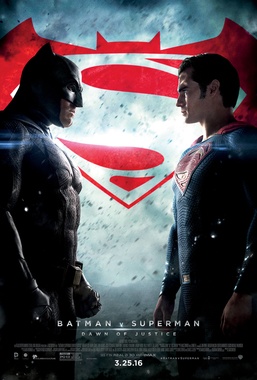
What type of conflict is the picture? 
a)
Character vs Character
b)
Character vs Nature
c)
Character vs Self
d)
Character vs Society
27.
What type of conflict is the picture? 
a)
Character vs Character
b)
Character vs Nature
c)
Character vs Self
d)
Character vs Society
28.
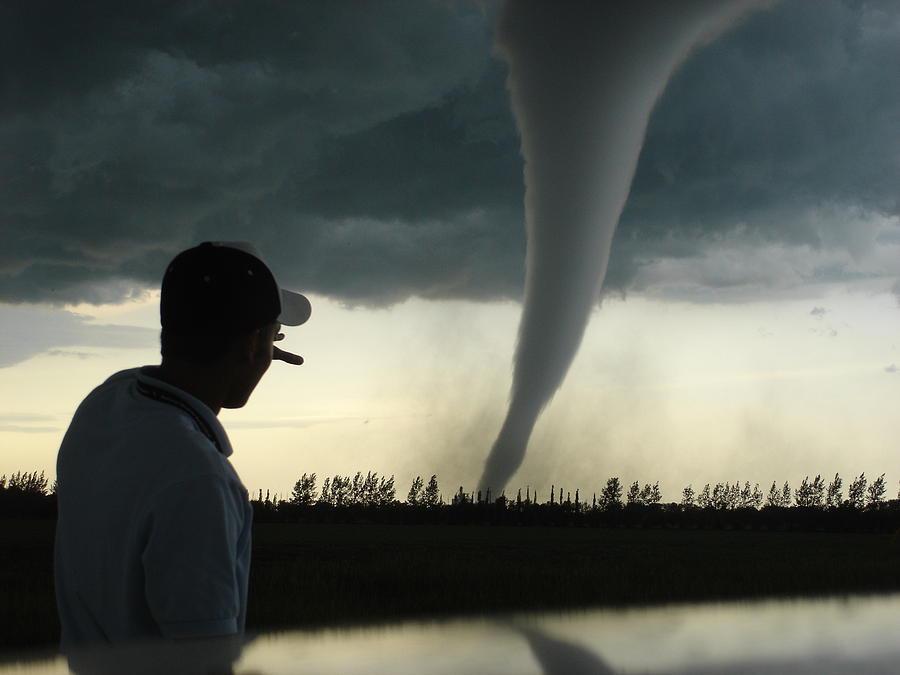
What type of conflict is the picture? 
a)
Character vs Character
b)
Character vs Nature
c)
Character vs Self
d)
Character vs Society
29.
What type of conflict is the sentence below? 
Mr. Sprecher thinks about whether or not he would make a good soccer player for his team. 
a)
Character vs Character
b)
Character vs Nature
c)
Character vs Self
d)
Character vs Society
30.
What type of conflict is the sentence below? 
Brianna plays chess against Morelia. 
a)
Character vs Character
b)
Character vs Nature
c)
Character vs Self
d)
Character vs Society
31.
What type of conflict is the sentence below? 
There is a new law passed that says owning Legos are against the rules, but Jasmine continues to collect Legos. 
a)
Character vs Character
b)
Character vs Nature
c)
Character vs Self
d)
Character vs Society
32.
What type of conflict is the picture? 
a)
Character vs Character
b)
Character vs Nature
c)
Character vs Self
d)
Character vs Society
33.
What type of conflict is the picture? 
a)
Character vs Character
b)
Character vs Nature
c)
Character vs Self
d)
Character vs Society
34.
What type of figurative language is shown?
Pansy pranced playfully around the playground.
a)
hyperbole
b)
alliteration
c)
onomatopoeia
d)
oxymoron
35.
What type of figurative language is shown?
The flower hugged the earth after being blown over by the storm.
a)
personification
b)
alliteration
c)
metaphor
d)
simile
36.
What type of figurative language is shown?
That freshly baked apple pie looks awfully good.
a)
hyperbole
b)
metaphor
c)
simile
d)
oxymoron
37.
What type of figurative language is shown?
The runner ran like a cheetah in the race.
a)
metaphor
b)
oxymoron
c)
simile
d)
hyperbole
38.
What type of figurative language is shown?
Her long hair is an ocean of waves.
a)
personification
b)
onomatopoeia
c)
hyperbole
d)
metaphor
39.
What type of figurative language is shown?
She was so sad that all the tears she cried filled up a lake.
a)
hyperbole
b)
oxymoron
c)
alliteration
d)
onomatopoeia
40.
What type of figurative language is shown?
Tracy was really feeling down in the dumps.
a)
personification
b)
idiom
c)
hyperbole
d)
metaphor
41.
What type of figurative language is shown?
Her eyes were as blue as the ocean.
a)
simile
b)
metaphor
c)
hyperbole
d)
alliteration
42.
What type of figurative language is shown?
I have told you a million times not to do that!
a)
personification
b)
alliteration
c)
hyperbole
d)
oxymoron
43.
What type of figurative language is shown?
The waiter served us a delicious plate of jumbo shrimp.
a)
alliteration
b)
personification
c)
oxymoron
d)
hyperbole
44.
What type of figurative language is shown?
The ocean waves danced in the moonlight.
a)
personification
b)
hyperbole
c)
onomatopoeia
d)
oxymoron
45.
What type of figurative language is shown?
The thunder boomed in the storm.
a)
oxymoron
b)
personification
c)
alliteration
d)
onomatopoeia
46.
What is alliteration?
a)
giving human traits to objects or ideas
b)
a phrase that means something else than what it says
c)
repeating the same initial sound in several words
d)
a contradictory phrase
47.
What is an onomatopoeia?
a)
a word that resembles the sound it makes
b)
comparing two things using "like" or "as"
c)
a dramatic exaggeration
d)
comparing two things by saying one is the other
48.
What is a metaphor?
a)
comparing two things using like or as
b)
repeating the same inital sound in neighboring words
c)
a phrase that means something else than what it says
d)
comparing two things by saying one is the other
49.
Match the definition with the term:
a short phrase combining two terms that are normally contradictory
a)
hyperbole
b)
onomatopoeia
c)
oxymoron
d)
alliteration
50.
Match the definition with the term:
repeating the same initial sound in several words of a phrase or sentence
a)
alliteration
b)
personification
c)
idiom
d)
hyperbole
51.
Match the definition with the term:
comparing two unlike things by saying one is the other
a)
metaphor
b)
oxymoron
c)
personification
d)
oxymoron
52.
Which is an example of a simile?
a)
His room was a hurricane of a mess.
b)
His room looked as if a hurricane came  through.
c)
A hurricane! AHHH!
d)
The hurricane screamed through the town. 
53.
Which of the following in an example of onomatopoeia?
a)
Boom!
b)
No!
c)
Yes!
d)
Go!
54.
Which of the following is an example of personification?
a)
You are as a beautiful as a flower.
b)
The trees danced in the wind.
c)
I waited in line for 10 years!
d)
He is an encyclopedia of knowledge. 
55.
The rain ran down the road. 
a)
alliteration
b)
metaphor
c)
simile
d)
idiom
56.
BAM!  The door shut behind me. 
a)
onomatopoeia
b)
personification
c)
simile
d)
idiom
57.
That fat cat weighs a thousand pounds! 
a)
hyperbole
b)
simile
c)
metaphor
d)
simile
58.
I was so tired after school, I slept for a month! 
a)
hyperbole
b)
simile
c)
alliteration
d)
metaphor
59.
Fall Fridays feel fantastic. 
a)
onomatopoeia
b)
simile
c)
alliteration
d)
metaphor
60.
How can you know that something is written in first person point of view?
a)
Pronouns like I, my, and him are used.
b)
The author is addressing the reader.
c)
The narrator is not in the story.
d)
Pronouns like I, my, and we are used.
61.
She liked ice cream, but he liked cake. So they bought both.
a)
3rd person pov
b)
1st person pov
62.
A personal narrative is written in ______ person point of view.
a)
first
b)
second
c)
third
d)
any
63.
What point of view is the following:
Cathy leaned into her computer screen with big eyes. She couldn't believe it- she had finally gotten a 100 on her math test! She knew her parents would be proud of her.
a)
First person
b)
Third person 
64.
What point of view is the following:
Maria introduced her project, which Amy thought she did a bit too enthusiastically. "OMG, thank you so much for letting me speak in front of you today! I am super excited, I spent so much time making this!" Maria said. Amy rolled her eyes and yawned.
a)
first person
b)
third person
65.
We go to the mountains every winter for vacation.
a)
3rd person
b)
1st person
c)
2nd person
66.
What POV is this passage?
As I stepped onto the shiny porch of my new house, I thought to myself,"This is gonna be a good day."
a)
Second Person
b)
First Person
c)
Third Person
67.
Sideways Stories from Wayside School by Louis Sachar.
 Leslie sat in front of Paul.  She had two long, brown pigtails that reached all the way down to her waist.  Paul saw those pigtails, and a terrible urge came over him.  He wanted to pull a pigtail.  He wanted to wrap his fist around it, feel the hair between his fingers, and just yank.  He thought it would be fun to tie the pigtails together, or better yet, tie them to her chair.  But most of all, he just wanted to pull one. 
a)
First-person
b)
Second-person
c)
Third-person
68.
In the school cafeteria, John felt lonely and out of place. He wished he could return to his old school and each lunch with his friends. 
 On the other side of the table, Ron looked at the new student. He wondered if they had much in common. "What's your name?" Ron asked the new student.
a)
First Person
b)
Second Person
c)
Third Person
69.
"Johnny stared bashfully at his shoes. His face was red and he hoped that no one noticed the milk that spilled on his pants." What point of View is this passage written in?
a)
First Person POV
b)
Second Person POV
c)
Third Person POV
70.
"I was shaking like a leaf. My palms were sweating. My heart was pounding so loudly I was sure everyone around me could hear it. I hated presentations."  What point of view is this passage in?
a)
First Person POV
b)
Second Person POV
c)
Third Person POV
71.
What point of view is the following:
"Effie Trinket trots to the podium and gives her signature, “Happy Hunger Games! And may the odds be ever in your favor!” But suddenly I am thinking of Gale and how the odds are not in his favor."
from The Hunger Games by Suzanne Collins
a)
third person
b)
first person
72.
What POV is this passage?
Joey comes over to his friend's house. As he steps in, he sees Jack sitting on the stairs.
a)
Second Person
b)
First Person
c)
Third Person
73.
Ester smiled brightly at his back, shrugged casually, and kept voice smooth as she reassured, "I'm not going anywhere." to laugh as she saw his shoulders almost flinch. 
a)
1st Person
b)
3rd Person Limited
c)
3rd Person Omniscient
d)
3rd Person Objective
74.
Ana keeps telling us to stop taking her gum. She thinks that it is us, but it is really Frank who takes her gum. What do you think should be done?
a)
2nd person
b)
3rd person objective
c)
3rd person OMNISCIENT
d)
1st person
75.
The cat is soft, cuddly, and has warmth.  
a)
it has warmth.
b)
the cat is warm.
c)
and warm. 
d)
NO CHANGE 
76.
My grumpy cat is very smart, friendly, and shows energy.  
a)
energetic. 
b)
has much energy.
c)
has much energetic.  
d)
NO CHANGE 
77.
The cat jumped in the air and has climbed the tree.  
a)
is climbing
b)
will climb
c)
climbed
d)
NO CHANGE 
78.
The big, fat, fluffy cat is both beautiful and she is loving.
a)
has a lot of love to give
b)
she has a lot of love to give
c)
loving
d)
NO CHANGE
79.
Stories entertain me, and riddles amuse me but poems are my favorite. 
a)
NO CHANGE
b)
Stories entertain me, and riddles amuse me but poems, are my favorite. 
c)
Stories entertain me and riddles amuse me, but poems are my favorite. 
d)
Stories entertain me, and riddles amuse me, but poems are my favorite. 
80.

Read the following paragraph. Which text structure is used?

The pond was a beautiful place to visit. The falling leaves, all different colors, decorated the surface of the water. At the edges of the pond, small wildflowers grew. The golden forest glowed faintly in the distance.

a)

compare and contrast

b)

main idea/description

c)

chronological

d)

problem and solution

81.
Read the following paragraph. Which text structure is used?
    The Chesapeake Bay faces an uncertain future. Issues such as pesticides, too many nutrients, and habitat loss all threaten the Bay’s water quality and animal life. However, scientists are hopeful that the future may be brighter. If everyone in the Chesapeake Bay watershed works together, solutions may be found.
a)
cause and effect
b)
problem and solution
c)
compare and contrast
d)
description
82.
Read the following paragraph. Which text structure is used?
      Baby painted turtles spend all winter in their nests. They have special chemicals in their blood that can keep their blood from freezing. As a result, baby painted turtles can survive freezing temperatures!
a)
compare and contrast
b)
cause and effect
c)
problem and solution
d)
chronological
83.
Read the following paragraph. Which text structure is used?
Have you ever made macaroni and cheese? It’s simple! First, boil some water and make some macaroni. Then, make your cheese sauce. After the cheese sauce is ready, mix it with the macaroni. Bake the entire thing in the oven. Finally, it’s time to eat!
a)
chronological order
b)
compare and contrast
c)
description
d)
problem and solution
84.
This type of writing considers similarities and differences.
a)
description
b)
compare & contrast
c)
order & sequence
d)
cause & effect
85.
In this type of writing, the reader will see words/phrases such as because, as a result of, and due to.
a)
cause & effect
b)
problem & solution
c)
order & sequence
d)
compare & contrast
86.
In this type of writing the reader will find words/phrases such as a problem is, solve,or solution.
a)
cause & effect
b)
problem & solution
c)
order & sequence
d)
compare & contrast
87.
This type of writing gives information step-by-step.
a)
cause & effect
b)
problem & solution
c)
order & sequence 
d)
compare & contrast
88.
What text structure talks about order in time?
a)
Chronological
b)
Compare and Contrast
c)
Cause and Effect
d)
Problem or Solution
89.
Choose the clue words that indicate cause and effect.
a)
next, after, then, first, last
b)
struggle, promise, problem, solution
c)
consequently, as a result of, so, therefore
d)
similar, common, compare, contrast
90.
Mavis is seventeen years old. She is a female. She likes sports. Which text structure did the author use?
a)
Sequence and Order
b)
Cause and Effect
c)
Description
d)
Problem and Solution
91.
This morning was crazy. My alarm clock was set for PM instead of AM, so I woke up really late. I just threw on some clothes and ran out the door. I rode my bike as fast as I could and thought that I was going to be late for sure, but when I got there everyone was outside and there were firetrucks all lined up in front of school. I guess somebody pulled the fire alarm before class started. It worked out though, because nobody really noticed or minded that I was tardy.
a)
Chronological
b)
Cause and Effect
c)
Problem and Solution
d)
Compare and Contrast
92.
When I get to my classroom in the morning, the first thing I do is hang up my coat and my backpack. Then I turn in my homework and sharpen my pencil. After that, I am ready for work, so I sit down at my seat and start on the morning assignment on the board.
--
What words signal the author's organizational pattern?
a)
Backpack, homework, pencil
b)
Hang, turn in, shapren
c)
First, then, after that
d)
I, my
93.
Notes included in a play, in addition to the dialogue, for the purpose of describing how something should be performed on stage.
a)
Tragedy
b)
Stage Directions
c)
Foil
d)
Aside
94.
A major division of a play.
a)
Act
b)
Tragedy
c)
Chorus
d)
Summary
95.
A statement made by a character in a play that is intended to be heard by the audience, but not by other characters on the stage.
a)
Irony
b)
Monologue
c)
Soliloquy
d)
Aside
96.
A group of actors who speak directly to the audience between scenes, commenting on the actions of the play.
a)
Foil
b)
Chorus
c)
Comedy
d)
Tragedy
97.
Any lighthearted or humorous literary work with a happy ending, especially one prepared for the stage or the screen.
a)
Irony
b)
Theme
c)
Tragedy
d)
Comedy
98.
A Conversation between two or more people or characters.
a)
Dialogue
b)
Figurative Language
c)
Monologue
d)
Aside
99.
A character who's traits contrast with the traits of another character.
a)
Chorus
b)
Inference
c)
Theme
d)
Foil
100.
Language that creates pictures by appealing to the senses of sight, sound, touch, taste, and smell.
a)
Inference
b)
Theme
c)
Imagery
d)
Figurative Language
101.
The difference between appearance and reality.
a)
Irony
b)
Theme
c)
Inference
d)
Tragedy
102.
A short section of a play that usually marks changes of time and place.
a)
Chorus
b)
Act
c)
Scene
d)
Dialogue
103.
A speech delivered by a character alone on stage that reveals the character's thoughts and feelings.
a)
Monologue
b)
Soliloquy
c)
Aside
d)
Scene
104.
A central message or perception about life that is revealed through a literary work.
a)
Tragedy
b)
Comedy
c)
Monologue
d)
Theme
105.
A work of literature, particularly a drama, that tells the story of the fall of a person of high status.
a)
Theme
b)
Foil
c)
Tragedy
d)
Comedy
106.
A long speech made by one character.
a)
Monologue
b)
Aside
c)
Soliloquy
d)
Dialogue
107.
A conclusion reached on the basis of evidence and reasoning
a)
Summary
b)
Irony
c)
Theme
d)
Inference
108.
Every day after work Paul took his muddy boots off on the steps of the front porch.  Alice would have a fit if the boots made it so far as the welcome mat.  He then took off his dusty overalls and threw them into a plastic garbage bag; Alice left a new garbage bag tied to the porch railing for him every morning.  On his way in the house, he dropped the garbage bag off at the washing machine and went straight up the stairs to the shower as he was instructed.  He would eat dinner with her after he was "presentable," as Alice had often said.  
Based on the text, how do you know Paul works in construction?
a)
He has tools
b)
He goes straight up the stairs to shower
c)
His boots are muddy and his overalls are dusty
d)
He wears a hat
109.
When he didn’t understand the instructions, the student asked the teacher to clarify them.
a)
remove
b)
call
c)
explain
d)
stop
110.
There was some controversy about the new school dress code. While most parents and teachers were in favor of the new code, many students were not. 
a)
Surprise
b)
Disagreement
c)
Arangemnent 
d)
policy
111.

Rosario was enjoying her vacation in the California sun. She was lying on a raft in the ocean. This was perfect, Rosario thought. There was no noise—no children screaming, no horns honking—and there were no papers to grade. All she could hear was the crashing of the waves onto the beach. Rosario sighed and looked around her at the beauty of the ocean. Then she saw something long and gray coming toward her on an approaching wave. She thought, “This could only be one thing!” and started yelling for help. She paddled back to shore as quickly as she could. She made it to the shore in one piece, but she realized that many people were laughing at her.

We can infer that the "thing" was not a...

a)

shark

b)

surfer

c)

swimmer

112.
What is a thesis statement?
a)
A sentence that identifies the position on the topic discussed. It includes general arguments supported by the sources.
b)
A sentence that argues with the reader.
c)
A statement about the writer's opinion on the topic.
113.

Which piece of text evidence is the best support for this claim/position?

Claim: Dark chocolate is the healthiest because it can help reduce a person's health issues.

a)

In Source 1, Dr Dirk Taubert says, "Dark chocolate -- not white chocolate -- lowers high blood pressure."

b)

"But that's no license to go on a chocolate binge. You have to balance the extra calories by eating less of other things" (Source 1).

c)

"Too much dark chocolate can increase a person's health issues" (Source 1).

114.

Every day after work Paul took his muddy boots off on the steps of the front porch. Alice would have a fit if the boots made it so far as the welcome mat. He then took off his dusty overalls and threw them into a plastic garbage bag; Alice left a new garbage bag tied to the porch railing for him every morning. On his way in the house, he dropped the garbage bag off at the washing machine and went straight up the stairs to the shower as he was instructed. He would eat dinner with her after he was “presentable,” as Alice had often said.


What does Paul most likely do for work?

a)

teacher

b)

construction worker

c)

bank teller

d)

deli worker

115.
Which connotation is MORE negative?
Mike _______ us to go to the funny house.
a)
nagged
b)
reminded
116.
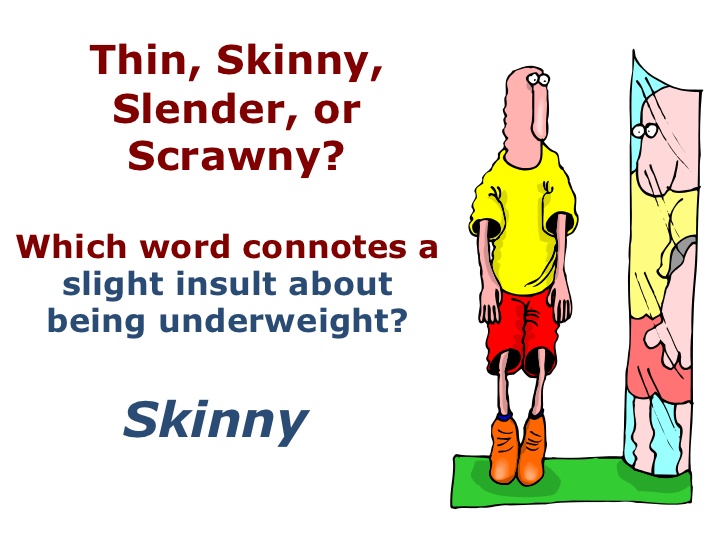
Which is the best answer?
Which is better?
a)
to be skinny
b)
to be slender
117.
Which is the best answer?
Which is more serious?
a)
problem
b)
disaster
118.
What is connotation?
a)
Connotation implies or suggests a meaning of a word.
b)
Dictionary meaning of a word.
c)
I don't know!
d)
Unknown meaning
119.
What is denotation?
a)
Direct meaning of a word or dictionary meaning.
b)
It means down.
c)
Let me ask my friend
d)
It means to note the word.
120.
Which connotation is MORE positive?
We saw ______ animals in the animal house.
a)
fascinating
b)
weird
121.
Which connotation is MORE positive?
Everyone had a _____ on his or her face on the way home.
a)
smile
b)
smirk
122.
Which is the best answer?
Which would a vain person be more likely to do?
a)
stroll
b)
parade
123.
Which is the best answer?
Which would you be after a walk in the mud?
a)
filthy
b)
dirty
124.
Which connotation is MORE positive?
________ people rode on the roller coaster.
a)
Brave
b)
Foolhardy
125.
Choose the word that has a positive connotation to complete the sentence.
We saw _______ animals at the zoo. 
a)
fascinating
b)
weird
126.
Choose the word that has a negative connotation to complete the sentence.
We bought ________ souvenirs at the amusement park.
a)
cheap
b)
inexpensive
127.
Choose the word that has the most positive connotation. 
He's a very _______ salesman. 
a)
pushy
b)
agressive
128.

Which phrase has a negative connotation?

a)

a stingy person

b)

a thrifty person

129.
Denotation is a word's ____________.
a)
Literal, dictionary definition
b)
Emotional meaning
c)
synonym
d)
antonym
130.
Connotation is a word's ___________.
a)
synonym
b)
emotional meaning
c)
antonym
d)
Literal, dictionary definition.
131.
Which of the following does not use active voice?
a)
Jacob Marley, a ghost, visited his old colleague Scrooge.
b)
Scrooge's old colleague, Jacob Marley, visited him as a ghost.
c)
Scrooge is visited first by the ghost of his old colleague Jacob Marley.
d)
As a ghost, Jacob Marley visited his old colleague Scrooge.
132.
Which of the following should be revised for active voice? 
a)
The story begins on a cold and bleak Christmas Eve in London.
b)
On a cold and bleak Christmas Eve, the story is told in London by a narrator.
c)
On a cold and bleak Christmas Eve, the story begins in London. 
d)
In London, the story begins on a cold and bleak Christmas Eve.
133.
How can this sentence be revised for active voice?
The car was looked at by a mechanic.

a)
The mechanic looked at the car.
b)
The car, a Porsche, was looked at by a mechanic.
c)
The car was examined by a mechanic.
d)
She took the car to Bob's Transmissions for a diagnostic by a mechanic.
134.
The dream was dreamt by him.
a)
Active Voice
b)
Passive Voice
135.
… a card to your parents?
a)
a) Was you write
b)
b) Did you write
c)
c) Were you written
d)
d) Did you written
136.
Choose the active voice.
a)
My homework has disappeared.
b)
I lost my homework.
137.
Choose the active voice.
a)
The sandwich was eaten by me.
b)
I ate the sandwich.
138.
What is active voice?
a)
When the subject performs the verb
b)
When the subject receives the verb