wayground logo

Free Printable Worksheets

Font size

S
M
L
XL
Worksheets

HW R.3 Due by 11:59pm on 6/13

Total questions: 209

Worksheet time: 4hrs 31mins

Name
Class
Date
1.

Enzymes are made of what type of macromolecule?

a)

protein

b)

carbohydrate

c)

lipid

d)

nucleic acid

2.

What do enzymes resemble?

a)

a chain of DNA

b)

a lock and key

c)

a puppy

d)

an open door

3.

What do enzymes do?

a)

they have energy stored in the chemical bonds

b)

nothing

c)

they make reactions happen at a faster rate

4.

Where is energy found in glucose?

a)

in the chemical bonds between molecules

b)

from the sunlight

c)

inside the oxygen

d)

glucose does not have energy

5.

Which 2 statements are true?

a)

One enzyme can work for all biological processes

b)

Enzymes are specific like a lock and key

c)

Enzymes can be denatured (broken) by temperature or pH

d)

Enzymes are a carbohydrate

6.

How do all organisms get energy?

a)

eating

b)

cellular respiration

c)

breathing

d)

photosynthesis

7.

What word also means eating?

a)

consume

b)

produce

c)

decompose

d)

locomotion

8.

How do humans get glucose?

a)

Producing water

b)

Sleeping

c)

Breathing carbon dioxide

d)

Consuming other organisms

9.

What does your body do with the food you eat?

a)

get carbon dioxide

b)

produce oxygen

c)

break it down to get ATP

d)

build sunlight

10.

What process breaks down glucose to release energy?

a)

cellular respiration

b)

photosynthesis

c)

both cellular respiration and photosynthesis

d)

homeostasis

11.

How do humans get oxygen and release carbon dioxide?

a)

eating

b)

breathing

c)

photosynthesis

d)

growth

12.

What process builds glucose using sunlight as an energy source?

a)

cellular respiration

b)

photosynthesis

c)

both cellular respiration and photosynthesis

d)

homeostasis

13.

What processes do plants do?

a)

cellular respiration

b)

photosynthesis

c)

both cellular respiration and photosynthesis

d)

homeostasis

14.

Where does cellular respiration take place inside a cell?

a)

somewhere else

b)

space

c)

chloroplast

d)

mitochondria

15.

Where does photosynthesis take place inside a cell?

a)

somewhere else

b)

space

c)

chloroplast

d)

mitochondria

16.

What are the 3 items needed for a plant to do photosynthesis?

a)

carbon dioxide

b)

oxygen

c)

water

d)

sunlight

17.

What are the 3 items produced from cellular respiration?

a)

carbon dioxide

b)

oxygen

c)

water

d)

ATP

18.

What are the 2 items needed for cellular respiration?

a)

carbon dioxide

b)

oxygen

c)

glucose

d)

ATP

19.

What are the 2 items produced during photosynthesis?

a)

carbon dioxide

b)

oxygen

c)

glucose

d)

sunlight

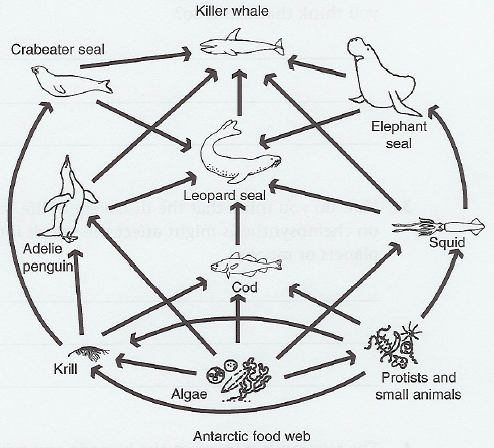
20.

What makes reactions like photosynthesis and cellular respiration occur?

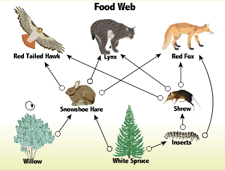
a)

enzymes

b)

carbohydrates

c)

DNA

d)

death

21.

What does produce mean?

a)

to eat

b)

to break down

c)

to make

d)

to be happy

22.

Describe the relationship between cellular respiration and photosynthesis.

a)

They are the same

b)

They are not important

c)

They are opposite

d)

They have nothing in common

23.

The oxygen we breathe is

a)

a waste product of plants

b)

a thoughtful gift from plants

c)

produced by other animals

d)

not needed for cellular respiration

24.

Photosynthesis

a)

takes the energy in sunlight to build food

b)

uses the glucose in sunlight to make food

c)

uses the energy in sunlight to make ATP

d)

breaks down glucose to release ATP energy

25.

Cellular Respiration

a)

takes the energy in sunlight to build food

b)

uses the glucose in sunlight to make food

c)

uses the energy in sunlight to make ATP

d)

breaks down glucose to release ATP energy

26.

Yeast does

a)

cellular respiration

b)

photosynthesis

c)

neither photosynthesis or cellular respiration

d)

both photosynthesis or cellular respiration

27.

Photosynthesis can be described as the process that

a)

uses carbon dioxide and water, in the presence of sunlight, to produce food (glucose) and oxygen.

b)

uses glucose and oxygen to produce energy for the cell (ATP), releasing carbon dioxide and water.

c)

uses glucose and oxygen, in the presence of sunlight, to make ATP.

d)

uses carbon dioxide and water, in the presence of sunlight, to produce ATP and oxygen.

28.

Cellular respiration can be described as the process that

a)

uses carbon dioxide and water, in the presence of sunlight, to produce food (glucose) and oxygen.

b)

uses glucose and oxygen to produce energy for the cell (ATP), releasing carbon dioxide and water.

c)

uses glucose and oxygen, in the presence of sunlight, to make ATP.

d)

uses carbon dioxide and water, in the presence of sunlight, to produce ATP and oxygen.

29.

Which statement is true? (pick all that apply)

a)

The products of photosynthesis are the reactants of cellular respiration

b)

The products of cellular respiration are the reactants of photosynthesis

c)

Cellular respiration and photosynthesis both occur in the mitochondria

d)

Cellular respiration happens in the chloroplast and photosynthesis happens in the mitochondria

30.

The correct chemical formula for photosynthesis is

a)

Carbon dioxide + Sunlight + Oxygen → Glucose + Water

b)

Carbon dioxide + Water + Sunlight → Glucose + Oxygen

c)

Sugar + Oxygen → Carbon Dioxide + Water + ATP

d)

Glucose + Carbon dioxide + ATP → Oxygen + Water

31.

The correct chemical formula for cellular respiration is

a)

Glucose + Oxygen + Energy → Carbon dioxide

b)

Carbon dioxide + Water + Sunlight → Glucose + Oxygen

c)

Glucose + Oxygen → Carbon Dioxide + Water + ATP

d)

Glucose + Carbon dioxide + ATP → Oxygen + Water

32.

Complete this sentence: Most living things use ____________ to make __________ from glucose.

a)

ATP, oxygen

b)

plastic, recylables

c)

sunlight, energy

d)

oxygen, ATP

33.

What organism does NOT photosynthesis?

a)

mushroom

b)

tree

c)

algae

d)

flower

34.

What organism(s) do cellular respiration?

a)

All life because every organism needs a metabolism

b)

Plants

c)

Animals

d)

Mushrooms

35.
What are tiny organelles that convert glucose into ATP?
a)
Ribosomes
b)
Vesicles
c)
Cytoskeleton
d)
Mitochondria
36.

I am only found in a plant cell. What am I?

a)

nucleus

b)

mitochondria

c)

cytoplasm

d)

chloroplast

37.
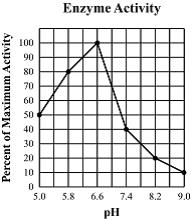
Which of the following conclusions can be drawn from this graph?
a)
The optimum pH of the enzyme is 6.6.
b)
The optimum pH of the enzyme is 5.8
c)
The enzyme’s activity increases as pH increases 5.0 to 9.0
d)
The enzyme’s activity is greater around pH of 8.0 .
38.
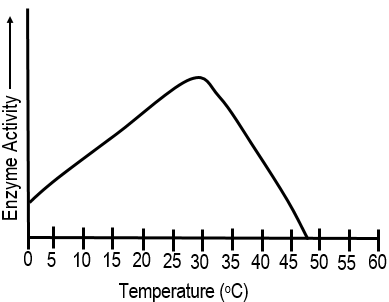
Based on the graph, what is the optimal temperature for this enzyme? 
a)
15oC
b)
40oC
c)
30oC
d)
35oC
39.
Which is NOT true?
a)
Enzymes speed up chemical reactions.
b)
Enzymes react best at a specific temperature.
c)
Enzymes only control ONE type of reaction.
d)
Enzymes are made of fatty acids.
40.
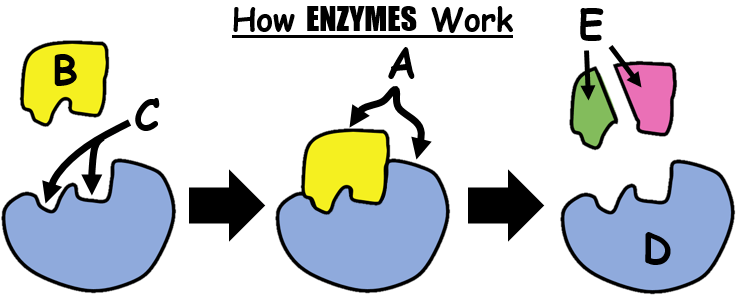
Letter D...
a)
active site
b)
enzyme
c)
substrate
d)
products
41.
Enzymes will make a reaction go _______ and use ______ energy.
a)
faster, less
b)
faster, more
c)
slower, less
d)
slower, more
42.
Every enzyme has a optimal temperature and pH. True or False?
a)
True 
b)
False
43.
A pH of 14 is a .....
a)
strong acid
b)
weak acid
c)
Strong base
d)
Weak base
44.
The pH scale is a range from:
a)
1-7
b)
0-14
c)
1-5
d)
1-20
45.
A solution with a pH of 3.6 would be...
a)
Acid
b)
Base
c)
Neutral
d)
Acid and Base
46.
Used for short term (quick) energy.
a)
carbohydrates
b)
lipids
c)
proteins
d)
nucleic acids
47.
Provides long term energy and insulation,
a)
lipids
b)
carbohydrates
c)
nucleic acids
d)
proteins
48.
Contains DNA and RNA
a)
lipids
b)
carbohydrates
c)
proteins
d)
nucleic acids
49.
Building blocks of the body, hair , muscles etc.
a)
protein
b)
nucleic acid
c)
lipids
d)
carbohydrates
50.
Is found in the cell membrane as a bilayer. 
a)
lipids
b)
protein
c)
nucleic acid
d)
carbohydrate
51.
Proteins are made of monomers called ___________
a)
Nucleotides
b)
Monosaccharides
c)
Amino Acids
d)
Glycerol and fatty acids
52.
The element _______is found in all of the organic compounds.
a)
Iron
b)
Nitrogen
c)
Carbon
d)
Oxygen
53.
The main source of energy for all life comes from ____.
a)
the Earth
b)
the moon
c)
the sun
d)
the food we eat/make
54.
Which substrate would this enzyme catalyze?
a)
Δ
b)
σ
c)
d)
μ
55.

The images show how plant cells respond to different solutions. The arrows indicate the movement of water between the cell and its surrounding environment. How is water moving in Cell A?

a)

Water is not moving.

b)

Water is moving into the cell more.

c)

Water is leaving the cell more.

d)

Water is equally moving into and out of the cell.

56.

The images show how plant cells respond to different solutions. The arrows indicate the movement of water between the cell and its surrounding environment. How is water moving in Cell B?

a)

Water is not moving.

b)

Water is moving into the cell more.

c)

Water is leaving the cell more.

d)

Water is equally moving into and out of the cell.

57.

The images show how plant cells respond to different solutions. The arrows indicate the movement of water between the cell and its surrounding environment. How is water moving in Cell C?

a)

Water is not moving.

b)

Water is moving into the cell more.

c)

Water is leaving the cell more.

d)

Water is equally moving into and out of the cell.

58.

The images show how plant cells respond to different solutions. The arrows indicate the movement of water between the cell and its surrounding environment. Which cell is decreasing in size?

a)

Cell A

b)

Cell B

c)

Cell C

d)

All of them

59.

The images show how plant cells respond to different solutions. The arrows indicate the movement of water between the cell and its surrounding environment. Which cell is increasing in size?

a)

Cell A

b)

Cell B

c)

Cell C

d)

All of them

60.

The images show how plant cells respond to different solutions. The arrows indicate the movement of water between the cell and its surrounding environment. What type of solution was added to Cell A?

a)

Salt Water (Hypertonic solution)

b)

Pure/Distilled Water (Hypotonic solution)

c)

Tap water (Isotonic solution)

d)

Nothing, plants do not need water solutions

61.

The images show how plant cells respond to different solutions. The arrows indicate the movement of water between the cell and its surrounding environment. What type of solution was added to Cell B?

a)

Salt Water (Hypertonic solution)

b)

Pure/Distilled Water (Hypotonic solution)

c)

Tap water (Isotonic solution)

d)

Nothing, plants do not need water solutions

62.

Where does photosynthesis occur?

a)

Mitochondria

b)

Ribosome

c)

Chloroplast

d)

Cell Membrane

63.

The images show how plant cells respond to different solutions. The arrows indicate the movement of water between the cell and its surrounding environment. What type of solution was added to Cell C?

a)

Salt Water (Hypertonic solution)

b)

Pure/Distilled Water (Hypotonic solution)

c)

Tap water (Isotonic solution)

d)

Nothing, plants do not need water solutions

64.

Where does cellular respiration occur?

a)

Mitochondria

b)

Ribosome

c)

Chloroplast

d)

Cell Membrane

65.

Which of the following in NOT a product of cellular respiration?

a)

carbon dioxide

b)

water

c)

glucose

d)

ATP

66.

Which of the following organisms is an autotroph?

a)

human

b)

algae

c)

mushroom

d)

cat

67.

What are the products of photosynthesis

a)

glucose and oxygen

b)

carbon dioxide and oxygen

c)

water and glucose

d)

sunlight and oxygen

68.

Starch and glucose are what type of macromolecule?

a)

lipids

b)

nucleic acids

c)

proteins

d)

carbohydrates

69.

The phospholipids of the cell membrane are what type of macromolecule?

a)

lipids

b)

nucleic acids

c)

proteins

d)

carbohydrates

70.

What is a heterotroph?

a)

a self feeding plant that can do photosynthesis and cellular respiration

b)

an organism that cannot do photosynthesis and must eat food to get energy

c)

a photosynthetic aquatic algae

d)

the same as an autotroph

71.

What organelle is represented by C (contains DNA)?

a)

nucleus

b)

lysosome

c)

cell membrane

d)

mitochondria

72.

What organelle is represented by D (contains receptors)?

a)

golgi body

b)

cell membrane

c)

chloroplast

d)

central vacuole

73.

What type of cell is this?

a)

bacteria because it has a nucleus

b)

animal cell because it has only a cell membrane

c)

plant cell because it is not a square/rectangle

d)

animal cell because it has both a cell membrane and cell wall

74.

Molecule C would leave the cell as a result of....

a)

digestion from your stomach

b)

active transport because it is going low --> high

c)

diffusion because it is going high --> low

d)

enzymes

75.

Which molecule is at equilibrium?

a)

Molecule A

b)

Molecule B

c)

Molecule C

d)

All of them

76.

The image shows how an onion cell changed with the addition of different solutions. What solution was added to make the cell transform as pointed out by arrow A?

a)

pure freshwater (distilled water)

b)

isotonic saline solution

c)

saltwater

d)

red food dye

77.

The image shows how an onion cell changed with the addition of different solutions. What solution was added to make the cell transform as pointed out by arrow B?

a)

pure freshwater (distilled water)

b)

saltwater

c)

red food dye

78.

The diagram below shows a model cell with substances indicated inside and outside the cell. After 20 minutes, where would starch be located?

a)

Only inside the cell

b)

Only outside the cell

c)

Both inside and outside the cell

d)

It will have disappeared

79.

The diagram below shows a model cell with substances indicated inside and outside the cell. After 20 minutes, where would glucose be located?

a)

Only inside the cell

b)

Only outside the cell

c)

Both inside and outside the cell

d)

It will have disappeared

80.

What color change happens when starch indicator mixes with starch?

a)

it changes from amber to purple/black

b)

it stays amber

c)

it stays blue after heat activation

d)

it changes from blue to orangish red after heat activation

81.

What color change happens when glucose indicator mixes with glucose?

a)

it changes from amber to purple/black

b)

it stays amber

c)

it stays blue after heat activation

d)

it changes from blue to orangish red after heat activation

82.

What color change happens when glucose indicator mixes with starch?

a)

it changes from amber to purple/black

b)

it stays amber

c)

it stays blue after heat activation

d)

it changes from blue to orangish red after heat activation

83.

What color change happens when starch indicator mixes with glucose?

a)

it changes from amber to purple/black

b)

it stays amber

c)

it stays blue after heat activation

d)

it changes from blue to orangish red after heat activation

84.

What organelle is letter B pointing to?

a)

chloroplast

b)

nucleus

c)

central vacuole

d)

cell membrane

85.

What organelle is letter A pointing to?

a)

chloroplast

b)

nucleus

c)

central vacuole

d)

cell membrane

86.

What organelle is letter D pointing to?

a)

chloroplast

b)

nucleus

c)

central vacuole

d)

cell membrane

87.

What organelle is letter C pointing to?

a)

chloroplast

b)

nucleus

c)

central vacuole

d)

cell membrane

88.

What is diffusion?

a)

the movement of molecules across a cell membrane from high concentration to low concentration without the use of ATP

b)

the movement of molecules across a cell membrane from high concentration to low concentration with the use of ATP

c)

he movement of molecules across a cell membrane from low concentration to high concentration without the use of ATP

d)

the movement of molecules across a cell membrane from low concentration to high concentration with the use of ATP

89.

What type of cell transport is this?

a)

endocytosis

b)

exocytosis

c)

simple diffusion

d)

facilitated diffusion

90.

What is osmosis?

a)

the movement of oxygen into the cell

b)

the movement of starch across a membrane, but not glucose

c)

the diffusion of water to areas of high salt/sugar

d)

a type of active transport

91.

What type of cell transport is this?

a)

endocytosis

b)

exocytosis

c)

simple diffusion

d)

a protein pump

92.
What function does the heart do?
a)
Protects organs and produces red blood cells.
b)
Generates heat.
c)
Breaks down food into nutrients.
d)
The heart is a pump, which moves the blood. The arteries and veins are the pipes where the blood flows.
93.
What do Red-Blood cells do?
a)
Carry oxygen from the lungs to the body cells and  transport carbon dioxide from the cells back to the lungs
b)
keeps blood flowing in one direction to the heart and prevent blood from flowing backwards
c)
Collects  blood from the capillaries and drain it into the veins
d)
Bring nutriients to the cells and carries away waste materials.
94.
What does blood do?
a)
Carries Water to cells
b)
Carries Oxygen to cells
c)
Carries Food to cells
d)
All of the above 
95.
Your blood is 100% liquid
a)
True
b)
False
96.

Hormones are chemical messengers

a)

True

b)

False

97.
Nerve cells are essential to an animal because they directly provide
a)
communication between cells
b)
transport of nutrients to various organs
c)
regulation of reproductive rates within other cells
d)
an exchange of gases within the body
98.
Which statement accurately compares cells in the human circulatory system to cells in the human nervous system?
a)
Cells in the circulatory system carry out the same life function for the organism as cells in the nervous system.
b)
Cells in the circulatory system are identical in structure to cells in the nervous system.
c)
Cells in the nervous system are different in structure from cells in the circulatory system, and they carry out different specialized functions.
d)
Cells in the nervous system act independently, but cells in the circulatory system function together
99.
In multicellular organisms, cells must be able to communicate with each other. Structures that enable most cells to communicate with each other are known as
a)
pathogenic agents
b)
chloroplasts
c)
antibiotics
d)
receptor molecules
100.

A characteristic of hormones and enzymes that allows them to work effectively with other organic molecules is their

a)

specific shape

b)

small size

c)

concentration of carbon and hydrogen atoms

d)

high-energy bonds

101.

The ability of certain hormones to attach to a cell is primarily determined by the

a)

receptor molecules in the cell membrane

b)

proteins in the cytoplasm of the cell

c)

amount of DNA in the cell

d)

concentration of salts outside the cell

102.

Insulin is released when

a)

during exercise

b)

blood sugar is high

c)

blood sugar is low

d)

you haven't eaten in a while

103.
All Offspring of Asexual reproduction are identical
a)
True
b)
False
104.

What is the process of making an identical copy of an organism?

a)

clothing

b)

genetic engineering

c)

cloning

d)

sexual reproduction

105.

How can DNA fragments be separated and analyzed?

a)

Gel electrophoresis

b)

Recombinant DNA

c)

Plasmids

d)

Restriction Enzymes

106.
Is it Cloning or Not: Sperm taken from a male goat is combined with a female’s egg in a petri dish. The resulting embryo is implanted into the female’s uterus to develop. 
a)
Cloning
b)
Not Cloning 
107.

The study of controversial topics brought about by advances in biology and medicine?

a)

Hybridization

b)

Selective breeding

c)

Cloning

d)

Bioethics

108.

What is selective breeding?

a)

Having many sets of chromosomes

b)

A method of improving a species by allowing only those individual organisms with desired characteristics to produce the next generation

c)

Technique that allows molecular biologists to make many copies of a particular gene

d)

Circular DNA molecule found in bacteria

109.

What is used to cut DNA at specific sequences

a)

Restriction enzymes

b)

Gel electrophoresis

c)

Recombinant DNA

d)

Bacterial plasmid

110.

Bacteria often contain small circular molecules of DNA known as?

a)

Clones

b)

Restriction enzymes

c)

Plasmids

d)

Hybrids

111.

What is a Hybrid in biology?

a)

A type of animal.

b)

A cross between two different living creatures.

c)

A car that runs on gas and a battery.

d)

A glass bottle.

112.

What does this image represent?

a)

Biotechnology

b)

Sexual Reproduction

c)

Gel electrophoresis

d)

DNA --> RNA --> Protein

113.

What is recombinant DNA?

a)

DNA from 2 different organisms combined

b)

DNA from 2 different ribosomes

c)

DNA that is separated out in a gel

d)

DNA --> RNA --> Protein

114.

"Sticky-ends" are DNA strands with:

a)

single-stranded ends that are ready to stick to another single-stranded end of DNA

b)

ends cut flat by an enzyme

c)

no way to be recombined

d)

glue

115.

DNA fingerprinting (gel electrophoresis) can help police...

a)

Identify crime scene DNA

b)

Identify suspects

c)

Idenitify victims

d)

All choices are correct.

116.

GMO stands for

a)

Genetically Made Organism

b)

Genetically Modified Organism

c)

Growing More Organisms

d)

Growing Many Organisms

117.

This laboratory procedure is known as

a)

CLONING

b)

gel electrophoresis

c)

chromatography

d)

use of a dichotomous key

118.

What is this technique an example of?

a)

chromatography

b)

gel electrophoresis

c)

direct harvesting

d)

genetic engineering

119.

A student performed a gel electrophoresis experiment. The results are represented in the diagram

below. Compared to the fragments at the top of the gel, the fragments at the lower end are

a)

larger, and move slower

b)

larger, and move faster

c)

smaller, and move faster

d)

smaller, and move slower

120.

This technique used to analyze DNA involves the

a)

synthesis of new DNA strands from subunits

b)

separation of DNA fragments based on size

c)

production of genetically engineered DNA molecules

d)

removal of defective genes from DNA

121.

. Which process is illustrated in the diagram below?

a)

chromatography

b)

direct harvesting

c)

meiosis

d)

genetic engineering

122.

Which set of terms correctly identifies the procedure

shown in the diagram below and a substance

produced by this procedure?

a)

selective breeding-growth hormone

b)

cloning-antibiotics


c)

genetic engineering-insulin


d)

replicating-glucose

123.

The arrows in the diagram below indicate the development of four different varieties of vegetable plants from wild mustard.Each of these varieties was most likely produced as a result of

a)

asexual reproduction in the wild for many years

b)

changes in light availability

c)

competition between plants

d)

selective breeding over many generations

124.

What is paper chromatography?

a)

separating DNA by size

b)

making an identical piece of paper

c)

separating the colors out of an organism's pigment

d)

cutting up DNA, like DNA "scissors"

125.

If an organism has a diploid number of 30 chromosomes, how many are in an egg or sperm cell?

a)

10

b)

30

c)

3

d)

15

126.

Which statement is correct regarding gel electrophoresis?

a)

The largest fragments of DNA (highest number of nucleotides) move furthest down the gel

b)

DNA is negatively charged and the electricity causes the DNA to be pulled towards the positive end.

c)

Two sisters would have less bands in common with each other than with a stranger

d)

The bands on gel electrophoresis stand for how much sugar is in an organism

127.

Which species has the most DNA in common with species A?

a)

X and Y only

b)

Y only

c)

Z only

d)

X, Y, and Z

128.

In sexually reproducing organisms, mutations can be inherited if they occur in

a)

the egg only

b)

the sperm only

c)

in any body cell from either parent

d)

in either the egg or sperm cells

129.

An example of a hybrid is

a)

Breeding two german shepherd dogs to get german shepherd puppies

b)

Breeding different corn plants to increase the chance of sweet flavor

c)

Breeding a tiger with a lion to produce a liger

d)

A sheep that is identical to its clone

130.

A boy inherits genes to be tall, but his growth is limited because he has poor nutrition. This is an example of

a)

an inherited disorder

b)

environmental influence on gene expression

c)

expression of a hidden trait

d)

not getting enough sleep

131.

Which knowledge was needed to develop this technique?

a)

knowledge of sexual reproduction

b)

knowledge of starch and glucose molecules

c)

knowledge about the development of embryos

d)

knowledge of the structures of DNA and genes

132.
The opossum and kangaroo both incubate their young in a pouch. This provides evidence that they---
a)
are descended from a common ancestor
b)
Have very similar skeletal structures
c)
belong to the same species
d)
must range great distances to eat
133.
The white feathers of a snowy owl allow it to blend in with its environment during the winter months (snow). This is an example of ________________
a)
Species
b)
Environmental Change
c)
Adaptation
d)
Variation
134.
Darwin referred to this as survival of the fittest. Over time, it results in changes in the inherited characteristics of a population. 
a)
Natural Selection
b)
Genetic Variation
c)
Survival of the Fittest
135.
Genetic differences between organisms of the same species
a)
Variation
b)
Adaptation
c)
Behavior
d)
Environment
136.
What did Charles Darwin observe in finch populations of the Galapagos Islands off the coast of South America?
a)
different species on different islands
b)
all species on one of the islands
c)
identical species on all the islands
d)
the same species as North America
137.
A fossil of an extinct dinosaur is found and the anatomy of the fossil shows similarities to that of a bird. What could this mean?
a)
This is purely by chance and isn't significant
b)
The extinct dinosaur and modern bird share a common ancestor
c)
All dinosaurs evolved into birds and that's why there aren't any dinosaurs alive today
d)
Dinosaurs choose to fly, and evolved into birds to escape predation and capture food
138.
What is the advantage of having different shaped beaks?
a)
To look different from other species.
b)
To be able to eat the food readily available in the environment.
c)
To protect itself against predators.
d)
To protect itself against prey.
139.
Which gas was believed to be absent from early Earth's atmosphere
a)
Hydrogen
b)
Nitrogen
c)
Oxygen
d)
Carbon
140.
Darwin wrote that organisms with traits that are best suited to the environment will ________________
a)
increase in number
b)
become extinct
141.
Which is not an example of an adaptation?
a)
A bird's beak allows it to crack open hard nuts.
b)
A zebra's stripes allow it to confuse its predators.
c)
A frog's large hind legs allow it to jump from danger.
d)
A cat sleeps on the sofa to avoid the vacuum cleaner.
142.
What was the name of the scientist who had the theory of evolution?
a)
Lamarck
b)
Einstein
c)
Washington
d)
Darwin
143.
Why are advantageous traits more likely to be passed onto offspring?
a)
Because they are more likely to survive and reproduce.
b)
Because they look cooler.
c)
Because they come from recessive alleles.
d)
Because the trait is an acquired phenotype.
144.
Evolution means...
a)
Change over time in a population.
b)
That everything is the same.
c)
That organisms never change.
d)
Negative traits are acquired in populations.
145.
What is it called when better adapted organisms survive to pass traits along to their offspring.
a)
Evolution
b)
Natural Selection
c)
Extinction
d)
Artifical Selection
146.
Any variation that can help a species survive in a given environment is called...
a)
an adapatation
b)
a characteristic
c)
a homologous structure
d)
a vestigial structure
147.
The ability of an organism to survive and reproduce is known as...
a)
Adaptation
b)
Trait
c)
Fitness
d)
Variation
148.
Some lizards have different size legs.  Lizards with longer legs are able to better access food. Over time, lizards with short legs became less common.
What is the successful adaptation?
a)
Lizards
b)
Long legs
c)
Food
d)
Leg sizes
149.
Why did the population of peppered moths in England change from light to dark after the Industrial Revolution?
a)
Light moths were easy to see against sooty trees and were eaten
b)
Light moths were killed by soot
c)
The birds that ate the dark moths were killed by soot
d)
Dark moths were produced by industrial processes
150.
The example of the peppered (brown) moths living near English industrial cities demonstrates that
a)
A change in an environment can result in the evolution of species living there
b)
Evolution occurs so slowly that is it not possible to determine that it has happened in less than a million years
c)
The environment near these cities has always favored dark colored moths
151.
Female hammerhead sharks sometimes produce offspring by a type of asexual reproduction. These offspring
a)
 are a result of the uniting of a male and a female gamete
b)
have cells that contain DNA found only in the female shark
c)
 are considered to be a different species from the male parent
d)
 have cells that contain genetic information from both parents
152.
Natural selection is best described as
a)
 a change in an organism in response to a need of that organism
b)
a process of nearly constant improvement that leads to an organism that is nearly perfect
c)
 differences in survival rates as a result of different inherited characteristics
d)
) inheritance of characteristics acquired during the life of an organism
153.
A woman changes her hair color to red; however, her children will not inherit this red hair color because the woman does not have
a)
genes for red hair in her skin
b)
 genes for red hair in her sex cells
c)
proteins for red hair in the placenta
d)
 proteins for red hair in her egg cells
154.
 Fossils provide evidence that
a)
 life on Earth millions of years ago was more complex than life is today
b)
 the changes that will occur in species in the future are easy to predict
c)
many species of organisms that lived long ago are now extinct
d)
 most species of organisms that lived long ago are exactly the same today
155.
 Potato farmers in Ireland during the mid 1800s all grew the same type of potato. The potato plants were all produced as clones of one another. When a fungus infected the crop, all of the potatoes were destroyed. This occurred because these potato plants
a)
had little genetic variability
b)
 had increased biodiversity
c)
were the product of fertilization
d)
were the result of biotechnology
156.
A mutation occurring in a human can be passed from parent to offspring when it occurs in a
a)
lung cell, due to exposure to a toxic gas
b)
 gamete formed in the ovary
c)
 body cell undergoing mitosis
d)
 heart cell with chromosome damage
157.

The diagrams of the front "arms" above show evidence of

a)

genetic engineering

b)

a common ancestor through analogous structures

c)

a common ancestor through homologous structures

d)

selective breeding

158.

A human's wisdom teeth and a whale's pelvis seem to have no purpose in the life of an organism but still exist. What are these examples of?

a)

vestigial organs

b)

high level of reproductive fitness

c)

mutations

d)

artificial selection

159.
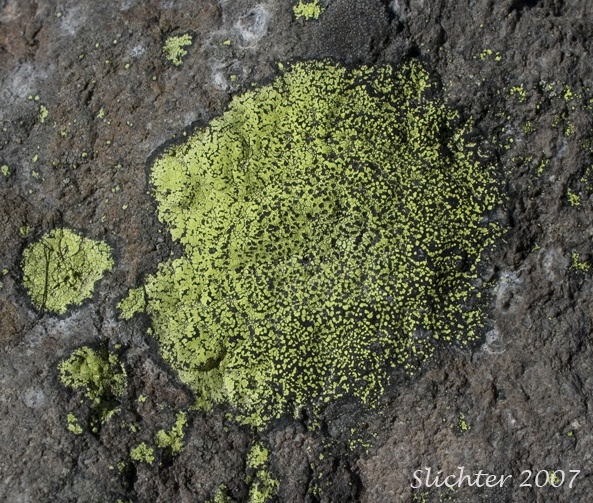
What is the name given to lichen or algae after a primary succession?
a)
pioneer species
b)
volunteer species
c)
founder species
d)
conqueror species
160.
Reaches a climax community quicker because soil is already present
a)
primary succession 
b)
secondary succession
c)
both types of succession
161.

What is the carrying capacity of the graph?

a)

1000

b)

8000

c)

800

d)

600

162.

The largest number of individuals that an environment can support long term is...

a)

carrying capacity

b)

emigration

c)

immigration

d)

population density

163.

Something that regulates the size of a population is called...

a)

a limiting measure

b)

a limiting factor

c)

carrying capacity

d)

biodiversity

164.

When death rate is equal to birth rate...

a)

population increases

b)

population decreases

c)

population stays the same.

d)

population rapidly increases then becomes stable

165.

When the death rate rises and the birth rate lowers...

a)

population increases

b)

population decreases

c)

population stays the same

d)

all of these

166.

If the carrying capacity of a predator decreases, what will happen to the carrying capacity of the prey?

a)

Will Increase

b)

Will Decrease

c)

Will stay the same

167.
A population of an organism will only grow exponentially if:
a)
The resources are unlimited
b)
They want to
c)
The resources are limited
d)
They do not like to compete
168.
If a blue catfish is introduced and eats the large fish who eat the smaller fish, what will happen to the population of the smaller fish?
a)
Increase
b)
Decrease
c)
Stay the same
d)
No affect on smaller fish
169.
What would most likely happen if an ecosystem no longer received sunlight?
a)
The number of herbivores would increase
b)
The number of plants would increase
c)
all organisms would adapt
d)
All living organisms would eventually die
170.
Do we need greenhouse gases on Earth?
a)
Yes - they keep the Earth warm
b)
Yes - they keep all the gases on our planet
c)
No - they only cause terrible climate change
d)
No - they only block some of the Sun's rays
171.
Why is the increase of Greenhouse gasses a big issue?
a)
It causes climate change and increase in the global temerature 
b)
It can lead to a major increase in Greenhouses 
c)
It leads to more factories
d)
It causes a major decrease in people
172.
The gradual increase in the temperature of the atmosphere is known as ________________.
a)
Greenhouse Effect
b)
Global Warming
c)
Carbon Dioxide Gases
d)
Methane
173.
How can global warming cause sea levels to rise? Choose the best answer.
a)
by causing it to rain more often
b)
by melting glaciers and ice caps
c)
by increasing the number of undersea volcanic eruptions
d)
by creating bigger and more powerful hurricanes
174.
Why does cutting down trees increase global warming?
a)
trees soak up carbon dioxide
b)
trees provide shade which counteracts global warming
c)
trees absorbs the sun's energy without radiating back into the atmosphere
d)
trees drain greenhouse gases like methane from soil
175.
Burning fossil fuels is one of the main causes for global warming.
a)
True
b)
False
176.
The diagram represents a model of a food pyramid.  Which statement best describes what happens in this food pyramid?
a)
More organisms die at higher levels than at lower levels, resulting in less mass at higher levels.
b)
Energy is lost to the environment at each level, so less mass can be supported at each higher level.
c)
When organisms die at higher levels, their remains sink to lower levels, increasing the mass of lower levels.
d)
Organisms decay at each level, and thus less mass can be supported at higher levels
177.
The greenhouse gas having the greatest role in human-caused global warming is
a)
methane
b)
carbon dioxide
c)
CFCs (chlorofluorocarbons)
d)
ozone
178.
Which one of the choices below is NOT a  cause for global warming?
a)
Having too many cows
b)
Burning Fossil Fuels
c)
Planting new trees
179.

1. Why is firewood considered to be a renewable resource?

a)

It can be replenished over time.

b)

It is used up faster than it can form.

c)

It is made from coal.

d)

It can be made synthetically.

180.

1. Which level of the food chain is most affected by biomagnifications?

a)

Producers

b)

primary consumers

c)

secondary consumers

d)

tertiary consumers

181.
Continued depletion of the ozone layer will most likely result in
a)
an increase in skin cancer among humans 
b)
a decrease in atmospheric pollutants 
c)
an increase in marine ecosystem stability 
d)
a decrease in climatic changes
182.
The acidity of a local stream would most likely be affected by
a)
a change in the percentage of decomposers living in the stream
b)
a new source of air pollution 
c)
a new predator species being introduced to the ecosystem
d)
a decrease in the amount of sunlight that reaches the stream
183.
Which human activity is correctly paired with its likely future consequence?
a)
overfishing in the Atlantic — increase in supply of flounder and salmon as food for people 
b)
development of electric cars or hybrid vehicles — increased rate of global warming 
c)
use of fossil fuels — depletion of underground coal, oil, and natural gas supplies 
d)
genetically engineering animals — less food available to feed the world’s population
184.
Which of the following is a renewable resource?
a)
coal
b)
solar energy
c)
natural gas
d)
oil
185.
How is acid rain formed?
a)
Carbon monoxide and carbon dioxide mix with water in the ocean.
b)
Carbon dioxide and oxygen mix with water in the air.
c)
Sulfur dioxide and carbon monoxide mix with lake water.
d)
Sulfur dioxide and nitrogen oxide mix with water in the air.
186.
largest number of individuals of a population that the environment can support  
a)
carrying capacity
b)
primary succession 
c)
denitrification
d)
mutualism
187.
What is this called?
a)
Food Web
b)
Food Chain
c)
Abiotic Factors
188.
What is this called?
a)
Food Web
b)
Food Chain
c)
Abiotic Factors
189.
What does a Primary Consumer eat?
a)
Tertiary Consumers
b)
Secondary Consumers
c)
Producers
190.
An organism that lives by breaking apart dead organic matter into simpler parts is...
a)
scavenger
b)
consumer
c)
decomposer
d)
carnivore
191.
A third-level consumer has to be which type?
a)
Carnivore.
b)
Decomposer.
c)
Producer.
d)
Herbivore.
192.
In a food web, arrows point at:
a)
who gets energy.
b)
who gets eaten.
193.
Which of the following is a herbivore?
a)
cricket
b)
frog
c)
hawk
d)
shrew
194.
__________ is an organism that eats BOTH plants and animals for energy.
a)
Omnivore
b)
Darnivore
c)
Carnivore
d)
Herbiovre
195.
If the grasshopper were to be removed completely from the food web, what organism would be most effected?
a)
The squirrel
b)
The shrew
c)
The deer
d)
The rabbit
196.
Which organism recieves the least amount of energy from the producer?
a)
Owl
b)
Grasshopper
c)
Lilypad
d)
Mouse
197.
The efficiency of energy transfer from a lower trophic level to the next highest level is roughly
a)
1%
b)
10%
c)
100%
d)
1000%
198.
The unique position that a species has in the physical use of its habitat and in its function (job) within an ecosystem  
a)
producer
b)
biotic factors
c)
ecosystem
d)
niche
199.

If there is 1000 Kcal for the producers, how much energy would be transferred to the Primary Consumers?

a)

10 Kcal

b)

1 Kcal

c)

100 Kcal

d)

1000 Kcal

200.
The diagram is intended to show relationships in an ecosystem. What do the arrows represent?
a)
The direction of population migration
b)
Differences in dietary habits
c)
Progressively smaller organisms
d)
The direction of the energy flow
201.
If these organisms were arranged in an ecological biomass pyramid, which organism would have the least amount of biomass?
a)
coyote
b)
insect
c)
lizard
d)
shrub
202.
How many predators does the squid have?
a)
1
b)
2
c)
3
d)
4
203.
Humans are considered...
a)
consumers
b)
decomposers
c)
producers
204.
What may happen if the snowshoe hare was removed from the food web pictured?
a)
The insects in the habitat would increase.
b)
The shrew population would decrease due to being only hawk food source.
c)
The willow tree population would decrease.
d)
Foxes would dies due to no food source. 
205.

Ostriches and gazelles feed next to each other. They both watch for predators and alert each other to danger.

a)

Mutualism

b)

Commensalism

c)

Parasitism

d)

Not Symbiosis

206.

Fleas obtain nutrients by feeding on the blood of a dog.

a)

Mutualism

b)

Commensalism

c)

Parasitism

d)

Not Symbiosis

207.

Bacteria living in a cow’s stomach help the cow digest cellulose in the grass. The bacteria are protected in the cow’s stomach and are provided with food (cellulose).

a)

Mutualism

b)

Commensalism

c)

Parasitism

d)

Not Symbiosis

208.

A bird builds a nest on a tree branch.

a)

Mutualism

b)

Commensalism

c)

Parasitism

d)

Not Symbiosis

209.

Hermit crabs live in shells made and then abandoned by snails. This neither harms nor benefits the snails.

a)

Mutualism

b)

Commensalism

c)

Parasitism

d)

Not Symbiosis