wayground logo

Free Printable Worksheets

NEW

Font size

S
M
L
XL
Worksheets

World History Final Review

Total questions: 75

Worksheet time: 2hrs 50mins

Name
Class
Date
1.
Imperialism is __________.
a)
when a powerful nation uses its resources to help a weaker nation
b)
when a weaker nation invites a powerful nation to help it industrialize
c)
when a powerful nation takes control of the economy and government of a weaker nation
d)
when weak nations join together to fight a strong nation
2.
The poem, The White Man's Burden, by Rudyard Kipling, represents the belief that European culture was _______.
a)
superior to other cultures
b)
misunderstood by Americans
c)
the oldest culture in the world
d)
a replica of Ancient Greek culture
3.
The argument that the human species improves when more intelligent and resourceful people thrive and prosper, while weak and stupid people die out, is referred to as:
a)
Social Darwinism
b)
Social Gospel
c)
Linnaean Model
d)
Pinnacle of Creation
4.
Industrialization affected the relationships between industrialized nations and non-industrialized nations because it
a)
was the driving force behind imperialism. 
b)
weakened economic ties between nations. 
c)
allowed industrialized nations to take slaves. 
d)
enabled the two types of nations to strengthen each other.
5.
What happened as a result of the Berlin Conference of 1884-1885? 
a)
France and Britain agreed to govern their African colonies jointly. 
b)
There was less fighting between African leaders and European powers. 
c)
African leaders voiced their suggestions for better relations with European powers. 
d)
Europeans divided Africa into colonies without consulting African leaders. 
6.
 Why was India called the "jewel in the crown"?
a)
It was the most valuable of all Britain's colonies.
b)
The success of India's self sufficient economy strengthened Britain.
c)
The sepoy were a perfect model of successful imperialism.
d)
it had vast supply of diamonds, rubies, and sapphires.
7.
What country did the Industrial Revolution begin in?
a)
France
b)
Britian
c)
United States
d)
Spain
8.
This machine separated the seed from cotton fibers.
a)
Spinning Mule
b)
Spinning Jenny
c)
Steam Engine
d)
Cotton Gin
9.
What is the movement of people from farms to cities?
a)
Utilitarianism
b)
Urbanization
c)
Proletariat
d)
Enclosure Movement
10.
The Industrial revolution created a new ____________ class.
a)
Upper
b)
Poor
c)
Lower
d)
Middle
11.
What allowed goods to be produced cheaper and faster for the increasing population?
a)
Cottage industry
b)
Animal power
c)
Hand made items
d)
Mass production
12.
According to Copernicus, the sun  
a)
Revolved around the earth
b)
Was the center of the Universe
c)
Was the biggest star
d)
 Had many moons
13.
During the Scientific Revolution the heliocentric view of the universe was first proposed by __.
a)
Ptolemy
b)
Francis Bacon
c)
Isaac Newton
d)
Nicolaus Copernicus
14.
The idea that the earth is the center of the universe is the ___________ theory.
a)
geocentric
b)
heliocentric
c)
earthcentric
d)
world's worst
15.
The idea that the sun is the center of the universe is the ____________ theory.
a)
geocentric
b)
heliocentric
c)
solar
d)
sunny
16.
What did Kepler add to Copernicus’ heliocentric theory?  
a)
That Jupiter had four moons
b)
That the planets revolved around the earth 
c)
That the sun was the biggest star
d)
That the planets move in eliptical (oval shaped) orbits around the sun
17.
During the scientific  revolution people started using experiments to test theories rather than just believing the ___________
a)
King
b)
Family
c)
Church
d)
Sir Salami 
18.
Enlightened thinkers based their philosophical beliefs on what two things?
a)
power and privilege
b)
money and fame
c)
good looks and charm
d)
reason and logic
19.
The Enlightenment is
a)
a time of rebirth
b)
a time when science ruled
c)
a time with people used reason and logic to explain the world
d)
a time when technology ruled
20.
Enlightenment philosopher who believed people had natural rights of life, liberty, and property.
a)
John Locke
b)
Montesquieu
c)
Rousseau
d)
Voltaire
21.
Enlightenment philosopher who believed to limit government, that it should be divided into separate branches that shared power.
a)
John Locke
b)
Montesquieu
c)
Rousseau
d)
Voltaire
22.
Natural Rights
a)
Life, Liberty, and the Pursuit of Happiness.
b)
Life, Liberty, and Property
c)
Freedom
d)
Rights to say what we want, when we want to.
23.
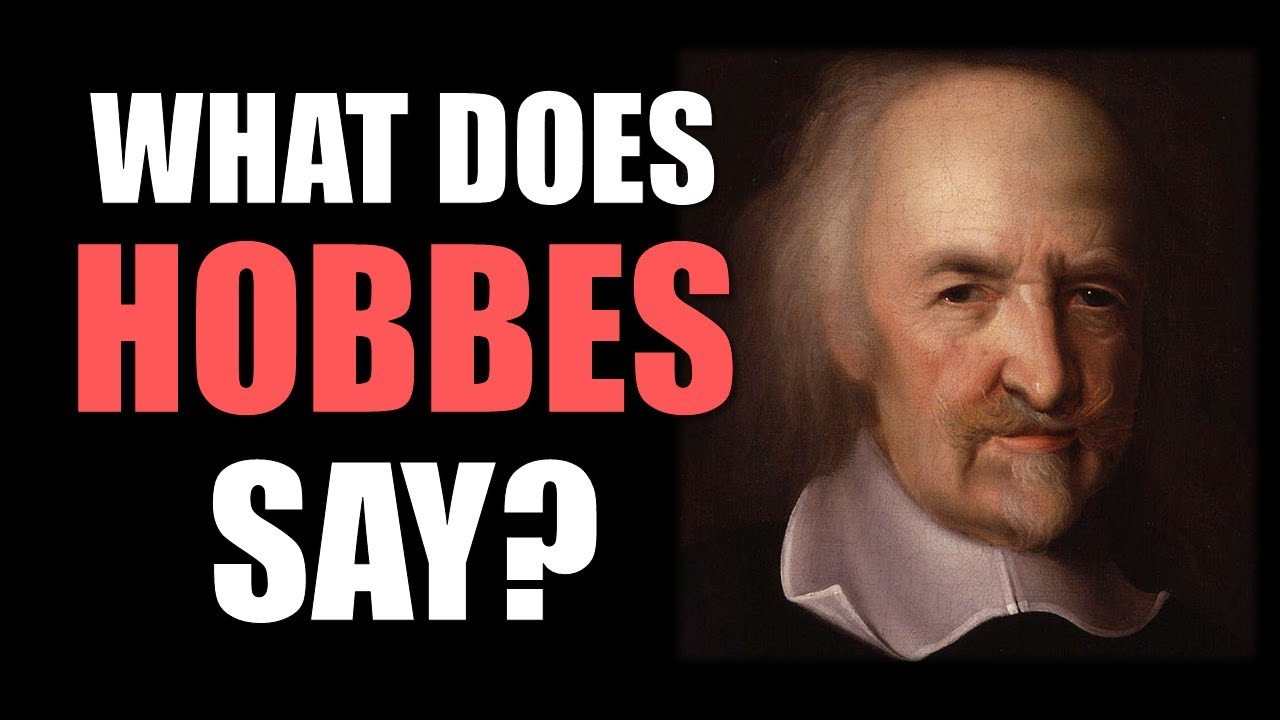
How did Hobbes view human nature?
a)
We are inquisitive and industrious.
b)
We are naturally selfish and quick to fight.
c)
We are naturally altruistic and usually willing to compromise.
d)
We are born a 'blank slate', and we develop differently according to our life's experiences..
24.
According to John Locke, why are governments created?
a)
God gives monarchs a divine right to rule over their people
b)
People are naturally selfish and need a strong ruler to create order
c)
People set up governments to protect their lives and property
d)
Civil government must be established to offset the power of the church
25.
The ability of one branch of government to limit the power of the other is called ___.
a)
a natural law
b)
checks and balances
c)
a social contract
d)
laissez-faire
26.
American's used _________________'s idea of separation of powers to write the US Constitution. 
a)
A. Montesquieu
b)
B. Hobbes
c)
C. Rousseau
d)
D. Voltaire
27.

French Enlightenment philosopher who strongly believed in freedom of speech and religion

a)

Voltaire

b)

Denis Diderot

c)

Mary Wollstonecraft

d)

John Locke

28.
How did many Americans react to the Zimmermann Telegram?
a)
They became concerned about Russian expansion
b)
They wanted to avoid membership in the League of Nations.
c)
They wanted to fire Zimmermann
d)
They were outraged over a possible German-Mexican alliance.
29.
Which war tactic of World War I caused soldiers to endure terrible living conditions?
a)
Armored tanks
b)
U-boats
c)
Dogfights from the air
d)
Trench warfare
30.
America entered World War I partly due to the
a)
invasion by the British.
b)
sinking of the Lusitania.
c)
bombings on America's land.
d)
attack at the U.S. navy base.
31.
The Treaty of Versailles placed total blame for World War I on one country.  It included harsh punishments which led to World War II.  Which country was blamed by the treaty?
a)
Germany
b)
Serbia
c)
Russia
d)
France
32.
The building up of a nation's army is called
a)
Militarism
b)
Nationalism 
c)
Imperialism 
d)
Alliances
33.
Information designed to influence opinion is called
a)
Militarism
b)
Communism 
c)
Propaganda
d)
Facebook 
34.
What were the causes of WWI?
a)
Militarism, Alliances, Nationalism, Imperialism
b)
Militarism, Alliances, Nationalism, Isolationism
c)
Militarism, Against, Nice, Iguanas
d)
Militarism, Alliances, Nationalism, Impractical
35.
What sparked World War I?
a)
Assassination of Archduke Franz Ferdinand
b)
Assassination of Archduke Marmaduke
c)
Assassination of Archduke Franz Ferdahand
d)
Assassination of Archduke Kaiser Wilhelm
36.
Who was the leader of the Italy?
a)
Winston Churchill
b)
Benito Mussolini
c)
Joseph Stalin
d)
Franklin Roosevelt
37.
Who was the leader of the Soviet Union (USSR)?
a)
Joseph Stalin
b)
Benito Mussolini
c)
Hideki Tojo
d)
Winston Churchhill
38.
Who was the leader of the Nazi Party in Germany?
a)
Joseph Stalin
b)
Benito Mussolini
c)
Hideki Tojo
d)
Adolf Hitler
39.
Which country did Hitler invade that triggered the all-out conflict in Europe?
a)
Spain
b)
Greece
c)
Poland
d)
Great Britain
40.
Which term explains the U.S. policy and stance on World War II?
a)
neutralism
b)
isolationism
c)
blitzkrieg
d)
atomicism
41.
The United States president at the beginning of WWII was
a)
Hirohito
b)
Harry Truman
c)
Franklin D. Roosevelt
d)
Winston Churchill
42.
Giving into aggression to keep peace.
a)
Kamikaze
b)
Holocaust
c)
Embargo
d)
Appeasement 
43.
the President of the U.S. who decided to drop the atomic bombs on Japan
a)
Roosevelt
b)
Truman
c)
Stalin
d)
Churchill
44.
The turning point in the Pacific theater that stopped Japanese advancement
a)
Battle of Midway
b)
Battle of Stalingrad
c)
Pearl Harbor
d)
Battle of Britain
45.
The place where American POWs suffered brutal treatment by the Japanese in the Philippines
a)
Hiroshima
b)
Kristallnacht
c)
Bataan death march
d)
Nagasaki
46.
December 7, 1941 - a "date that will live in infamy" - the event that pushed America into the war
a)
Japanese attack on Pearl Harbor
b)
the Bataan death march
c)
German invasion of Poland
d)
the D-Day invasion
47.
The bombing of Hiroshima and Nagasaki
a)
ended war in the Pacific
b)
opened a second front to Asia
c)
caused the Japanese seizure of Manchuria
d)
was a result of the Potsdam conference
48.
Who was the genius German general in North Africa; known as the "Desert Fox"
a)
Bernard Montgomery
b)
Dwight Eisenhower
c)
Adolf Hitler
d)
Erwin Rommel
49.
What two nations were in competition with each other during the Cold War?
a)
Spain and Portugal
b)
England and France
c)
Germany and Italy
d)
United States and Soviet Union
50.

Where was Korea divided?

a)

18 parallel

b)

34 parallel

c)

38 parallel

d)

15 parallel

51.
In the 1950s, the United States became involved in the Vietnam War. Why did the United States become involved in this war?
a)
to prevent the collapse of the government of North Vietnam
b)
to stop Vietnam from taking over Hong Kong
c)
to stop the spread of communism to South Vietnam
d)
to prevent attacks against United States shipping
52.
This "figurative" wall divided communist countries from democratic counties--
a)
Great Wall of China
b)
Berlin Wall
c)
Iron Curtain
d)
Wall of Democracy
53.
Which of the following foreign policies gave financial aid to European nations to rebuild after WWII?
a)
Truman Doctrine
b)
Marshall Plan
c)
Warsaw Pact
d)
Domino Theory
54.
The physical barrier separating Communist East Berlin and Democratic West Berlin--
a)
Berlin Bloackade
b)
Berlin Base
c)
Berlin Wall
d)
Berlin Barrier
55.

What was the mutual defense alliance of non communist nations, which included the U.S.?

a)

NATO

b)

Warsaw Pact

c)

Truman Doctrine

d)

Open Skies

56.
What was the name for the 1955 alliance of Soviet-dominated countries of Eastern Europe  that were the counterpart to the western alliance?
a)
NATO
b)
Warsaw Pact
c)
European Alliance
d)
Iron Curtain
57.

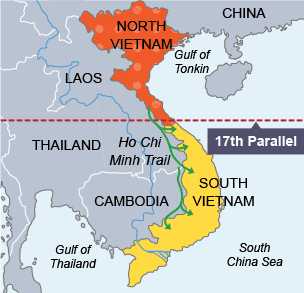
Images like this one refer to what theory about the spread of Communism in Asia (China, Korea, Vietnam)?

a)

The Mar$hall Plan

b)

The Domino Theory

c)

Proxy Wars

d)

Flexible Response

58.

Which leader promoted communism in North Vietnam?

a)

Ho Chi Minh

b)

Mao Zedong

c)

Pol Pot

d)

Diem

59.

Truman's policy of preventing the expansion of communism was -

a)

containment

b)

deterrence

c)

militarism

d)

perestroika

60.
The Cold War was mainly focused on the U.S and their fight against ___.
a)
Socialism
b)
Fascism
c)
Communism
d)
Exorcisms
61.
What did Americans fear most about the Cuban Missile Crisis?
a)
The Soviets invading Cuba
b)
The spread of communism
c)
A nuclear war
d)
WWIII
62.
What did Americans fear most about the Cuban Missile Crisis?
a)
The Soviets invading Cuba
b)
The spread of communism
c)
A nuclear war
d)
WWIII
63.
Who were the leaders of the United States and the Soviet Union during the Cuban Missile Crisis?
a)
John F Kennedy & Nikita Khrushchev
b)
Nixon & Stalin
c)
John F. Kennedy & Mussolini
d)
Truman & Nikita Khrushchev
64.
What event in the 1960's brought the world close to a nuclear war?
a)
The space race
b)
Berlin War
c)
The Cuban Missile Crisis
d)
The arms race
65.
A competition between nations to build powerful weapons is called ___________.
a)
Arms Race
b)
Blockade
c)
Space Race
d)
Atomic Bomb
66.
A competition between the Soviet Union and The United States to send people to space was called the __________________.
a)
Arms Race
b)
Space Race
c)
Snail Race
d)
Atomic Race
67.

Increasing interdependence of nations and peoples across the globe.

a)

Infrastructure

b)

Globalization

c)

Interdependence

d)

Specialization

68.

What are some negatives of globalization?

a)

Workers are exploited in sweatshops

b)

Pollution and deforestation

c)

Low wages for factory workers in Asia and Africa

d)

All of the answers are correct

69.

The process of creating an international network of trade, communication and culture.

a)

globalization

b)

recession

c)

NAFTA

d)

Multinatural cooperation

70.

a common currency (money) used by several EU

a)

Euro

b)

Pound

c)

Dollar

d)

Franc

71.

Which country has nuclear weapons?

a)

Mexico

b)

Canada

c)

Russia

d)

Morocco

72.

Which country has nuclear weapons?

a)

France

b)

Mongolia

c)

Norway

d)

Denmark

73.

Which country has nuclear weapons?

a)

Austrailia

b)

Pakistan

c)

Sweden

d)

Iceland

74.

Which country has nuclear weapons?

a)

Jordan

b)

Afghanistan

c)

Iraq

d)

Israel

75.

Which country has nuclear weapons

a)

Spain

b)

Algeria

c)

United Kingdom

d)

Rwanda