wayground logo

Free Printable Worksheets

NEW

Font size

S
M
L
XL
Worksheets

Spring Final Review- WWI, Global Depressions, WWII, Cold War, Decolonization

Total questions: 80

Worksheet time: 42mins

Name
Class
Date
1.
This plan tried to avoid a two front war for Germany in WWI.
a)
Schlieffen Plan
b)
The Five-Year Plan
c)
Reichstage
d)
The Final Solution
2.
Who did Gavrillo Princip assassinate in Sarajevo to spark WWI?
a)
Franz Ferdinand
b)
Wilhelm I
c)
Nicholas I
d)
Hindenburg
3.
The Triple Alliance before WWI was made up of.
a)
Great Britain, France, US
b)
Italy, France, Russia
c)
Germany, Austria-Hungary, Italy
d)
Germany, Britain, Austria-Hungary
4.
What treaty ended WWI and contributed to the start of WWII?
a)
Treaty of Paris
b)
Treaty of Vecht
c)
Treaty of Versailles
d)
Treaty of London
5.
What is NOT true about trench warfare in WWI?
a)
It was static
b)
It was on the Eastern front
c)
No Man's Land was a zone between lines
d)
It was on the Western fron
6.
Which is NOT a reason the U.S. joined WWI?
a)
Zimmerman Telegram
b)
Triple Alliance
c)
Sinking of the Lusitania
d)
Germany breaking the Sussex Pledge
7.
Who wasn't a Central Power during WWI?
a)
Italy
b)
Germany
c)
Austria-Hungary
d)
Ottoman Empire
8.
An investment of millions in building up the navy is an example of what cause of WWI?
a)
Militarism
b)
Alliances
c)
Imperialism
d)
Nationalism
9.
The Triple Entente before WWI was made up of who?
a)
Britain, France, US
b)
Britain, Germany, US
c)
Austria-Hungary, Germany, Italy
d)
Britain, France, Russia
10.
Who wasn't an Allied Power during WWI?
a)
Britain
b)
U.S.
c)
Russia
d)
Ottoman Empire
11.
Wilson's Fourteen points were meant to do what at the end of WWI?
a)
Punish Germany
b)
Prevent future conflicts
c)
Make the US, Britain, and France world leaders
d)
Redistribute Germany's colonies among allies
12.
An extreme pride in your nation or a group trying to establish their own nation is an example of what cause of WWI?
a)
Militarism
b)
Alliances
c)
Imperialism
d)
Nationalism
13.
When every citizen takes part in the war effort home and on the front lines its called.
a)
Mobilization
b)
Total War
c)
Conscription
d)
Absolutism
14.
The Kaiser of Germany during WWI was __________.
a)
Nicolaus II
b)
Ferdinand
c)
Wilhelm
d)
Lenin
15.
This cause of WWI was created due to colonial and trade disputes between European powers and the rivalries they created.
a)
Militarism
b)
Alliances
c)
Imperialism
d)
Nationalism
16.

This area was known as a "powder keg" about ready to explode before WWI.

a)

Russia

b)

The Balkans

c)

Belgium

d)

The Middle East

17.

This treaty officially pulled Russia out of the War allowing Germany to focus on the Western Front.

a)

Treaty of London

b)

Treaty of Paris

c)

Treaty of Versailles

d)

Treaty of Brest-Litovsk

18.

This man became dictator of the USSR directly after the successes of the Red Army and the Bolshevik Revolution.

a)

Joseph Stalin

b)

Vladimir Lenin

c)

Leon Trokstky

d)

Vladimir Putin

19.

Which of these countries would have NOT been upset about how the Treaty of Versailles affected them?

a)

Japan

b)

Italy

c)

Germany

d)

France

20.

Which is NOT a weakness that the Weimar Republic had?

a)

Hyperinflation

b)

A broken democratic system

c)

Too many political parties limited political power

d)

Presidents had 4 year terms with strong checks and balances

21.
Which is not an Axis power?
a)
Soviet Union
b)
Germany
c)
Japan
d)
Italy
22.
Which best explains why Hitler invaded the Soviet Union?
a)
To join empires with Japan
b)
To gain Moscow's industrial wealth
c)
To join with Stalin to rule the world
d)
To create more living space and annihilate Jews and Slavs
23.
What type of leader has the characteristics of: Dictator, preaches racial superiority, extreme nationalism.
a)
Democratic Leader
b)
Fascist Leader
c)
Republican Leader
d)
Donald Trump
24.
Which country did NOT look to solve its problems in the 1930's through aggressive conquest?
a)
Japan
b)
Italy
c)
Soviet Union
d)
Germany
25.
The Treaty of Versailles did all of the following except _________.
a)
Created no economic recovery
b)
Germany lost the Rhineland
c)
Germany kept is colonies to produce goods for reparations
d)
Germany had to pay war reparations
26.
The Red Army won the Battle of __________ and started pushing the Germans back toward Berlin.
a)
Leningrad
b)
Warsaw
c)
the Bulge
d)
Stalingrad
27.
What 2 islands were vital for the U.S. troops to capture to bomb/invade mainland Japan?
a)
Iwo Jim and Okinawa
b)
Iwo Jima and Midway
c)
Okinawa and the Phillipines
d)
Iwo Jima and Guadalcanal
28.
A loaf of bread in Germany costing $200,000,000,000 is best described by ____________.
a)
Hyperinflation
b)
Tariffs
c)
Externality
d)
Elasticity
29.
Which is not true about Island Hopping?
a)
The U.S. captured every island on the way to Japan.
b)
The U.S. targeted islands most weakly defended.
c)
The U.S. used captured islands as bases.
d)
The U.S. did not capture every island on their way to Japan.
30.
The invasion of this country pulled most of Europe into WWII.
a)
Poland
b)
France
c)
Soviet Union
d)
Belgium
31.
The Battle of _________ was Germany's last offensive of the war.
a)
the Bulge
b)
Stalingrad
c)
Midway
d)
Britain
32.
The Battle of _________ was the turning point of the war in the Pacific.
a)
Midway
b)
Guadalcanal
c)
the Bulge
d)
Britain
33.
Japan invaded _________ a part of China in 1931.
a)
Manchuria
b)
Shanghai
c)
Thailand
d)
The Malayan Peninsula
34.
The Allied invasion of North Africa was called Operation _____________.
a)
Torch
b)
Rosco
c)
Avalanche
d)
Husky
35.
Which country was not a part of the D-Day invasion?
a)
Soviet Union
b)
U.S.
c)
Britain
d)
Canada
36.
Which is a reason the Japanese attacked Pearl Harbor?
a)
To get back at the U.S. for what happened at Midway.
b)
To attack isolationist countries.
c)
The U.S. put a trade embargo on oil and steel.
d)
Due to a lack of negotiation.
37.
December 7, 1941 is the date of what?
a)
D-Day
b)
Pearl Harbor
c)
Germany's invasion of Poland
d)
VE Day
38.
Who was President at the time of Pearl Harbor?
a)
Harry Truman
b)
Dwight Eisenhower
c)
Woodrow Wilson
d)
Franklin Roosevelt
39.
Who created Fascism?
a)
Hitler
b)
Stalin
c)
Mussolini
d)
Franco
40.
Which President decided to use the A-Bomb on Japan?
a)
Franklin Roosevelt
b)
Dwight Eisenhower
c)
Harry Truman
d)
Woodrow Wilson
41.
Soviets won at Stalingrad by __________.
a)
Encircling German troops forcing a surrender.
b)
Blitzkrieging the Germans
c)
Sinking German ships and U-boats
d)
None of them
42.
What group was Not a victim of the holocaust?
a)
Jews 
b)
Italians
c)
Slavs
d)
Gypsies
43.
Germany signed a non-aggression pact with what country?
a)
Poland
b)
Czechoslavakia
c)
France
d)
Soviet Union
44.
Hitler's plan to eradicate Jews and those unfit for society.
a)
The Extinction
b)
The Only Solution
c)
The Schlieffen Plan
d)
The Final Solution
45.

After suggesting it be created, which nation chose not to join the League of Nations after WWI

a)

Great Britain

b)

the United States

c)

France

d)

Italy

46.

The purpose of the League of Nations was to help

a)

prepare for the coming of World War II

b)

stop the spread of Communism

c)

maintain a lasting peace

d)

Britain and France get revenge on Germany

47.

Germans arranged for the return of this Bolshevik leader to Russia in hopes he would cause trouble...

a)

Stalin

b)

Hitler

c)

Steinhoff

d)

Lenin

48.

What happened in the U.S. on October 24 of 1929?

a)

Roosevelt was elected President

b)

the stock market crashed

c)

we banned immigration from the U.S.S.R. because we feared Communism

d)

Great Britain paid back all the money they owed us and there was a national celebration

49.

The 1917 Russian Revolution resulted in the rise of _________ in Russia.

a)

Fascism

b)

Capitalism

c)

Socialism

d)

Communism

50.

What nation did the British and the French blame for starting WWI and to punish

a)

U.S.

b)

Germany

c)

Serbia

d)

Austria-Hungary

51.

Which country's depression began in 1919, right after WWI due to the demand it reparations to France and Britain?

a)

USA

b)

Germany

c)

Soviet Union

d)

Ottoman Empire

52.

Which of the following best explains a major reason why Europe was impacted by the US stock market crash?

a)

Due to high rates of European immigration to America, many Europeans heard about the market crash.

b)

Most Europeans were heavily invested in the American stock market crash

c)

We were all members of the League of Nations and each member nation was invested in the other members

d)

Many European nations had taken loans from America, which American banks were now demanding be repaid

53.
What two nations were in competition with each other during the Cold War?
a)
Spain and Portugal
b)
England and France
c)
Germany and Italy
d)
United States and Soviet Union
54.

Where was Korea divided?

a)

18 parallel

b)

34 parallel

c)

38 parallel

d)

15 parallel

55.
In the 1950s, the United States became involved in the Vietnam War. Why did the United States become involved in this war?
a)
to prevent the collapse of the government of North Vietnam
b)
to stop Vietnam from taking over Hong Kong
c)
to stop the spread of communism to South Vietnam
d)
to prevent attacks against United States shipping
56.
How did the US respond to finding out that the Soviets had missiles in Cuba?
a)
They sent the Air Force to bomb Cuba
b)
They began placing missiles in the Soviet Union.
c)
They placed a naval blockade around Cuba.
d)
They invaded Cuba and the Soviet Union.
57.
This "figurative" wall divided communist countries from democratic counties--
a)
Great Wall of China
b)
Berlin Wall
c)
Iron Curtain
d)
Wall of Democracy
58.
Which of the following foreign policies gave financial aid to European nations to rebuild after WWII?
a)
Truman Doctrine
b)
Marshall Plan
c)
Warsaw Pact
d)
Domino Theory
59.
The physical barrier separating Communist East Berlin and Democratic West Berlin--
a)
Berlin Bloackade
b)
Berlin Base
c)
Berlin Wall
d)
Berlin Barrier
60.
Nations that were aligned with, but also under the influence and pressure of, the Soviet Union were called--
a)
European Nations
b)
NATO
c)
Warsaw Pact
d)
Satellite Nations
61.
What was the mutual defense alliance of non communist nations?
a)
NATO
b)
Warsaw Pact
c)
Truman Doctrine
d)
Open Skies
62.
What was the name for the 1955 alliance of Soviet-dominated countries of Eastern Europe  that were the counterpart to the western alliance?
a)
NATO
b)
Warsaw Pact
c)
European Alliance
d)
Iron Curtain
63.
Leader of communism in China
a)
Mao Zedong
b)
Hirohito Showa
c)
Xi Jinping
d)
Pu Yi
64.

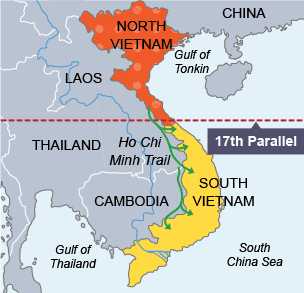
Images like this one refer to what theory about the spread of Communism in Asia (China, Korea, Vietnam)?

a)

The Mar$hall Plan

b)

The Domino Theory

c)

Proxy Wars

d)

Flexible Response

65.

Which leader promoted communism in North Vietnam?

a)

Ho Chi Minh

b)

Mao Zedong

66.

Which quote by Mikhail Gorbachev best defends his policies of glasnost and perestroika?

a)

"More socialism means more democracy, openness and collectivism in everyday life."

b)

"America must be the teacher of democracy, not the advertiser of the consumer society."

67.

Who led the Nationalists in a civil war in China and was forced to retreat to Taiwan?

a)

Chiang Kai-shek

b)

Mao Tse-tung

68.

Mikhail Gorbachev agreed to arms reduction treaties with the United States in the 1980s because

a)

Soviet economy couldn't handle another arms race

b)

He wanted to compete against STAR WARS

c)

The Soviet Union wanted to become democratic

69.

Truman's policy of preventing the expansion of communism was -

a)

containment

b)

deterrence

c)

militarism

d)

perestroika

70.

Who was most known for using nonviolent civil disobedience to achieve Indian independence?

a)

Mohandas Gandhi

b)

Jomo Kenyatta

c)

Gamal Abdul Nasser

d)

Nelson Mandela

71.

What was one reason India was divided into two nations in 1947?

a)

Differences between Hindus and Muslims created religious conflict.

b)

Indian leaders disagreed about India's role in the UN

c)

Great Britain feared Indian would be too strong

d)

North India became communist and South India became democratic

72.

After WWII, this group declared African nations had the right to determine if they would be independent or stay under European control.

a)

The United Nations

b)

The League of Nations

c)

Warsaw Pact

d)

NATO

73.

In which nation did Nelson Mandela lead a successful reform movement?

a)

Kenya

b)

The Congo

c)

Ethiopia

d)

South Africa

74.

The end of the Mandate System after WWII resulted in:

a)

formation of multiple communist nations in Southeast Asia

b)

conflicts based on religious difference in the Middle East

c)

spread of Christian ideas in Europe

d)

the Great Depression in the United States
75.
The term "Decolonization" refers to . . . 
a)
The European powers trading colonies because to other countries because they could no longer afford to maintain them
b)
The process by which the European powers helped their colonies to gradually become self-sufficient and able to manage their own affairs
c)
The process by which colonies were lost during World War II
d)
The process by which colonies obtained their independence after World War II
76.
One challenge that faced countries becoming independent was . . .
a)
They owed tribute to the colonial power for their independence 
b)
The countries were now drained of money and resources for their own people
c)
The European powers did not leave the colonies prepared to govern themselves
d)
Once independent, other countries swept in to recolonize them
77.
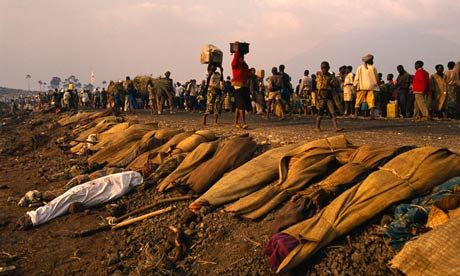
A major goal of the Hutu-led regime in Rwanda in 1994 was to-
a)
Eliminate Tutsi minority
b)
Promote ethnic tolerance
c)
Align with the Soviet Union
d)
Strengthen ties with Belgium 
78.
A major cause of the Arab-Israeli conflict was that in 1948 both groups
a)
Claimed sovereignty over the same land.
b)
believed the United States was on their side.
c)
wanted to control Mediterranean trade.
d)
Wanted the huge oil reserves in Israel.
79.
Why are European languages spoken in Africa today? 
a)
Because of alliances made during WW I
b)
Because of colonization by Europeans
c)
Because the British defeated the Dutch and Afrikaners.
d)
Because the Congress of Vienna required it.
80.

The purpose of Mohandas Gandhi's actions such as the Salt March and the textile boycott was to

a)

begin a cycle of armed revolution

b)

draw attention to critical issues

c)

increase the strength of the military

d)

resist the power of religious leaders