
Font size
 Worksheets
USI Unit 11: Imperialism
Total questions: 40
Worksheet time: 21mins
Which is NOT an argument for American expansion?
spread democracy & peace
acquire land to compete against European nations
racial & religious superiority
gain more citizens around the world
What was the US mainly concerned about during imperialism?
finding new markets for trade
acquiring raw materials
world conquest
declaring war
Which of the following split China into different spheres of influence for European nations, Japan, and the US?
Monroe Doctrine
Open Door Policy
social darwinism
laissez faire
US purchased the following territory from Russia
Alaska
Hawaii
Puerto Rico
Cuba
US annexed the following territory due to its strategic location and sugar plantations
Hawaii
Japan
Philippines
Alaska
Declared Latin America as the US' sphere of influence
Monroe Doctrine
Open Door Policy
Hawaiian Annexation
extractive economy
Strategy for how a nation deals with other nations
foreign policy
imperialism
extractive economy
domestic policy
A reason why US acquired islands in the Pacific Ocean
for coaling or fuel stations
for tourism
to trade weapons
for oil
Why was Queen Liliuokalani removed from power in Hawaii?
took away political power from white plantation owners
gave political power to white plantaion owners
betrayed her people
she died and her brother, Kalakaua, took over
Why did plantation owners in Hawaii fear a loss of profit?
a new tariff imposed taxes on sugar
protesters burned their plantations
not enough workers to produce sugar
not enough customers to buy sugar
This type of foreign policy encourages stronger nations to extend their influence over weaker ones.
Imperialism
Isolationism
Globalism
Communism
Identify reasons for American Imperialism
Economic Interests
Military Interests
Cultural Superiority
Self Interests
Why did Secretary of State William Seward buy the territory of Alaska?
He saw England in North America as a strategic threat.
He saw France in North America as a strategic threat.
He saw Russia in North America as a strategic threat.
He saw Germany in North America as a strategic threat.
Which American Secretary of State promoted an 'open door ' policy with China?
John Kennedy
John Lennon
John Wayne
John Hay
How did many Americans justify imperialism?
We were spreading democracy
We were spreading Christianity
We were providing loans
We were providing educational opportunities
Why was the purchase of Alaska criticized at the time?
It was too expensive.
It was too far away.
It was seen as worthless.
It was seen as too cold.
These events lead the U.S. into war with Spain in 1898.
America annexing Hawaii
Spain annexing Puerto Rico
Cuban people being placed into concentration camps
The U.S.S. Maine sinking
When capturing the Philippine Islands, American forces suffered how many casualties?
0
5
10
15
Theodore Roosevelt commanded a cavalry unit in Cuba known as the
Rough Rollers
Rough Riders
Rough Company
Rough Racers
These types of exaggerated news stories helped push the U.S. into war with Spain.
Red Journalism
Orange Journalism
Yellow Journalism
Green Journalism
After the Spanish-American War, the U.S. annexed which former Spanish territories?
Cuba
Columbia
Puerto Rico
Philippine Islands
America first attempted to buy land to build the Panama Canal from what country ?
Cuba
Columbia
Croatia
Cambodia
How did America end up getting the land it needed to build the Panama Canal?
We supported a revolution in Columbia.
We supported a revolution in Cuba
We supported a revolution in Croatia
We supported a revolution in Cambodia
Which of the following was not a reason why America practiced Imperialism?
Desire for raw materials
Yellow Journalism
Muckraking
Spreading American ideals
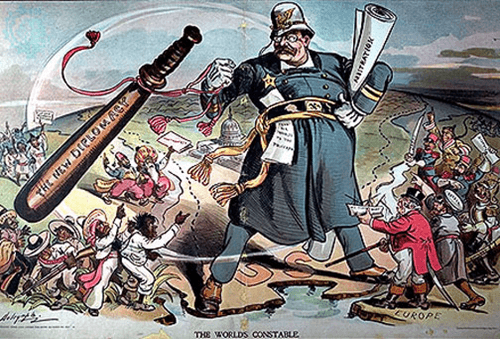
Which of the following defines Yellow Journalism?
Writing about bad stuff to cause change
Exaggerating events to sell newspapers
Investigative journalism
Reporting only the truth



