
 Worksheets
World History Final II
Total questions: 40
Worksheet time: 20mins

"I shall return", a direct quote in reference to a return to the Philippine Islands. Japanese occupation in the Pacific Theater came to a halt under this brilliant military commander.
Gen. Dwight D. Eisenhower
Gen. George S. Patton
Gen. Douglass Mac Arthur
Adm. Chester W. Nimitz
Adm. William Halsey Jr.

What were one of the main objectives of the Empire of Japan, when they decided to attack the United States Navy at Pearl Harbor?
Attack the Battle Ships, Cruisers and Destroyers.
Attack the Oil fields and main radar communications systems.
Attack the Aircraft Carriers so as to limit air superiority in the Pacific Theater.
Attack hospitals, munition dumps and the general quarters of high ranking officers.
Search and destroy US attack Submarines.

Select the World War II battles that were NOT fought at Sea.
Battle of the Bismark Sea
Battle of Coral Sea
Papa New Guinea Campaign
Battle of Iwo Jima
Battle of Midway
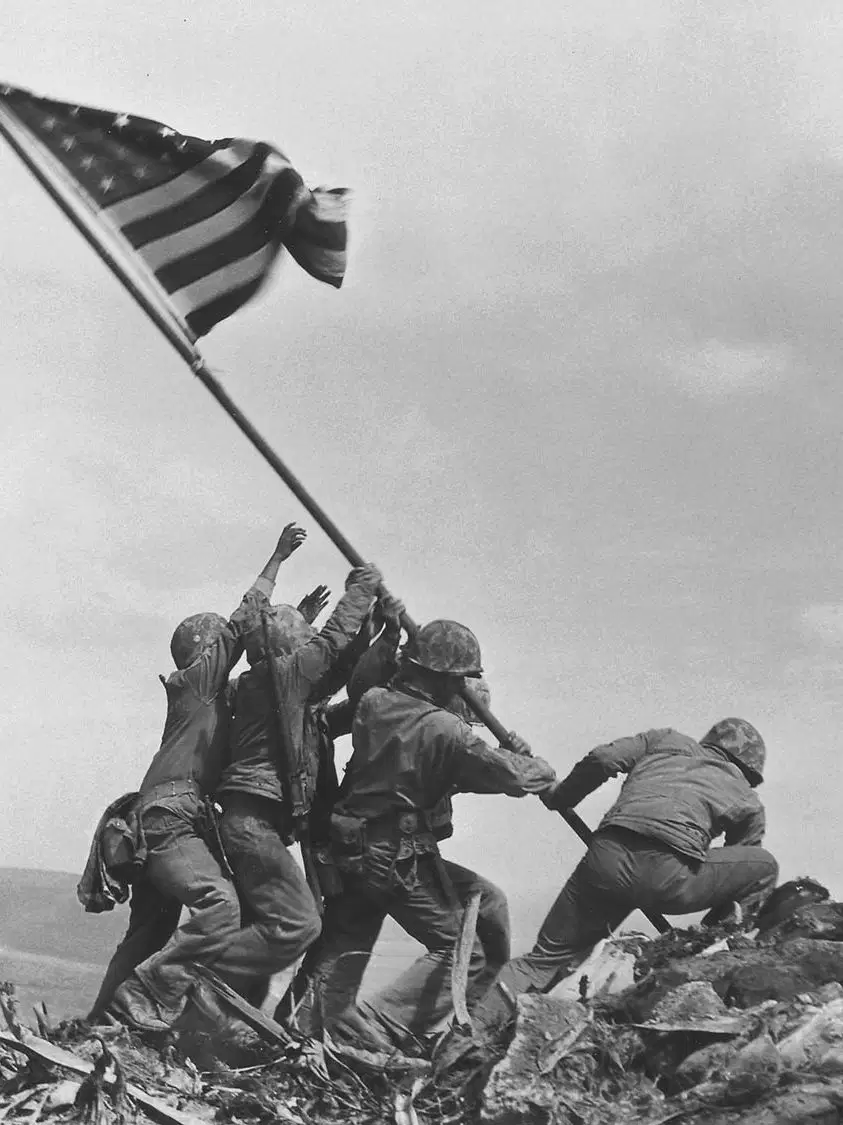
Which World War II battles were fought on small Islands located in the Pacific Ocean?
Battle of Iwo Jima
Battle of Guadalcanal
Battle of Okinawa
Battle of Wake Island
All answers are correct.

African American solders were mostly accepted into this branch of the military during the Second World War.
United States Army
United States Navy
United States Air Force
United States Marine Corps
United States Coast Guard

The Mitsubishi "Zero", was built to counter these specific types of mechanized weapons used by the Allied Forces during WWII.
P-51 Mustang
Messerschmidt Bf 109
British Spitfire
Submarines
B-29 Bombers

The Death March of Bataan, can be considered by most, as a direct violation of the War Crimes Act.
United Nations
Green Peace
Geneva Conventions
War Crimes Policy
A Truce or Armistice.

Only one country has used an Atomic weapon as a means to annihilate and completely obliterate an opponent during a time of a mutually declared war.
Japan
Russia
North Korea
Iran
The United States

This country suffered the most losses, including but not limited to; human lives, property damage and compromised natural resources during WWII.
United States
Germany
France
Britain
Russia

The 442nd regimental combat team, was the most decorated unit during world war two, but in doing so, they also suffered the most;
Prejudice and Discrimination
Casualties
Fallen Soldiers
Skepticism and Criticism mostly from media-based outlets
Family members sent to Japanese Internment Camps.

If history serves us correct, the third world war will also have it's roots in or near to this country.
Ukraine
Poland
Russia
Germany
China

"Rosie the Riveter" was propaganda used to depict women as a driving force being the war effort. Rosie was originally from this naval port city.
Vallejo
Stockton
Richmond
Alameda
Long Beach

The 442nd Army Regiment of World War Two was the most decorated military unit of all-time. Battling racial prejudices, segregation and discrimination while continuously defeating the German Army.
African Americans
Japanese Americans
Chinese Americans
Latin Americans
Native Americans
Both North and South America were named after this explorer.
Christopher Columbus
John Cabot
Amerigo Vespucci
Ferdinand Magellan
Vasco da Gama

Explorers from Spain and Portugal sailed East in a attempt to to reach this country.
Spain
South America
China
India
North America
In 1560, his empire had the most powerful Navy in the world.
Portugal
Spain
Ottoman Empire
British Empire
North America

The Nina, Pinta, and Santa Maria ships all belonged to this explorer.
Christopher Columbus
John Cabot
Ferdinand Magellan
Marco Polo
Amerigo Vespucci

He was the first Englishman to circumnavigate the globe in a single expedition from 1577 to 1580.
Amerigo Vespucci
Sir Francis Drake
Christopher Columbus
John Cabot
Hernán Cortés


This strategy involved combing air, land, and sea with Marines to navigate the challenging geography and distances toward Japan.
Infinity War Saga
D-Day Offensive
Island Hopping
Navajo Code Talkers


Which feature of WWI fighting created a stalemate in the early part of the war?
aerial dogfights
chemical weapons
trench warfare
tanks

The map shows the American strategy of _________, where American forces tried to move closer and closer to the Japanese mainland so they could conduct bombing raids.
Blitzkreig
Defeat Hitler First
Kamikaze
Island Hopping

Who was the leader of the Soviet Union?
Chruchhill
Hitler
Stalin
Roosevelt
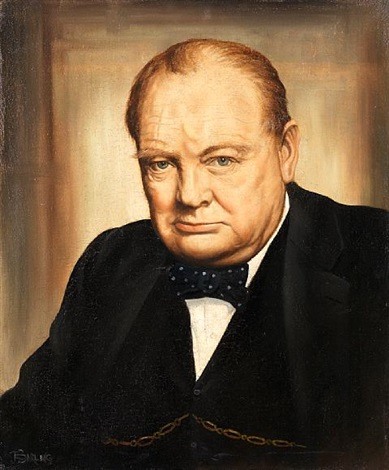
Winston Churchill was the leader of what country?
USSR
France
Germany
Great Britain

What battle is the pacific theater was vital to gain in order the bomb Japan
Okinawa
Iwo Jima
Normandy
Midway

Who is this?
Douglas MacArthur
Harry S. Truman
Dwight D. Eisenhower
Rosie the Riveter

What would be the best title for this chart?
Events During World War I
Totalitarian Regimes Between the Wars
Economic Problems Between the Wars
Causes of World War II

The photograph depicts which event of WWII?
the Japanese attack on Pearl Harbor
the Battle of Britain
Hitler's invasion of Poland
the Soviet Union's invasion of Finland

Where was D-day (the invasion of by the Allies in Europe WW2)
Normandy, France
Pas de Calais, France
Sicily, Italy

Which battle is considered a turning point in the Pacific Theater during WWII due to the strategic planning and use of intelligence?
Battle of Britain
Battle of Midway
Battle of Stalingrad
Battle of the Bulge

After what battle was the photo taken?
D-Day
Iwo Jima
Okinawa
Britain

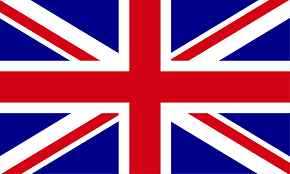
Great Britain fought on what side?
Axis
Allies

What Nations were part of the Axis Powers.
Japan
Nazi Germany
Soviet Union
Italy
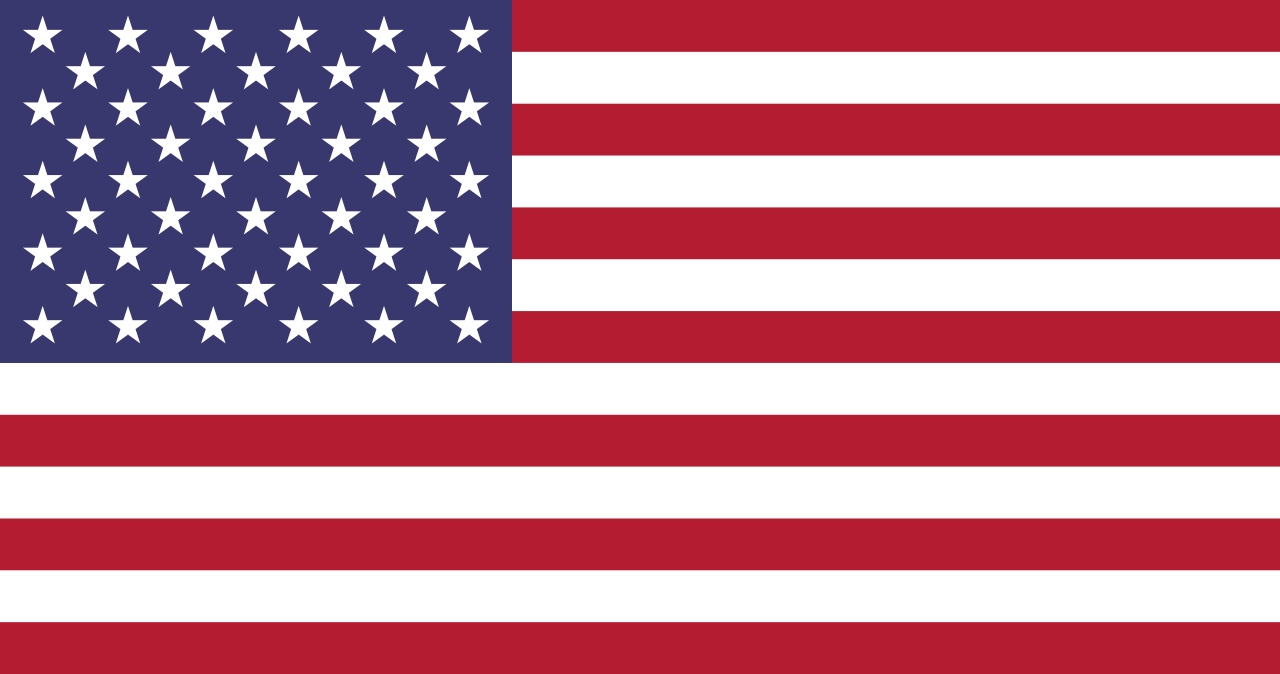
United States fought on what side?
Axis
Allies
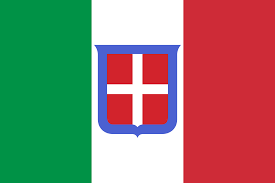
Italy fought on what side?
Axis
Allies

Which countries are part of the Axis Powers in World War II?
Germany, France, and Italy
Germany, Great Britain, and Russia
Germany, Italy, and Japan
Germany, Japan, and Russia

The military strategy practice by Americans against the Japanese was called
island-hopping
blitzkrieg
trench warfare
guerrilla tactics

